 Pin it
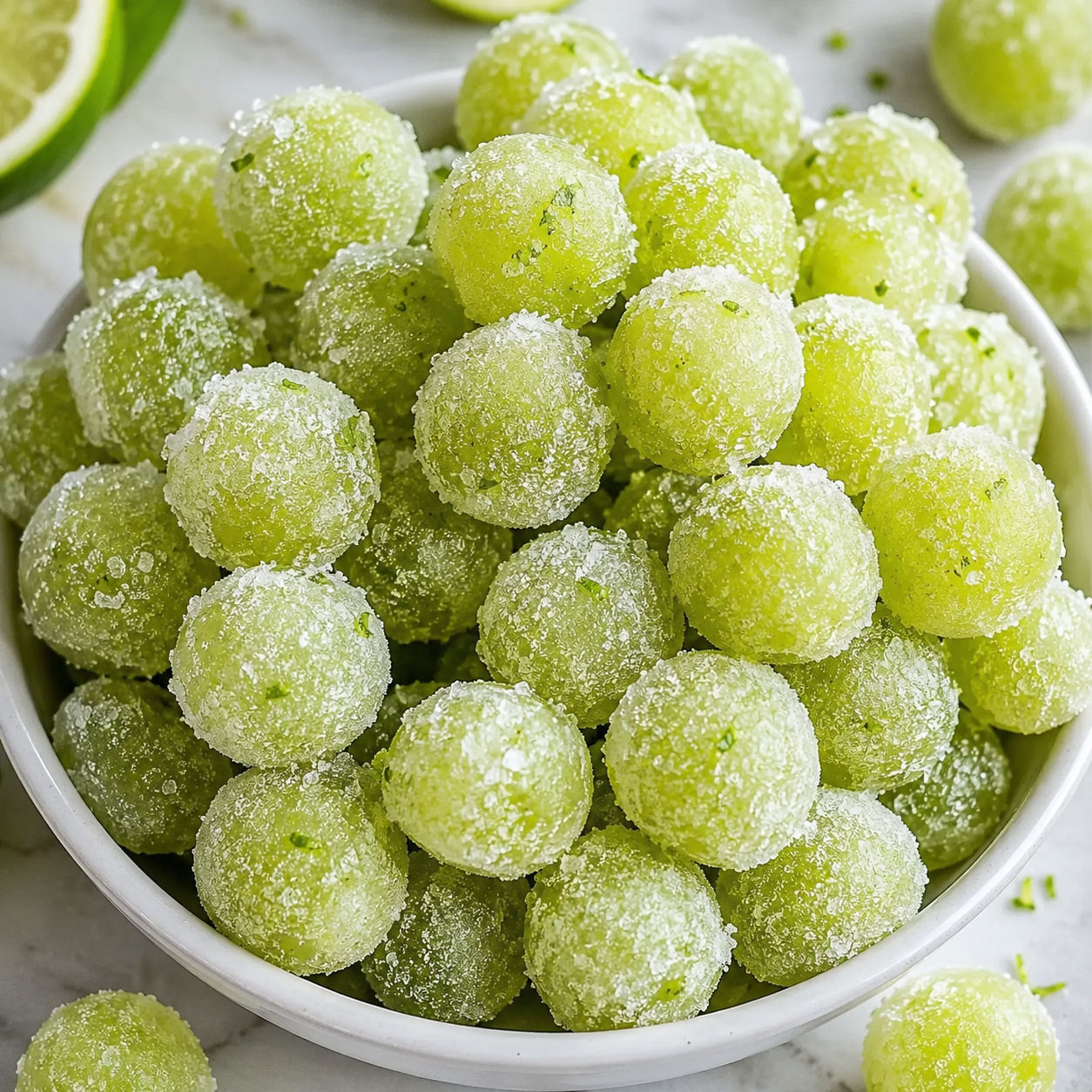
Frozen Candied Grapes are the kind of snack that disappears straight from the freezer. The grape turns icy and juicy inside, while the outside gets a thin sweet-tart shell that makes each bite feel like candy.
I like this version because it skips sticky syrup. Lime juice helps the coating cling, citric acid brings the sour candy bite, and a parchment-lined tray keeps the grapes separate instead of frozen into one clump.
The Sour Candy Coating
Start with crisp seedless grapes that are sweet before you coat them. The coating is simple, so the fruit has to carry the flavor.
Lime juice gives the powder something to grab. Citric acid adds the sour finish without making the grapes wet or syrupy.
- Seedless green grapes. They freeze with a bright, snappy bite and a clean tart-sweet flavor.
- Fresh lime juice. It lightly wets the grape skins and adds a sharper citrus edge.
- Monk fruit sweetener. It makes a dry, candy-like coating without adding regular sugar.
- Citric acid. A tiny amount gives the grapes that sour candy pucker.
- Lime zest. Optional, but it makes the coating smell fresh as soon as you open the container.
Shake, Coat, Freeze
- Wash and dry. Rinse the grapes well, pull them from the stems, and dry them thoroughly so the lime juice does not get watered down.
- Add lime. Toss the grapes with fresh lime juice until every grape has a thin shine, then drain off any extra juice.
- Mix the coating. Stir the monk fruit sweetener, citric acid, and lime zest in a shallow bowl until evenly blended.
- Roll the grapes. Coat the grapes a few at a time, then place them on a parchment-lined tray without touching.
- Freeze until firm. Freeze for 2-3 hours, then serve cold or transfer to a freezer container.
Frozen Candied Grapes Crunch
The best texture comes from dry grapes and a thin coating. If the grapes are dripping with lime juice, the sweetener melts into a paste. If they are bone dry, the coating slides right off. You want a light, tacky sheen.
Freeze the grapes on a tray first. This small step keeps them round, separate, and easy to grab by the handful. Once they are solid, move them to a lidded container or freezer bag. If you like colorful candy-style grapes, try the same method used in frozen candy grapes with Jell-O, but keep the coating light so the fruit still tastes fresh.
Flavor Swaps That Stick
This recipe is easy to bend toward whatever sour candy flavor you like. Lemon juice gives a brighter, sharper coating. Orange zest softens the sour edge. A small pinch of chili-lime seasoning turns the grapes into a sweet, cold snack with a little heat.
If you use regular granulated sugar, the coating will be crunchier at first and slightly sweeter. If you use powdered monk fruit, the shell looks more frosty. For a dessert tray, serve these beside candied lemon peel or candied pineapple. The mix of frozen, chewy, and sticky textures makes the plate feel more fun without much extra work.
Serving Without Sticky Fingers
Serve frozen candied grapes straight from the freezer. They soften quickly at room temperature, especially in a warm kitchen. A chilled bowl helps, and toothpicks are useful if you are putting them out for a party.
For a hot afternoon snack, I like them with something cold to drink, especially frozen cherry coke slushies or a citrusy sparkling water. They also work as a little sweet bite on a snack board with cheese, crackers, and nuts. If you are serving young kids, slice grapes lengthwise before freezing. Canada's Food Guide gives the same safety reminder in its sweet and sour grapes guide.
Store Them Frosty
Keep the finished grapes in an airtight freezer container. A sheet of parchment between layers helps protect the coating. They taste best during the first week, when the centers are juicy and the outside still has a clean sour bite.
Wash the grapes before you start, not after coating. The FDA has practical produce washing advice in its produce safety guide. After the grapes are coated and frozen, do not thaw and refreeze them. The skins wrinkle, the coating gets wet, and the texture loses that icy pop.
Fixing Patchy Coating
If some grapes look bare, the bowl probably had too much juice at the bottom. Work in small batches and lift the grapes out with a slotted spoon before rolling them in the coating. You can also dust the finished tray with a little extra sweetener mixture before freezing.
If the flavor is too sharp, reduce the citric acid next time. Start with 1 1/2 teaspoons for a softer sour bite. If it tastes flat, add more lime zest rather than more juice. Zest brings fresh citrus flavor without loosening the coating.
Summary
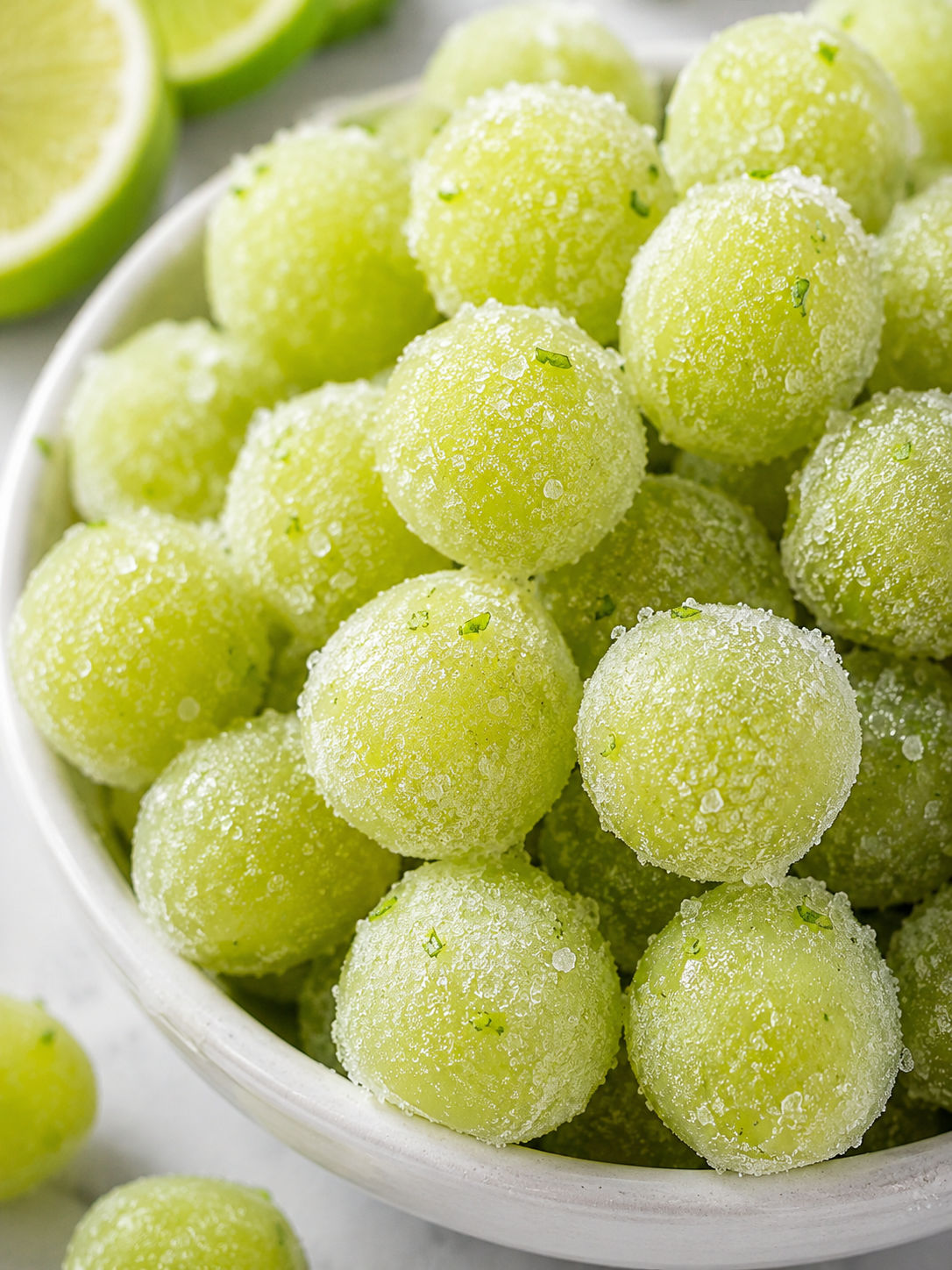
These grapes are best served frozen, right after the coating has set. Make a batch when grapes are crisp and sweet, then keep them ready for a cold snack.
FAQs
- Can I make Frozen Candied Grapes with red grapes?
Yes. Red grapes work well and taste a little deeper and sweeter than green grapes. Choose firm seedless grapes, because soft grapes freeze with a mushier center.
- Can I use Jell-O powder instead of citric acid?
You can. Use a few tablespoons of dry gelatin dessert mix and coat the lime-damp grapes before freezing. It will be sweeter and more colorful than the citric acid version.
- How long do candied grapes need to freeze?
They need at least 2 hours on a parchment-lined tray. For the firmest texture, freeze them for 3 hours, then move them to a container once they are fully set.
- Why is my coating falling off?
The grapes may be too wet or too dry. Pat them dry after washing, then coat them lightly with lime juice. If juice pools in the bowl, drain it before rolling the grapes in the sweetener mixture.
- How do I store frozen candied grapes?
Freeze them in a single layer first, then transfer them to an airtight freezer container. They keep their best texture for about 1 week, though they are safe longer if stored well.
- Are these safe for young children?
Whole grapes can be a choking hazard for small children. Slice them lengthwise before coating and freezing if serving young kids, and expect the pieces to freeze a little faster.
