 Pin it
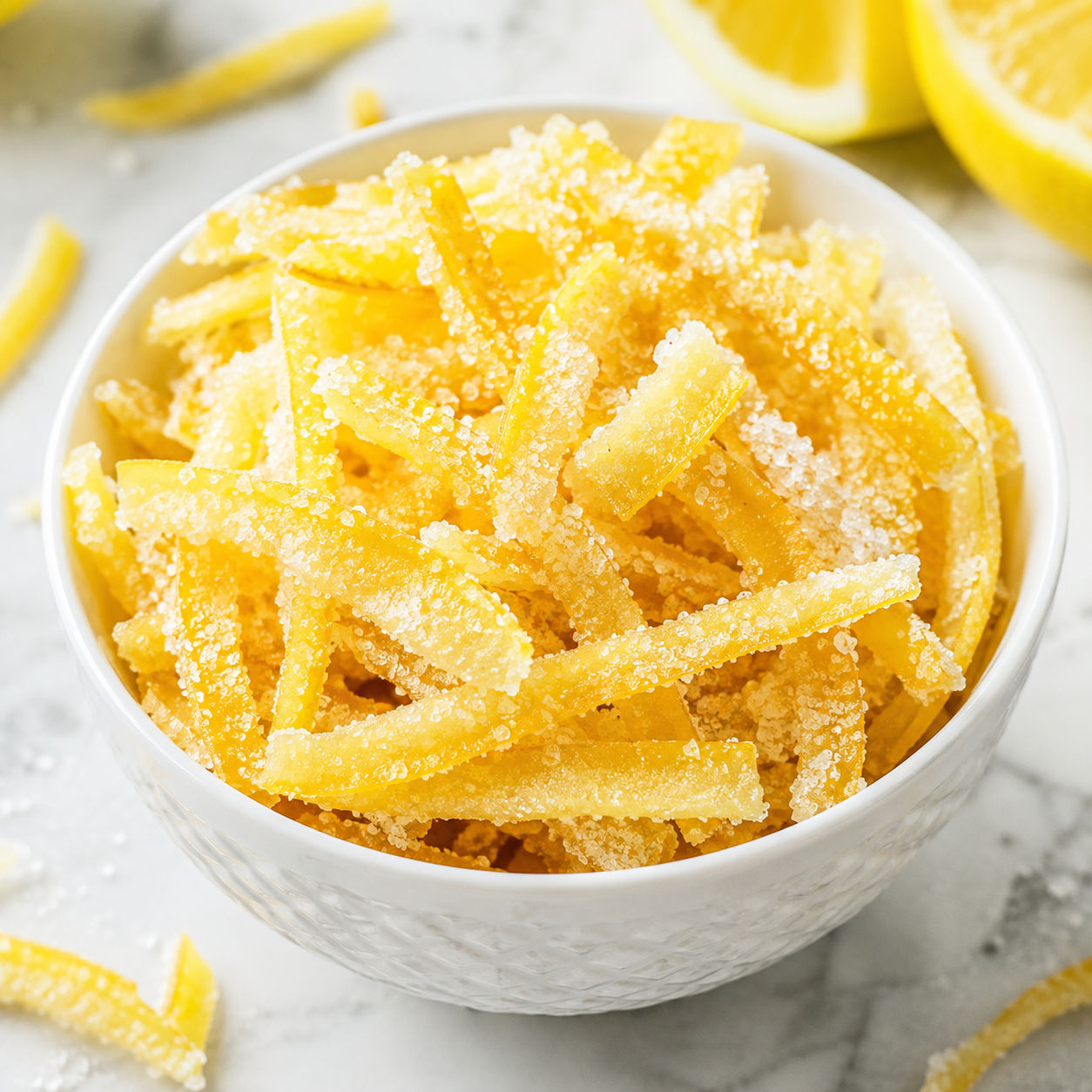
Simple Homemade Candied Lemon Peel is one of those small kitchen projects that makes the whole counter smell clean and sunny. You start with lemon rinds that might have been tossed out, then turn them into glossy, sweet-tart strips for cakes, cookies, ice cream, and holiday tins.
The method is simple, but it rewards patience. Blanching keeps the peel from tasting harsh, and a slow syrup simmer gives it that tender chew instead of a hard candy snap.
Simple Homemade Candied Lemon Peel Basics
Choose lemons with bright, firm skin and scrub them well before you cut. Organic lemons are nice here because the peel is the main ingredient, but clean conventional lemons work too.
The sugar does two jobs. It sweetens the peel and slowly pulls it into that glossy, bendable texture.
- Lemons. Fresh lemon peel gives the candy its clean citrus aroma and a little natural bite.
- Granulated sugar. Sugar builds the syrup, sweetens the rind, and coats the finished strips so they dry neatly.
- Water. Fresh water is used for blanching and for making the syrup.
- Fine sugar for coating. A final toss keeps the strips from sticking and gives them a delicate sparkle.
- Pinch of salt. Optional, but it keeps the sweetness from tasting flat.
Candy the Peels Gently
- Prep the lemons. Slice off the ends, score each lemon into quarters, and pull away the peel in wide pieces. Cut the peel into 1/4-inch strips and trim away any very thick pith.
- Blanch the strips. Cover the peels with water, boil 5 minutes, drain, and repeat 2 more times with fresh water. This softens the rind and calms the bitterness.
- Make the syrup. Combine sugar and fresh water in a saucepan. Heat until the sugar dissolves, then add the blanched peel.
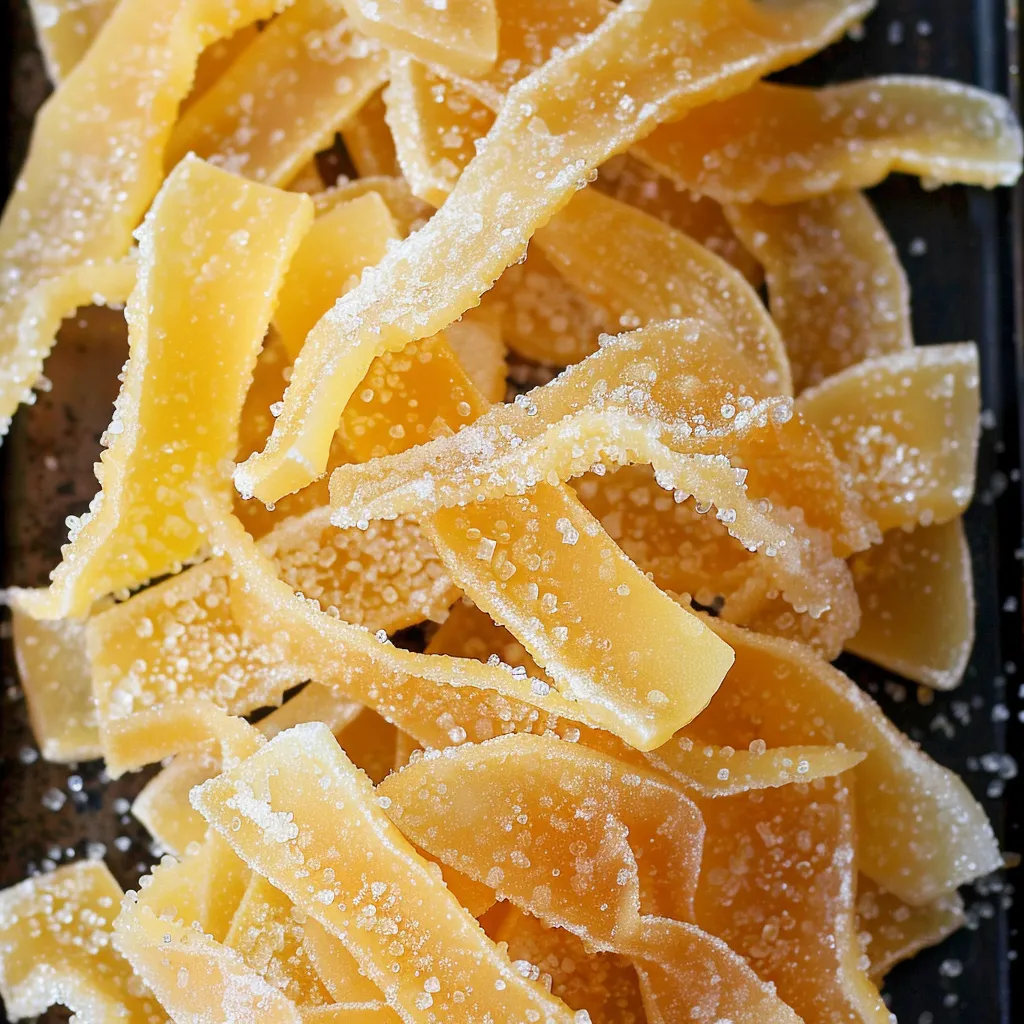
- Simmer until translucent. Keep the syrup at a gentle bubble for 45-55 minutes. The peels should look shiny and slightly see-through, not browned.
- Coat and dry. Lift the strips out with a fork or slotted spoon, let excess syrup drip off, then toss in fine sugar. Dry on a rack until tacky but not wet.
Why Blanching Matters
Lemon peel has a bright oil layer on the outside and a white pith layer underneath. The oil is fragrant. The pith can be bitter if it is thick or undercooked. Blanching the strips in plain water gives you control before sugar enters the pan.
I like 3 short blanching rounds for regular grocery-store lemons. If your lemons are thin-skinned, 2 rounds may be enough. Taste one tiny cooled piece after the second blanch. It should still taste lemony, but it should not make your mouth feel dry. For another citrus candy project, try Easy Candied Orange Slices or the brighter tropical bite of Simple 3-Ingredient Candied Pineapple.
Getting the Syrup Right
The syrup should simmer, not rage. A hard boil can make the strips curl tightly and turn the syrup too thick before the peel has time to soften. Keep the heat low enough that you see steady small bubbles around the edges of the pan.
Do not stir aggressively. Move the peel now and then with a fork so every strip gets coated. When the pieces look glossy and slightly translucent, they are ready. If the syrup gets very thick before that happens, add 1 or 2 tablespoons of hot water and keep going. Save the leftover syrup. It tastes like lemon candy and is excellent in iced tea, lemonade, or brushed over Classic Lemon Bars with Shortbread Crust.
Drying Without Stickiness
Freshly candied peel comes out of the syrup glossy and slippery. Give it a few seconds to drip before it hits the sugar bowl, or the coating will clump. Toss small batches at a time so every strip gets a clean, even layer.
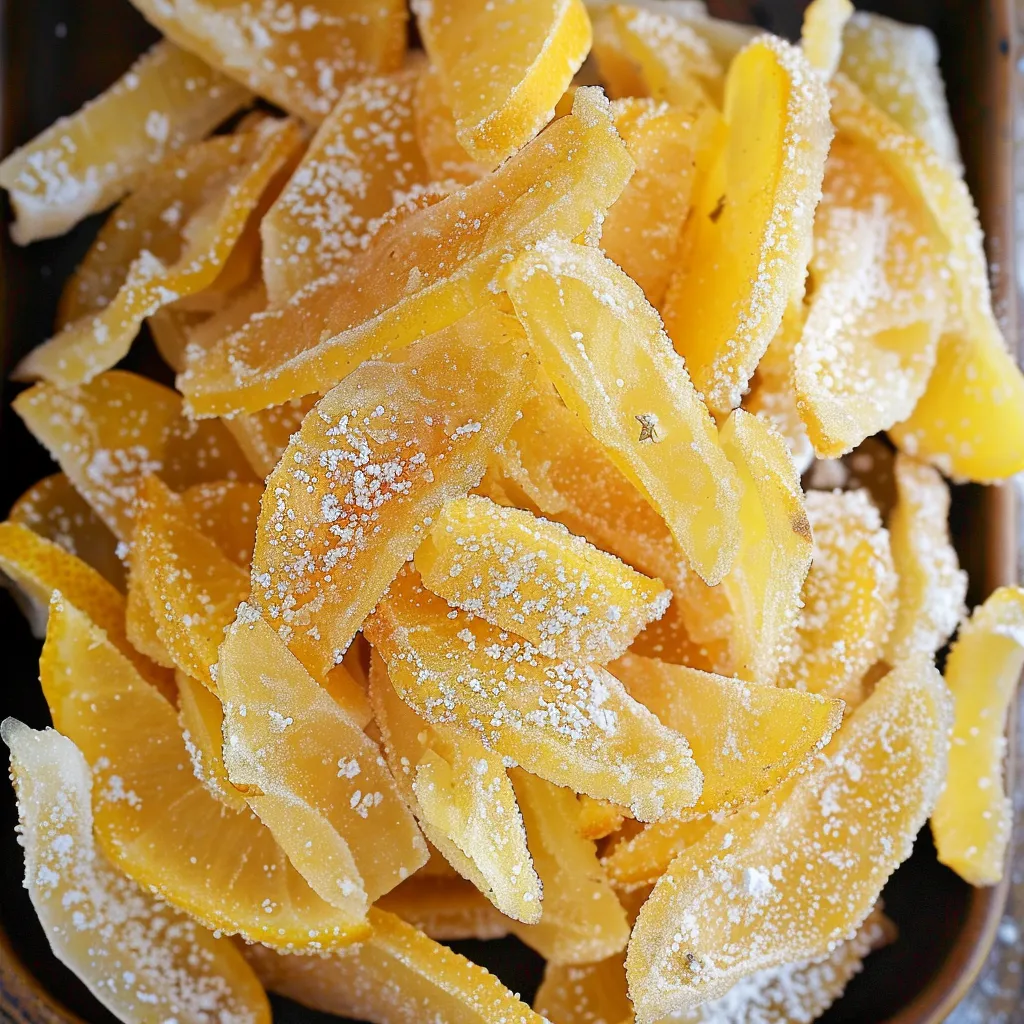
Drying time depends on your kitchen. In a dry room, 4 hours may be enough. In humid weather, leave the rack out overnight. The finished peel should bend without cracking, and the sugar coating should feel dry when you tap it. If you plan to chop it into Lemon Cardamom Poppy Seed Twists or muffins, let it dry a little longer so it cuts cleanly.
Flavor Twists That Work
Plain lemon peel is the most useful version, but a small flavor addition can make it feel special. Add a thin slice of fresh ginger, half a vanilla bean, or a small cinnamon stick to the syrup while it simmers. Remove the flavoring before you coat the peels in sugar.
For chocolate-dipped peel, let the sugared strips dry fully first. Dip halfway into melted dark chocolate and set on parchment until firm. You can also chop the dried peel and fold it into biscotti, shortbread, granola, or cheesecake filling. Keep additions gentle. Lemon peel has a clean edge, and too much spice can cover it up.
Storage and Gift Jars
Once the strips are dry, store them in an airtight jar with a little extra sugar at the bottom. Keep the jar away from heat and direct sun. If the peels soften after a day or two, spread them back on a rack for another hour and return them to the jar.
For gifting, let the peels dry overnight before packing. A small parchment-lined tin works better than a tightly packed bag because it protects the sugar coating. Add a few chocolate-dipped strips if you want contrast. This recipe scales well, but use a wide saucepan for a double batch so the peels are not crowded in the syrup.
Summary
Keep a jar on hand for baking, gifting, or chopping into scones and muffins. The peels taste best once fully dry and slightly firm.
FAQs
- How do you make candied lemon peel less bitter?
Blanch the sliced peel in fresh water 2 or 3 times before simmering it in syrup. This pulls out some of the bitter compounds while keeping enough pith for a soft, chewy texture.
- Can I use bottled lemon peel or lemon zest?
No. This recipe needs fresh lemon rind cut into strips. Zest is too thin and will disappear into the syrup, while dried peel will not soften the same way.
- How long does homemade candied lemon peel last?
Once fully dry, store it in an airtight container at room temperature for about 2 weeks. For longer storage, refrigerate it for up to 2 months or freeze it with parchment between layers.
- Why is my candied lemon peel sticky?
It probably needs more drying time. Spread the sugared strips on a rack with space between them and let them sit until the surface feels dry, usually 4-8 hours depending on humidity.
- Can I make this with oranges or limes?
Yes. Oranges work very well with the same method, and limes work if you blanch them carefully because their peel can be sharper. Grapefruit peel also works, but it usually needs an extra blanch.
- What can I do with the leftover lemon syrup?
Strain it and keep it in the refrigerator for up to 2 weeks. Stir it into tea, sparkling water, cocktails, fruit salad, or a quick glaze for lemon cake.
