 Pin it
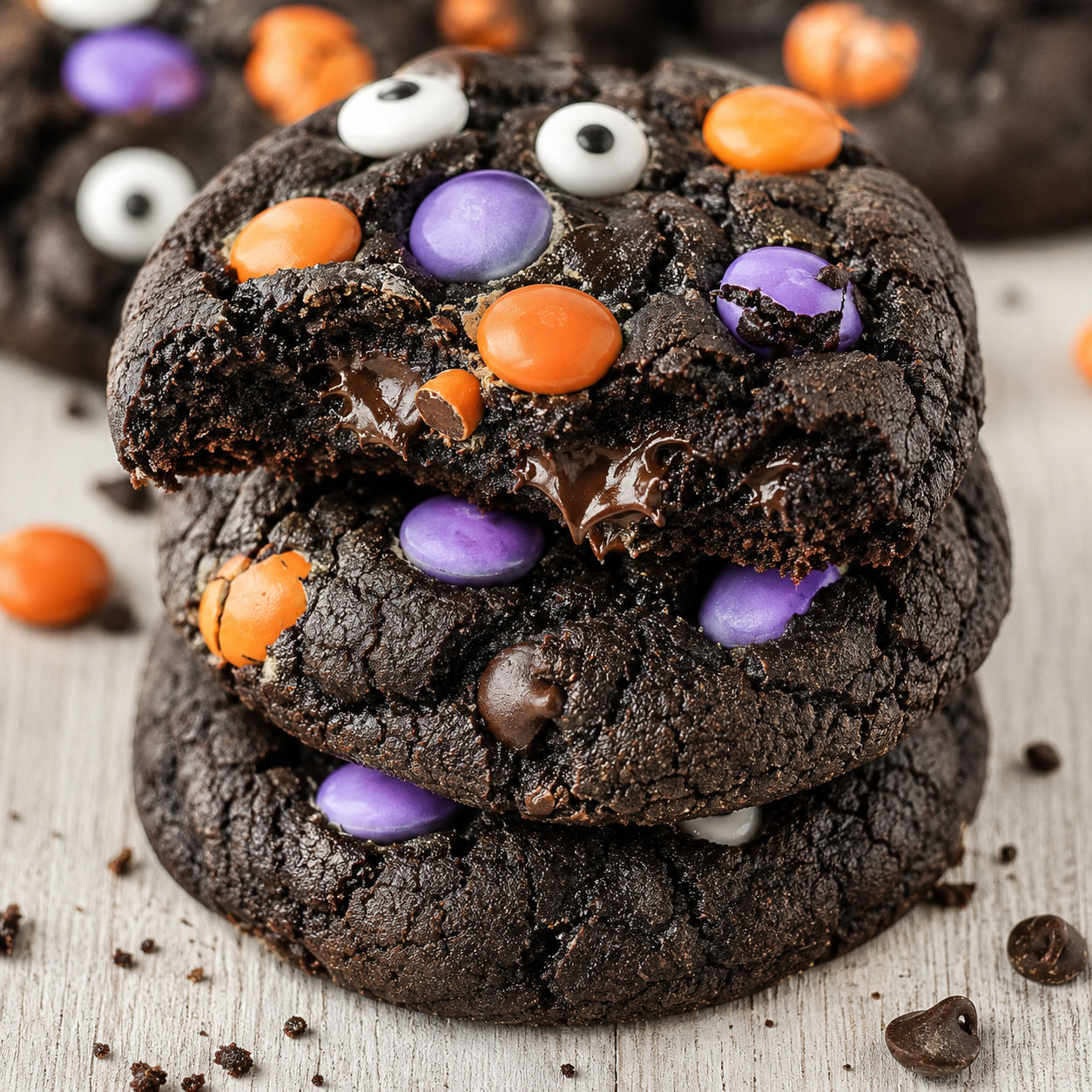
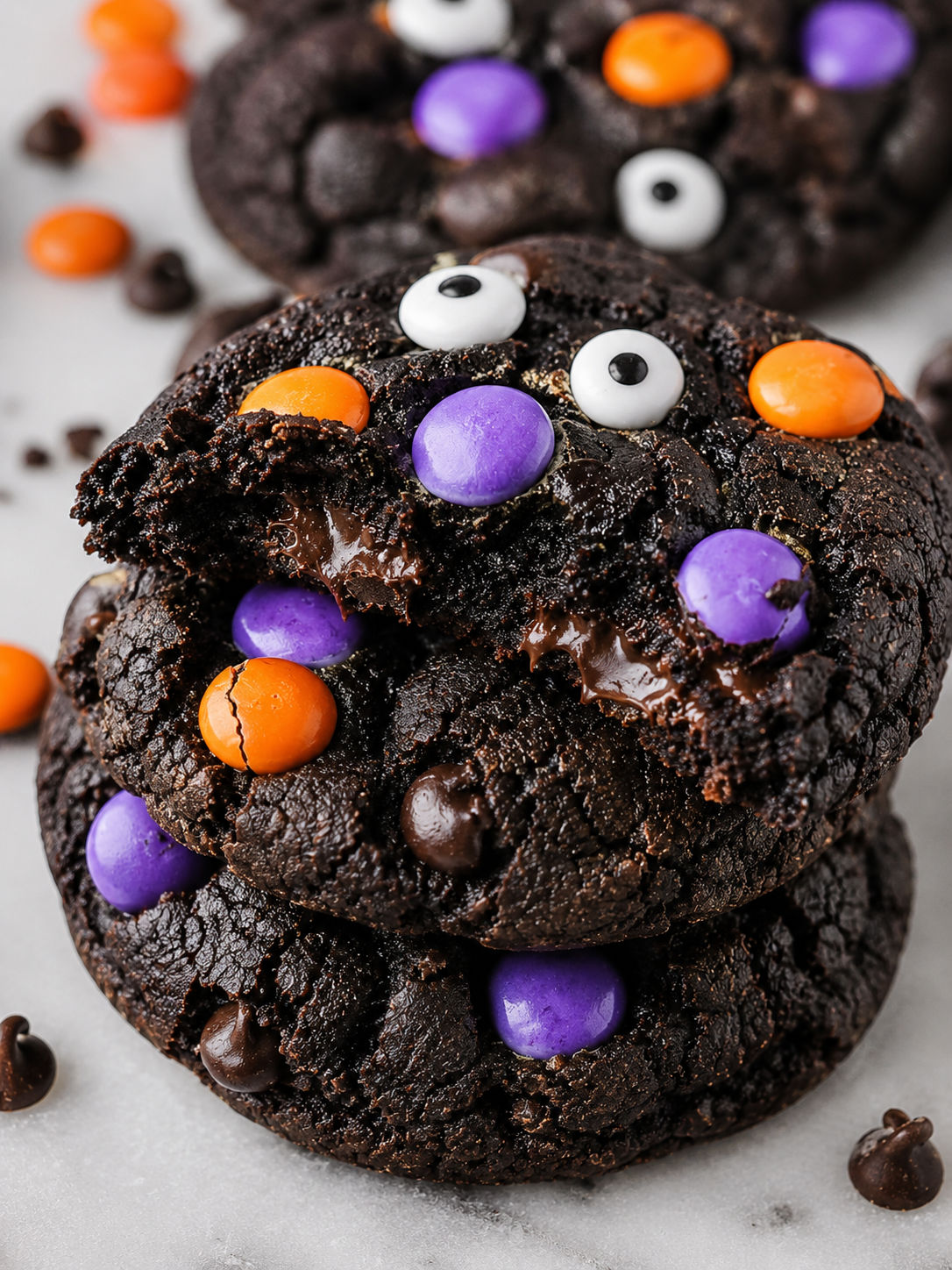
I make these every October when the candy bowls come out and the kitchen needs to smell like chocolate. They look dramatic on a platter, almost black against the orange and purple candies, but the real reason people come back for seconds is the texture.
The dough comes together in one bowl. Black cocoa does all the color work, so you never need a drop of food dye. The result is a cookie with a brownie-like center, crinkly surface, and that distinctive Oreo-adjacent depth that only black cocoa delivers.
What goes into the dough
Most of these ingredients are pantry staples. The one specialty item is black cocoa powder, which you can find online or at well-stocked baking shops. It is worth seeking out for both the color and the smooth, mellow chocolate flavor.
- All-purpose flour. The structure of the cookie. Spoon and level it so the dough does not turn dry.
- Black cocoa powder. This heavily Dutched cocoa gives the cookies their midnight-black color and subtle Oreo-like taste without any food coloring.
- Unsalted butter. Melted butter creates that dense, fudgy center we want here rather than a cakey puff.
- Light brown sugar. Adds moisture and chew. The molasses deepens the chocolate flavor too.
- Granulated sugar. Helps the edges crack and crisp just enough.
- Egg. Binds the dough and adds richness.
- Vanilla extract. A background note that rounds out the chocolate.
- Baking soda. Just enough lift to keep them from turning into brownies.
- Salt. Essential. It keeps the cocoa from tasting flat.
- Semisweet chocolate chips. Melty pockets inside an already chocolate dough.
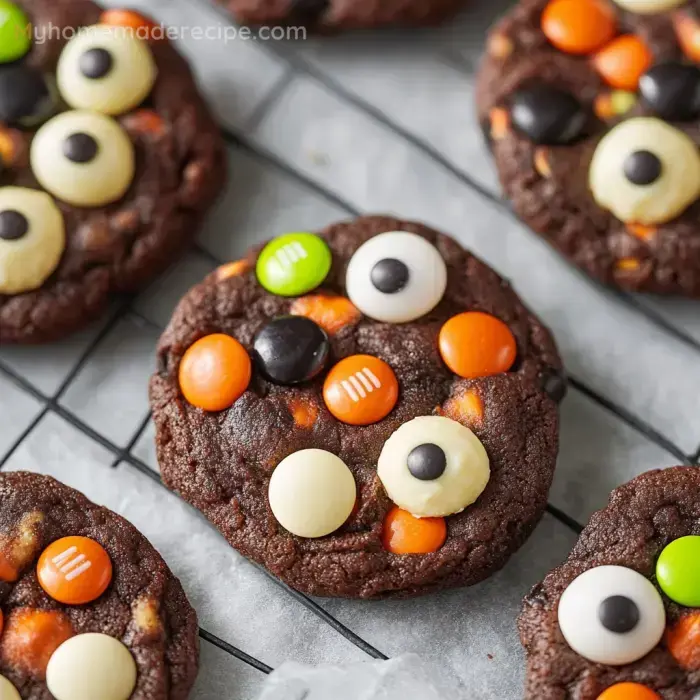
- Halloween candies. Orange and purple M&Ms, candy eyes, or sprinkles for festive crunch.
How the dough comes together
- Melt the butter. Let it cool slightly so it does not scramble the egg when you mix them together.
- Whisk the dry ingredients. In a separate bowl, combine the flour, black cocoa, baking soda, and salt so the cocoa disperses evenly.
- Mix the wet base. Stir the melted butter with both sugars until glossy, then beat in the egg and vanilla until smooth.
- Combine and fold. Add the dry mix to the wet and stir until just a few streaks of flour remain, then fold in the chocolate chips and Halloween candies.
- Scoop and bake. Drop rounded tablespoons onto a parchment-lined sheet and bake at 350°F until the tops crack and the edges look set but the centers are still soft, about 10 to 12 minutes.
- Cool on the pan. Let them rest for 5 minutes before moving to a rack. They finish baking on the hot sheet and firm up as they cool.
Why black cocoa matters
Black cocoa is not just regular cocoa with extra color. It is heavily alkalized, which strips away sharp acidity and leaves a smooth, mellow chocolate flavor that reminds people of Oreo wafers. That same alkalizing process is what turns the powder so dark. If you swap in natural cocoa, the cookies will still taste good but they will look reddish-brown rather than midnight black. King Arthur Baking has a helpful guide on cocoa powder types if you want to learn more.
The candy mix-in trick
The best Halloween cookies have texture contrast. I use a mix of semisweet chips for gooey melt and crunchy-coated candies for color. Add the candies at the very end of mixing so they do not bleed dye into the dough. If you love stuffed cookies, our brownie stuffed chocolate cookies use a similar fudgy base with a hidden center.
Storage and make-ahead
Baked cookies keep in an airtight container at room temperature for up to 4 days. Stack them with parchment between layers so the candy decorations do not smudge. You can also freeze the scooped dough balls on a sheet, then transfer them to a bag and bake straight from frozen. Add 2 to 3 minutes to the bake time. For another festive option, try our Hocus Pocus Halloween cookies or a batch of chocolate sugar cookies for rolling and cutting.
Texture tweaks and swaps
For extra-thick cookies, chill the scooped dough for 20 minutes before baking. This slows spread and gives you a taller, bakery-style dome. Want a salty finish? Sprinkle flaky sea salt on top right after they come out of the oven. You can also swap the Halloween candies for peanut butter chips, white chocolate chunks, or crushed pretzels once the holiday is over.
FAQs
- Can I use regular cocoa powder instead of black cocoa?
Yes, but the color will change. Natural cocoa yields a reddish-brown cookie rather than a midnight black one. The flavor will also be slightly more acidic. For the true Halloween look, black cocoa is worth buying.
- Why are my cookies flat and greasy?
Usually the butter was too hot or the flour was under-measured. Let melted butter cool for 5 minutes before mixing, and always spoon and level your flour rather than scooping straight from the bag.
- Can I freeze the cookie dough?
Absolutely. Scoop the dough onto a baking sheet and freeze until solid, then transfer to a freezer bag for up to 2 months. Bake from frozen and add 2 to 3 minutes.
- Do I need to chill the dough before baking?
Not required, but a 20-minute chill helps if your kitchen is warm or you want thicker cookies. It firms up the butter and slows spread in the oven.
- What candies work best?
Any candy-coated chocolate with a hard shell works well because it resists melting. Candy eyes are fun for kids. Avoid soft caramels or gummy candies, which can melt and stick to the pan.
- Can I make these gluten-free?
Yes. Use a 1-to-1 gluten-free baking blend that contains xanthan gum. The texture will be slightly more tender but still fudgy and chewy.
- How long do baked cookies last?
Store them airtight at room temperature for up to 4 days, or freeze for up to 3 months. Thaw frozen cookies at room temperature for about 30 minutes.
