 Pin it
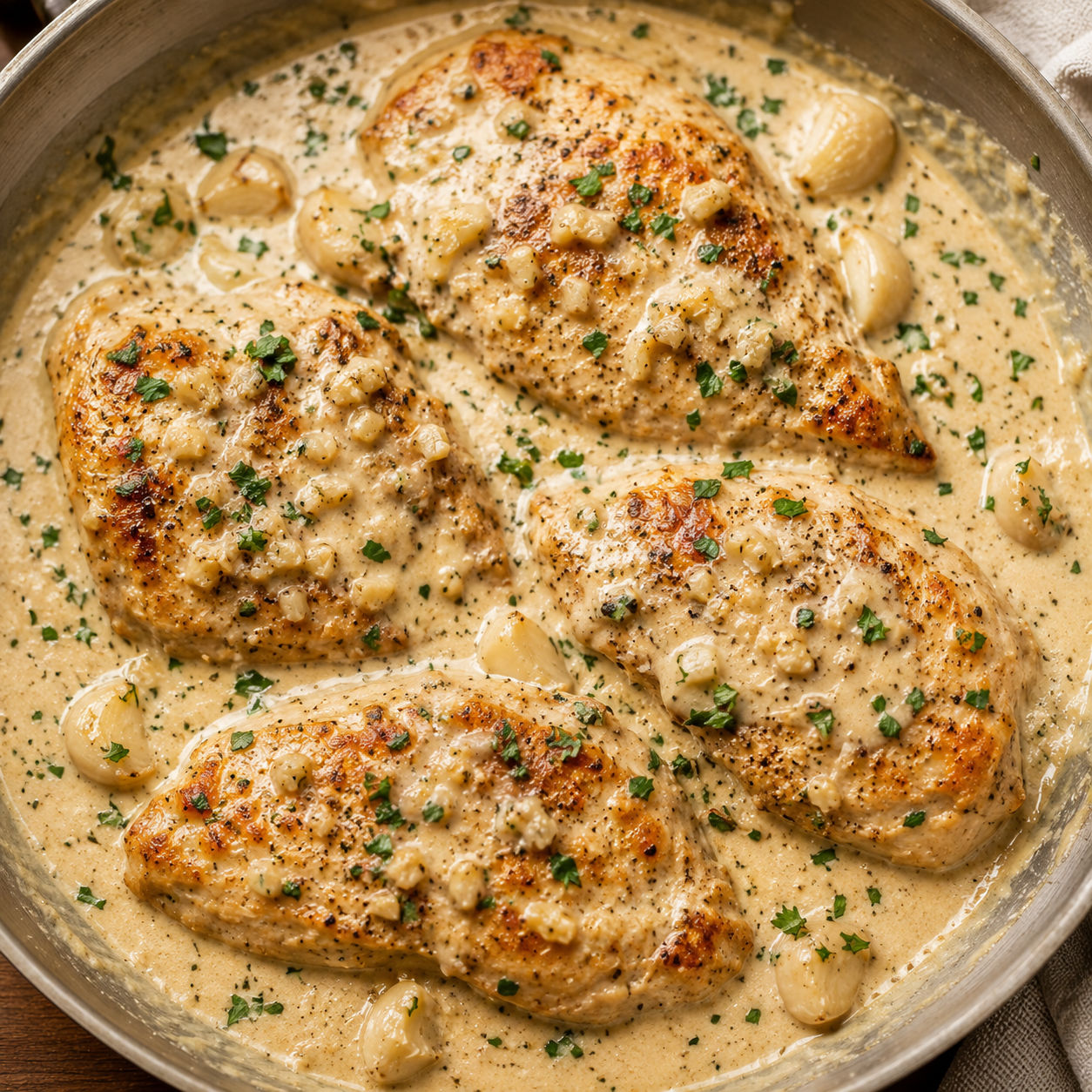
Creamy Garlic Chicken is the kind of skillet dinner that feels richer than the work it asks from you. The chicken gets a light golden crust first, then the sauce comes together in the same pan with garlic, broth, cream, and Parmesan.
I like this version because the garlic is present but not harsh. Some cloves soften in the pan while minced garlic seasons the sauce, so every bite tastes warm and savory instead of sharp.
Creamy Garlic Chicken Basics
Start with thin chicken cutlets so they cook quickly and evenly. Use fresh garlic, real Parmesan, and a broth you like, since those three ingredients carry most of the sauce.
- Chicken breasts. Sliced into thin cutlets so they brown fast and stay tender.
- Flour. Gives the chicken a delicate crust and helps the sauce cling.
- Parmesan. Adds salt, body, and a nutty edge to the cream sauce.
- Garlic. Minced garlic seasons the sauce while whole cloves soften into sweet pockets.
- Chicken broth. Lifts the browned bits from the pan and keeps the sauce from tasting flat.
- Heavy cream. Makes the sauce smooth and spoonable.
- Butter and olive oil. Butter adds flavor while oil helps the chicken brown without scorching.
- Parsley and lemon. A fresh finish that cuts through the richness.
Skillet To Creamy Sauce
- Prepare the chicken. Slice the breasts into cutlets, pat them dry, and season both sides well. Dry chicken browns better.
- Dredge lightly. Coat the cutlets in flour mixed with Parmesan, garlic powder, salt, and pepper. Shake off the extra so the coating stays thin.
- Sear until golden. Cook the chicken in hot butter and oil until browned and cooked through, about 4-5 minutes per side. Move it to a plate.
- Soften the garlic. Lower the heat and cook the onion with whole and minced garlic until fragrant. Do not let the garlic darken.
- Build the sauce. Add broth and scrape up the browned bits. Simmer briefly, then stir in cream and Parmesan until smooth.
- Return and finish. Nestle the chicken into the sauce and simmer for 2-3 minutes. Add parsley and a small squeeze of lemon before serving.
Why Thin Cutlets Matter
Chicken breast gets dry when the outside waits too long for the center to cook. Cutting each breast horizontally fixes that. You get more surface area for browning and the meat cooks through before the crust turns tough. If the pieces are uneven, give the thicker spots a few taps with a meat mallet or rolling pin.
This same thin-cutlet approach is useful in saucy dinners like Creamy Garlic Chicken Penne. The sauce can only do so much. Tender chicken starts before the cream ever hits the pan.
Taming The Garlic
Garlic can go from fragrant to bitter fast. Keep the heat at medium or lower after the chicken comes out, and stir often once the garlic goes in. Whole cloves become mellow and almost sweet as they simmer. Minced garlic gives the sauce its aroma right away.
If you prefer a softer garlic flavor, use 5 or 6 cloves instead of a full head. If you love a stronger sauce, keep the full amount but avoid browning it hard. That is the difference between round garlic flavor and a sharp burnt edge.
Getting A Smooth Sauce
The sauce works best when broth reduces first, then cream joins at a gentle simmer. Scrape the pan well after adding broth. Those browned bits season the sauce and keep it from tasting like plain cream. Once the cream is in, lower heat is your friend.
Parmesan should be finely grated from a block. Pre-grated cheese can melt unevenly because it often has anti-caking starches. For safe doneness, cook chicken to 165°F as listed by FoodSafety.gov.
Good Swaps
Half-and-half can replace heavy cream, but keep it from boiling. Boneless thighs are a forgiving swap for breasts. For extra vegetables, stir in baby spinach at the end or spoon the sauce over roasted broccoli. If you want a brighter version, try the same skillet idea with creamy lemon garlic chicken.
You can also turn the meal toward comfort food by serving it with potatoes. The sauce is especially good with the creamy garlic flavor in Creamy Garlic Chicken Potatoes.
Storing And Reheating
Store leftovers in an airtight container in the fridge for up to 3 days. Reheat gently in a skillet over low heat with a small splash of broth, milk, or cream. Stir the sauce around the chicken as it warms.
The microwave works in short bursts, but it can tighten chicken breast quickly. If you use it, cover the dish and stop as soon as the chicken is hot. Do not freeze this one if you can avoid it. Cream sauces often thaw grainy.
Summary
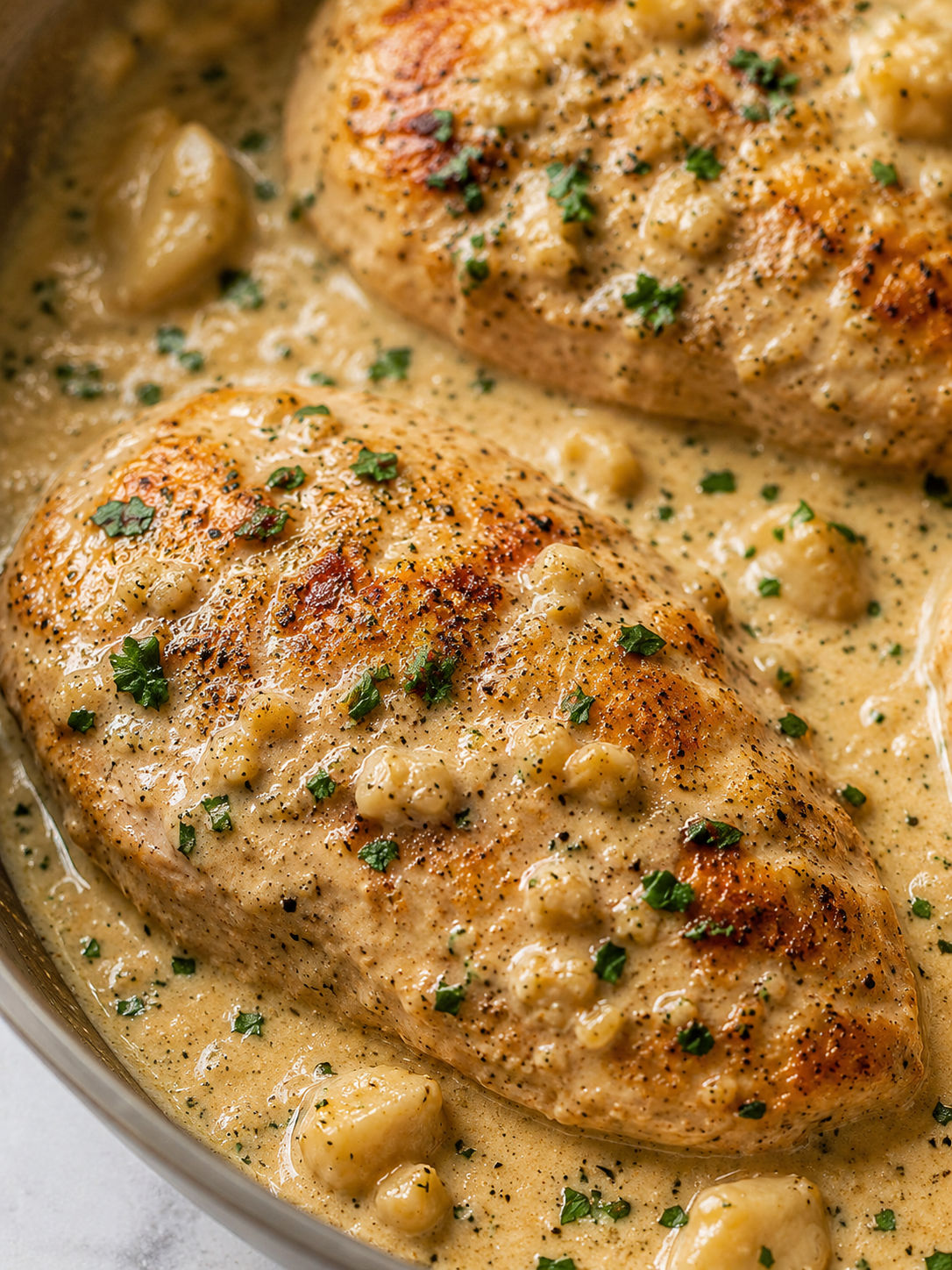
Serve this creamy garlic chicken right from the skillet while the sauce is glossy and warm. A spoonful of sauce over rice or mashed potatoes is the whole point.

FAQs
- Can I use chicken thighs instead of chicken breasts?
Yes. Boneless, skinless thighs work well and stay juicy. They may need a few extra minutes in the pan, so cook until the thickest part reaches 165°F.
- How do I keep the cream sauce from splitting?
Keep the sauce at a gentle simmer once the cream goes in. A hard boil can make dairy separate. Stir in the Parmesan off the strongest heat and let it melt slowly.
- Can I make Creamy Garlic Chicken ahead?
You can cook it a day ahead, but the sauce is best fresh. Reheat it gently in a skillet with a splash of broth or milk to loosen the sauce.
- What can I use instead of heavy cream?
Half-and-half works if you keep the heat low. Evaporated milk is another good option. The sauce will be lighter and a little less thick, but still creamy.
- What should I serve with creamy garlic chicken?
Mashed potatoes, buttered noodles, rice, roasted asparagus, or steamed broccoli all work. Pick something that can catch the sauce.
- Can I make this gluten-free?
Yes. Replace the all-purpose flour with a gluten-free cup-for-cup flour blend or a light dusting of cornstarch. Check that your broth and Parmesan are gluten-free too.
