 Pin it
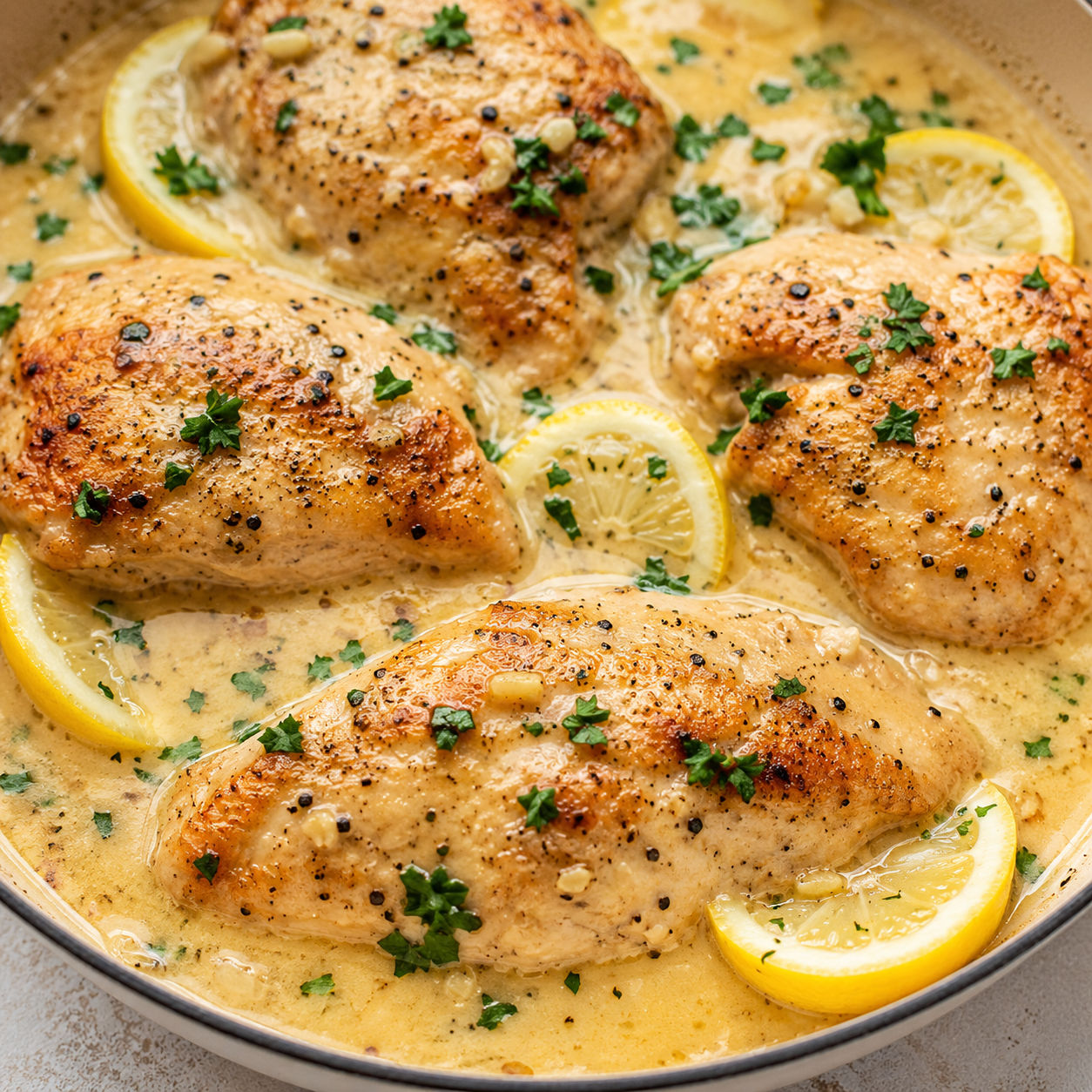
Easy and Delicious Creamy Lemon Garlic Chicken is the kind of dinner that makes a plain pack of chicken breasts feel worth sitting down for. The sauce is rich but not heavy, with enough lemon to wake up the cream and enough garlic to make the whole kitchen smell right.
The trick is simple. Pound the chicken thin, brown it well, and let the sauce finish gently. Add the lemon near the end so it tastes fresh instead of sharp.
Bright Creamy Skillet Staples
Choose thin chicken breasts or cutlets so they cook quickly and stay tender. Fresh lemon matters here because bottled juice tastes flat once it hits cream.
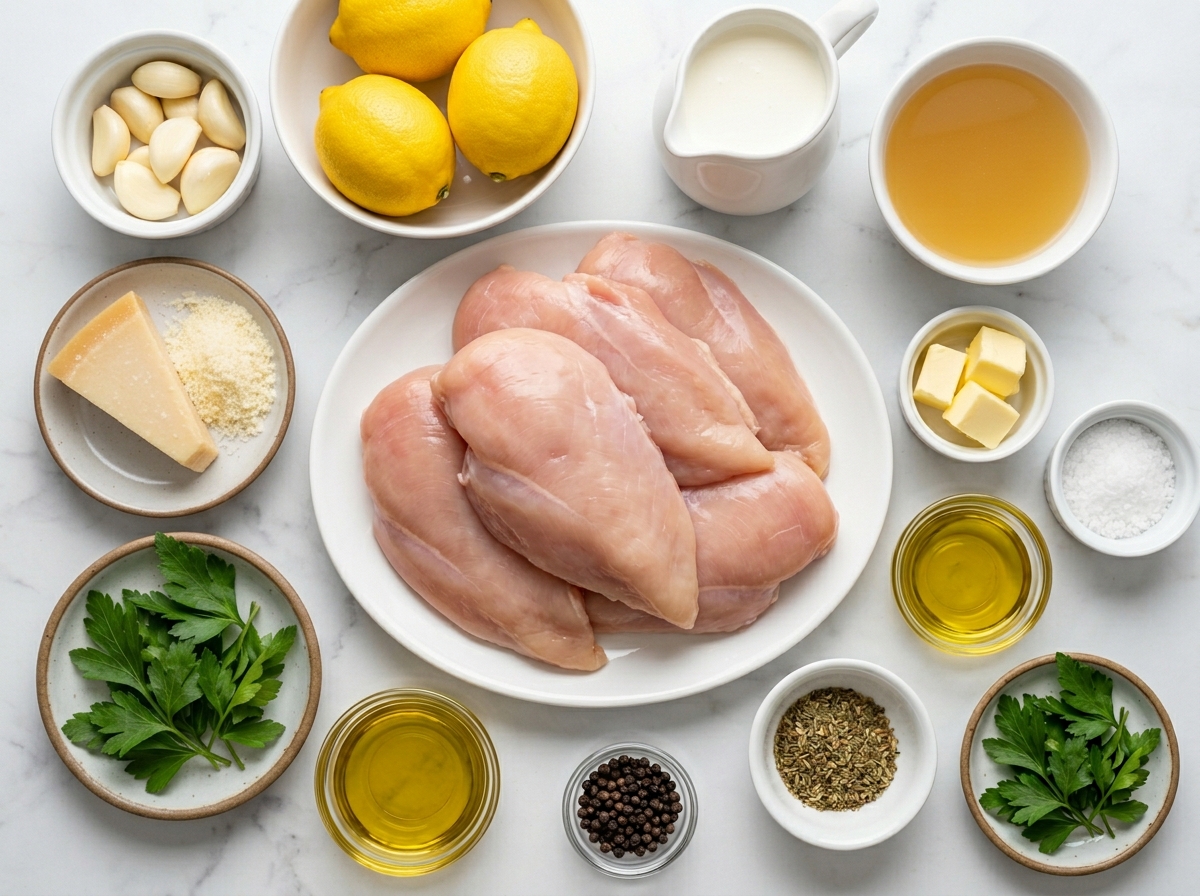
- Chicken breasts. Pounded thin, they brown fast and finish gently in the sauce.
- Olive oil and butter. Oil helps sear the chicken while butter gives the sauce a round, savory base.
- Garlic. Fresh minced garlic perfumes the sauce without needing much else.
- Chicken broth. It loosens the cream and pulls browned bits from the skillet.
- Heavy cream. It makes the sauce silky and holds up better with lemon than milk.
- Parmesan. A small handful thickens the sauce and adds salty depth.
- Lemon zest and juice. Zest brings fragrance, while juice sharpens the finish.
- Parsley. A fresh green finish keeps the dish from feeling too rich.
Sear, Simmer, Finish Bright
- Pound the chicken. Pat the chicken dry, then pound it to an even 1/2-inch thickness so the thin edges do not dry out before the center cooks.
- Season and sear. Season both sides with salt, pepper, and Italian seasoning. Sear in hot oil and butter until golden, about 4-5 minutes per side, then move it to a plate.
- Start the sauce. Lower the heat and cook the garlic in the pan for about 30 seconds. Stir often so it smells sweet and does not brown.
- Simmer the cream. Add broth, scrape up the browned bits, then stir in cream and parmesan. Let it bubble gently until it lightly coats a spoon.
- Return the chicken. Nestle the chicken back into the sauce and simmer until the thickest part reaches 165 F.
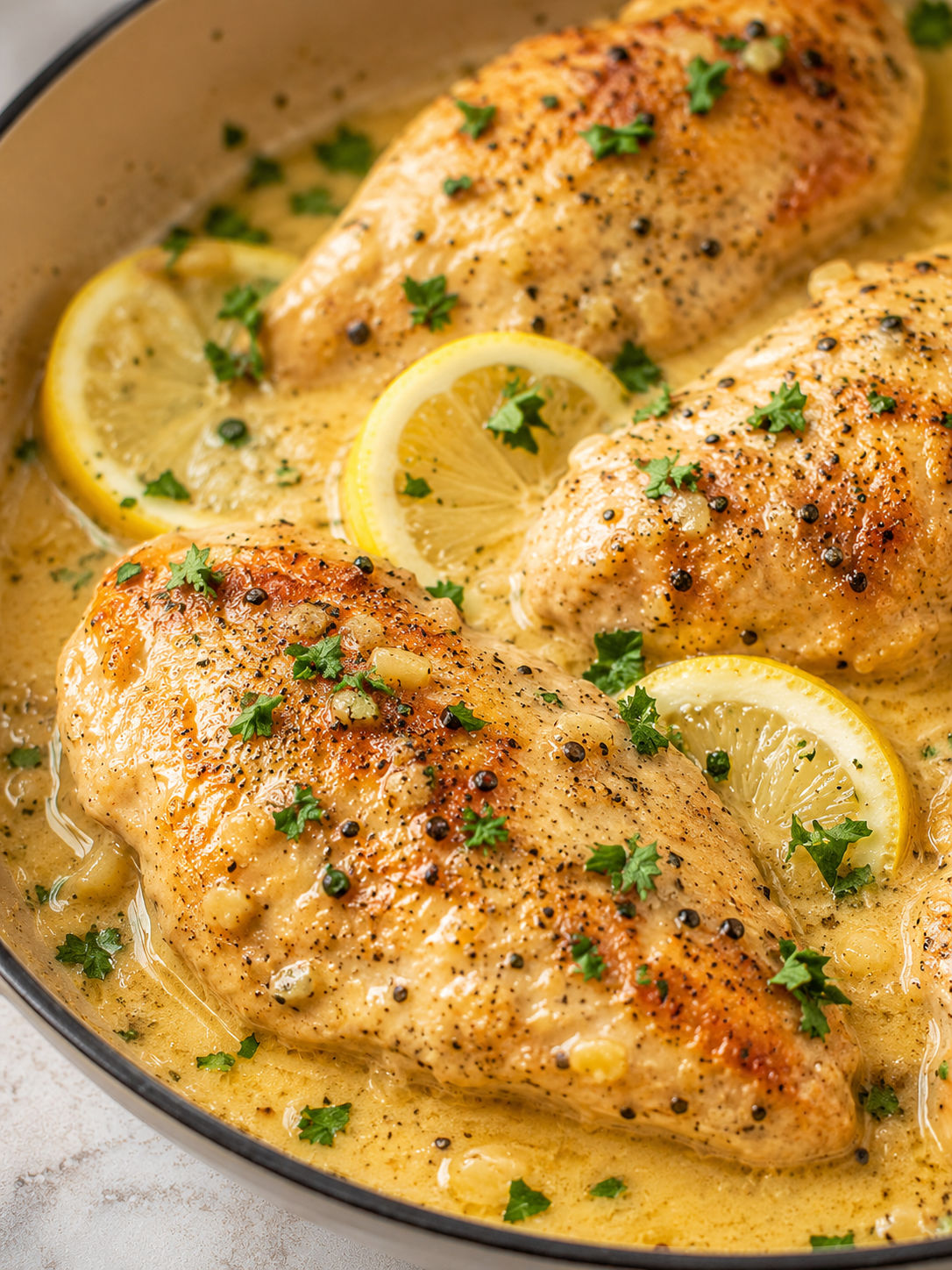
- Add lemon last. Turn the heat low, stir in lemon zest and juice, then spoon sauce over the chicken and finish with parsley.
Easy and Delicious Creamy Lemon Garlic Chicken
The best version of this dish tastes balanced. You want cream first, then garlic, then a clean lemon finish that does not take over. That balance comes from using zest and juice differently. Zest can go in while the sauce simmers because it gives fragrance without much acidity. Lemon juice should wait until the heat is low.
If your sauce tastes dull, it usually needs salt before it needs more lemon. Parmesan brings salt too, so stir it in first and taste again. For a slower hands-off version, try this Lemon Garlic Chicken. For a deeper garlic flavor without lemon, this Creamy Garlic Chicken is the one to bookmark.
Keep The Chicken Juicy
Thick chicken breasts are the usual reason creamy skillet chicken turns dry. Slice very large breasts in half horizontally or pound them evenly. That gives you more golden surface and a shorter cooking time.
Use medium-high heat for the sear, then lower the heat once the cream goes in. The sauce should gently bubble, not rage. An instant-read thermometer is the cleanest way to know when to stop. The FoodSafety.gov temperature chart lists poultry at 165 F.
Sauce Fixes That Work
If the sauce is too thin, let it simmer uncovered for another minute or two before returning the chicken. If it gets too thick, loosen it with a splash of broth. Keep the skillet moving and scrape the bottom so the browned bits melt into the cream.
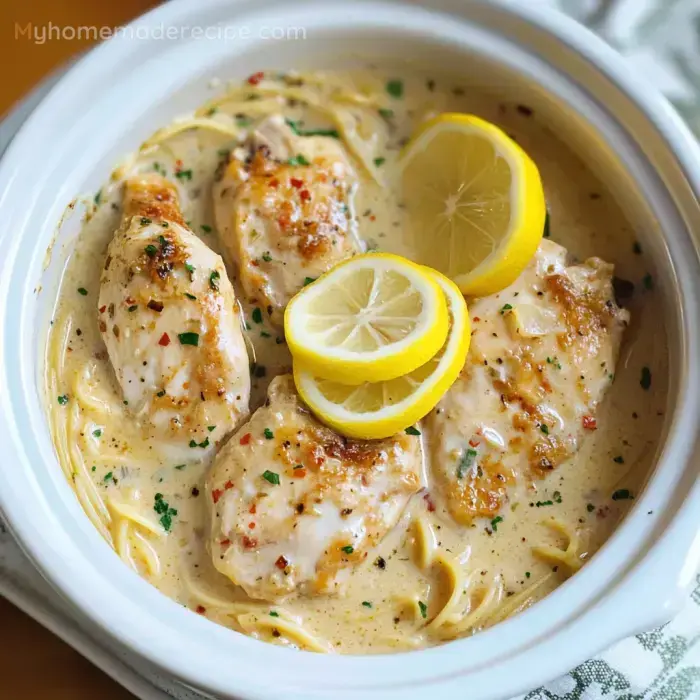
A little parmesan helps the sauce cling, but too much can make it salty and heavy. Add it by the handful and taste. If you like chicken and cream sauce with a bigger pasta-night feel, the same skillet flavors show up nicely in Creamy Garlic Herb Chicken Pasta.
Smart Swaps For Dinner
Half-and-half works in place of cream, but the sauce will be thinner and more likely to split if the heat is high. Boneless thighs are a good swap for breasts. They need a little more time and bring a richer flavor.
For herbs, parsley keeps it clean, while thyme makes it cozier. Add spinach during the last minute if you want greens in the pan. If lemon is what you are craving, Chicken Piccata Lemon Capers has a sharper, brighter sauce.
Serving And Leftovers
This chicken wants something that can catch the sauce. Mashed potatoes, rice, egg noodles, or crusty bread all make sense. For a lighter dinner, spoon the chicken next to roasted asparagus or a lemony salad.
Leftovers keep in an airtight container for up to 3 days. Warm them slowly in a skillet with a splash of broth or cream. The microwave works in short bursts, but high heat can tighten the chicken and dull the sauce.
FAQs
- Can I use chicken thighs instead of breasts?
Yes. Boneless skinless thighs work well and stay juicy. They may need 2-4 extra minutes in the sauce, depending on thickness.
- Will lemon juice make the cream sauce curdle?
It can if the sauce is boiling hard. Keep the heat low and stir the lemon juice in near the end. Heavy cream is more stable than milk here.
- How do I know the chicken is done?
The center should reach 165 F on an instant-read thermometer. If you do not have one, cut into the thickest piece and check that the juices run clear with no pink center.
- Can I make creamy lemon garlic chicken ahead?
You can cook it up to 2 days ahead. Reheat it gently in a covered skillet with a splash of broth or cream to loosen the sauce.
- What can I serve with it?
Mashed potatoes, rice, or buttered noodles are all good with the sauce. For a lighter plate, serve it with steamed green beans, roasted asparagus, or a crisp salad.
- Can I make it gluten-free?
This version is naturally gluten-free if your broth and parmesan are certified gluten-free. Skip any store-bought seasoning blends unless the label clearly says they are gluten-free.
