 Pin it
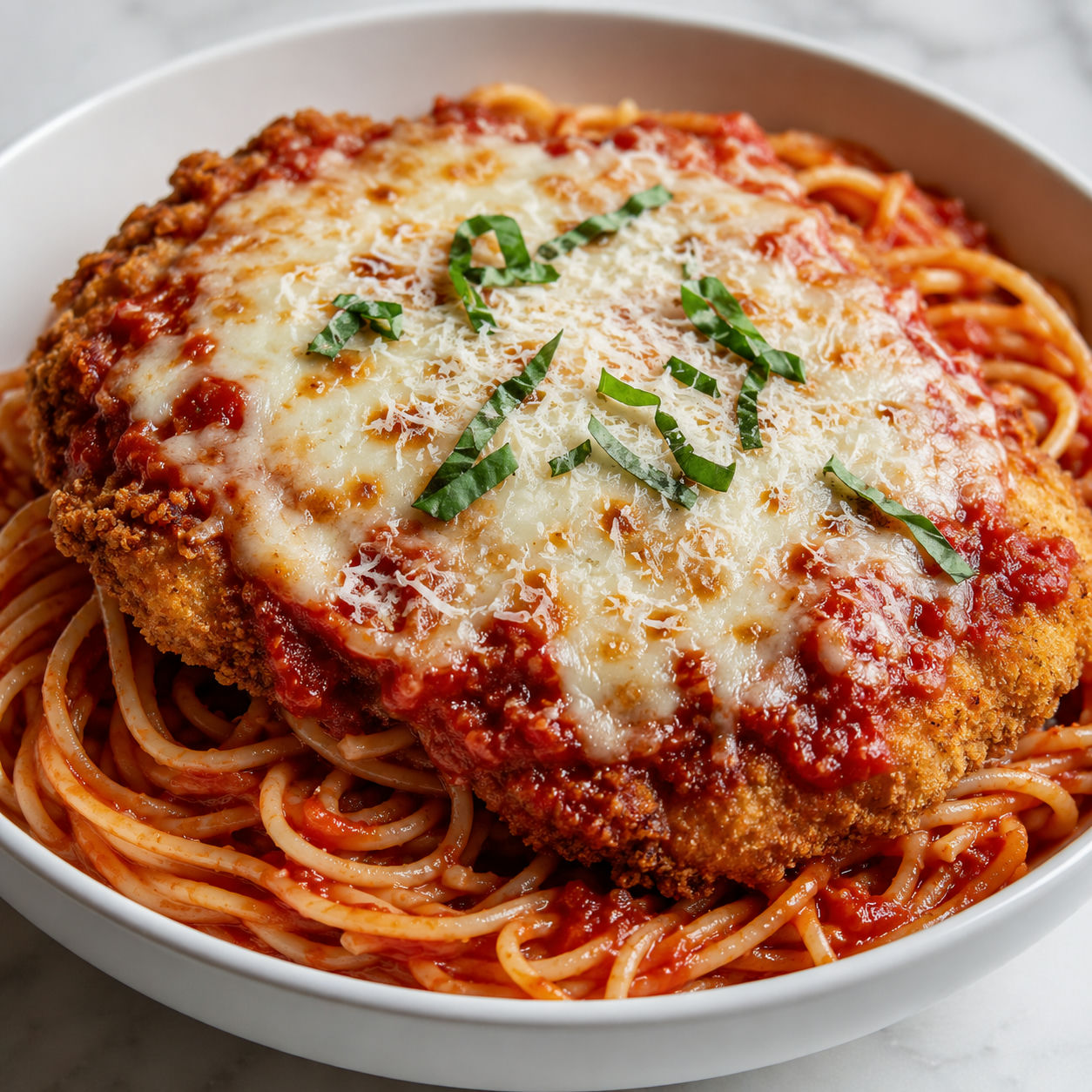
Classic Chicken Parmesan over Spaghetti is the kind of dinner that makes the kitchen smell like garlic, toasted breadcrumbs, and bubbling marinara. The best version has thin chicken cutlets with a real crunch, enough sauce to feel generous, and cheese that melts into soft golden spots.
I like serving the cutlets over spaghetti instead of beside it because the pasta catches the extra sauce without burying the chicken. Keep the sauce light on top of the cutlets and pass more at the table. That one choice keeps the breading from going limp.
The cutlet lineup
Good chicken parmesan starts with thin cutlets, dry breadcrumbs, and cheese that melts without turning watery. Use a thick marinara you like, since it seasons both the chicken and the spaghetti.
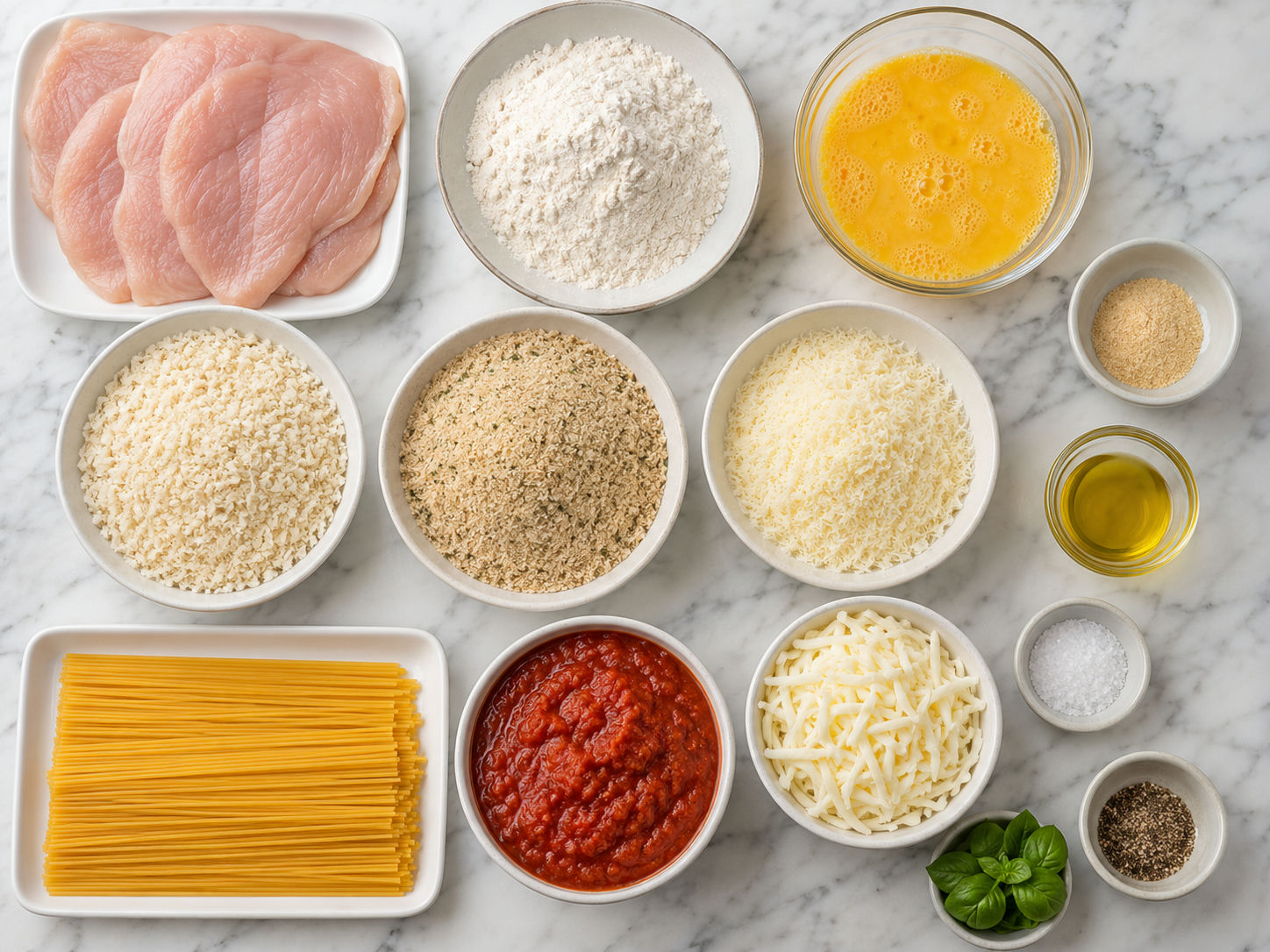
- Chicken breasts. Sliced and pounded thin so the meat cooks before the coating burns.
- Flour. Gives the egg something to grip and helps the breading stay attached.
- Eggs. Create the sticky middle layer for a sturdy crust.
- Panko and Italian breadcrumbs. Panko adds crunch while seasoned crumbs bring garlic and herb flavor.
- Parmesan. Mixed into the crumbs for salty depth and sprinkled at the end.
- Marinara sauce. A thick tomato sauce keeps the dish saucy without soaking the crust.
- Mozzarella. Melts over the hot cutlets and browns lightly in the oven.
- Spaghetti. The classic base that catches extra marinara and makes the meal feel complete.
- Basil or parsley. Adds a fresh finish to the rich cheese and fried coating.
The skillet-to-oven method
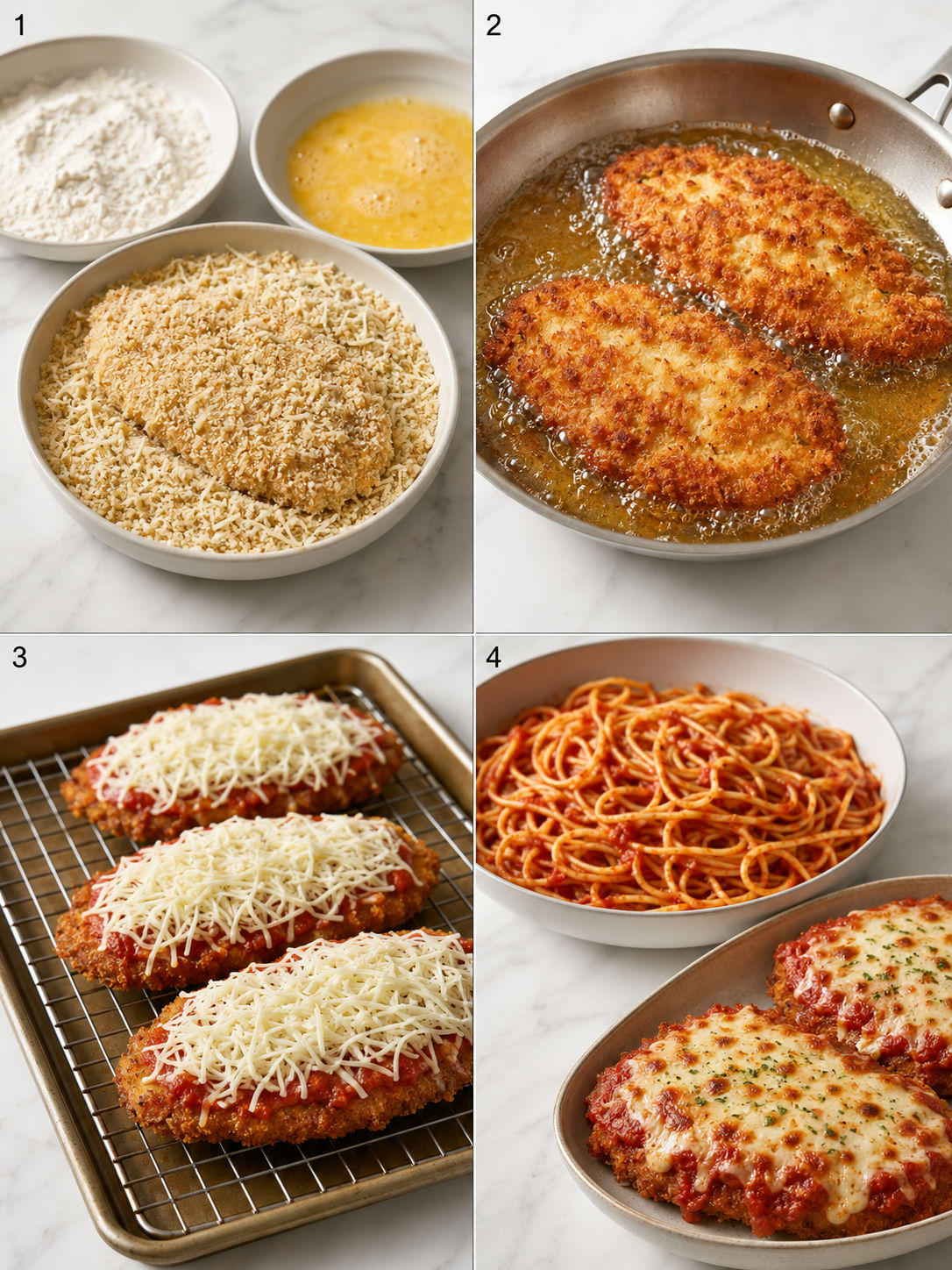
- Prep the chicken. Slice the breasts into four cutlets, pound them evenly, and season both sides with salt and pepper.
- Set up the breading. Put flour in one dish, beaten eggs in another, and the breadcrumb mixture with parmesan and garlic powder in a third.
- Bread each cutlet. Coat the chicken in flour, dip it in egg, then press it firmly into the crumbs so every edge is covered.
- Fry until golden. Cook the cutlets in a shallow layer of hot oil for 3-4 minutes per side, then move them to a rack.
- Sauce and bake. Spoon marinara over the center, add mozzarella and parmesan, and bake until the cheese melts and the chicken reaches 165°F.
- Finish the spaghetti. Boil the pasta until al dente, toss it with warm marinara, then set the cheesy cutlets on top.
Keep the crust crisp
The crust is the whole point, so treat it gently after frying. Move each cutlet to a wire rack instead of a plate. A plate traps steam underneath and softens the bottom before the cheese even goes on. When you add sauce, keep it mostly in the center of the chicken and leave some edges bare. Those edges stay crunchy after the short bake.
If you like extra breaded chicken dinners, the same rack trick helps with crispy chicken parmesan with cheese and crispy garlic parmesan oven chicken.
Classic Chicken Parmesan over Spaghetti
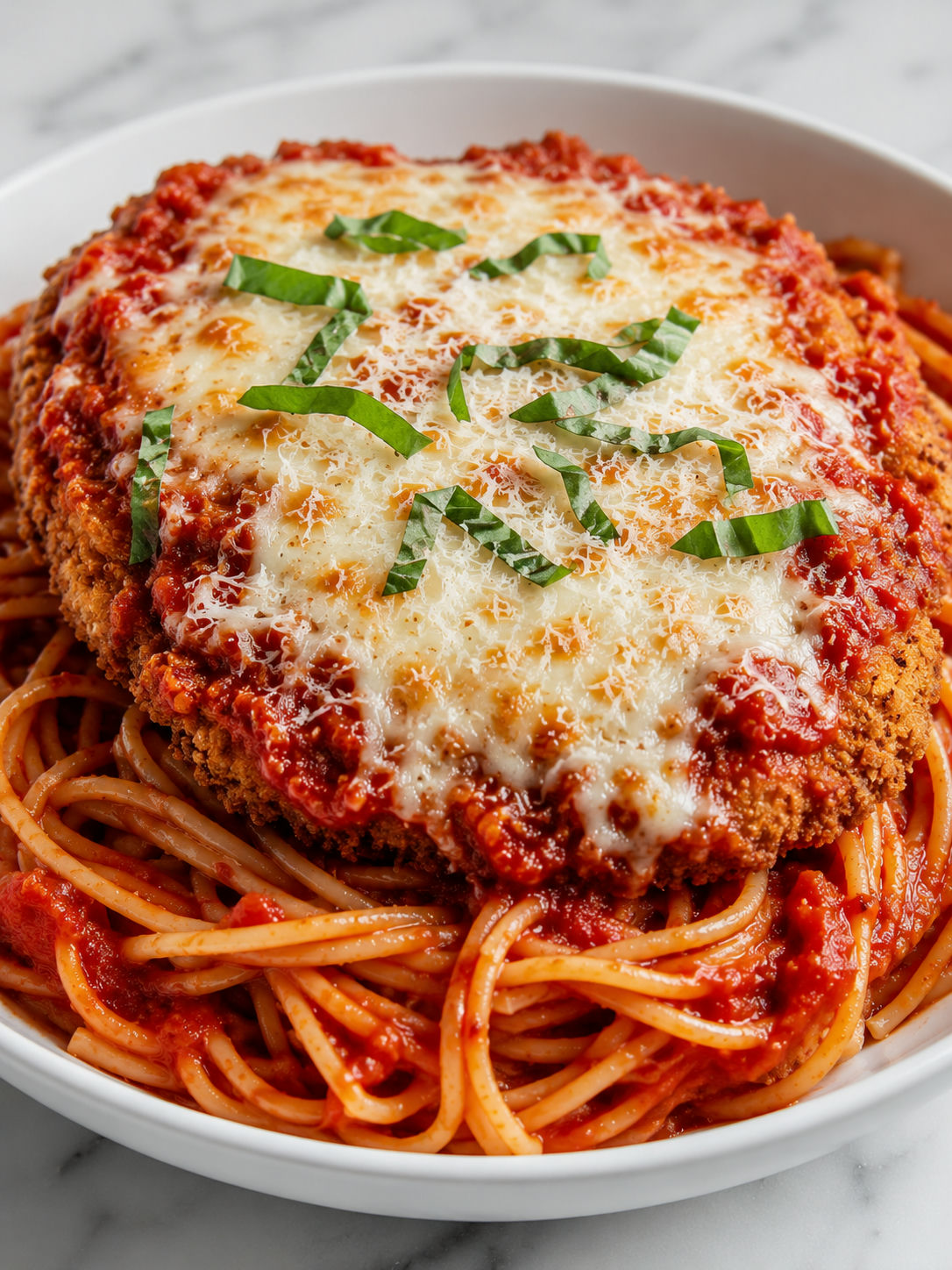
The pasta should support the cutlets, not drown them. Warm the marinara separately and toss most of it with the spaghetti first. Then add the chicken on top with a little extra sauce around the plate. This gives you saucy pasta and a crisp cutlet in the same bite.
Chicken parmesan is an Italian-American favorite, often served with pasta in the United States. You can read more about its background at Chicken parmesan. For another spaghetti night, rich skillet spaghetti with classic meat sauce hits the same cozy note.
Swaps for busy nights
Store-bought marinara is fine here. Choose one that tastes balanced before it goes into the pan, since a short recipe does not give the sauce much time to mellow. If you only have regular breadcrumbs, use them and add a tablespoon more parmesan for texture. Fresh mozzarella tastes lovely but releases more moisture, so low-moisture mozzarella is easier for a crisp finish.
You can also use thin chicken tenderloins. Skip the slicing and pound them lightly so they cook evenly. For a meatless plate with similar sauce and cheese comfort, try classic eggplant parmesan.
Storage without soggy breading
Store leftover chicken and spaghetti in separate containers if you can. The pasta keeps well with sauce for up to four days. The chicken is best within three days. Reheat cutlets on a rack in a 375°F oven until hot, then add a little fresh mozzarella for the last few minutes if the cheese looks dry.
For food safety, cooked chicken should reach 165°F. The USDA safe temperature chart is a useful reference when checking poultry.
What to serve beside it
This plate already brings pasta, chicken, sauce, and cheese, so keep the sides sharp or green. A lemony salad cuts through the richness. Roasted broccoli, sauteed spinach, or green beans also work. Garlic bread is never wrong, but serve smaller pieces so the meal does not feel too heavy.
If you are feeding kids, slice the cutlets before serving and spoon sauce around the pieces. It cools faster and makes the crisp edges easier to grab with spaghetti.
FAQs
- Can I use chicken thighs instead of breasts?
Yes, boneless skinless thighs work well, but they take a little longer. Pound them to an even thickness and cook until the center reaches 165°F.
- How do I keep chicken parmesan from getting soggy?
Use a wire rack after frying so steam does not soften the bottom. Spoon sauce on the center of each cutlet only, then serve extra sauce with the spaghetti.
- Can I make chicken parmesan ahead?
You can bread the cutlets a few hours ahead and keep them uncovered in the fridge. Fry and bake them close to serving time for the best crunch.
- What pasta goes best with chicken parmesan?
Spaghetti is the classic choice because it twirls neatly under the cutlets and carries marinara well. Linguine or thin spaghetti also work if that is what you have.
- Can I bake the breaded chicken instead of frying it?
Yes, but the crust will be drier and less evenly browned. Spray or brush the breaded cutlets with oil and bake on a rack at 425°F until golden and cooked through.
- What should I serve with chicken parmesan over spaghetti?
A crisp green salad, roasted broccoli, or garlic bread all fit. Since the plate is rich, something fresh and simple helps balance the cheese and sauce.
