 Pin it
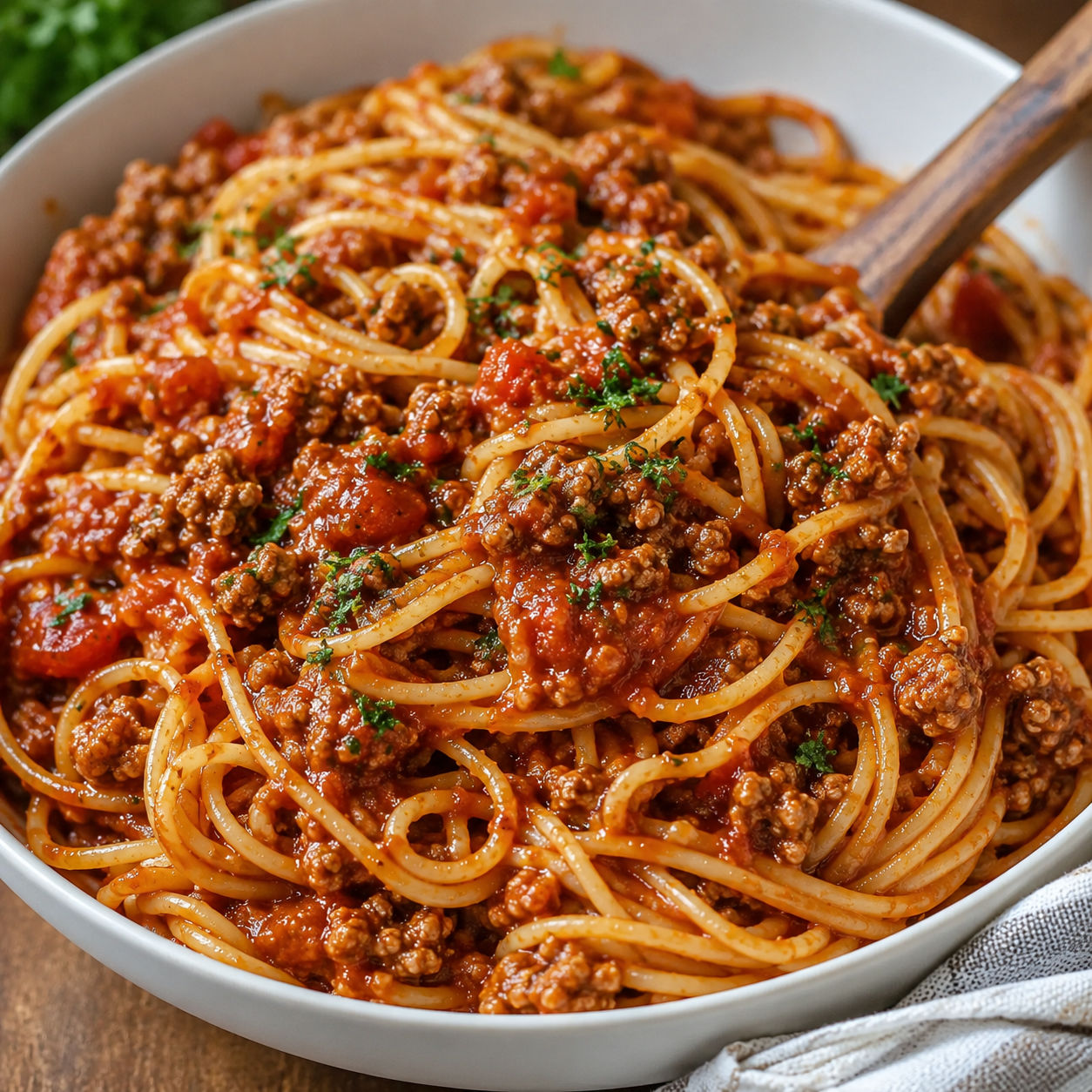
Rich Skillet Spaghetti with Classic Meat Sauce is the kind of dinner that makes the kitchen smell like someone planned ahead. Ground chuck browns with onion, green pepper, and garlic before the tomatoes go in, so the sauce tastes rounded instead of flat.
I like this version when I want old-school spaghetti that still feels practical on a weeknight. The sauce needs time to simmer, but most of that time is hands-off. You stir, taste, and let the skillet do the work.
Classic meat-sauce skillet lineup
Choose ground chuck if you can, since the extra fat carries the tomato and herbs. Canned tomatoes matter here too, so use a brand you like because the sauce simmers long enough for their flavor to show.
- Ground chuck. Gives the sauce a beefy base and enough fat to stay tender after simmering.
- Onion and green pepper. Add sweetness and a mild garden flavor that makes this taste like a family-style skillet sauce.
- Fresh garlic. Goes in after the vegetables soften so it turns fragrant without burning.
- Diced tomatoes. Bring little pockets of tomato texture to the sauce.
- Crushed tomatoes. Thicken the skillet and help the sauce cling to the spaghetti.
- Tomato sauce. Smooths everything out so the finished sauce is hearty but not chunky all the way through.
- Dried herbs. Basil, oregano, Italian seasoning, and parsley give the sauce its classic Italian-American flavor.
- Spaghetti. Long strands hold the sauce when you toss everything together while hot.
Rich Skillet Spaghetti with Classic Meat Sauce
- Soften the vegetables. Warm olive oil in a deep skillet, then cook the onion and green pepper until they smell sweet and look glossy.
- Add the garlic. Stir it in for about 1 minute. Keep it moving so it perfumes the oil without turning bitter.
- Brown the beef. Add the ground chuck and break it into small crumbles. Let it brown before draining off extra grease.
- Season the base. Stir in the dried herbs, garlic powder, onion powder, salt, and pepper. Give the spices a short moment in the hot skillet.
- Simmer the sauce. Add the diced tomatoes, crushed tomatoes, and tomato sauce. Simmer uncovered until thick and deep red.
- Toss with pasta. Cook the spaghetti until al dente, save a little pasta water, then toss the noodles with enough sauce to coat every strand.
Browning builds the flavor
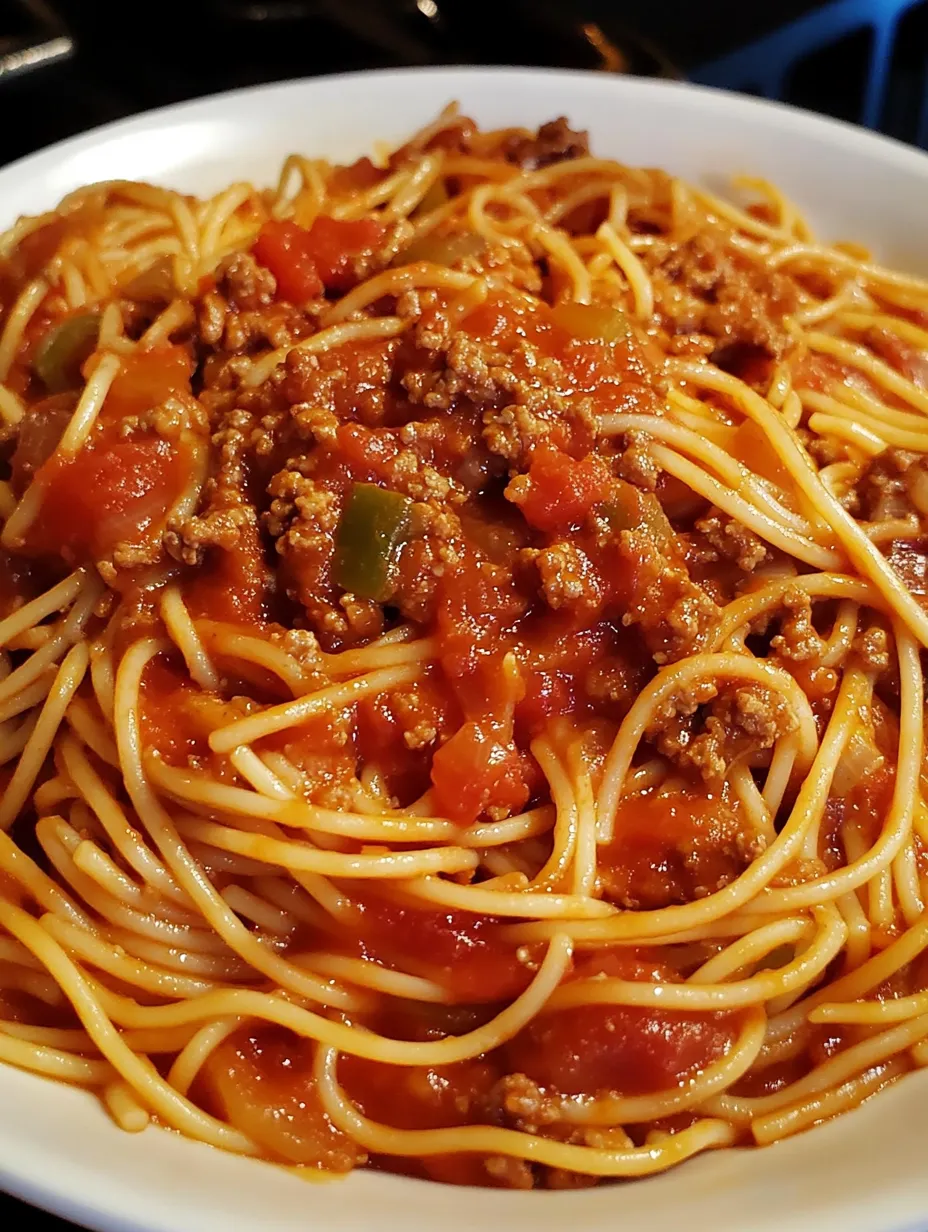
The best part of this sauce happens before the tomatoes ever hit the skillet. Let the onion and green pepper soften until they smell sweet, then let the beef sit against the hot pan in spots instead of stirring nonstop. Those browned bits make the sauce taste like it simmered longer than it did. If you like that deeper tomato base, the same idea shows up in easy homemade spaghetti sauce with ground beef.
Once the meat is browned, drain only the excess grease. Leave a light sheen behind. A completely dry skillet can make the herbs taste dusty, while a little fat helps them bloom. The USDA lists 160°F as the safe temperature for ground beef, and you can check their safe temperature chart for details.
Let the tomatoes settle in
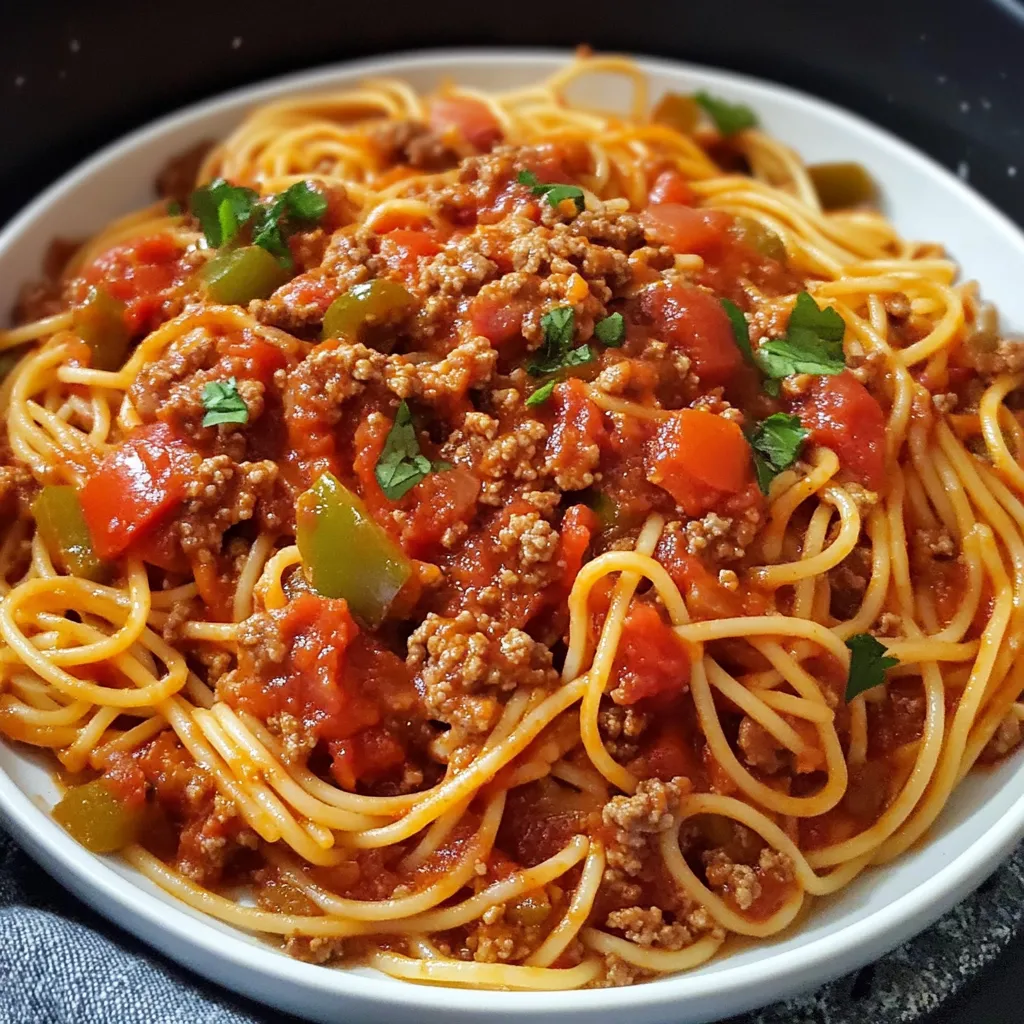
Three tomato textures make this sauce feel full. Diced tomatoes stay visible, crushed tomatoes give body, and tomato sauce fills in the gaps. At first the skillet may taste sharp. After 45 minutes, the acidity softens and the beef starts to taste woven through the sauce instead of separate from it.
Keep the simmer gentle and uncovered. A hard boil throws sauce onto the stove and can make the beef tough. Stir every 10 minutes and scrape the bottom so the thick tomato layer does not catch. If you want a lighter one-pan spaghetti for another night, one-pan spaghetti with chard keeps the same cozy idea with more greens.
Keep the spaghetti lively
Cook the pasta just shy of tender because it will keep softening once it meets the hot meat sauce. Salt the water well. Skip oil in the pasta pot if you plan to toss the noodles with sauce, since oil can make it harder for the sauce to cling.
Before draining, save a cup of pasta water. You may not need it, but it is helpful if the sauce gets too thick while the pasta cooks. Add a splash at a time and toss. The starch loosens the sauce without watering down the flavor. For a richer baked version with a creamier finish, baked cream cheese spaghetti casserole is a good next stop.
Swaps for your skillet
You can make this with half ground beef and half Italian sausage for a stronger fennel flavor. Ground turkey works too, but choose dark meat if possible and add a little extra olive oil. Mushrooms are a good add-in. Cook them after the green pepper so their moisture has time to leave the pan.
For a small heat bump, add crushed red pepper with the dried herbs. For a deeper sauce, pour in 1/4 cup red wine after browning the beef and let it reduce before adding tomatoes. If you enjoy slow, meaty pasta sauces, rich white Bolognese sauce for pasta takes the same comfort in a creamier direction.
Leftovers stay useful
Store sauce and spaghetti separately when you can. The sauce keeps its texture better, and the noodles will not soak up every drop overnight. Refrigerate both in airtight containers for up to 4 days. Reheat the sauce in a skillet over low heat, then add the pasta with a small splash of water.
For freezing, pack only the meat sauce. It will hold for up to 3 months. I like freezing it flat in bags so it thaws quickly on busy nights. If everything is already mixed together, it is still worth saving. Warm it slowly and add a spoonful of tomato sauce or pasta water to bring it back.
FAQs
- Can I use ground beef instead of ground chuck?
Yes. Ground chuck has enough fat to make the sauce taste rich, but regular ground beef works well. If the beef is very lean, add an extra tablespoon of olive oil so the sauce does not taste dry.
- Can I make the meat sauce ahead?
Yes. The sauce keeps well in the fridge for up to 4 days. Reheat it gently in a covered skillet and cook fresh spaghetti right before serving.
- How do I keep skillet spaghetti from getting watery?
Simmer the sauce uncovered so extra liquid can cook off. If the tomatoes taste sharp or thin after 30 minutes, keep simmering and stir more often near the end.
- Can I freeze the classic meat sauce?
The sauce freezes better than the finished pasta. Cool it completely, pack it in freezer containers, and freeze for up to 3 months. Thaw overnight in the fridge before reheating.
- What can I serve with this spaghetti?
Garlic bread, a crisp green salad, roasted broccoli, or simple sauteed zucchini all work well. Keep the side light because the meat sauce is hearty.
- Can I make this gluten-free?
Yes. Use your favorite gluten-free spaghetti and cook it just until tender. Toss it with the sauce right before serving because gluten-free pasta can soften quickly.
