 Pin it
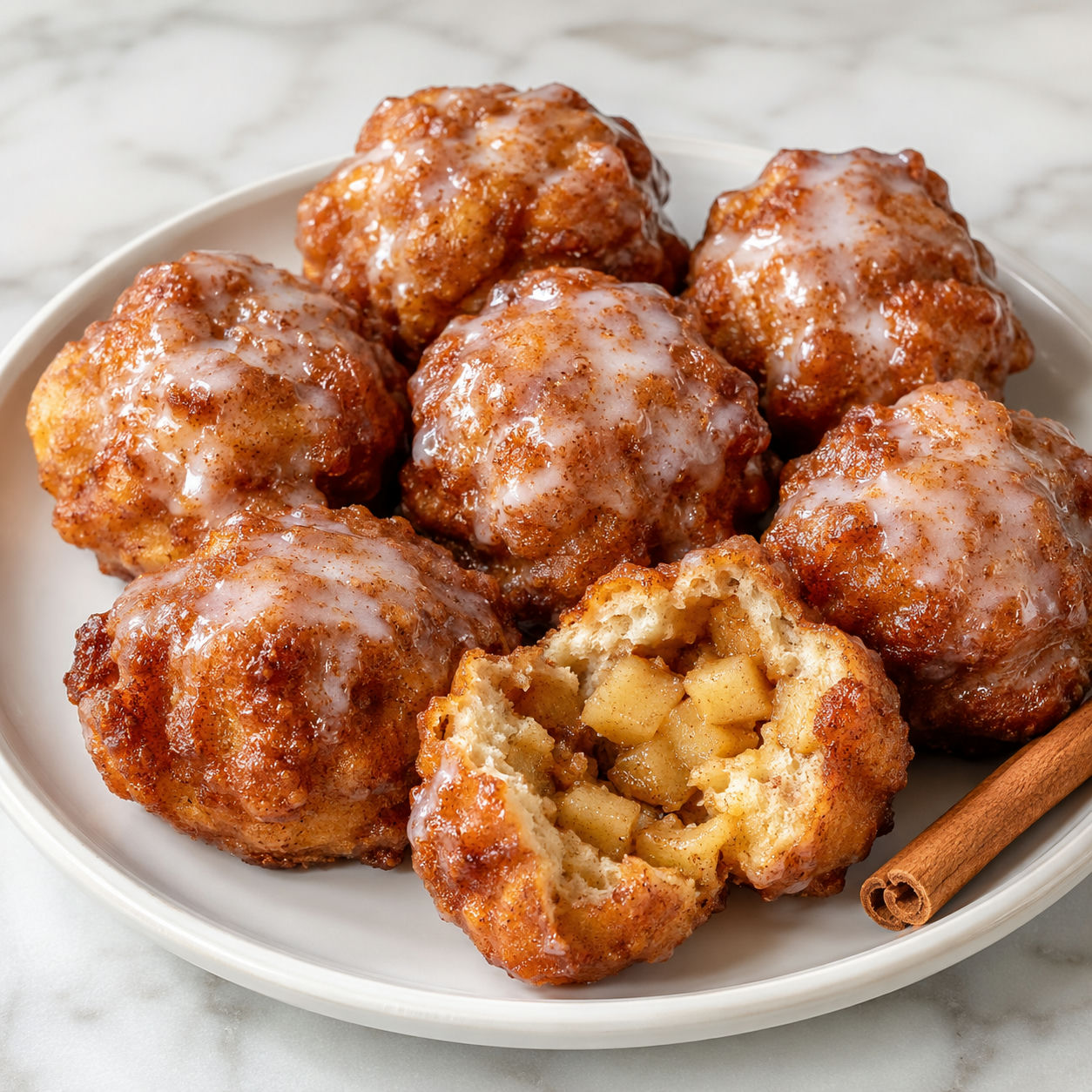
These are the treats that disappear before the party really starts. Drop a bowl of them on any table and watch people quietly pocket three or four while pretending to reach for a napkin. The bite-sized format is the whole point. No plates, no forks, just crispy little fritters with a hit of apple and cinnamon in every piece.
The recipe is honest and fast. You build a simple batter, fold in fresh apple, and drop it by the spoonful into hot oil. A few minutes per side and they come out golden and puffed. The glaze is just powdered sugar, cinnamon, and a splash of milk, and it sets to a thin shell that crackles slightly when you bite through.
Honeycrisp or Fuji apples hold their shape and stay sweet during frying. Peeling takes the most time. After that, you are mostly standing next to a pot watching for the right color.
What Goes Into the Batter
A short, clean list with nothing unusual. Good flour, a firm sweet apple, and real cinnamon are worth a moment of attention. The rest is standard pantry staples you likely already have.
- All-purpose flour. Forms the structure of each bite without making them heavy or doughy.
- Baking powder. Gives the fritters lift so they puff slightly in the oil instead of sitting flat.
- Ground cinnamon. The backbone spice, used in both the batter and the glaze for warmth throughout.
- Ground nutmeg. A small amount deepens the cinnamon without announcing itself.
- Granulated sugar. Adds just enough sweetness to the batter without competing with the glaze.
- Whole milk. Loosens the batter to a scoopable, drop-fry consistency and keeps the inside tender.
- Egg. Binds the batter and helps the outside set golden in the oil.
- Vanilla extract. Rounds out the spice and keeps the sweetness from tasting flat.
- Honeycrisp or Fuji apples. Firm enough to hold their shape in the hot oil and sweet enough to need no extra sugar.
- Powdered sugar. The base of the glaze, it dissolves smooth with just a splash of milk and cinnamon.
Fry, Drain, Dip, Done
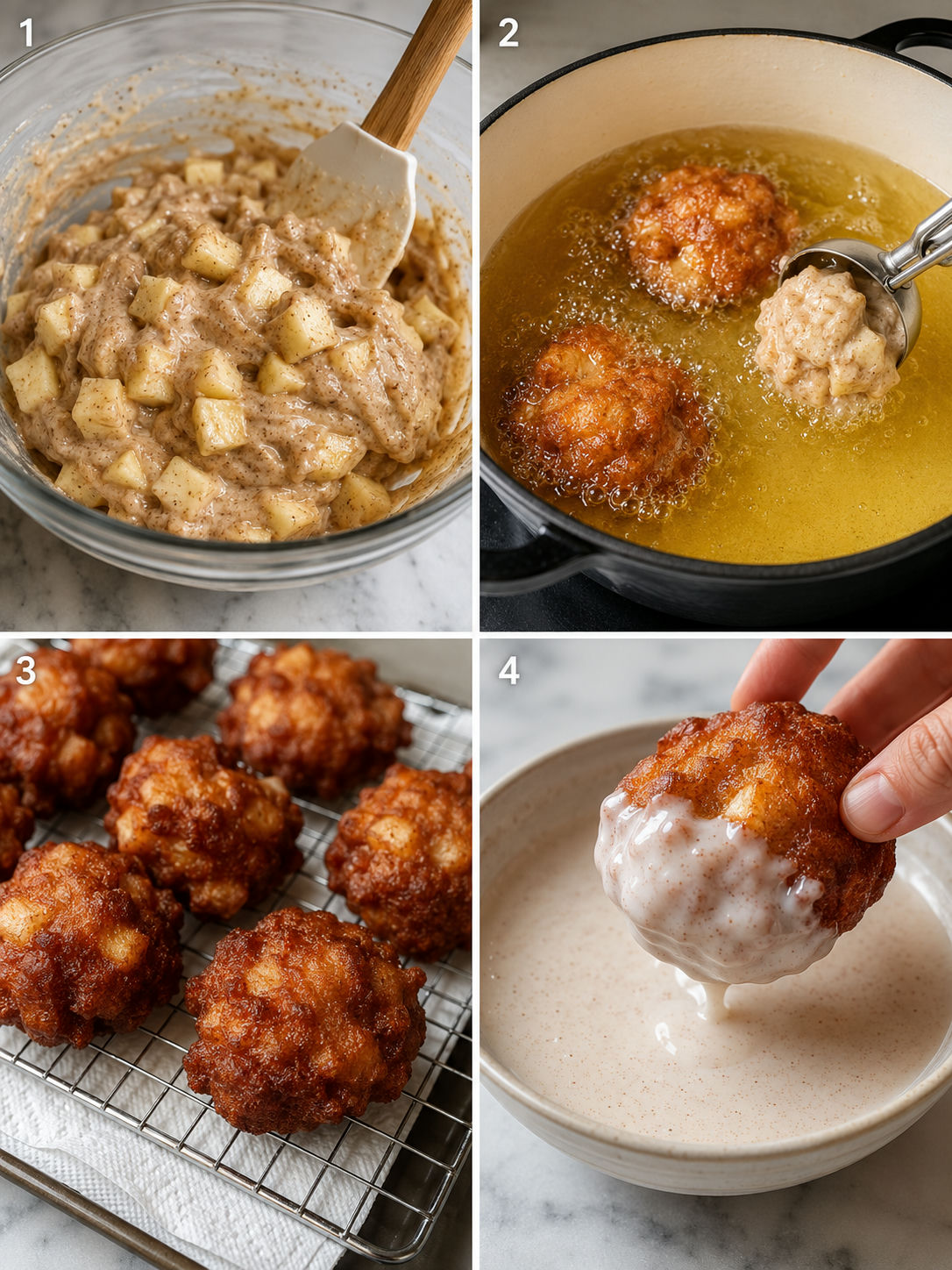
- Heat the oil. Pour 2 inches of vegetable oil into a heavy-bottomed pot or Dutch oven and set over medium heat. Clip a thermometer to the side and wait until it reads 350°F (175°C) before you drop anything in.
- Mix the dry ingredients. Whisk the flour, baking powder, cinnamon, nutmeg, salt, and sugar together in a large bowl until evenly combined with no visible clumps.
- Combine the wet ingredients. In a separate bowl, whisk the milk, egg, and vanilla until smooth. Pour into the dry ingredients and stir just until a thick batter comes together. A few small lumps are fine. Overmixing makes the fritters tough.
- Fold in the apples. Add the diced apple to the batter and fold with a spatula until the pieces are evenly spread throughout.
- Fry in small batches. Drop rounded tablespoons of batter into the hot oil, 5 or 6 at a time. Fry for 2 to 3 minutes per side until deep golden brown, turning carefully with a slotted spoon. Transfer to a wire rack or paper towels to drain. Let the oil return to 350°F between each batch.
- Make the glaze. Whisk the powdered sugar, cinnamon, milk, and vanilla in a shallow bowl until smooth. Start with 3 tablespoons of milk and add more by the teaspoon until the glaze drips slowly from a spoon.
- Glaze while warm. Dip each fritter in the glaze or drizzle generously over the top. Set on a wire rack for 3 to 4 minutes for the coating to set, then serve.
Which Apple Works Best Here
Firm, sweet apples are the right call. Honeycrisp is the top choice because it holds its shape during frying, releases just enough moisture into the batter, and tastes genuinely sweet without being cloying. Fuji and Gala are solid backups when Honeycrisp is out of season.
Softer apples like McIntosh or Red Delicious tend to break down in the oil before the batter sets, leaving wet pockets inside. You want visible little chunks in every bite, and that requires a variety that stays firm under heat.
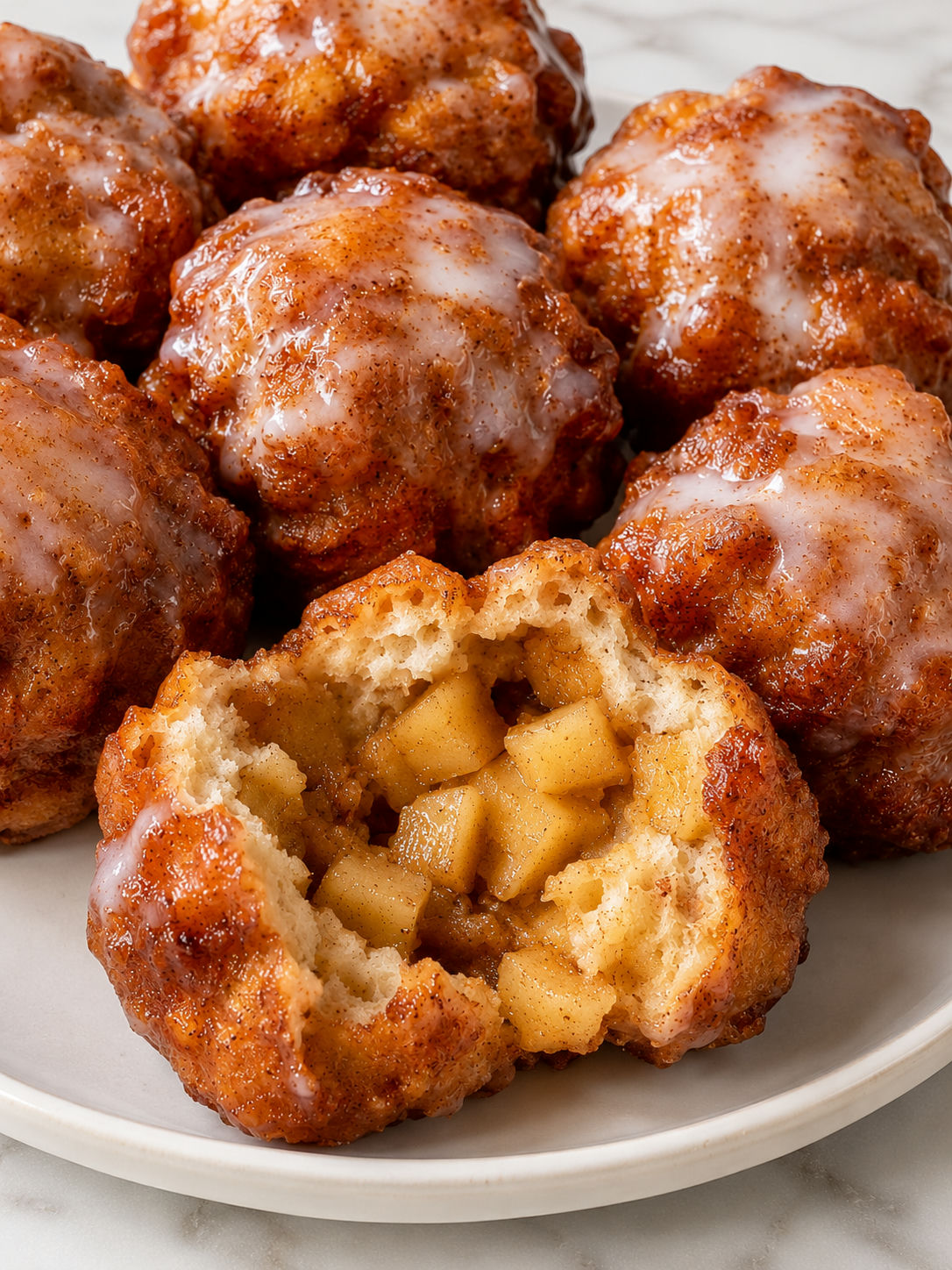
Dice the apple small, about 1/4 inch. Larger chunks stay raw in the center by the time the outside is done. Apples also bring meaningful fiber and plant compounds to these bites, as noted by Harvard's nutrition research. For a completely different take on fried apple, the fried cinnamon apple rings on this site use whole slices and give you a chewier, thicker result.
Why Oil Temperature Makes or Breaks
Frying at 350°F (175°C) is not arbitrary. Too hot, above 370°F, and the outside of each fritter browns before the batter in the center has time to set. You pull out something that looks done but is undercooked inside. Too cool, below 325°F, and the fritters absorb oil instead of shedding it, coming out greasy and heavy.
A clip-on thermometer is the easiest way to stay in range. The temperature drops every time you add cold batter, and it climbs again as the oil recovers. Check it between batches and give it a minute to stabilize before the next round. Serious Eats has detailed guidance on home frying techniques if you want to go deeper on the science.
Getting the Glaze Right
The glaze should coat the back of a spoon and drip off slowly in a thin ribbon. Too thick and it clumps on the surface rather than forming an even shell. Too thin and it runs straight off and pools underneath instead of sticking.
Start with 3 tablespoons of milk and add more by the teaspoon. Dip each fritter while it is still warm because the heat helps the glaze grab and set faster. If it stiffens while you are working, a few drops of milk stir it back to life. For a sharper apple note in the coating, the cinnamon glazed apple fritters with cider glaze swap milk for apple cider and give you a completely different flavor in the coating.
Storing and Reheating Leftover Bites
Fresh fritters are best the day they are made. The glaze holds well at room temperature for about two days in an airtight container. After that, the texture softens and they lose the slight crispness on the crust.
To revive them, arrange on a wire rack set on a baking sheet and heat in a 325°F oven for 5 minutes. Skip the microwave as it steams out whatever crispness remains. If you need a treat that holds up better the next day, the baked blueberry fritter bites stay tender and moist longer since they skip the frying step entirely.
A Few Ways to Switch These Up
The batter is flexible. A pinch of cardamom alongside the cinnamon adds a floral, slightly spicy note that pairs especially well with Fuji apples. Brown sugar in place of white granulated gives the batter a mild molasses undertone. A handful of chopped walnuts or pecans folded in with the apple adds crunch that survives the fry.
For a fall dessert spread, pair these alongside the caramel apple pie bombs for two different apple formats on the same board. You get crispy glaze here and rich pastry there, and they complement each other well without competing.
FAQs
- Can I bake these instead of frying?
Yes. Spoon the batter into a greased mini muffin tin and bake at 375°F for 12 to 15 minutes until a toothpick comes out clean. The texture will be softer and more cake-like rather than crispy on the outside, but the flavor is still great. Dip them in the glaze while still warm.
- What apples work best for fritter bites?
Honeycrisp and Fuji are the top picks. They are firm, sweet, and hold their shape in the oil. Granny Smith gives you a pleasant tart contrast to the sweet glaze. Avoid McIntosh and Red Delicious as they turn mushy when heated, leaving wet spots in the batter.
- Why are my fritters coming out greasy?
The oil was likely too cool when you added the batter. Below 325°F, batter absorbs fat instead of forming a quick crust. Always bring the oil to 350°F before the first batch and check the temperature between rounds. Crowding the pot also drops the temperature sharply, so fry 5 or 6 at a time.
- Can I make the batter ahead of time?
Not really. Once baking powder contacts wet ingredients it starts reacting, and batter that sits more than 30 minutes loses lift. The fritters come out noticeably denser. Mix the dry ingredients ahead and seal them, then combine with the wet ingredients and apples just before you fry.
- How do I keep fritter bites warm for a crowd?
Set glazed fritters on a wire rack over a baking sheet in a 200°F oven. They will hold for up to 30 minutes without turning soggy. Do not pile them in a bowl while still hot as the trapped steam softens the crust quickly.
- Can I use a gluten-free flour?
A one-to-one gluten-free flour blend works in the same quantities with no other adjustments needed. The fritters come out slightly more delicate but hold together well. Whole wheat flour can replace up to half of the all-purpose flour, though using more than that makes the bites noticeably denser.
- How long do cinnamon glazed apple fritter bites keep?
Best eaten the day they are made. They stay good in an airtight container at room temperature for 2 days or in the fridge for up to 4 days. The crust softens after day one, but 5 minutes in a 325°F oven restores enough crispness to make reheating worthwhile.
