 Pin it
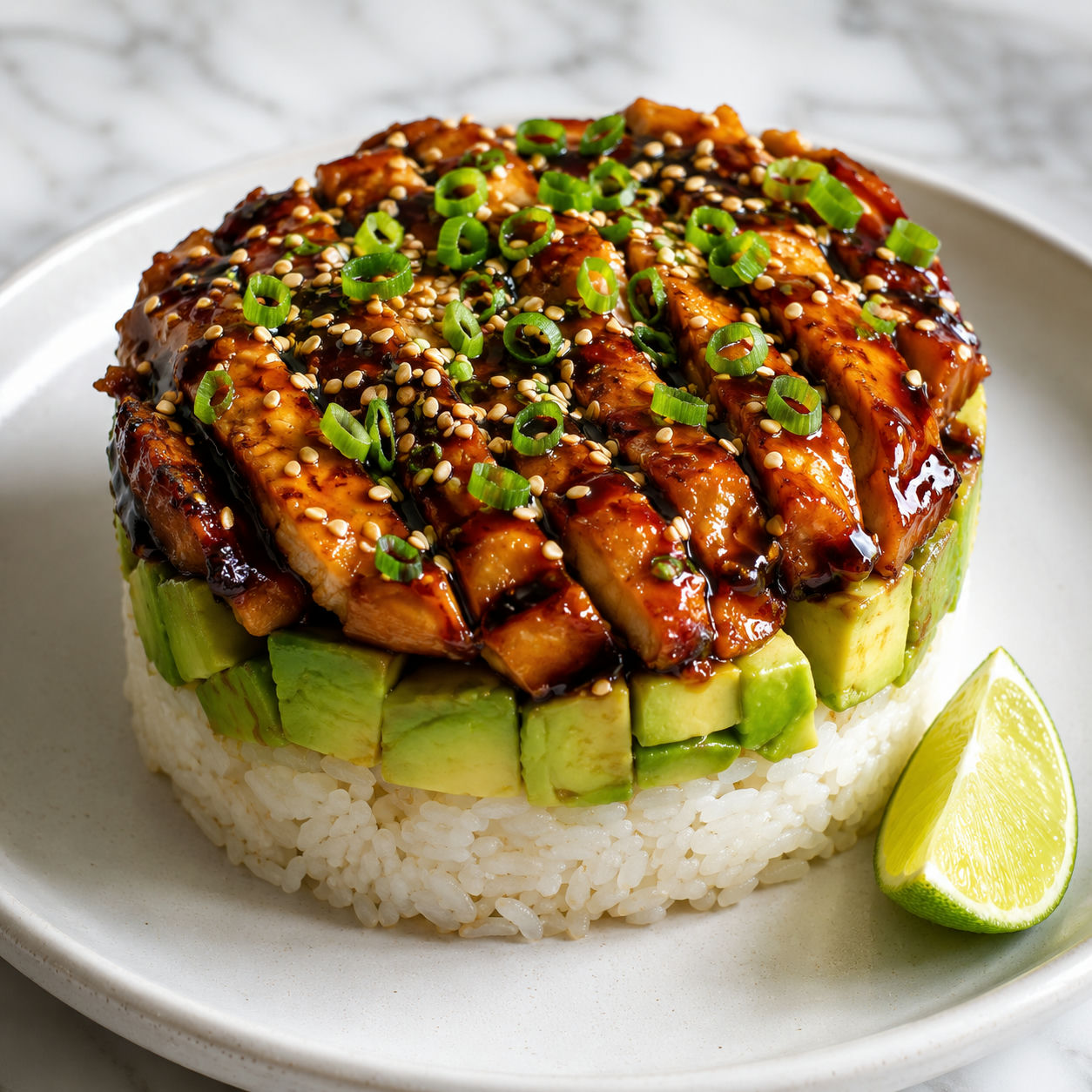
This is the kind of dinner that looks like you ordered it from somewhere. Three clean layers, a glossy lacquered top, a streak of bright green in the middle. In reality it comes together in about 35 minutes with ingredients most weeknight kitchens already have.
The teriyaki glaze is the part that matters most. Japanese teriyaki is not just a marinade. It is a reduction. You build the sauce, pour it over hot chicken, and let it cook down until it turns thick and dark and shiny. That is the difference between a watery coating and the real thing.
The sushi rice and avocado do their jobs quietly. Sticky rice presses into a base that holds its shape. Cool, creamy avocado in the middle balances the salty-sweet glaze on top. You do not need a ring mold, but it makes the whole thing almost foolproof.
The three layers and what each one needs
Each layer has one job. The sushi rice needs to be slightly warm and sticky so it compresses cleanly at the base. The avocado should be ripe but still firm enough to hold its shape when sliced. The chicken needs the glaze fully reduced before it goes on top, not just poured over and called done.
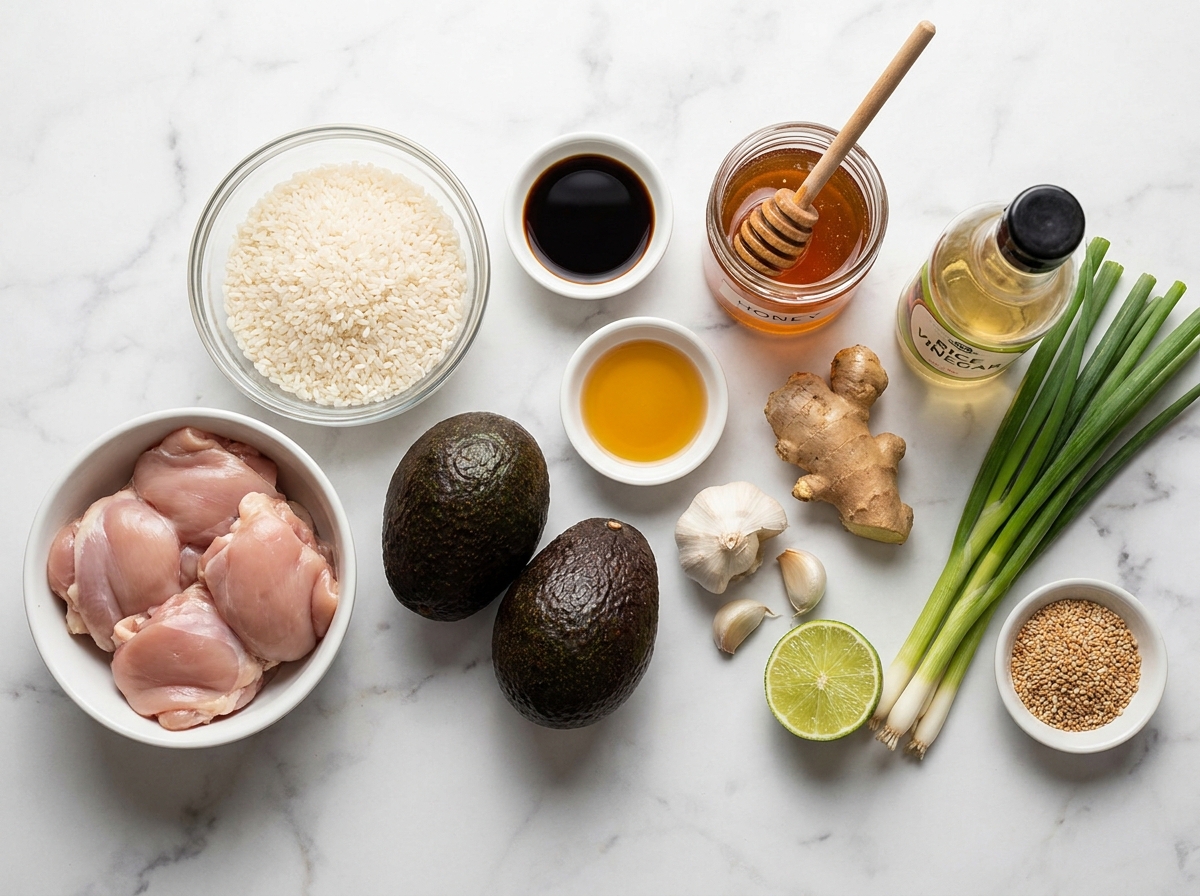
- Chicken thighs. Stay moist under high heat better than breasts, and their fat helps the teriyaki glaze caramelize without burning.
- Soy sauce. The base of the glaze. Low-sodium works fine but full-sodium gives a bolder bite. Use tamari for a gluten-free swap.
- Honey. Adds sweetness and helps the glaze reduce to something thick and sticky rather than just salty liquid.
- Rice vinegar. Keeps the glaze balanced and cuts the sweetness. Do not skip it or the sauce tastes flat.
- Sesame oil. Added off the heat after the glaze finishes. A small amount gives the sauce a nutty depth you cannot get from cooking oil.
- Fresh ginger and garlic. Freshly grated ginger makes a real difference over dried. Grate it fine so it melts into the sauce.
- Sushi rice. Short-grain and starchy, it holds the stack shape once pressed and cooled slightly.
- Ripe Hass avocado. Should give gently to pressure without feeling mushy. Bright green flesh inside with no brown spots.
Cooking and building the stack
- Cook the sushi rice. Rinse 2 cups sushi rice under cold water until the water runs mostly clear, about 3 to 4 passes. Combine with 2.5 cups water in a saucepan, bring to a boil, cover tightly, and drop to the lowest heat for 15 minutes. Remove from heat and steam covered for 10 more minutes. Stir in 1 tablespoon rice vinegar, 1 teaspoon sugar, and half a teaspoon of salt. Spread on a tray to cool until just warm.
- Mix the teriyaki glaze. Whisk together 3 tablespoons soy sauce, 2 tablespoons honey, 1 tablespoon rice vinegar, 1 teaspoon sesame oil, 1 teaspoon freshly grated ginger, and 2 minced garlic cloves until combined. Set aside.
- Sear and glaze the chicken. Season 1.5 lbs (680 g) chicken thighs lightly with salt and pepper. Heat 1 tablespoon vegetable oil in a wide skillet over medium-high heat until shimmering. Cook 4 to 5 minutes per side until golden. Pour the teriyaki glaze into the pan and simmer, turning occasionally, for 5 to 7 minutes until the glaze reduces and coats thickly. Cook to an internal temperature of 165°F (74°C) per USDA food safety guidelines. Rest 5 minutes on a board, then slice thin.
- Prep the avocado. Halve and pit 2 ripe avocados. Slice the flesh into thin strips and toss immediately with the juice of half a lime and a pinch of salt.
- Assemble the stacks. Lightly wet the inside of a 3-inch ring mold and place it on a serving plate. Pack in about half a cup of warm sushi rice, pressing firmly with the back of a spoon. Add a layer of avocado slices. Top with 4 to 5 pieces of glazed chicken, overlapping slightly. Slowly lift the mold straight up. Repeat for each serving.
- Garnish and serve. Scatter toasted sesame seeds and sliced green onions over each stack. Drizzle any remaining pan glaze over the top. Add pickled ginger and nori on the side if desired. Serve immediately.
Why reducing the glaze is non-negotiable
The glaze makes or breaks this recipe. Pour the sauce over the chicken and pull it from the heat too quickly and you end up with a thin, salty liquid that soaks into the rice and makes the whole stack soggy. Let it go. The sauce should bubble steadily and thicken until it coats the back of a spoon without dripping. That takes around 5 to 7 minutes over medium heat. The chicken will look dark and lacquered, not wet. The same reduction method is what gives the glaze its punch in our Teriyaki Beef with Pineapple Rice Stack too.
Picking the right avocado
A Hass avocado is your best bet. The skin turns nearly black when ripe and the flesh stays creamy without going stringy. Give it a gentle squeeze at the store; it should give slightly without collapsing. For stacking, slices hold the layer better than mashed avocado, which tends to ooze out the sides when you press the rice down on top. Lay them in overlapping layers inside the mold rather than stacked straight up for a denser, more stable middle layer. Lime juice is not optional; it slows browning and adds a citrus contrast that cuts nicely through the sweet-salty glaze.
Swaps, shortcuts, and the bowl option
No ring mold? A clean tin can with both ends removed works exactly the same way, aiming for about 3 inches in diameter. Or skip the stack format entirely and build a bowl: rice on the bottom, avocado on the side, sliced chicken on top, garnishes over everything. Same flavors, zero presentation stress. Cauliflower rice works in the bowl version if you want something lighter, though it will not compress for a proper stack. A teaspoon of sriracha stirred into the glaze adds a low heat that builds nicely. If you like this Pacific-fusion direction, our Honey Lime Chicken and Avocado Rice Stack is another fast weeknight option with a citrus-bright glaze.
Storing leftovers and making ahead
Store the chicken, rice, and avocado separately in airtight containers. The chicken and rice both keep well for 3 days in the fridge. Reheat the chicken in a skillet with a small splash of water so the glaze revives rather than drying out. Rice goes in the microwave with a damp paper towel over the top. Slice fresh avocado each time you serve. Assembled stacks do not survive the fridge well; the rice gets cold and dense and the avocado oxidizes. Leftover teriyaki chicken also repurposes beautifully the next day into a quick rice skillet, much like our Chicken and Bacon Fried Rice.
FAQs
- Can I use chicken breasts instead of thighs?
You can, but thighs are more forgiving. Chicken breast dries out quickly under the high heat needed to caramelize a teriyaki glaze properly. If you use breasts, slice them in half horizontally before cooking so they cook through before the outside over-browns. Pull them off the heat the moment they reach 165°F (74°C).
- What rice works best for the stack?
Short-grain sushi rice is the right choice. It turns sticky enough when cooked to hold its shape when pressed into the mold. Long-grain varieties like basmati or jasmine will not compact the same way and the stack crumbles when you lift the mold. Rinse the rice until the water runs mostly clear before cooking for the best sticky texture.
- How do I keep the avocado from going brown?
Toss the sliced avocado with lime juice right after cutting. The acid slows oxidation and keeps the color bright. Build the stacks within a few minutes of slicing for the best look. The California Avocado Commission also recommends pressing plastic wrap directly against the cut surface to slow browning if you need a short head start.
- Can I make any part of this ahead?
The rice keeps well in the fridge for up to 3 days covered. The teriyaki chicken can be cooked, stored for 3 days, and reheated in a skillet with a splash of water to revive the glaze. Slice the avocado fresh each time. Do not assemble the stacks more than 20 minutes ahead or the rice gets cold and dense and the avocado starts to discolor.
- Is this dish gluten-free?
Standard soy sauce contains wheat, so the recipe as written is not gluten-free. Swap regular soy sauce for tamari or a certified gluten-free soy sauce and the dish becomes naturally gluten-free. If you are using a bottled teriyaki sauce, check the label since most conventional brands contain wheat.
- What else can I add to the stack or serve alongside?
Pickled ginger and a thin strip of nori on the side are classic additions that cut through the richness of the glaze. A drizzle of sriracha mayo right before serving adds heat and creaminess. Thin cucumber slices tucked into the avocado layer add a clean crunch. Keep any additions light so the stack holds together when you lift the mold.
- Can I use a different protein?
Shrimp works beautifully with teriyaki glaze and cooks even faster than chicken. Our Teriyaki Shrimp with Pineapple and Rice Stack follows a similar build. Firm tofu is a solid vegetarian option; press it dry first so it sears cleanly in the pan rather than steaming.
