 Pin it
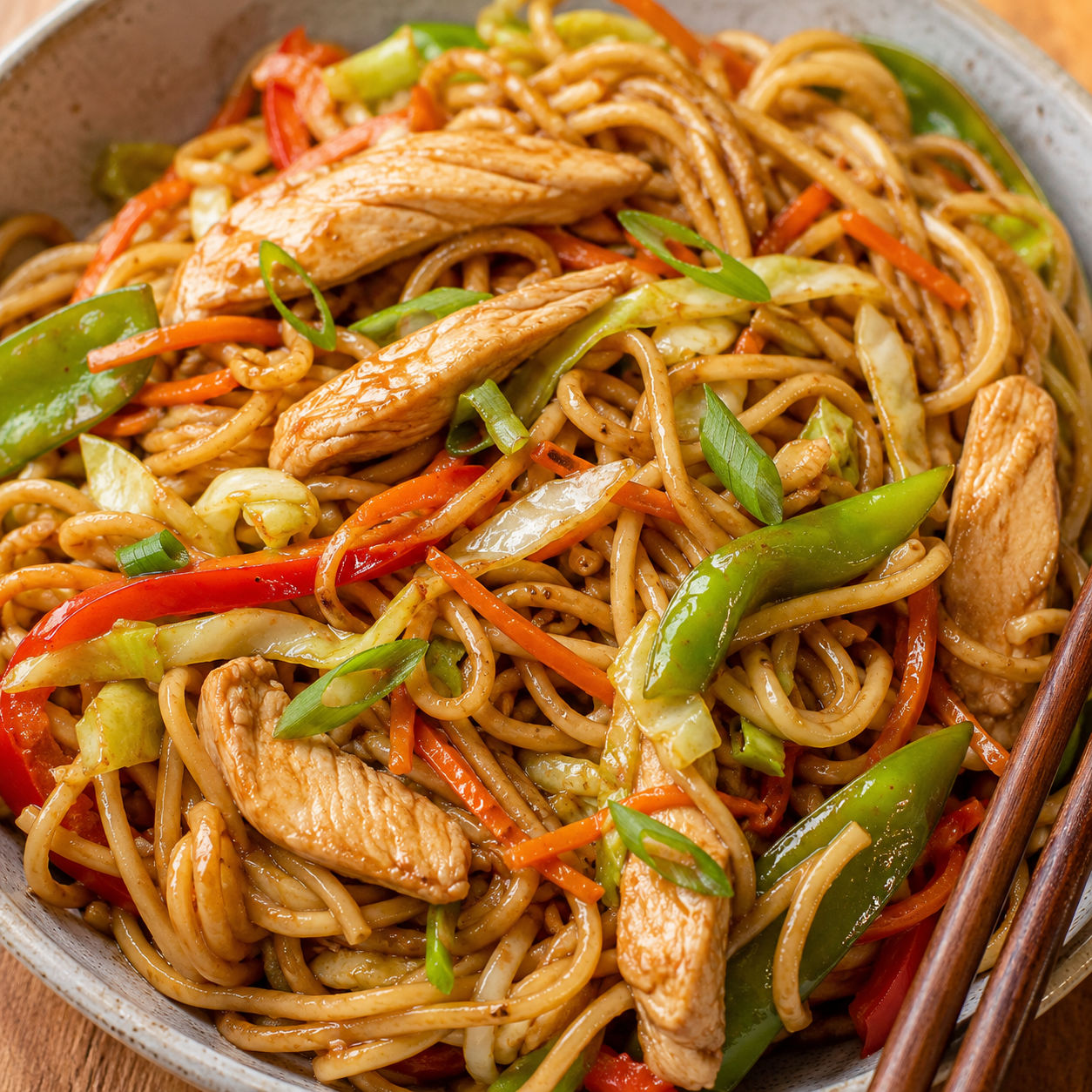
Easy Chicken Lo Mein is the kind of dinner that saves a busy night without feeling like a shortcut. The noodles are chewy, the chicken stays tender, and the sauce coats everything instead of pooling at the bottom of the skillet.
I like this version because it uses grocery-store ingredients and one wide pan after the noodles are cooked. Have the sauce mixed and the vegetables sliced before the heat goes on. Once the garlic hits the oil, the whole dish moves quickly.
Noodles, chicken, glossy sauce
Use noodles with some chew and chicken sliced thin enough to cook fast. The sauce should taste salty, lightly sweet, and nutty before it hits the pan because the noodles will mellow it out.
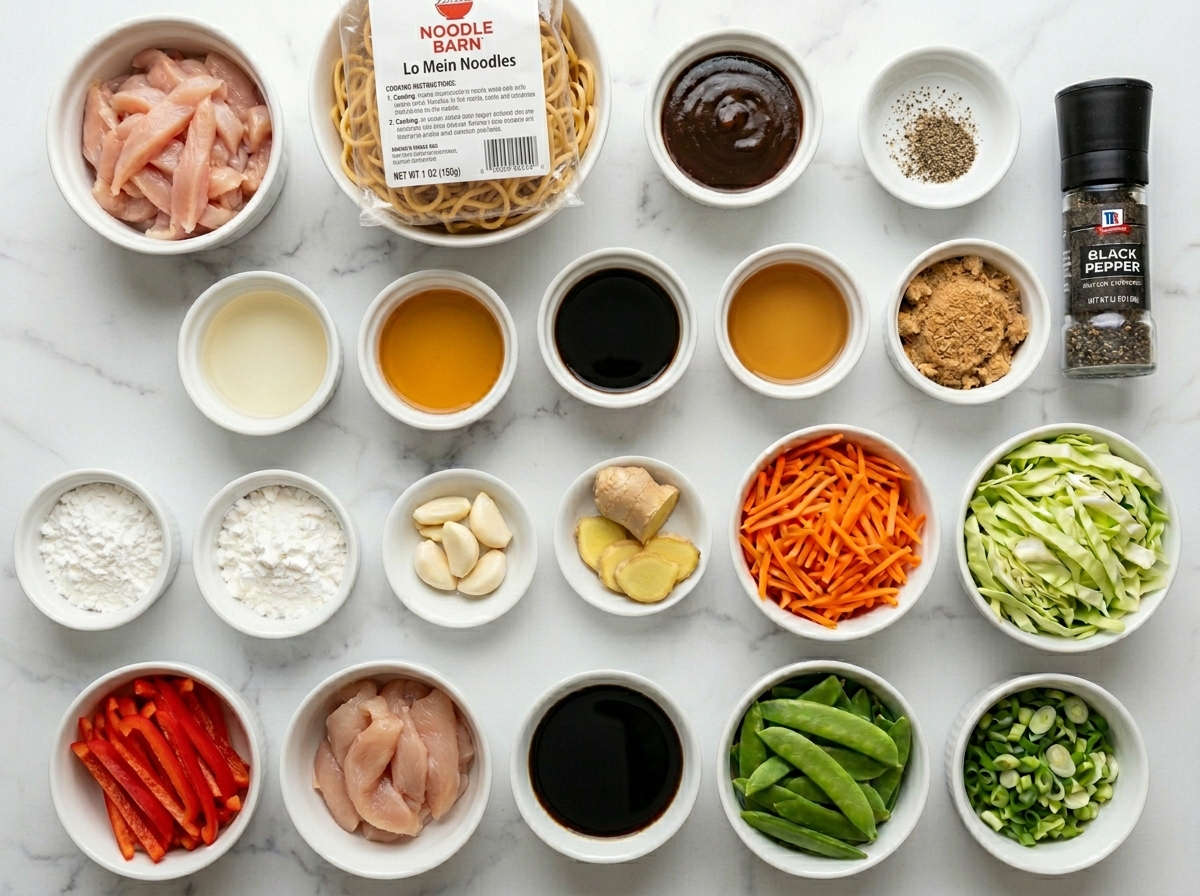
- Lo mein noodles. They give the dish its chewy takeout-style bite and hold sauce better than very thin pasta.
- Chicken breast or thighs. Thin strips cook fast and pick up flavor from soy sauce and garlic.
- Low-sodium soy sauce. The salty base of the sauce, low-sodium keeps the finished noodles balanced.
- Hoisin sauce. Adds body, sweetness, and a dark glossy finish.
- Oyster sauce. Brings a deeper savory note. Use vegetarian oyster sauce if needed.
- Toasted sesame oil. A small amount gives the noodles their warm, nutty aroma.
- Garlic and ginger. They make the sauce taste fresh instead of flat.
- Carrots, cabbage, bell pepper, and snow peas. These vegetables add crunch, color, and enough freshness to balance the noodles.
- Green onions. A quick finish that keeps the dish bright.
Cook Easy Chicken Lo Mein fast
- Mix the sauce. Whisk the soy sauce, hoisin, oyster sauce, rice vinegar, sesame oil, brown sugar, and water in a bowl so it is ready before the pan gets hot.
- Boil the noodles. Cook them one minute less than the package suggests, then drain well so they can finish in the sauce.
- Season the chicken. Toss thin chicken strips with soy sauce, cornstarch, and pepper. This helps the surface brown and keeps the meat tender.
- Sear the chicken. Cook it in a hot wide skillet until browned and cooked through, then move it to a plate.
- Stir-fry the vegetables. Add the garlic, ginger, carrots, cabbage, bell pepper, and snow peas. Keep them moving until crisp-tender.
- Toss everything together. Return the chicken, add the noodles and sauce, then toss until glossy and hot. Finish with green onions.
Why the pan matters
A wide skillet or wok gives moisture somewhere to go. That matters because crowded chicken steams before it browns. If your skillet is small, cook the chicken in two batches and pull each batch as soon as the pieces are no longer pink in the center.
The same idea helps the vegetables. You want them crisp-tender, not limp. Carrots and cabbage can handle a minute longer than snow peas, so add the peas near the end if yours are thin. If you enjoy noodle dinners, the same fast skillet rhythm works in Chicken Stir Fry Rice Noodles and Easy Homemade Chicken Yakisoba.
Sauce that clings
The sauce is simple, but the balance matters. Soy sauce brings salt. Hoisin gives sweetness and shine. Oyster sauce adds depth. Rice vinegar keeps the noodles from tasting heavy. A little toasted sesame oil finishes the whole pan with a nutty smell that shows up as soon as you toss.
Do not pour in extra sauce too early. Let the noodles, chicken, and vegetables meet in the pan first, then add the sauce and toss hard for one or two minutes. The heat tightens the sauce around the noodles. For a garlickier version, try Garlic Chicken Lo Mein. If you want seafood instead, Easy Shrimp Lo Mein Recipe follows the same saucy idea.
Chicken stays tender
Thin slicing is the biggest helper here. Cut the chicken across the grain into pieces that are about 1/4 inch thick. A quick toss with cornstarch gives the surface a light coating, which protects the meat and helps the sauce grab on later.
Cook chicken over medium-high heat and let the pieces touch the pan. Stir often, but not nonstop. A little browning gives the noodles better flavor. For food safety, chicken should reach 165°F according to the USDA safe temperature chart. An instant-read thermometer is the easiest way to check without overcooking.
Smart swaps for busy nights
This recipe is forgiving. Use spaghetti or linguine when lo mein noodles are not around. Swap snow peas for broccoli florets, snap peas, mushrooms, bok choy, or a bag of coleslaw mix. Leftover cooked chicken also works. Add it with the noodles instead of searing it at the start.
For a lighter bowl, use more cabbage and fewer noodles. For heat, add chili crisp, sriracha, or crushed red pepper at the table so everyone can control the spice. A helpful source recipe from Just a Taste uses a short soy-hoisin sauce and quick vegetables, which is the same weeknight-friendly spirit here.
Store it without soggy noodles
Leftovers keep in an airtight container in the refrigerator for 3-4 days. Reheat them in a skillet with a splash of water. The water loosens the chilled sauce and helps the noodles relax without turning oily.
For make-ahead cooking, prep the sauce and vegetables in separate containers. The chicken can be sliced the night before. I do not love freezing cooked lo mein because the vegetables soften and the noodles can break, but it is still safe if you need to save it. Thaw overnight and reheat gently.
Summary
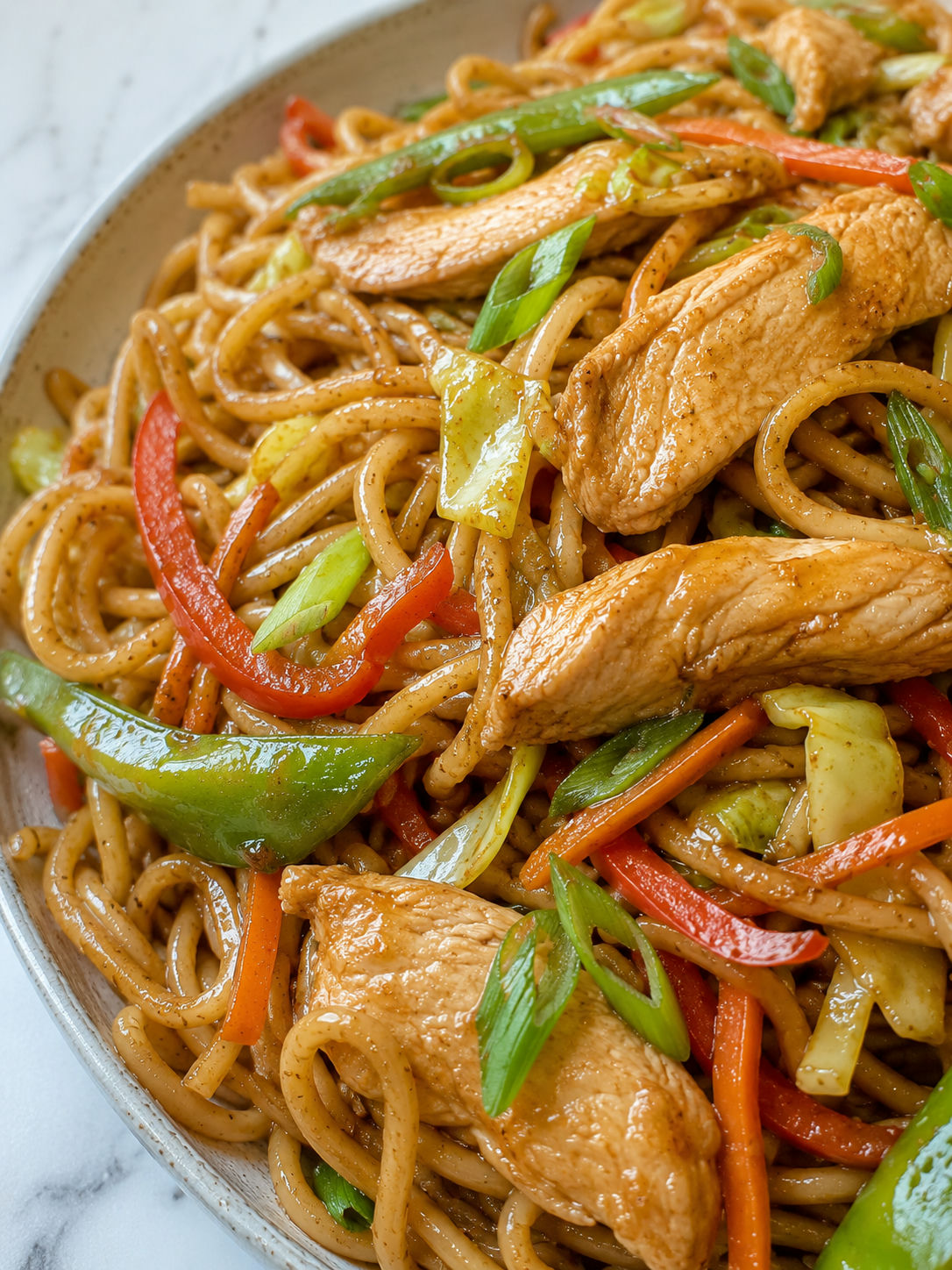
Easy Chicken Lo Mein comes down to fast prep, high heat, and a sauce that is mixed before the noodles go in. Keep the vegetables crisp and toss just until glossy.
FAQs
- What noodles should I use for Easy Chicken Lo Mein?
Fresh or dried lo mein noodles are the closest fit because they stay springy after tossing. If you cannot find them, spaghetti or linguine works well. Cook any noodle just shy of tender so it does not turn soft in the skillet.
- Can I use chicken thighs instead of chicken breast?
Yes. Boneless chicken thighs are a good swap and stay juicy even with high heat. Slice them thin across the grain and cook until browned and fully cooked.
- How do I keep lo mein from getting mushy?
Drain the noodles when they still have a little bite. Rinse them briefly if the package directs it, then toss with a few drops of oil if they need to wait. The final two minutes in the pan will finish them.
- Can I make chicken lo mein ahead of time?
You can prep the sauce, slice the vegetables, and cut the chicken a day ahead. For the best texture, cook and toss the noodles right before serving. Fully cooked leftovers are still good for lunch the next day.
- Is chicken lo mein gluten free?
Not as written. Lo mein noodles, soy sauce, hoisin, and oyster sauce usually contain wheat. Use gluten-free spaghetti, tamari, and gluten-free versions of the sauces if you need a gluten-free dinner.
- What can I serve with chicken lo mein?
It is filling on its own, but cucumber salad, steamed broccoli, egg drop soup, or a small plate of dumplings works nicely. For a bigger takeout-style spread, pair it with sesame chicken or a simple stir-fried vegetable.
