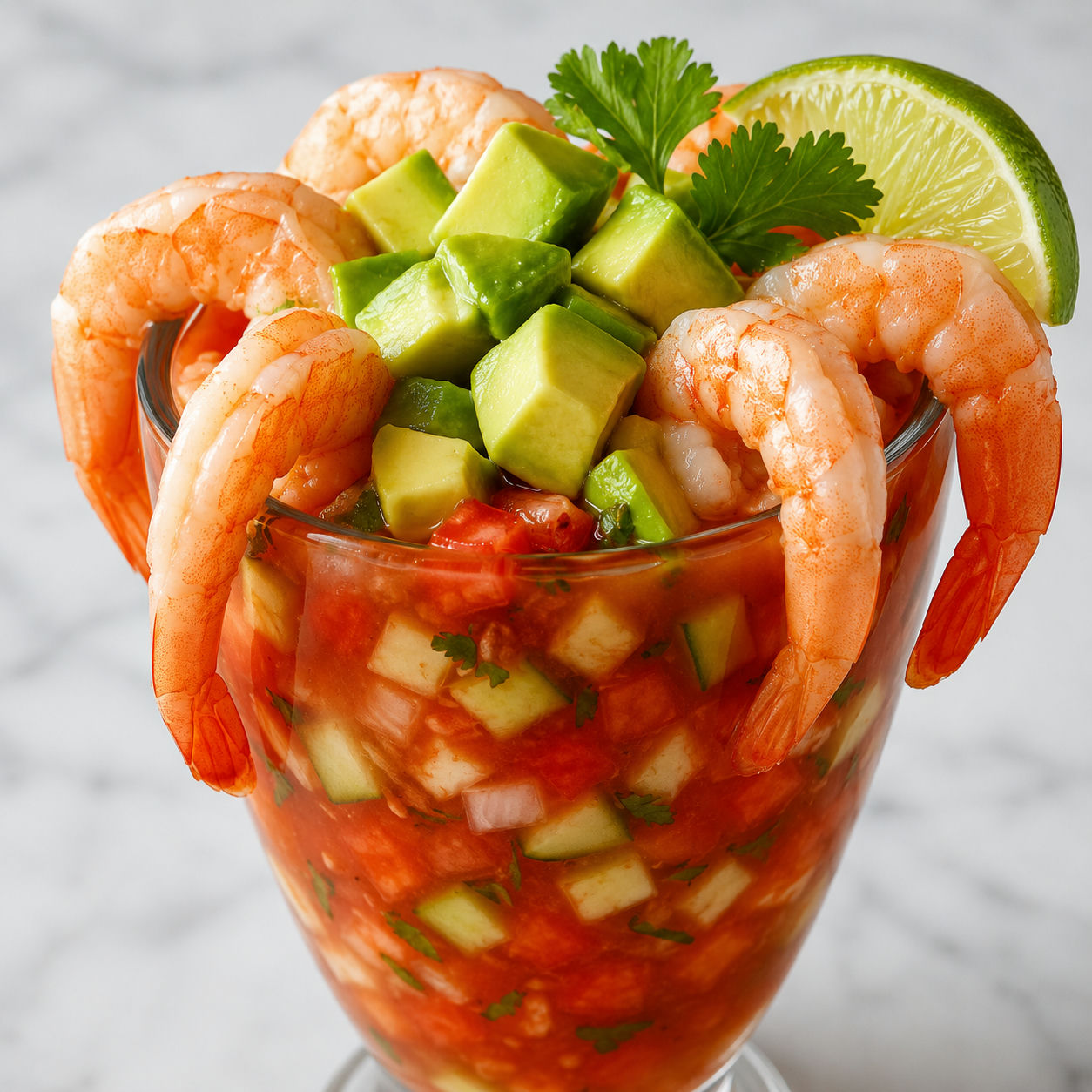
 Pin it
Mexican shrimp cocktail is nothing like the American version with the small cup of horseradish sauce. Cóctel de Camarones is a chilled, spoonable mix of plump shrimp, diced cucumber, tomato, and jalapeño bathed in a bright tomato-clam juice base with lime and Mexican hot sauce. Street vendors in Sinaloa and Veracruz have been ladling this into clear cups for decades, and once you try it, the dipping-sauce version feels a little flat by comparison.
The backbone of the dish is the sauce. A good mix of Clamato, ketchup, fresh lime juice, and Valentina gives you that tangy, slightly sweet heat this cocktail is known for. It comes together in under five minutes. The shrimp spend just two minutes in simmering salted water, then go straight into an ice bath so they stay firm and sweet.
You can have this ready in 30 minutes. Let it sit in the fridge for an extra hour and it gets even better. Just wait to add the avocado until right before serving.
Clamato, Shrimp, and Fresh Crunch
The ingredient list is short but each piece carries real weight. Fresh lime juice and a good Mexican hot sauce are non-negotiable. Everything else has room to shift, but start here before experimenting.
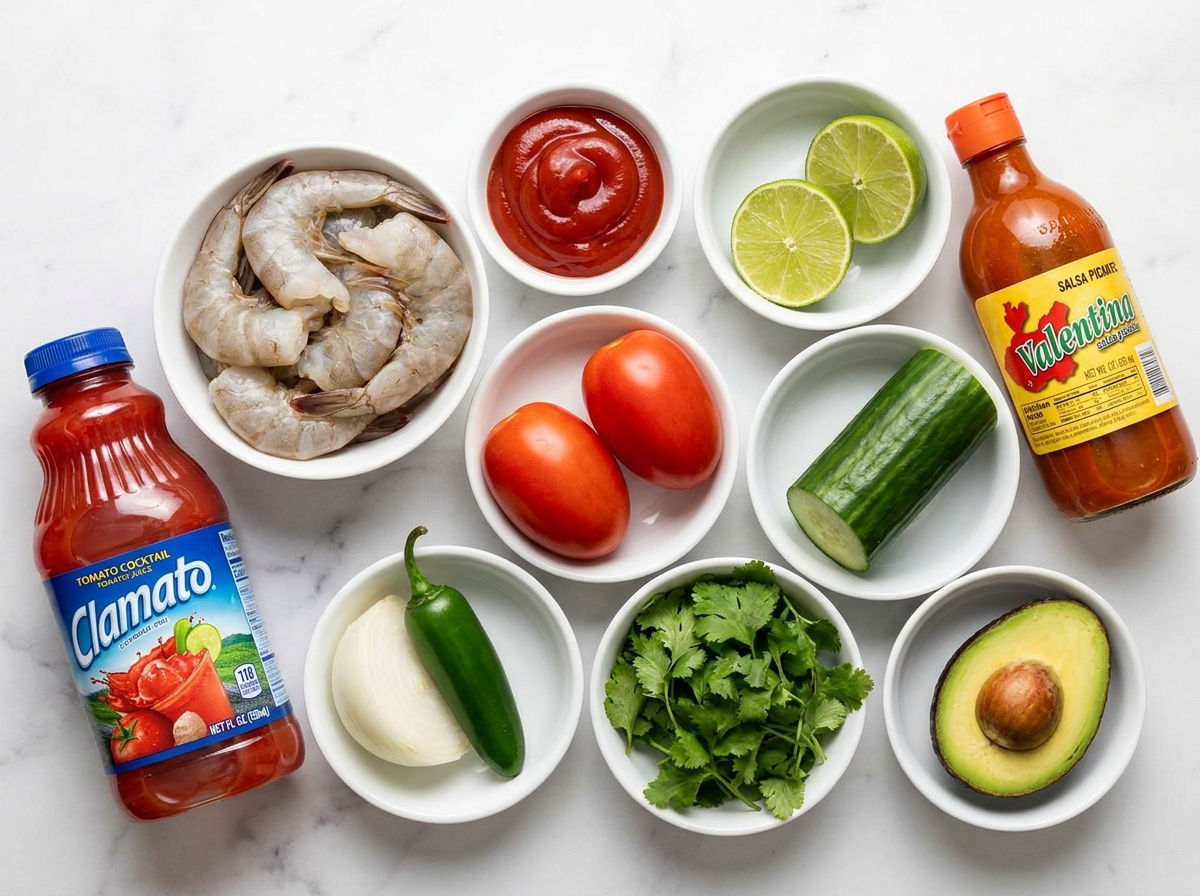
- Large shrimp. They poach evenly in 2 minutes and hold texture better than extra-small or extra-jumbo sizes.
- Clamato juice. The tomato-clam base that gives this cocktail its savory depth. It is meaningfully different from plain tomato juice.
- Ketchup. Adds gentle sweetness and thickens the sauce just enough to coat the shrimp.
- Fresh lime juice. Two limes' worth lifts the whole sauce and balances the ketchup's sweetness.
- Mexican hot sauce. Valentina or Cholula work best. They are tangy rather than just hot.
- Worcestershire sauce. One tablespoon adds savory depth without being identifiable in the finished dish.
- Roma tomatoes. Firm and low in water. They dice cleanly without turning the sauce watery.
- English cucumber. Cool crunch against the spicy sauce. Peel and dice small.
- White onion. Sharp and clean. Soak briefly in cold water to mellow the bite if needed.
- Jalapeño. Seeded and minced for moderate heat. Leave seeds in for more fire.
- Cilantro. Stirred in at the end. Skip only if you genuinely cannot stand it.
- Ripe avocado. Added last so it stays creamy and bright green on top.
Poach, Chill, and Layer in 30 Minutes
- Poach the shrimp. Bring a large pot of salted water to a gentle simmer. Add the shrimp and cook for 2 minutes until pink and opaque through the center. Do not let them boil hard.
- Ice bath immediately. Transfer to a bowl of ice water the second they are done. Let sit for 3 to 4 minutes, then drain and pat dry with paper towels.
- Build the sauce. Whisk together the Clamato, ketchup, lime juice, hot sauce, and Worcestershire in a large bowl. Season with salt. It should be tangy, mildly sweet, and bright.
- Add the vegetables. Stir in the diced tomatoes, cucumber, white onion, jalapeño, and cilantro. Mix until combined.
- Fold in the shrimp. Add the chilled shrimp and fold gently to coat. Refrigerate 30 to 60 minutes if time allows. The flavor deepens noticeably after resting.
- Serve and top. Spoon into tall glasses or wide bowls. Add diced avocado and an extra squeeze of lime on top. Serve with saltine crackers or tostadas and extra hot sauce.
Clamato vs. Plain Tomato Juice
Clamato is the right call. The clam broth adds a savory quality that makes the shrimp taste more like themselves. Plain tomato juice works in a pinch but the finished sauce lands flat. If you cannot find Clamato, mix 3/4 cup tomato juice with 1/4 cup bottled clam juice from the canned seafood aisle. It gets you close.
A small splash of orange juice is a popular variation that adds subtle sweetness against the heat. A few drops of soy sauce can deepen the savory note without changing the dish's character. Both are worth trying once you have the base down.
The Shrimp Poaching Window
Two minutes is the whole window. Shrimp in simmering water go from raw to perfectly cooked to overdone fast. Pull them the moment the flesh turns pink and opaque through the center. If they are curling into tight circles, they have gone too far. The FDA recommends cooking shrimp to an internal temperature of 145°F (63°C) for food safety. At that point they are safe and still tender. Anything past that and the texture turns rubbery.
Swaps That Still Work
No Valentina? Cholula, Tamazula, or Tabasco all work. The tang and heat level vary slightly but the dish handles any of them. For a Worcestershire-free version, a teaspoon of soy sauce plus a drop of fish sauce gets close to the same savory depth without the gluten.
Serrano chiles swap in for jalapeño if you want sharper heat. Diced mango is a popular coastal Mexican addition that adds fruity contrast to the spice. Persian cucumbers behave exactly like English ones. Diced cooked octopus or imitation crab blends in seamlessly if you want to stretch the recipe.
Serving, Chilling, and Making Ahead
The traditional way to serve this is in a tall glass with shrimp tails draped over the rim and saltines on the side. Wide cocktail bowls work just as well. For a party, set out extra lime wedges, hot sauce, and tostadas so guests can customize their own portion.
To make ahead, combine everything except the avocado and refrigerate up to 24 hours. The sauce soaks into the vegetables and becomes richer over time. Add the avocado right before bringing it to the table. FoodSafety.gov has a full guide to safe storage times for cooked seafood if you want detailed guidance.
What to Put on the Table Alongside
This is classic party food and sits well next to other Mexican dishes. Mexican street corn with cotija cheese is a natural match since the grilled sweetness plays well against the chilled, spicy cocktail. A bowl of homemade salsa roja and chips keeps things moving while guests serve themselves.
For a fuller spread, crispy Mexican chicken flautas round things out without much extra effort. And if you love shrimp in Mexican cooking, the shrimp enchiladas with creamy jalapeño sauce are worth bookmarking for your next dinner.
FAQs
- Can I use frozen shrimp?
Yes. Thaw them under cold running water for 3 to 5 minutes, then pat completely dry before poaching. Removing surface moisture keeps them from diluting the sauce.
- What can I substitute for Clamato juice?
Mix 3/4 cup tomato juice with 1/4 cup bottled clam juice, sold near the canned fish. That combination gets close to the real thing. Plain tomato juice or V8 work in a pinch but the dish tastes flatter without the clam element.
- Can I make this ahead of time?
Yes, up to 24 hours ahead. Combine everything except the avocado, cover, and refrigerate. The sauce soaks into the shrimp and vegetables and deepens in flavor. Add the avocado right before serving so it stays bright and does not brown.
- How spicy is it?
Moderate. Two tablespoons of Valentina and one seeded jalapeño give noticeable but manageable heat. For less heat, use one tablespoon of hot sauce and skip the seeds. To turn it up, leave the seeds in or swap in a minced serrano.
- What crackers are traditionally served with Cóctel de Camarones?
Saltine crackers are the classic choice. They are thin, neutral, and good for scooping. Tostadas hold up better if the cocktail is very saucy. Some people spoon a bit of the cocktail sauce right onto the cracker and eat it as a topping.
- Can I add other seafood?
Absolutely. Diced cooked octopus is common in coastal Mexican versions. Imitation crab meat blends in easily and is budget-friendly. Small cooked scallops also work. Any addition should be fully cooked and chilled before going into the bowl.
- How long does it keep?
Best within 24 hours. The cucumber softens after that and the avocado darkens even when added fresh. The shrimp and sauce keep up to 2 days, but the vegetable texture declines. Make it the day you plan to serve it for the best result.
