 Pin it
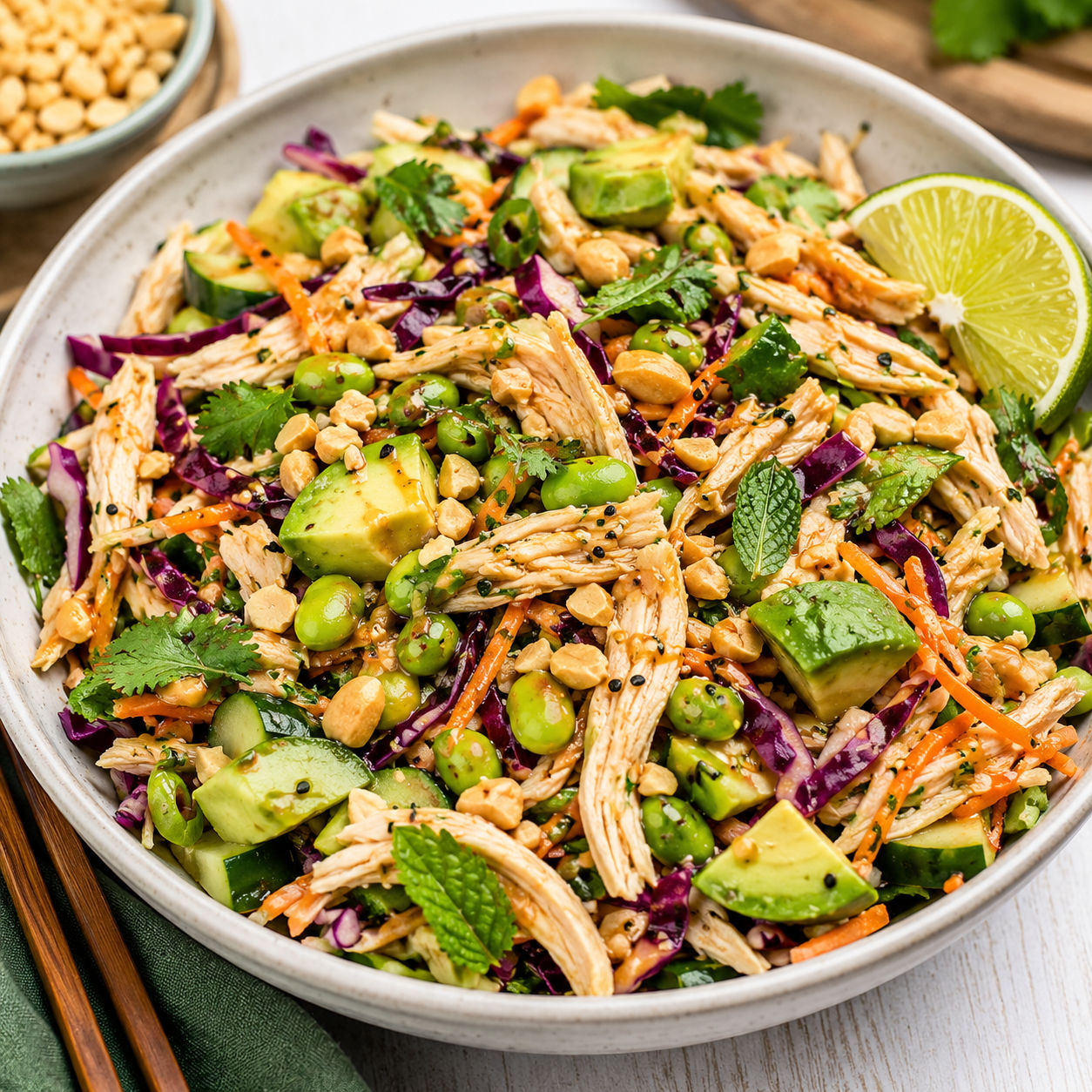
Fresh and Flavorful Asian Chicken Salad is the kind of lunch that actually feels filling without feeling heavy. You get cool cucumber, crisp cabbage, tender chicken, creamy avocado, and a sesame ginger dressing that wakes everything up.
I like it best with rotisserie chicken on busy days. If you have leftover grilled or poached chicken, use that instead. The salad takes about 15 minutes once the chicken is cooked.
Crisp, Colorful Salad Staples
Use vegetables with snap and chicken that is already cooked and tender. The dressing is bold, so the salad can handle sturdy cabbage, fresh herbs, and crunchy peanuts without going flat.
- Cooked chicken. Shredded rotisserie, grilled, or poached chicken makes the salad filling and keeps the prep quick.
- Green and red cabbage. They bring crunch, color, and enough structure to hold the dressing.
- Carrots. Their sweetness balances the vinegar, ginger, and soy sauce.
- Cucumber. It cools the salad and adds clean, juicy texture.
- Edamame. These little beans add protein and a soft bite against the crisp vegetables.
- Avocado. A creamy finish that softens the sharper dressing.
- Cilantro and mint. Fresh herbs make the salad taste bright instead of heavy.
- Peanuts and sesame seeds. They add roasted crunch and a nutty finish.
- Sesame ginger dressing. Rice vinegar, soy sauce, lime, honey, garlic, ginger, and sesame oil tie the bowl together.
Fresh and Flavorful Asian Chicken Salad
- Whisk the dressing. Combine rice vinegar, soy sauce, lime juice, honey, sesame oil, neutral oil, garlic, ginger, and chili flakes until glossy. Taste it now because the vegetables will soften the punch.
- Prepare the chicken. Shred or chop the cooked chicken into bite-size pieces. If it is cold from the fridge, break up any tight clumps so the dressing reaches every piece.
- Build the salad base. Add cabbage, carrots, cucumber, edamame, scallions, cilantro, and mint to a large bowl. Use a bowl with room to toss, not one packed to the rim.
- Toss and finish. Add the chicken and enough dressing to lightly coat everything. Fold in avocado, then top with peanuts and sesame seeds right before serving.
Why The Crunch Holds
Cabbage is the reason this salad stays lively longer than lettuce-based chicken salads. It softens a little after dressing, but it does not collapse right away. Slice it thin so the dressing can coat it without leaving dry, tough pieces. If you like extra crunch, use half napa cabbage and half green cabbage.
The same crisp cabbage style works well in Fresh Sesame Chicken Cabbage Crunch Salad and Asian Chicken Crunch Salad with Peanut Dressing. Those are good next stops if you want a creamier dressing or a more peanut-forward bowl.
Dressing That Tastes Awake
The dressing should taste a little strong before it hits the salad. Rice vinegar gives it lift. Soy sauce adds salt and savoriness. Lime juice sharpens the edge, while honey keeps the vinegar from taking over. Fresh ginger matters here. Powdered ginger will not give the same clean bite.
If you are using leftover cooked chicken, keep food safety in mind. Cooked poultry should be reheated or served cold from proper storage, and chicken needs to reach 165°F when cooked from raw. You can check the safe minimum temperature chart for a quick reference.
Smart Swaps That Fit
No edamame on hand? Use snap peas, shelled peas, or extra cucumber. Swap peanuts for cashews, almonds, or sunflower seeds if needed. For a gluten-free version, use tamari instead of soy sauce. For a vegetarian salad, replace the chicken with crispy tofu or tempeh and keep the rest the same.
A handful of mandarin orange segments makes the salad sweeter. Thinly sliced red bell pepper adds color and crunch. If you want a noodle version, look at Asian Noodle and Beef Salad with Fresh Vegetables for a heartier direction.
Make-Ahead Lunch Strategy
This salad is friendly to meal prep if you pack it in layers. Put cabbage, carrots, cucumber, edamame, scallions, and chicken in one container. Keep herbs wrapped in a barely damp paper towel if you are prepping more than one day ahead. Store the dressing in a jar and shake it right before serving.
For leftovers, follow the USDA guidance on cold storage and use cooked chicken within a few days. Their leftovers and food safety guide is a useful reference. Once dressed, this salad is best by the next day.
What To Serve Alongside
For lunch, this bowl needs nothing more than extra peanuts and a wedge of lime. For dinner, I like it with steamed rice, cold soba noodles, or simple grilled chicken skewers. If you want a cool side with the same fresh feel, pair it with Fresh Asian Cucumber Salad with Sesame, Ginger, and Cilantro.
Summary
Serve this salad right after tossing for the sharpest crunch. For meal prep, store the dressing, avocado, and peanuts separately and assemble just before eating.
FAQs
- Can I use rotisserie chicken for Asian chicken salad?
Yes. Rotisserie chicken is the fastest choice and works well with the sesame ginger dressing. Pull off the skin, shred the meat, and use about 3 cups for four servings.
- What can I use instead of edamame?
Try snap peas, green peas, or thinly sliced bell pepper. Edamame adds protein and a gentle bite, so choose something crisp if you want the salad to keep its texture.
- How do I make this salad gluten-free?
Use tamari instead of soy sauce and check that your chili crunch, if using, is gluten-free. The rest of the salad is naturally free of wheat when the crunchy topping is peanuts or sesame seeds.
- Can I make Asian chicken salad ahead?
You can prep most of it up to 3 days ahead. Keep the dressing, avocado, and peanuts separate. Toss everything right before serving so the cabbage stays crisp.
- How long does leftover chicken salad keep?
Once dressed, it is best within 24 hours because the cabbage softens. Undressed salad components keep in an airtight container in the fridge for up to 3 days.
- What should I serve with this salad?
It works as a full lunch on its own. For dinner, add steamed jasmine rice, cold noodles, or a bowl of miso soup. A simple cucumber salad also pairs well.
