 Pin it
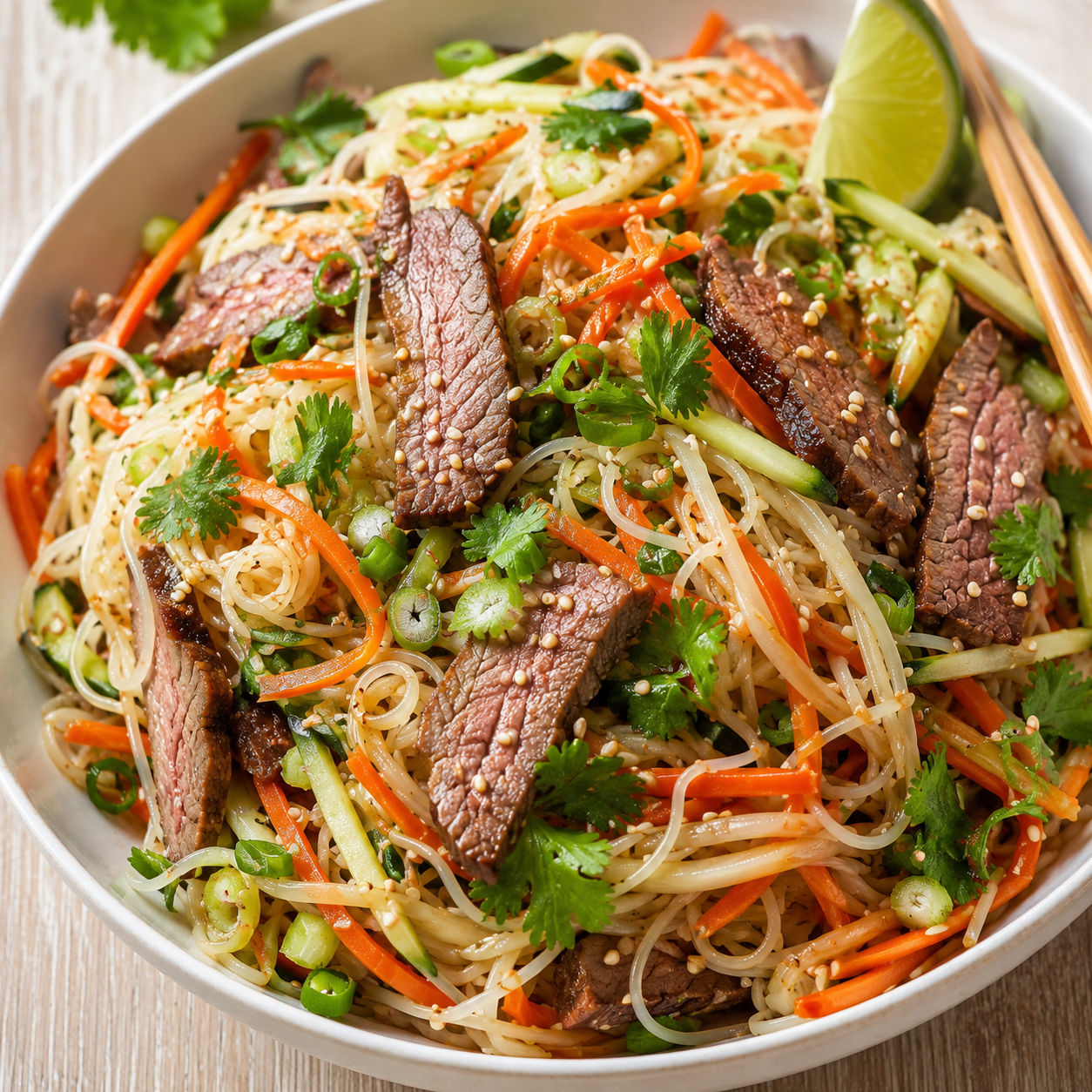
Asian Noodle and Beef Salad with Fresh Vegetables is the kind of dinner that feels cool and crisp but still eats like a real meal. You get tender strips of beef, slippery rice noodles, crunchy carrots, zucchini, celery, and a sharp ginger-lime dressing that wakes up the whole bowl.
I like it most when the steak is still a little warm and the noodles have had ten minutes to drink in the dressing. The vegetables stay snappy, the sesame oil smells nutty, and every bite lands somewhere between salad and noodle bowl.
Fresh Beef Noodle Bowl Basics
Choose a steak with a little marbling and vegetables that feel firm and crisp. The dressing is simple, so fresh lime juice, real ginger, and toasted sesame oil make a clear difference.
- Top sirloin steak. Gives the salad savory depth and stays tender when grilled or seared quickly.
- Thin rice noodles. Soak up the dressing without making the bowl heavy.
- Zucchini. Adds a mild green crunch that blends easily with the noodles.
- Carrots. Bring sweetness, color, and a clean snap.
- Celery. Keeps the salad fresh and juicy after tossing.
- Tamari or soy sauce. Builds the salty base of the dressing.
- Lime juice and rice vinegar. Add brightness and help balance the beef.
- Fresh ginger. Gives the dressing warmth without making it spicy.
- Toasted sesame oil. Adds a nutty finish. Use a measured hand because it is strong.
- Cilantro or basil. Fresh herbs make the whole salad taste lighter.
Asian Noodle Beef Salad Method
- Mix the dressing. Whisk tamari, lime juice, rice vinegar, honey, ginger, garlic, and sesame oil until the honey dissolves. Let it sit while you cook so the ginger blooms.
- Cook the beef. Pat the steak dry, season it with pepper, and grill or sear it over medium-high heat until browned outside and cooked to your liking.
- Rest and slice. Move the steak to a board for 5-10 minutes. Slice thinly against the grain so each strip is tender.
- Soak the noodles. Prepare the rice noodles according to the package directions, then rinse under cold water and drain well.
- Cut the vegetables. Slice zucchini, carrots, and celery into thin pieces that can twirl with the noodles.
- Toss the salad. Combine noodles, vegetables, beef, herbs, and most of the dressing. Add the rest only if the noodles need it.
Slice The Steak Right
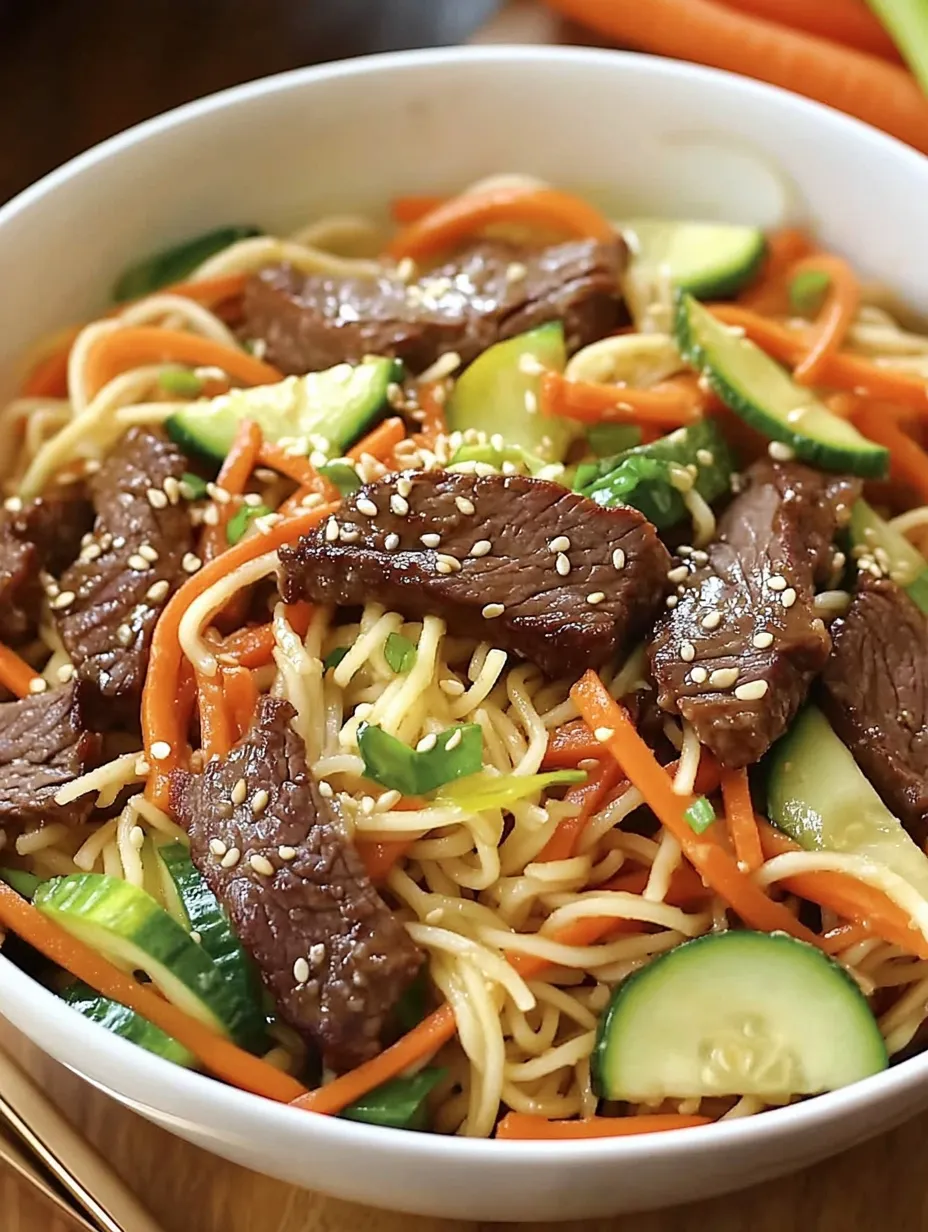
The beef is the only cooked part, so it needs a little care. Pat it dry before it hits the pan or grill. Moisture on the surface blocks browning, and browning is where the salad gets its deeper flavor. Let the steak rest before slicing. If you cut right away, the juices run out and the meat tastes flatter.
Look for the grain, those long lines running through the steak. Cut across those lines into thin strips. This matters more than the exact cut. A lean sirloin sliced correctly will eat softer than a pricier piece sliced the wrong way. The USDA safe temperature chart is useful if you prefer checking doneness with a thermometer, especially when cooking for guests. See the USDA internal temperature guide.
Keep The Noodles Springy
Rice noodles can go from firm to limp fast. Use the package time as a guide, but start checking early. They should bend easily and still have a little bounce. Rinse them with cold water right away to stop the cooking and wash off extra surface starch.
Drain them better than you think you need to. Wet noodles thin the dressing and leave a puddle at the bottom of the bowl. I shake the colander a few times, then let the noodles sit while I slice the vegetables. If you like noodle salads with more crunch, the Ramen Noodle Cabbage Salad is another good one to keep in rotation.
Vegetables That Hold Crunch
Fresh vegetables are not just color here. They keep the salad lively against the beef and noodles. Carrots, celery, and zucchini hold up well because they stay crisp after a short rest in the dressing. Cut everything thin so you get a little of each ingredient in every bite.
Cucumber works, but scrape out the watery center if you are making the salad ahead. Bell pepper adds sweetness. Snow peas add a firmer bite. For a brighter all-vegetable side with similar flavors, try the Asian Cucumber Salad. If you want a heartier chicken version, the Asian Chicken Crunch Salad leans into cabbage and peanut dressing.
Dressing Balance Matters
The dressing should taste a little too strong from the spoon. Once it coats beef, noodles, and raw vegetables, it softens. Lime and vinegar bring sharpness. Tamari brings salt. Honey rounds the edges. Ginger and garlic give it backbone.
Add three-quarters of the dressing first, toss, and wait a few minutes. Rice noodles absorb liquid slowly. If you pour it all in at once, the salad can taste over-sauced at first and dry later. A final spoonful right before serving keeps everything glossy. For another fresh noodle bowl direction, the Quick Shrimp Lo Mein with Fresh Vegetables has a warmer stir-fry feel.
Make-Ahead And Storage
This salad is friendly to prep, but it tastes best when the pieces are stored separately. Keep the cooked beef, drained noodles, cut vegetables, herbs, and dressing in their own containers. Toss them together 15-20 minutes before eating so the noodles season without turning soft.
Leftovers keep for up to 3 days in the refrigerator. The herbs will darken and the vegetables will soften a little, but the flavor stays good. FoodSafety.gov has a helpful cold storage chart if you want a quick reference for refrigerated leftovers. You can find it at the FoodSafety.gov cold storage guide.
Summary
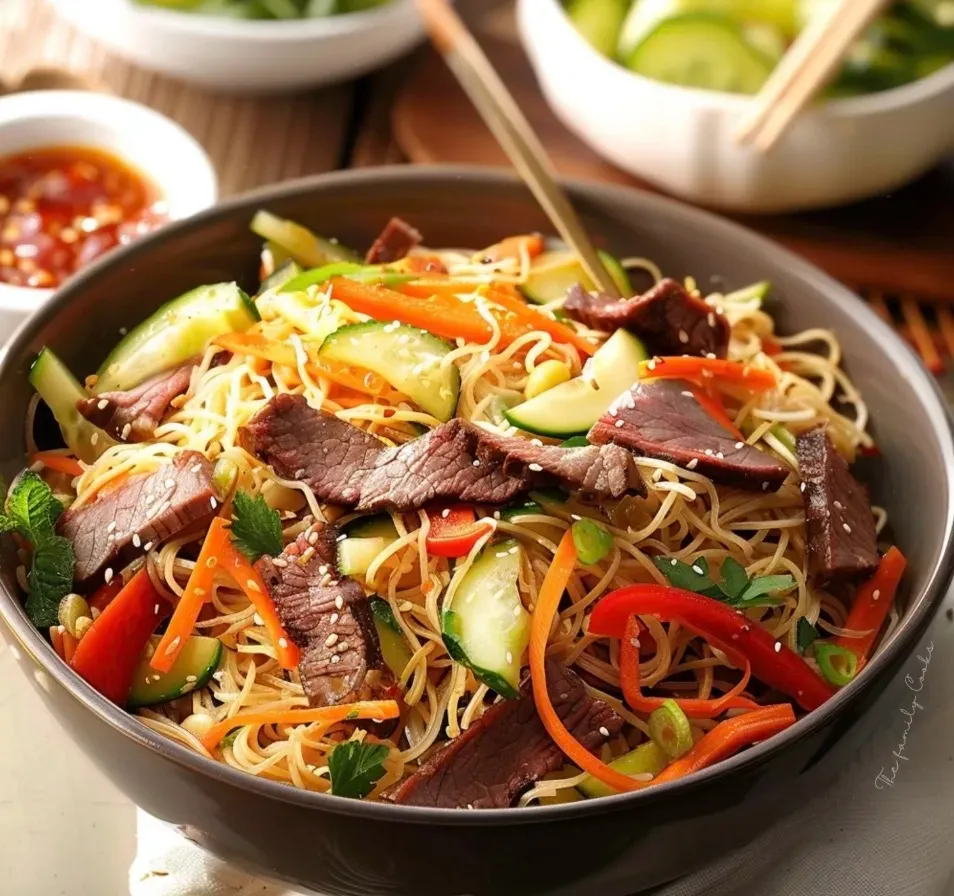
Serve this beef noodle salad slightly chilled or at room temperature. Keep the dressing separate if you are packing it ahead.
FAQs
- What cut of beef is best for Asian beef noodle salad?
Top sirloin is a good choice because it cooks quickly and slices neatly. Flank steak or skirt steak also work well, but cut them thinly against the grain so the pieces stay tender.
- Can I use leftover steak?
Yes. Thinly sliced leftover grilled steak is excellent here. Let it come closer to room temperature before tossing so it does not chill the dressing too much.
- Can I make this salad gluten-free?
Use rice noodles and replace soy sauce with gluten-free tamari. Check the label on your rice vinegar and sesame oil too, since some brands are processed around wheat.
- How far ahead can I make it?
You can prep the dressing, vegetables, noodles, and beef up to one day ahead. Store them separately, then toss 15-20 minutes before serving for the best texture.
- How do I keep rice noodles from clumping?
Rinse them under cold water after soaking, then drain them very well. Toss them with a spoonful of dressing before adding the vegetables if they start sticking together.
- What vegetables can I substitute?
Cucumber, red bell pepper, snow peas, shredded cabbage, or radishes all fit this salad. Keep the cuts thin so the vegetables mix easily with the noodles.
- What should I serve with beef noodle salad?
It is filling enough on its own, but it also works with dumplings, lettuce cups, or a light cucumber side. For a bigger spread, add a crisp salad with a different dressing.
