 Pin it
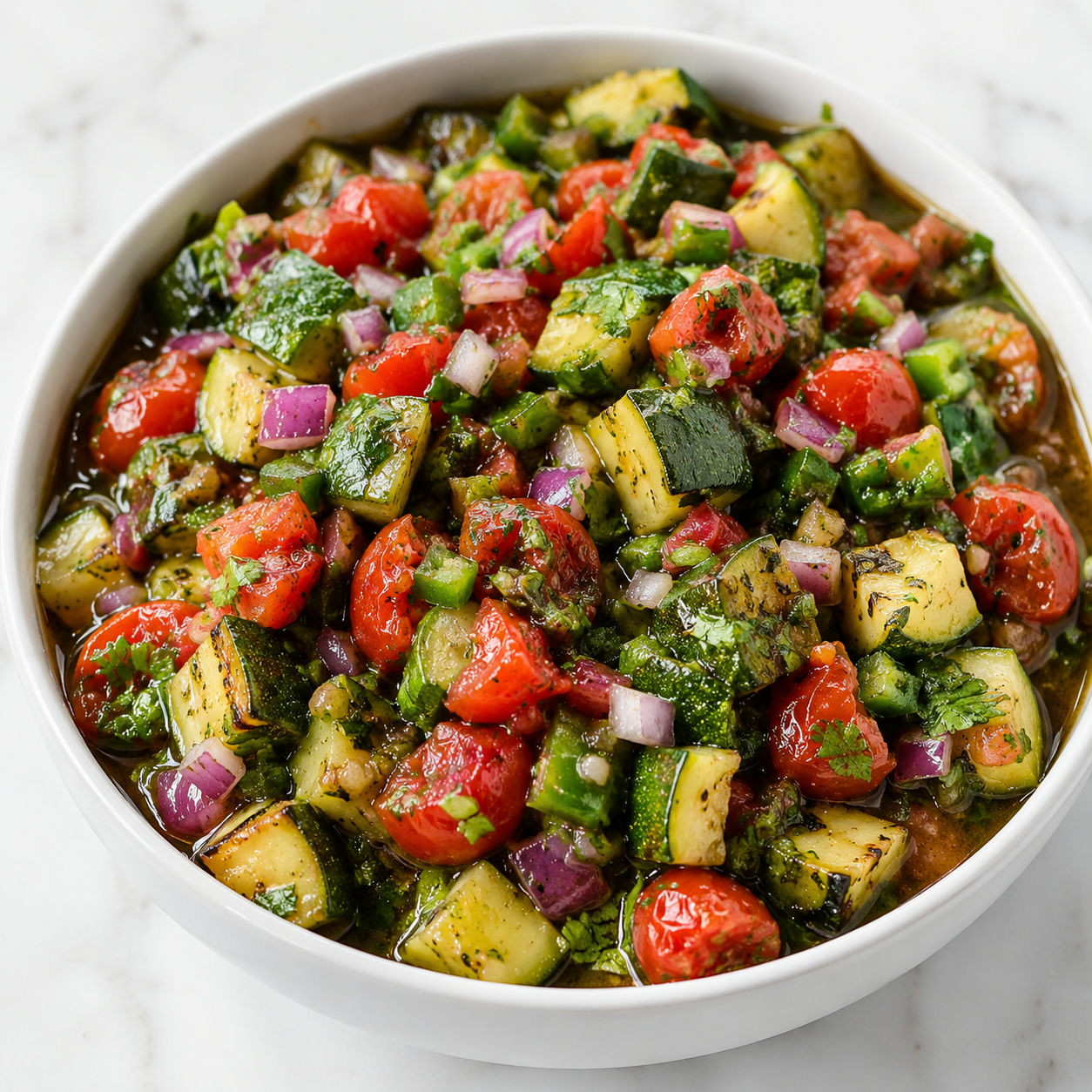
Zucchini Salsa is what I make when the garden gives me one more zucchini and I want something brighter than another casserole. The zucchini gets a quick roast with tomatoes, onion, jalapeno, and garlic, then everything is tossed with lime and cilantro while still a little warm.
It lands somewhere between pico de gallo and roasted salsa. You get soft edges from the vegetables, a clean lime finish, and enough texture to pile onto a sturdy chip without it sliding right off.
Fresh Garden Salsa Lineup
Choose zucchini that feels firm and heavy for its size. Smaller zucchini have fewer seeds and a cleaner bite, which matters in a salsa where every piece shows.
Roma tomatoes work well because they are meaty, but cherry tomatoes are sweet and roast quickly. If your tomatoes are very juicy, scrape out some seeds before they hit the pan.
- Zucchini. Adds a mild, tender bite and stretches the salsa into something hearty enough for tacos.
- Tomatoes. Bring sweetness, juice, and the familiar salsa base.
- Red onion. Gives sharpness and a little crunch once roasted.
- Jalapeno. Adds fresh heat. Remove the seeds for a gentler bowl.
- Garlic. Roasts until mellow and savory instead of harsh.
- Lime juice. Brightens the vegetables and keeps the salsa from tasting flat.
- Cilantro. Adds a fresh finish after the pan comes out of the oven.
- Olive oil and salt. Help the vegetables brown and pull the whole salsa into balance.
Roast, Chop, Then Brighten
- Heat the oven. Set it to 425°F and line a rimmed baking sheet with parchment for easier cleanup.
- Cut the vegetables. Dice the zucchini into small half-inch pieces, halve the tomatoes, and finely chop the onion and jalapeno so every scoop tastes balanced.
- Roast the base. Toss zucchini, tomatoes, onion, jalapeno, and garlic with olive oil and salt. Roast until the zucchini is tender and the tomatoes slump, about 18-20 minutes.
- Drain if needed. Spoon off any extra liquid on the pan if the tomatoes released a lot of juice. This keeps the salsa chunky.
- Finish the salsa. Transfer the warm vegetables to a bowl. Stir in lime juice, cilantro, cumin, and more salt to taste.
- Rest before serving. Let it sit for 10 minutes so the lime and salt settle into the vegetables. Serve warm, room temperature, or chilled.
Why Zucchini Salsa Works
Zucchini is mild, so it needs heat, acid, and salt to act like salsa instead of a side vegetable. Roasting solves the first problem. The edges soften, the tomatoes concentrate, and the onion loses its raw bite. Lime solves the second problem. Add it after roasting so the flavor stays clean and bright.
The biggest salsa mistake is extra water. Bon Appetit points out that watery tomatoes can thin out homemade salsa fast, and zucchini can do the same if it is cut too large or left raw. Keep the dice small, roast on a wide pan, and do not crowd the vegetables. If you like salsa with a similar fresh bite, try this radish salsa next.
Heat And Texture Tweaks
For mild salsa, scrape the jalapeno clean and use half. For more heat, leave some seeds in or add a serrano. If you want a smokier bowl, broil the pan for the last 1-2 minutes and watch closely so the garlic does not burn.
You can also change the texture. Chop everything by hand for a chunky salsa. Pulse it once or twice in a food processor for something spoonable, but stop before it turns smooth. Better Homes and Gardens has a useful overview of how peppers, tomatoes, citrus, and herbs work together in homemade salsa at their salsa guide.
Smart Ways To Serve It
Tortilla chips are the obvious move, and they should be thick enough to handle the zucchini. I also like this spooned over grilled chicken, black bean tacos, fried eggs, or a simple rice bowl with avocado. It is especially good next to recipes that already lean Tex-Mex, like Tex-Mex zucchini bake or grilled salsa verde chicken.
For a snack board, set it out with chips, lime wedges, sliced cucumbers, and a bowl of crispy zucchini chips. Keep the salsa in a shallow bowl so people get vegetables and juice in each scoop.
Make-Ahead And Storage
Zucchini salsa tastes best after a short rest, so making it 30 minutes ahead is helpful. For longer storage, chill it in a covered container for up to 3 days. The vegetables will soften as they sit, but the flavor stays good.
Do not freeze it. Tomatoes and zucchini release too much water after thawing. If leftovers look loose, drain off a spoonful of liquid and freshen the bowl with another squeeze of lime and a pinch of salt before serving.
Canning Is Different
This is a refrigerator salsa. It is not tested for water-bath canning, and zucchini changes the balance of a salsa more than most people expect. If you want shelf-stable jars, use a tested canning recipe from a university extension or another approved food preservation source.
For everyday cooking, this quick version is simpler and brighter. Make a small batch, eat it within a few days, and let the zucchini keep a little texture.
Summary
Serve this salsa chilled or at room temperature with tortilla chips, tacos, grilled meats, eggs, or rice bowls.
FAQs
- Can I make zucchini salsa with raw zucchini?
You can, but the texture is firmer and the flavor is more grassy. A short roast softens the zucchini, pulls out some moisture, and gives the salsa a sweeter flavor without making it mushy.
- Do I need to peel the zucchini?
No. The peel adds color and helps the diced pieces hold their shape. Use small or medium zucchini with smooth skin for the best texture.
- How long does zucchini salsa last?
Keep it in an airtight container in the refrigerator for up to 3 days. Stir before serving because the lime and vegetable juices settle at the bottom.
- Can I make it less spicy?
Yes. Remove the jalapeno seeds and white ribs, or use only half the pepper. For no heat, swap in a small diced green bell pepper after roasting.
- What should I serve with zucchini salsa?
Serve it with tortilla chips, spoon it over tacos, or use it on grilled chicken, shrimp, salmon, eggs, and rice bowls. It is also good tucked into quesadillas or scattered over nachos right before serving.
- Can I can this zucchini salsa?
This recipe is written for the refrigerator, not shelf-stable canning. Zucchini changes acidity and density, so use a tested canning recipe if you want jars for the pantry.
