 Pin it
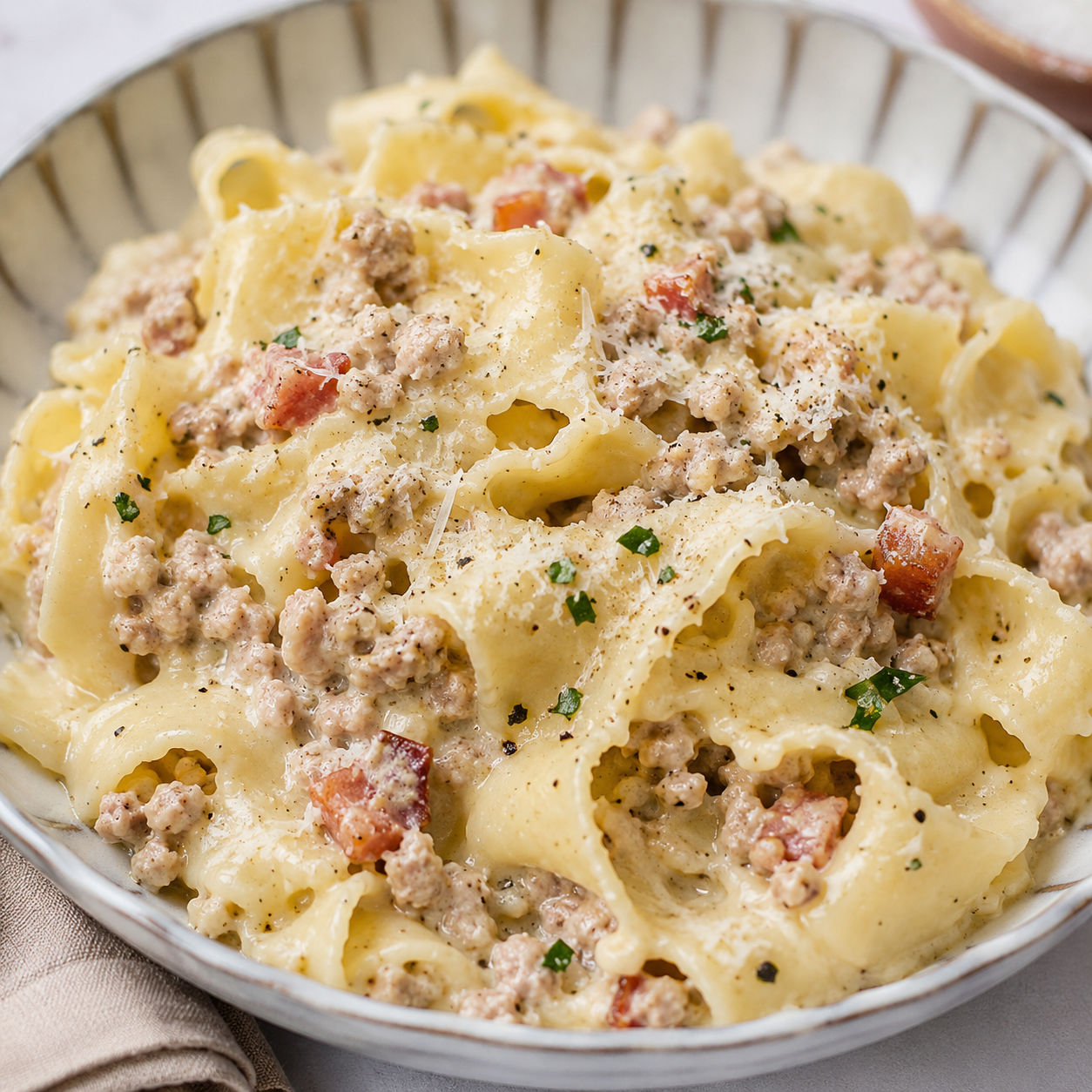
Rich white Bolognese sauce for pasta is what I make when I want the comfort of a slow meat sauce without the weight of tomato. It is creamy, savory, and mellow, with pancetta tucked into the base and just enough white wine to keep it from feeling flat.
The sauce needs time more than effort. Once the meat is browned and the vegetables are soft, it simmers quietly until the milk and broth reduce around the meat. Wide pasta is best because every ribbon catches the creamy bits.
The Creamy White Lineup
Choose ingredients with enough fat and depth to carry a tomato-free sauce. Pancetta, milk, and parmesan do the heavy lifting, while finely chopped onion, carrot, and celery melt into the background.
- Pancetta. Starts the sauce with salty pork fat and a deep cured flavor.
- Ground beef and pork. Give the sauce body, richness, and a tender bite when simmered slowly.
- Onion, carrot, and celery. Make the soffritto base that keeps the sauce sweet and rounded.
- Garlic. Adds a quiet savory note without taking over the sauce.
- Dry white wine. Lifts the browned meat from the pan and keeps the cream from tasting heavy.
- Chicken broth. Gives the sauce enough liquid to simmer until the meat softens.
- Whole milk and cream. Build the pale, silky body that makes this ragu bianco feel rich.
- Parmesan and nutmeg. Finish the sauce with salt, depth, and a warm dairy-friendly aroma.
Build The Sauce Slowly
- Render the pancetta. Cook it in olive oil until the fat releases and the edges turn lightly crisp. Leave the fat in the pot because it seasons the soffritto.
- Soften the vegetables. Add onion, carrot, celery, and a pinch of salt. Cook until soft and glossy, not browned, so the sauce stays gentle.
- Brown the meat. Add beef and pork, then break it into small pieces. Let the moisture cook off before moving on, or the sauce will taste boiled.
- Reduce the wine. Pour in the white wine and scrape the pot well. Let it bubble until the sharp alcohol smell fades.
- Simmer the dairy base. Stir in broth, milk, cream, bay leaf, rosemary, and nutmeg. Simmer gently until thick and rich.
- Toss with pasta. Cook pasta just shy of al dente, then toss it with sauce, parmesan, and pasta water until glossy.
Brown Meat Before Simmering
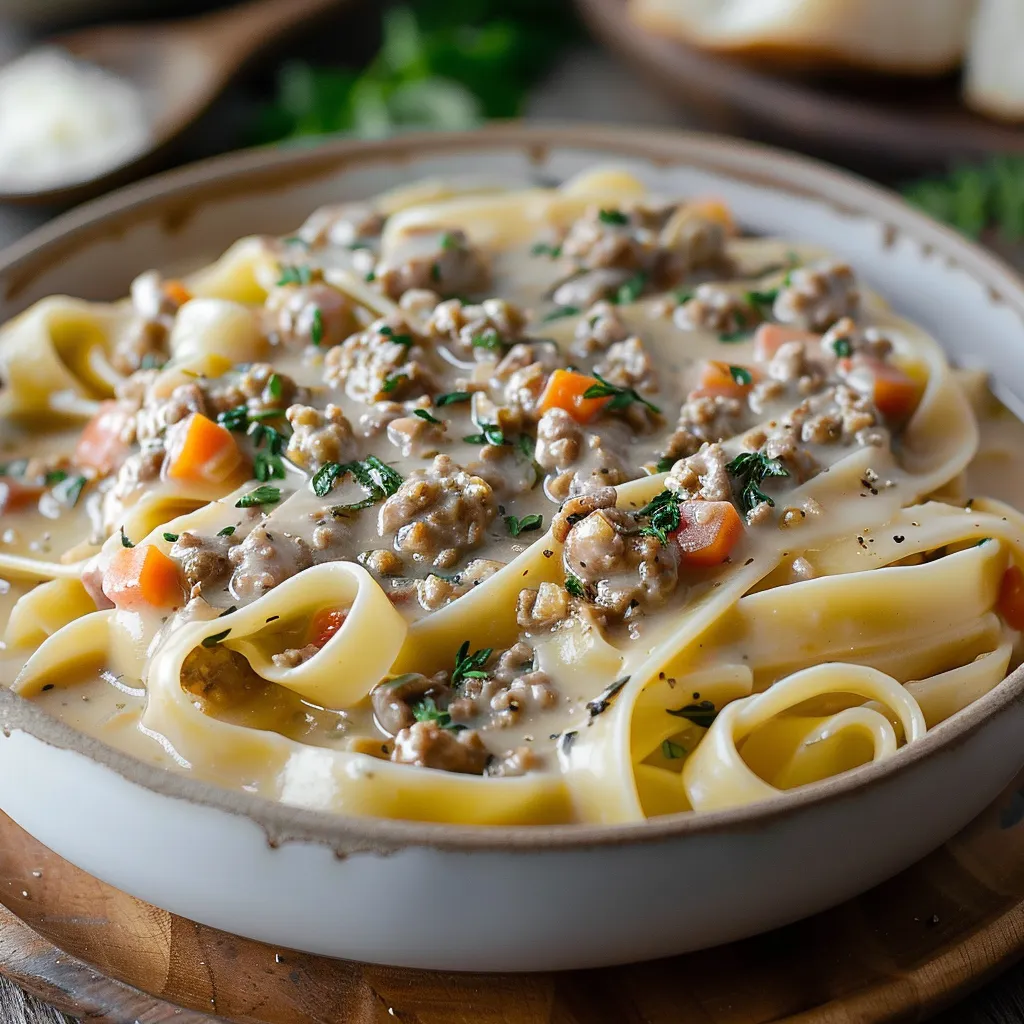
The best flavor comes before the liquid goes in. Once the meat hits the pot, give it enough time to lose its raw moisture and start sizzling. You do not need a hard crust on every bit, but you do want a few browned spots on the bottom of the pot.
That browned layer is why the wine matters. It loosens the stuck-on flavor and folds it back into the sauce. The official Bolognese recipe from the Accademia Italiana della Cucina also leans on slow cooking, wine, pancetta, and milk for depth, even though this white version skips the tomato.
Why Pasta Water Matters
White Bolognese should cling to pasta, not sit under it. The fix is starchy pasta water. Add a splash when tossing the pasta with sauce and parmesan, then keep tossing until the sauce turns glossy and hugs the noodles.
This is the same finishing move that helps creamy pasta dishes feel smooth instead of heavy. If you like that texture, try the site's creamy parmesan garlic pasta or the richer creamy garlic beef pasta next.
Smart Swaps That Work
Ground veal can replace the pork or part of the beef if you want a softer, restaurant-style sauce. Bacon works when pancetta is hard to find, but use less salt because bacon is often smokier and sharper. For herbs, rosemary is classic with white ragu. Sage or thyme also fit, but use a light hand.
You can make the sauce lighter with all whole milk instead of cream. It will be less plush, but still good if you simmer it long enough. For a nearby tomato-free sauce with a different personality, the garlic white sauce is quicker and smoother.
Serving It Well
Pappardelle is my first pick because the wide noodles carry the meat and cream without getting buried. Tagliatelle, fettuccine, and rigatoni are strong choices too. Finish each bowl with parmesan, black pepper, and a little lemon zest if the sauce tastes too rich.
A crisp salad or roasted green vegetable is enough on the side. If you want a bigger pasta night, pair it with something bright like homemade Italian pasta salad so the meal does not feel too heavy.
Storing And Reheating
Store the sauce without pasta when you can. It keeps in the fridge for up to 4 days and freezes for about 2 months. Cool it quickly, then pack it in shallow containers.
Reheat on low with a splash of broth or milk. Cook fresh pasta while the sauce warms, then toss everything together with pasta water. If reheating pasta already mixed with sauce, use a skillet instead of a microwave for better texture.
FAQs
- What is white Bolognese sauce?
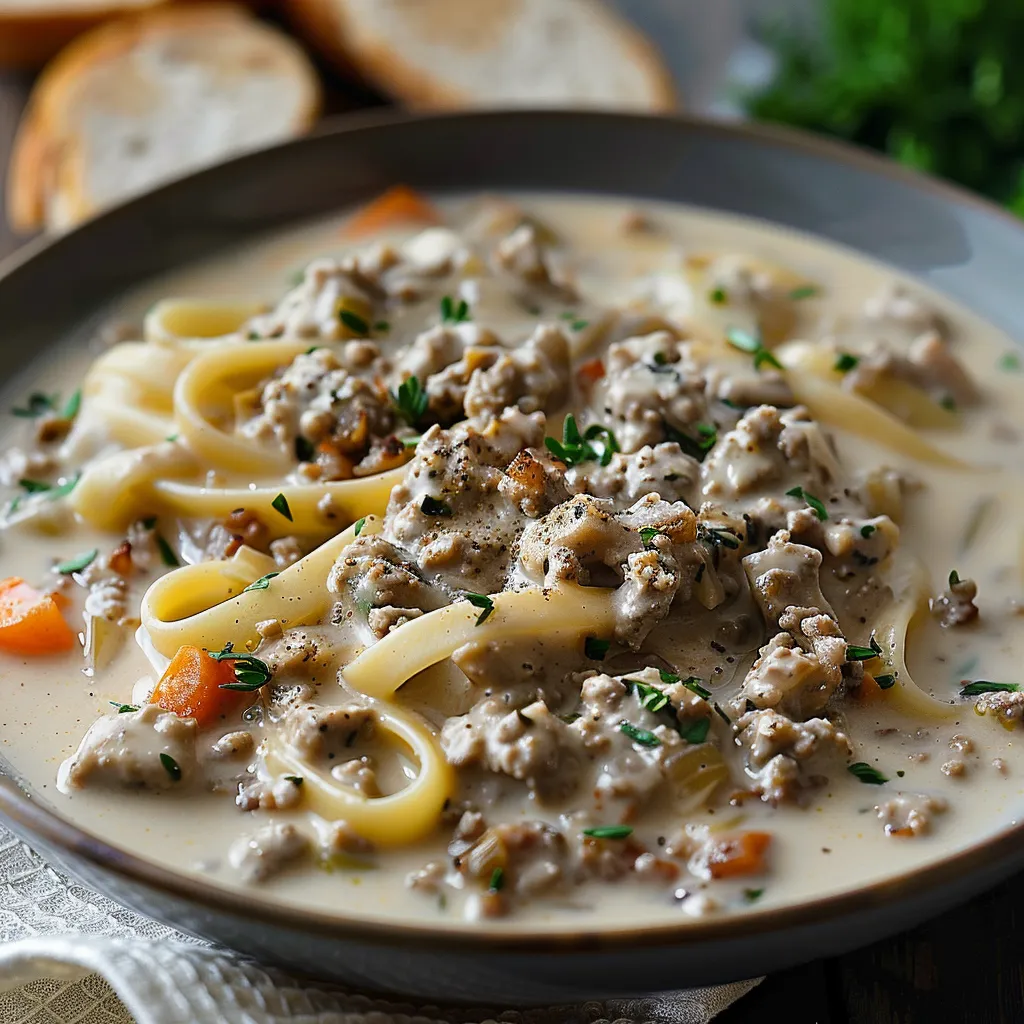
White Bolognese is a tomato-free meat sauce, often called ragu bianco. It uses ground meat, pancetta, soffritto, wine, broth, and milk or cream for a pale, rich sauce that coats pasta.
- Can I make this without wine?
Yes. Use extra chicken broth plus 1 teaspoon of white wine vinegar or lemon juice near the end. The sauce will be slightly softer in flavor, but it will still taste rich and balanced.
- What pasta shape works best?
Pappardelle, tagliatelle, fettuccine, and rigatoni all work well. Wide ribbons catch the meat sauce beautifully, while rigatoni traps the creamy bits inside the tubes.
- Can I make white Bolognese ahead?
Yes. The sauce tastes even better after a night in the fridge. Rewarm it gently with a splash of broth, milk, or pasta water before tossing with fresh-cooked pasta.
- Why did my sauce turn greasy?
The meat may not have simmered long enough, or the heat was too high after adding the dairy. Let the sauce reduce slowly and stir in pasta water at the end to bring the fat and liquid together.
- Can I use all beef instead of beef and pork?
You can use all beef, preferably 85 to 90 percent lean. The pork adds sweetness and a softer texture, so add an extra tablespoon of butter or cream if using only beef.
