 Pin it
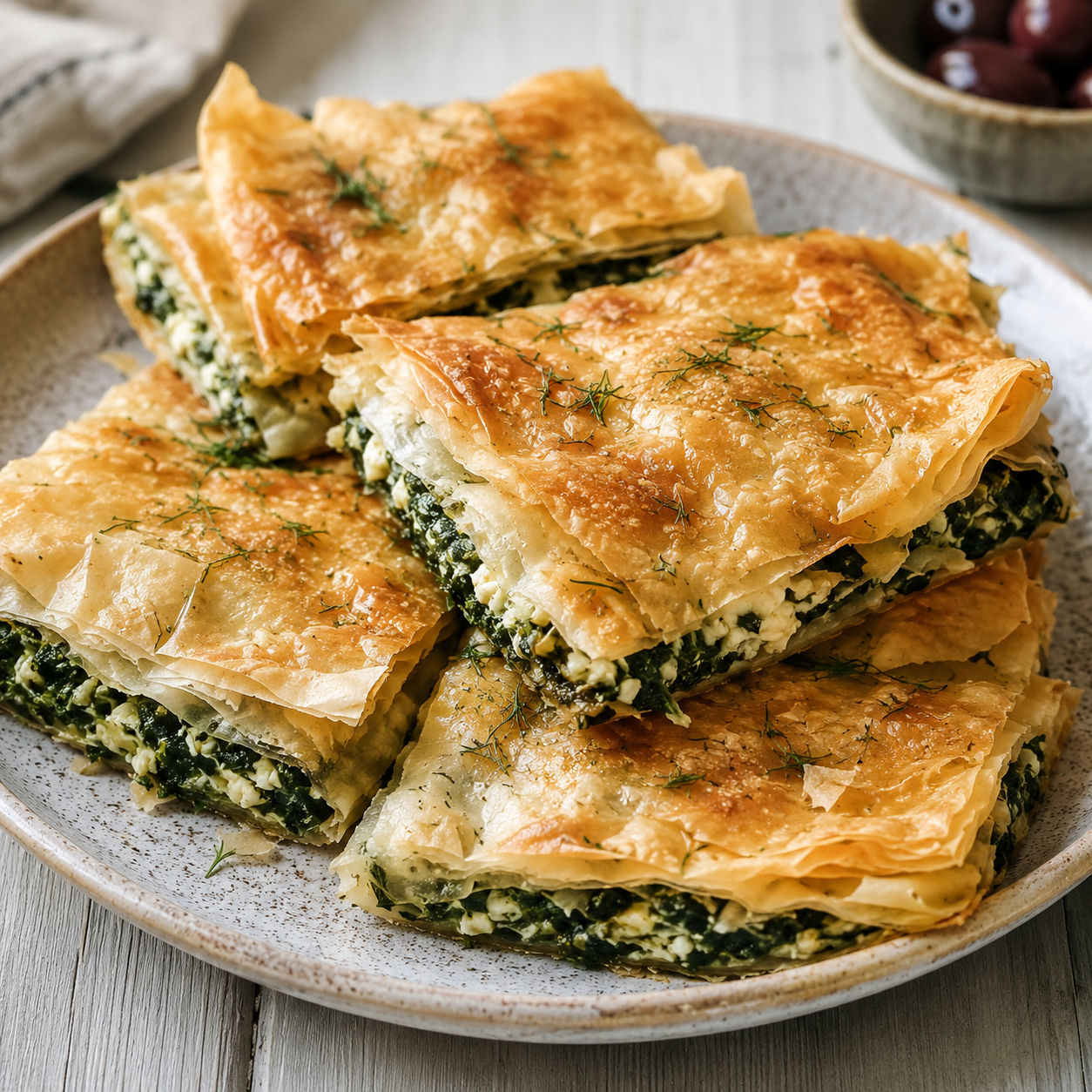
Authentic Greek Spinach Pie (Spanakopita) with Feta and Crispy Phyllo is all about balance. The filling should taste green and bright, not heavy, with salty feta, fresh dill, scallions, and just enough egg to hold it together.
The phyllo takes a little patience, but it is not fussy once you keep it covered and brush each sheet lightly. The reward is a pan of crackly golden layers with a tender spinach center that works for dinner, brunch, or a tray of appetizers.
Feta, Greens, And Phyllo
Good spanakopita starts with dry greens, briny feta, and phyllo that has been thawed gently. Fresh dill is the flavor that makes the filling taste Greek, so do not skip it if you can help it.
- Spinach. Gives the pie its earthy green filling and needs to be well drained for a crisp crust.
- Greek feta. Adds salt, tang, and creamy pockets through the filling.
- Scallions and leek. Bring a sweet onion flavor without overpowering the spinach.
- Fresh dill and parsley. Keep the pie bright and herbal instead of dense.
- Eggs. Bind the filling so the slices hold together after resting.
- Phyllo pastry. Bakes into thin crisp layers around the spinach and feta.
- Extra virgin olive oil. Brushes between the sheets and gives the crust a traditional savory finish.
- Lemon zest and nutmeg. Add a quiet lift that makes the feta taste fresher.
Authentic Greek Spinach Pie Method
- Thaw the phyllo. Let it thaw overnight in the refrigerator, then rest at room temperature while you make the filling.
- Cook the greens. Wilt the spinach with scallions and leek until soft, then drain and squeeze out as much liquid as you can.
- Mix the filling. Stir the cooled spinach with feta, herbs, eggs, lemon zest, nutmeg, salt, and pepper until just combined.
- Build the base. Oil a 9x13-inch pan and layer half the phyllo sheets, brushing each one lightly with olive oil.
- Add the filling. Spread the spinach mixture evenly over the base and press it gently into the corners.
- Finish the top. Layer the remaining phyllo with olive oil, tuck in the edges, and score the top into squares.
- Bake and rest. Bake until golden and crisp, then rest 15 minutes before slicing so the filling settles.
Drain The Spinach Hard
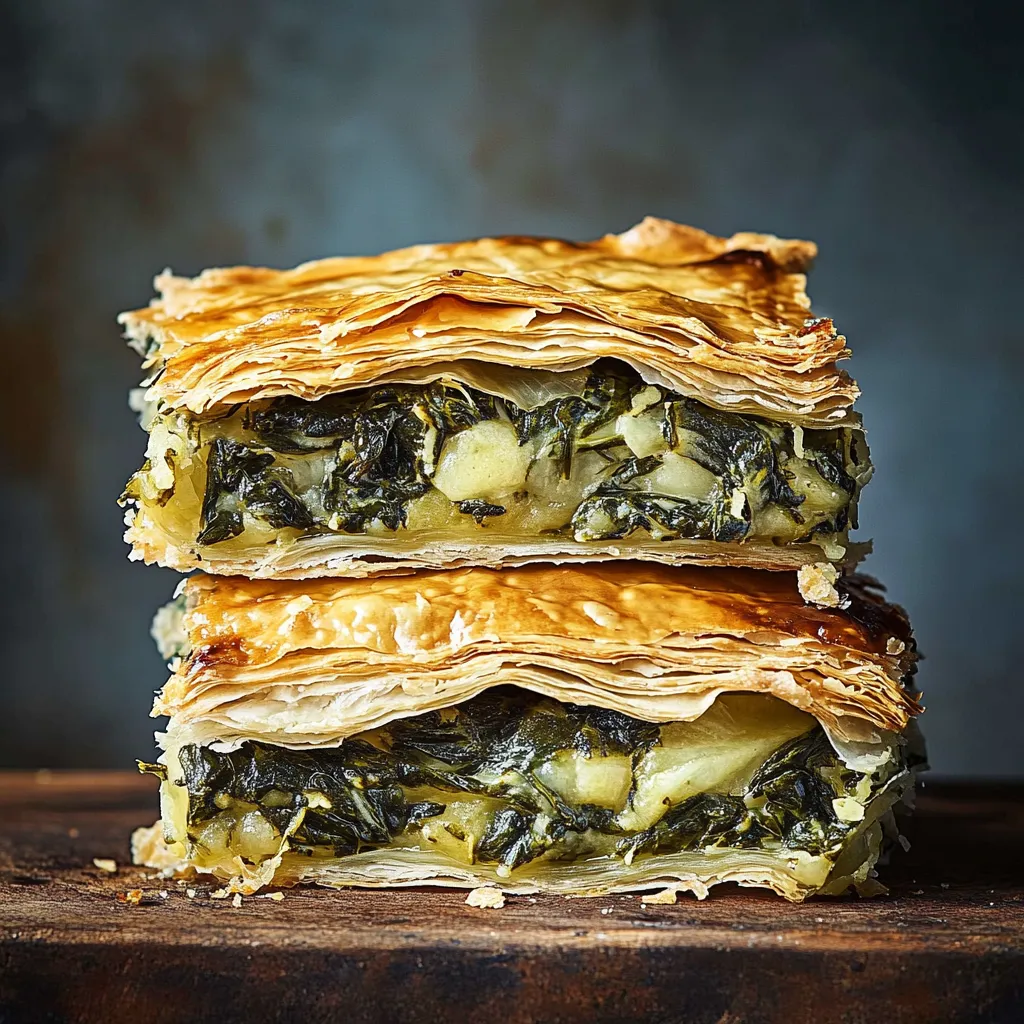
Moisture is the make-or-break detail. Fresh spinach looks like a mountain at first, then collapses into a small pan of greens with a surprising amount of liquid. Cook it just until wilted, tip it into a colander, and let it cool enough to handle. Then squeeze it in a clean towel until it feels almost dry.
Frozen spinach works too, but it needs the same treatment. Thaw it fully and squeeze in batches. If water runs out when you press the filling with a spoon, the pie will steam from the inside. That steam softens the bottom layers before the phyllo has time to crisp.
Layer Phyllo Without Panic
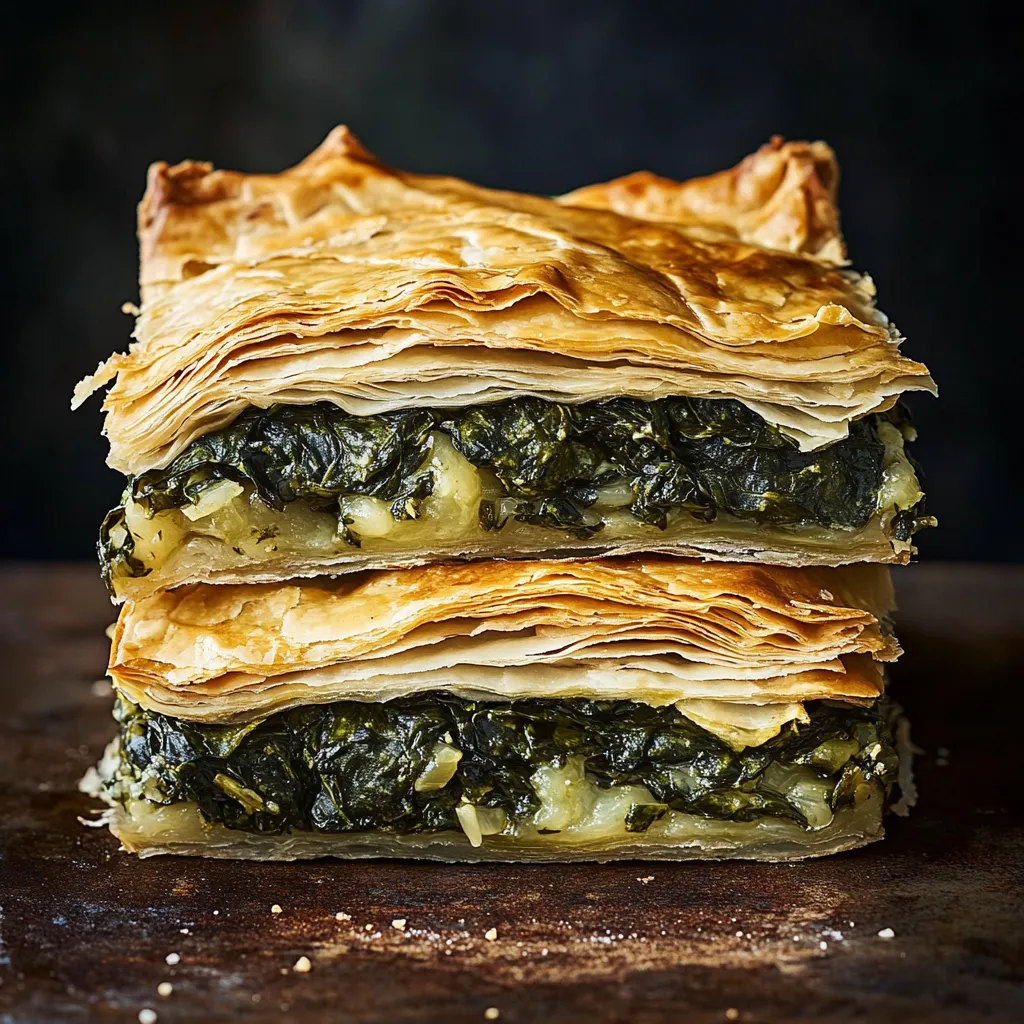
Phyllo dries quickly, so set up before you open the package. Keep the stack under a clean towel that is barely damp, not wet. Brush the pan, lay in a sheet, brush again, and repeat. The oil does not need to soak the sheet. A thin shine is enough.
If a sheet tears, use it anyway. Spanakopita is built from many layers, and small cracks disappear once the next sheet goes on. For more phyllo ideas, the same crisp pastry shows up in hot honey feta phyllo rolls and crispy feta fillo honey bites.
Keep The Filling Greek
Brined feta, dill, scallions, and olive oil give spanakopita its familiar flavor. Ricotta can make the filling softer, but it also makes the pie taste less sharp. If you need to stretch the filling, use a small spoonful of ricotta rather than replacing the feta completely.
Mint is optional, but a little is lovely. Lemon zest is not always used, yet it brightens the spinach without turning the pie lemony. For another spinach and feta dinner, try the golden spinach and feta bake. For a broader traditional overview, The Greek Foodie has helpful notes on Greek-style phyllo and herbs.
Serve It Warm Or Room Temperature
Spanakopita does not need to be piping hot. In fact, it slices more cleanly after a short rest, and the flavor opens up as it cools. Serve larger squares as a meatless main with a tomato salad, olives, and yogurt sauce. Smaller squares are easy to pass as appetizers.
For a Greek dinner spread, pair it with Greek roast potatoes with lemon and feta or a platter of Greek chicken gyros if you want a heartier table.
Store It So It Recrisps
Leftover spanakopita keeps in the refrigerator for up to 4 days. Let it cool first, then cover it loosely or store pieces in a container lined with a paper towel. Reheat slices on a baking sheet at 350°F until the pastry crisps again and the center is warm.
A microwave warms the filling but makes the phyllo limp. Use the oven or toaster oven when you can. For general leftover timing, the USDA leftover safety guide is a useful reference.
FAQs
- Can I use frozen spinach for spanakopita?
Yes. Thaw it completely, then squeeze it hard in a clean towel until very dry. Use about 20 ounces frozen spinach in place of 2 pounds fresh spinach.
- What feta is best for Greek spinach pie?
Use a block of Greek feta packed in brine if you can find it. It crumbles cleanly, tastes tangy, and does not dry out like many pre-crumbled tubs.
- How do I keep phyllo from tearing?
Thaw it overnight in the refrigerator, then bring it to room temperature before opening. Keep the stack covered with a barely damp towel while you work. Small tears are fine because the layers hide them.
- Can spanakopita be made ahead?
Yes. Assemble it a day ahead, cover tightly, and refrigerate before baking. You can also freeze it unbaked and bake from frozen, adding extra time until the center is hot and the top is golden.
- Why is my spanakopita soggy?
The most common cause is wet spinach. Drain wilted greens well and squeeze them before mixing the filling. Also bake until the bottom and edges look crisp, not just pale gold on top.
- What should I serve with spanakopita?
Serve it warm or at room temperature with a tomato cucumber salad, lemon potatoes, or tzatziki. It also works as a vegetarian main with soup or as small squares for an appetizer tray.
