 Pin it
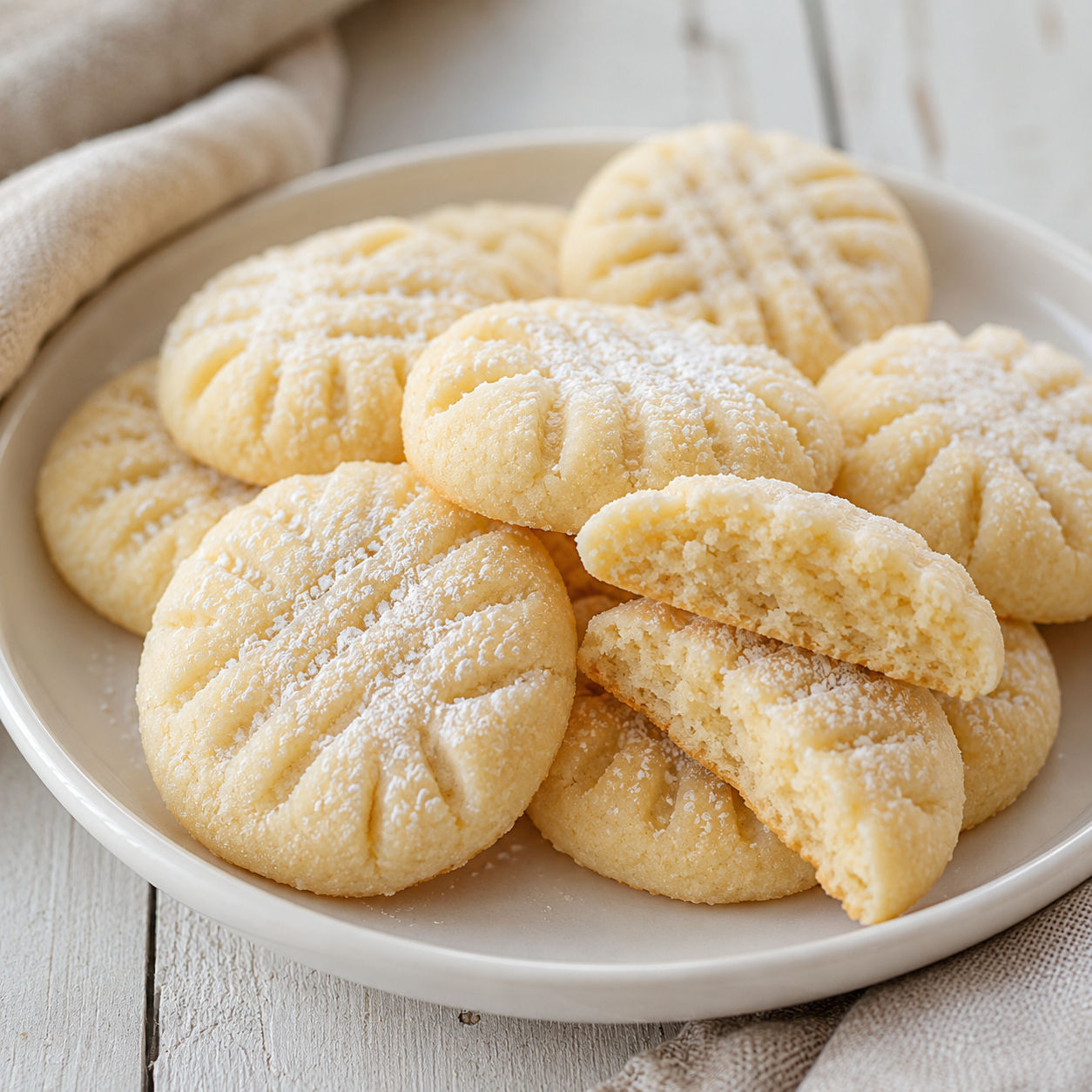
Easy 5-Ingredient Whipped Shortbread Cookies are the kind of cookie that feels fancier than the work involved. The dough is simple, but the long whipping time gives the cookies their soft, sandy bite and delicate lift.
I like these plain, with fork marks on top and just enough vanilla to warm up the butter. They are fragile when hot, so patience matters more than decorating skill here.
Five quiet pantry staples
This is a butter-forward cookie, so use butter that tastes good on its own. The powdered sugar should be smooth, and the flour should be spooned and leveled so the cookies stay tender instead of dry.
- Salted butter. Gives the cookies their rich flavor and keeps the ingredient list short without adding separate salt.
- Powdered sugar. Blends smoothly into the butter and keeps the crumb fine rather than gritty.
- Vanilla extract. Adds a soft bakery aroma without taking over the butter flavor.
- All-purpose flour. Builds just enough structure so the cookies hold their shape.
- Cornstarch. Softens the dough and creates that delicate melt-away finish.
Whip, chill, bake gently
- Whip the butter. Beat softened salted butter and powdered sugar for 5-7 minutes, scraping the bowl once or twice, until the mixture looks pale and fluffy.
- Add the vanilla. Beat in the vanilla just until the butter mixture smells sweet and even.
- Mix the dry ingredients. Whisk flour and cornstarch together, then add them to the butter in three additions on low speed. Stop as soon as no dry streaks remain.
- Chill the dough. Cover and chill for 30-45 minutes, until scoopable and no longer sticky.
- Shape the cookies. Scoop 1-inch balls onto a parchment-lined baking sheet and press gently with a fork dipped in cornstarch.
- Bake until set. Bake at 300 F for 12-14 minutes, until the tops look dry and the bottoms are barely golden. Cool fully on the pan before moving.
The texture depends on whipping
The long whipping step is what separates these from a dense slice-and-bake shortbread. You are beating air into the butter and powdered sugar, and that air gives the finished cookie its soft crumble. Stop too soon and the cookies will still taste good, but they will feel heavier.
Softened butter should bend easily under a finger without looking greasy. If it is shiny or collapsing, it is too warm. Chill it for a few minutes and start again. A stand mixer makes this easy, but a hand mixer works if you give it the full time. For a richer shortbread comparison, the site's classic whipped shortbread cookies are a good place to see how small changes affect shape and tenderness.
Measure flour with a light hand
Shortbread has no eggs or liquid to rescue a dry dough, so flour measurement matters. Spoon the flour into the cup and level it with a flat edge. Scooping straight from the bag packs in extra flour, and that can make the cookies chalky instead of tender. King Arthur Baking has a useful ingredient weight chart if you prefer baking by grams.
The dough should look soft and thick after mixing, not crumbly. If it breaks apart before chilling, it was probably over-measured or mixed too long after the flour went in. Add dry ingredients on low speed and stop as soon as they disappear. The final texture comes from gentle handling after the whipping is done.
Small changes that work
Vanilla keeps the flavor clean, but almond extract gives these cookies a more old-fashioned holiday taste. Use only 1/2 teaspoon almond extract if yours is strong. You can also press a single candied cherry piece into the center before baking, which makes them feel closer to maraschino cherry shortbread cookies without changing the dough.
For color, add sprinkles after pressing the fork marks. They are optional, so they do not belong in the five-ingredient base. Jam should be used carefully because this dough is delicate. If you want a fruitier cookie built for filling, try the heart-shaped strawberry shortbread cookies instead. This dough is best when the butter flavor stays in front.
Packing, freezing, and gifting
Whipped shortbread keeps well, but it needs gentle packing. Let the cookies cool completely, then layer them in a tin with parchment between each layer. Avoid stacking them while warm because trapped steam softens the bottoms and can make the fork marks lose their crisp edges.
For make-ahead baking, freeze shaped dough balls on a tray until solid, then move them to a freezer bag. Press the fork marks before freezing, or let the dough soften for 5 minutes before pressing and baking. Baked cookies also freeze well, but they should thaw in a single layer. For a holiday cookie box, pack these beside sturdier cookies like buttery pecan snowball cookies so the shortbread does not get crushed.
Food safety for flour
Even though this dough has no eggs, it still should not be eaten raw. Flour can carry bacteria because it is a raw agricultural ingredient. The FDA explains safe handling in its flour safety guidance. Wash hands, utensils, and counters after mixing the dough, especially if kids are helping with the fork marks.
Once baked and cooled, the cookies are fine at room temperature in an airtight container. Keep them dry and away from strongly scented foods. Butter cookies pick up odors quickly, so do not store them next to onions, spice blends, or savory leftovers.

Summary
These whipped shortbread cookies use salted butter, powdered sugar, vanilla, flour, and cornstarch for a pale, tender cookie that keeps well and freezes nicely.

FAQs
- Why do whipped shortbread cookies need cornstarch?
Cornstarch softens the structure of the cookie and gives whipped shortbread its fine, tender crumb. It also helps the cookies feel lighter than classic shortbread made with only flour, butter, and sugar.
- Can I use unsalted butter instead of salted butter?
Yes. Use the same amount of unsalted butter and add 1/4 teaspoon fine salt to the dry ingredients. That technically makes six ingredients, but the flavor will be much better than leaving the salt out.
- Do I have to chill whipped shortbread dough?
Chilling is worth it. The dough is soft after whipping, and a short chill helps the cookies hold their fork marks and stay thicker in the oven. If your kitchen is warm, chill the shaped cookies for another 10 minutes before baking.
- How should I store these cookies?
Store cooled cookies in an airtight tin or container at room temperature for up to 1 week. Place parchment between layers because the cookies are delicate and can chip at the edges.
- Can I freeze whipped shortbread cookies?
Yes. Freeze the baked cookies for up to 2 months, or freeze shaped dough balls for up to 3 months. Bake frozen dough straight from the freezer and add 1-2 minutes to the baking time.
- Why did my shortbread cookies spread?
The dough was likely too warm, the butter was too soft, or the flour was under-measured. Chill the dough well and spoon flour into the measuring cup before leveling it. Packed or scooped flour can change the texture, so measuring gently matters.
