 Pin it
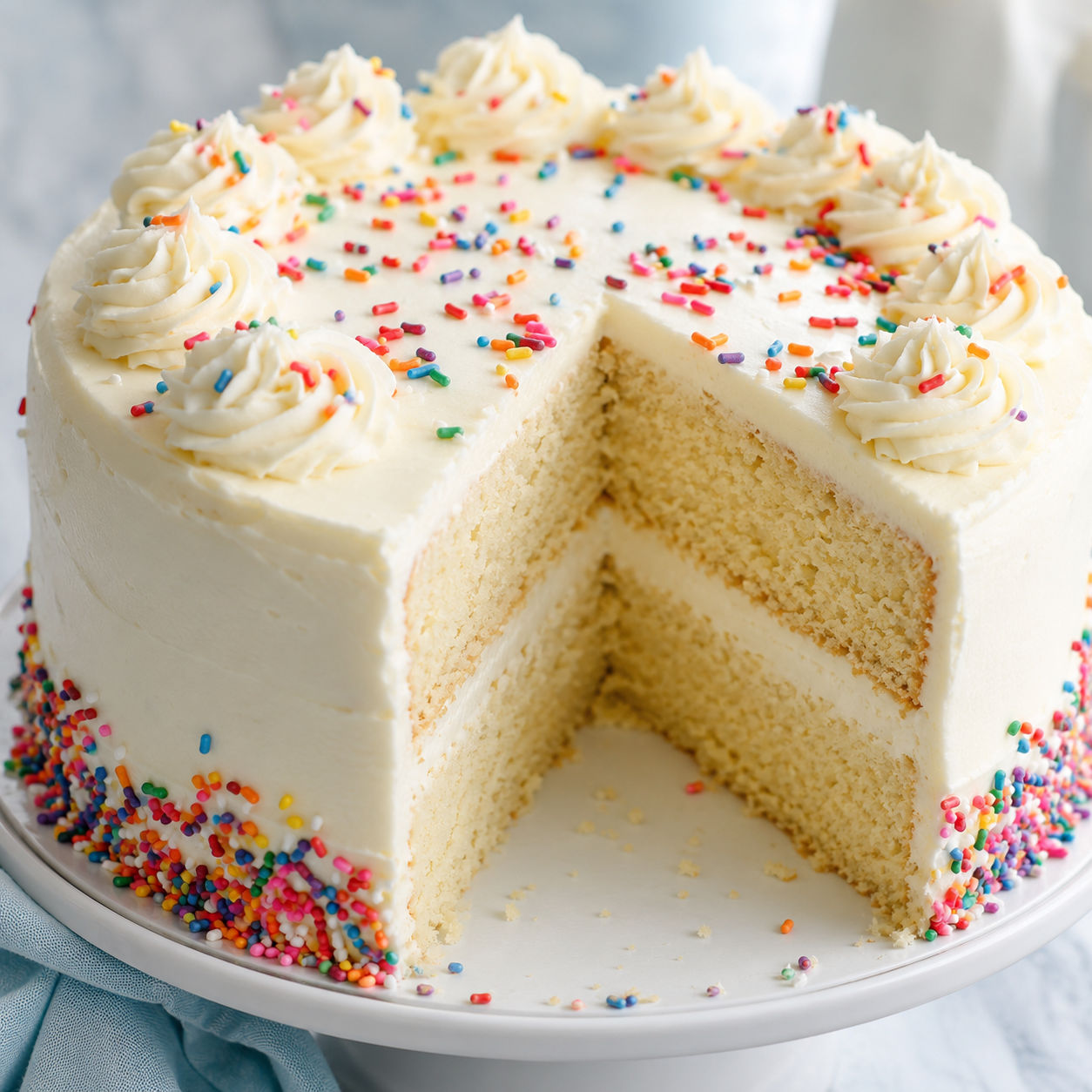
Classic Vanilla Birthday Cake with Buttercream Frosting should taste like a real celebration, not a dry white cake hiding under too much sugar. This version bakes up soft and buttery, with enough vanilla to carry every bite.
The buttercream is simple, fluffy, and easy to spread. It sets just enough for clean slices but stays creamy when you cut into it.
I like this cake for birthdays because it is familiar in the best way. Add sprinkles, candles, or a few piped swirls, and it looks ready for the table without a fussy decorating plan.
Classic Vanilla Cake Ingredients
This cake is built on everyday baking staples, so freshness matters. Use room-temperature butter, eggs, and buttermilk so the batter blends smoothly instead of breaking.
- Cake flour. Gives the layers a fine, soft crumb that feels light without being fragile.
- Baking powder and baking soda. Lift the batter and help the buttermilk do its job.
- Unsalted butter. Adds classic birthday cake flavor and helps the crumb stay tender.
- Neutral oil. Keeps the slices moist after the cake cools.
- Granulated sugar. Sweetens the cake and helps the butter cream into a fluffy base.
- Eggs and egg yolks. Give the layers structure, richness, and a pale golden color.
- Buttermilk. Adds gentle tang and keeps the cake soft.
- Vanilla extract. The main flavor, so use one you like.
- Powdered sugar. Makes the buttercream smooth and pipeable.
- Heavy cream. Loosens the frosting so it spreads without tearing the cake.
- Sprinkles. Add the birthday look and a little crunch at the edges.
Build The Birthday Layers
- Prepare the pans. Grease two 8-inch round pans, line the bottoms with parchment, and heat the oven to 350°F.
- Mix the dry bowl. Whisk the cake flour, baking powder, baking soda, and salt so the leavening is evenly spread.
- Cream the base. Beat the butter, oil, and sugar until lighter in color and fluffy. This takes a few minutes and gives the cake lift.
- Add eggs and vanilla. Beat in the eggs and yolks one at a time, then mix in the vanilla until the batter looks smooth.
- Alternate dry and buttermilk. Add the flour mixture in three additions with the buttermilk in two additions. Mix just until the streaks disappear.
- Bake and cool. Divide the batter between the pans and bake until the centers spring back, 28-32 minutes. Cool completely before frosting.
- Frost the cake. Beat the buttercream until fluffy, stack the layers with frosting between them, add a thin crumb coat, chill briefly, then finish with more frosting and sprinkles.
Room Temperature Matters
Cold butter will not trap air well, and cold buttermilk can make the batter look curdled. Set the butter out until it dents when pressed but still feels cool. Eggs and buttermilk can sit out for about 30 minutes while you prep the pans and measure the dry ingredients.
The measuring matters too. Cake flour is easy to pack into a cup, which can make the cake heavy. If you weigh it, the results are steadier. The King Arthur ingredient weight chart is useful when you want to double-check baking weights.
Buttercream That Spreads Smooth
American buttercream is simple, but texture decides everything. Start with butter that is softened, not greasy. Beat it alone until creamy before adding powdered sugar. Add the sugar in batches, or the mixer will throw a cloud over the counter.
Once the sugar is in, beat the frosting for a few minutes with vanilla, salt, and cream. The salt cuts the sweetness. The cream makes it softer and easier to spread. If it feels stiff, add cream one tablespoon at a time. If it looks loose, beat in a little more powdered sugar.
The Crumb Coat Step
A crumb coat is just a thin first layer of frosting. It catches loose crumbs so the final coat stays clean. Spread a small amount over the top and sides, then chill the cake for 15-20 minutes until the frosting feels set.
After that, the second coat goes on much more smoothly. A small offset spatula helps the top. A bench scraper makes the sides cleaner, but a butter knife works for a casual birthday cake. For another simple party option, try the site's Vanilla Birthday Cake or the soft Sugar Cookie Bars with Frosting.
Swaps For Different Parties
You can tint the buttercream with gel food color, stir a few tablespoons of rainbow sprinkles into the batter, or add almond extract for a bakery-style flavor. Use a light hand with almond extract because it can take over fast.
If someone wants a different frosting, keep the cake layers and change the finish. A swipe of Peanut Butter Cake Frosting turns it richer. For a fruitier table, pair it with the flavor idea from Strawberry Lemonade Layer Cake and add a thin layer of lemon curd under the vanilla buttercream.
Storage And Clean Slices
The frosted cake can sit covered at cool room temperature for a day. After that, refrigerate it in a cake carrier or loosely covered container. Buttercream firms in the fridge, so let the cake stand at room temperature before serving. The flavor is better when the frosting has softened.
For clean slices, chill the frosted cake for 20 minutes, then cut with a long thin knife dipped in hot water and wiped dry. Leftover slices keep well for three to four days. Wrap the cut sides with a little plastic wrap so the crumb does not dry out.
Summary
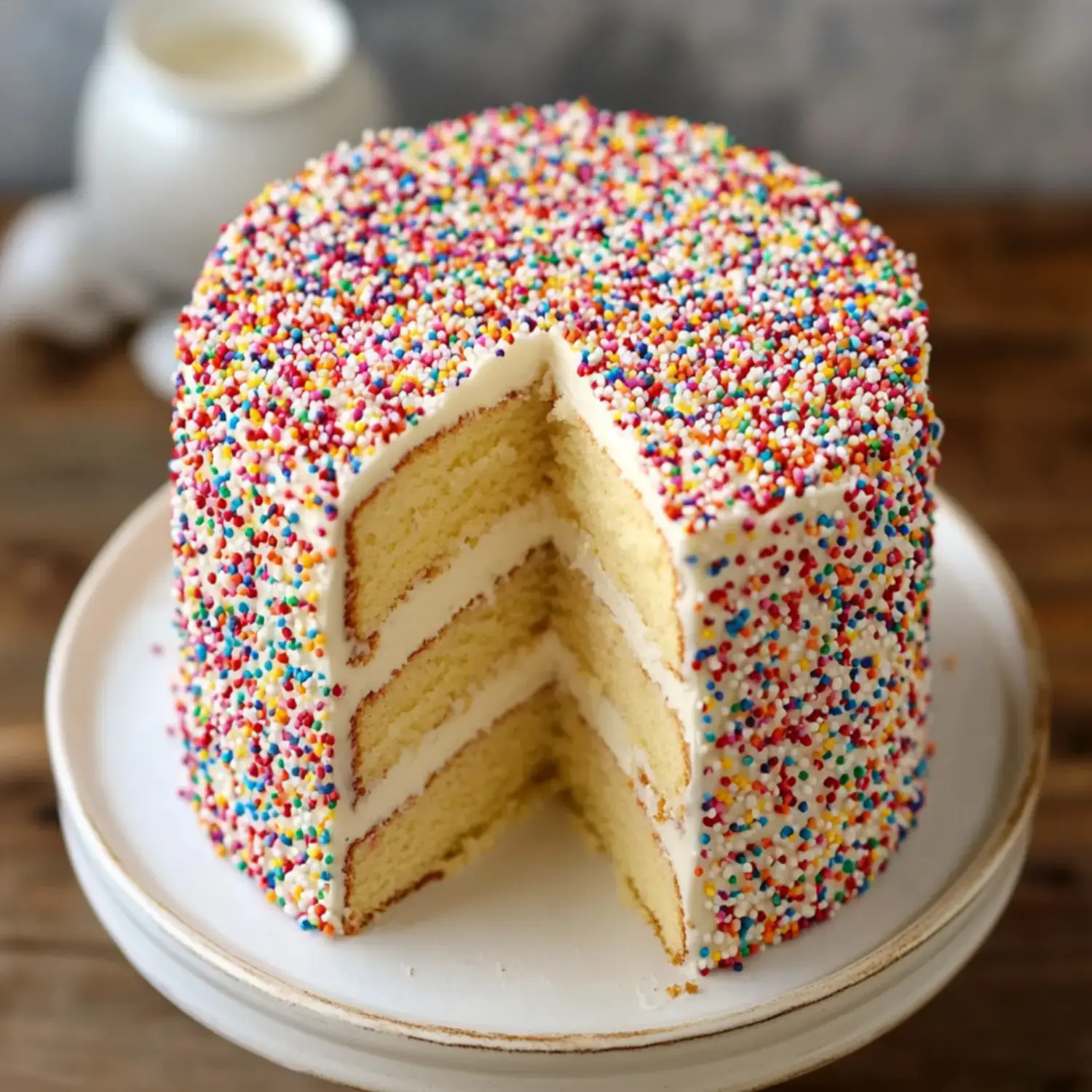
Use room-temperature dairy and eggs, bake the layers just until the centers spring back, and frost only after the cake is completely cool.

FAQs
- Can I make this vanilla birthday cake ahead of time?
Yes. Bake the cake layers one day ahead, cool them fully, wrap them tightly, and keep them at room temperature overnight. You can also freeze the unfrosted layers for up to two months.
- Can I use all-purpose flour instead of cake flour?
You can, but the crumb will be a little sturdier. For a softer result, replace 2 tablespoons from each cup of all-purpose flour with cornstarch and sift well.
- Why did my vanilla cake turn dry?
Dry cake usually comes from too much flour or overbaking. Spoon flour into the cup and level it, or weigh it. Pull the layers when a toothpick shows a few moist crumbs, not when the edges are deeply browned.
- How do I keep buttercream from tasting too sweet?
Use a good pinch of salt and enough cream to make the frosting light. Beating the butter first also helps because it adds air before the sugar goes in.
- Can I turn this into cupcakes?
Yes. Fill lined cupcake wells about two-thirds full and bake at 350°F for 18-21 minutes. The recipe makes about 24 cupcakes, depending on your pan.
- Does the frosted cake need refrigeration?
It can sit at cool room temperature for one day. For longer storage, refrigerate it covered, then let slices stand at room temperature for 30-45 minutes before serving.
