 Pin it
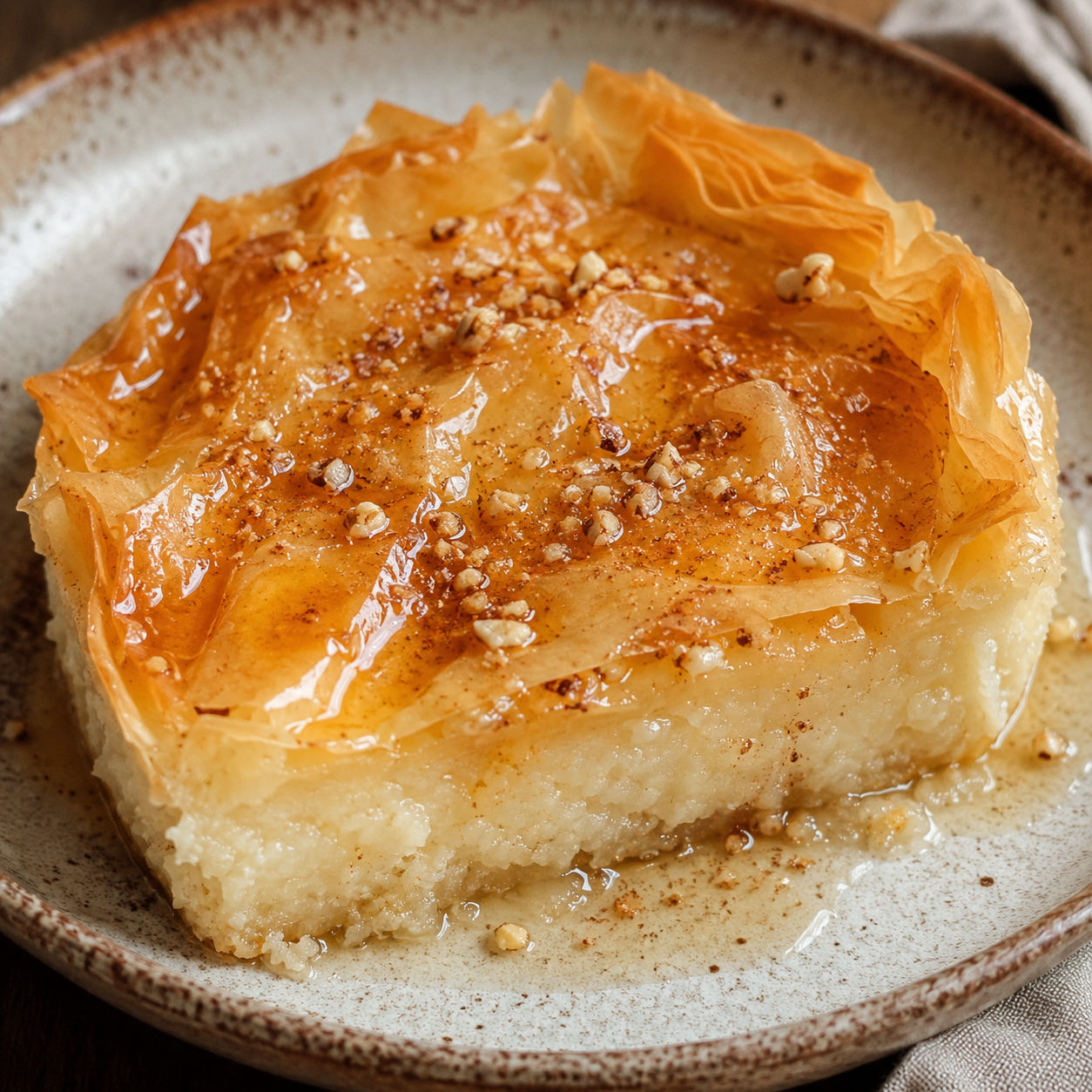
This is the kind of dessert that feels like it came from a village kitchen rather than a pastry shop. The custard is humble, thickened with semolina instead of flour, and the phyllo bakes into shards that crack when you cut through them. A heavy drizzle of honey at the end brings everything together.
I like it because it is not overly sweet. Most of the sugar comes from the honey on top, so you taste the milk, the orange zest, and the toasted phyllo first. It is best served warm, while the inside is still soft and the crust shatters.
If you have never worked with semolina in a custard, think of it as insurance against a gloomy texture. It keeps the filling light and slightly fluffy, with a gentle grain that is pleasant rather than gritty. The recipe is forgiving, and the ruffled phyllo edges are supposed to look rustic.
What builds the custard
The ingredient list is short, so quality matters. Use a honey you would eat straight from the spoon, because it carries the finish. Fine semolina is sold near the flour in most groceries, and it thickens the custard without making it pasty.
- Phyllo pastry. Four sheets create a shattering golden shell. Keep the stack covered with a damp towel while you work so it does not dry out and crack.
- Fine semolina. This is the thickener. It gives the custard a light, almost fluffy body and a subtle grain that keeps each bite interesting.
- Whole milk. The base of the custard. Whole milk produces the creamiest result, though 2% milk will work if that is what you have.
- Honey. Sweetens the custard and gets drizzled over the top after baking. A Greek thyme or flower honey is traditional.
- Eggs. Four eggs bind the custard and help it set into clean slices once the pie cools.
- Orange zest and vanilla. Warm aromatics that lift the dairy and honey so the pie tastes bright rather than heavy.
- Cinnamon and walnuts. The classic Greek finish. Ground walnuts add a gentle crunch and a bitter note that balances the honey.
How to bake it
- Prepare the phyllo base. Brush a 10-inch round baking pan with melted butter. Lay one phyllo sheet in the pan, brush it with butter, and let the excess hang over the edge. Repeat with the remaining three sheets, rotating each one slightly so the overhang covers the sides evenly.
- Cook the semolina custard. Warm the milk with half the honey, the vanilla, and the orange zest in a saucepan over medium heat until steaming. Beat the eggs in a bowl, then slowly whisk in a ladle of the hot milk to temper them. Pour the eggs back into the pot, add the semolina, and cook while whisking constantly until the mixture thickens to a loose pudding consistency. This takes about 5 to 7 minutes.
- Fill and fold. Pour the hot custard into the phyllo-lined pan. Fold the overhanging phyllo inward over the top to create a ruffled, crinkled edge. Brush any remaining butter over the exposed phyllo.
- Bake until golden. Bake at 350°F (175°C) for 35 to 40 minutes, until the phyllo is deeply golden and the custard is set with only a slight jiggle in the center. If the top browns too quickly, tent it loosely with foil for the last 10 minutes.
- Drizzle and serve. Let the pie cool for at least an hour so the custard firms up. Drizzle generously with the remaining honey, then dust with cinnamon and ground walnuts. Cut into wedges and serve warm or at room temperature.
Why semolina matters
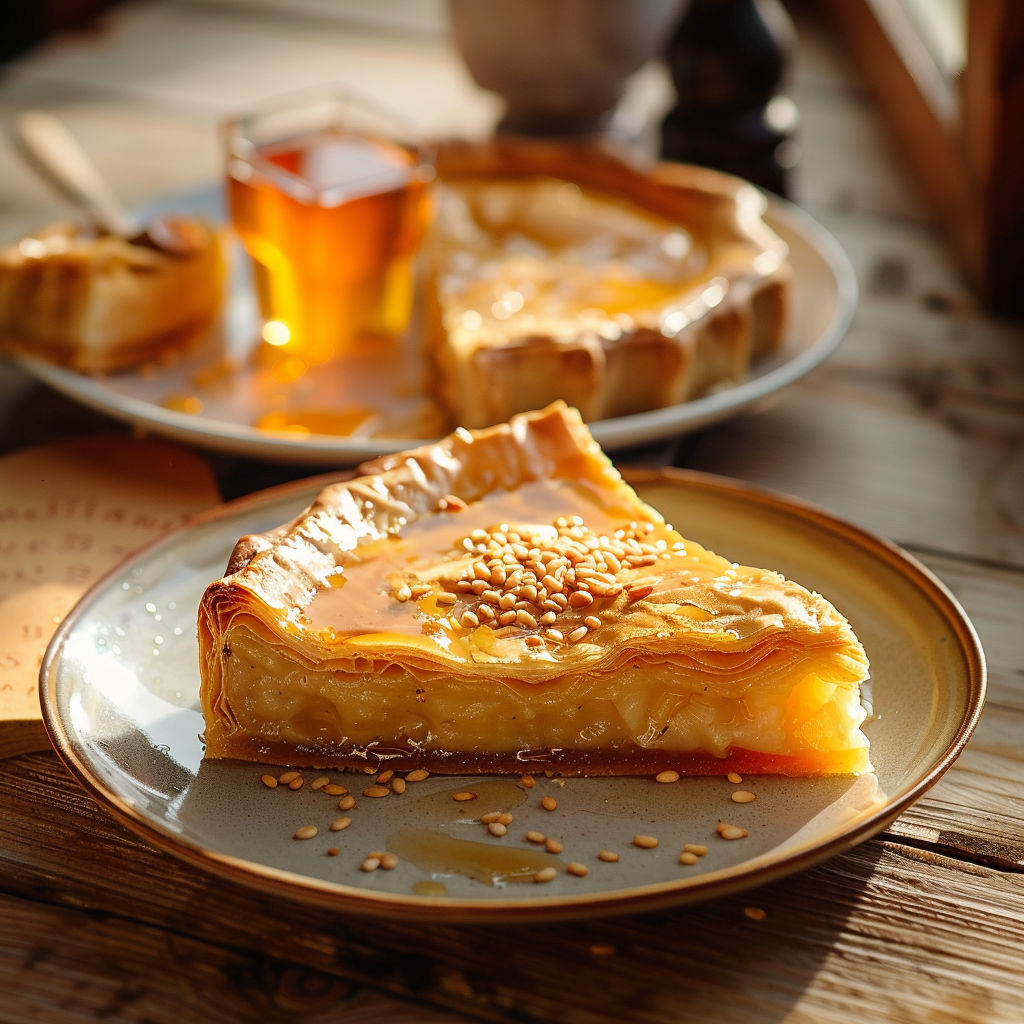
Flour can make a custard taste starchy and dull. Semolina, which is durum wheat that has been milled, brings a mild nuttiness and a texture that is lighter than cornstarch but more structured than flour. In Greek kitchens it is the standard for milk pies because it holds up to baking without weeping or collapsing. Cooks like Diane Kochilas have long used it in traditional desserts for exactly this reason.
The key is to use fine semolina, not the coarse kind meant for couscous. Fine semolina absorbs the milk quickly and cooks out smooth in under ten minutes. If you only have coarse semolina, let it soak in the cold milk for ten minutes before you turn on the heat.
Phyllo without panic
Phyllo intimidates people because it tears, but torn sheets are fine here. You are folding the edges inward to create a rustic ruffle, so no one sees the imperfections. The only real rule is to keep the unused sheets covered with a barely damp towel so they do not turn brittle. Work quickly and brush each layer with melted butter so the sheets separate and crisp in the oven. For a deeper dive on handling the dough, see this phyllo guide. And if you love savory phyllo pies, our spanakopita uses the same ruffled-edge technique.
Picking the right honey
Since honey is both inside the custard and drizzled on top, its flavor dominates the dessert. A dark, robust buckwheat honey will overwhelm the delicate orange and vanilla. I prefer a lighter Greek thyme honey or a mild flower honey. If your honey has crystallized, warm the jar in a bowl of hot water before measuring. For another honey-forward dessert, try our Honey and Pistachio Cheesecake.
Serving and keeping leftovers
This pie is at its best about an hour after it comes out of the oven, when the custard has set but the phyllo is still crackling. If you must refrigerate it, wrap the pan tightly and store for up to three days. Reheat slices in a 325°F oven for 10 minutes to bring the crispness back. The microwave works in a pinch, but it softens the phyllo into chewiness.
FAQs
- Can I make this without phyllo?
Yes. Butter your baking pan and dust it with a thin layer of semolina. Pour the custard directly in and bake. You will have a crustless galatopita, which is equally traditional and even simpler.
- What kind of honey works best?
A light Greek thyme or flower honey is ideal. Avoid very dark or strongly flavored honeys, which can overpower the orange and vanilla. If your honey is thick and crystallized, warm it gently before drizzling.
- Can I use coarse semolina instead of fine?
Fine semolina is best because it dissolves quickly into a smooth custard. If you only have coarse semolina, soak it in the cold milk for 10 minutes before heating to help it soften.
- How do I keep the eggs from curdling?
Temper them slowly. Whisk a ladle of hot milk into the beaten eggs first, then pour the mixture back into the pot. Keep the heat at medium and never let the custard boil once the eggs are added.
- Can I prepare this pie ahead of time?
You can bake it up to a day ahead. Store it covered at room temperature for the same day, or refrigerate for longer storage. Add the honey drizzle and toppings just before serving so the phyllo stays crisp.
- How sweet is this dessert?
It is moderately sweet. The custard itself is lightly honeyed, and most of the sweetness comes from the drizzle on top. You control the final amount by how much honey you add at the end.
- What other toppings work well?
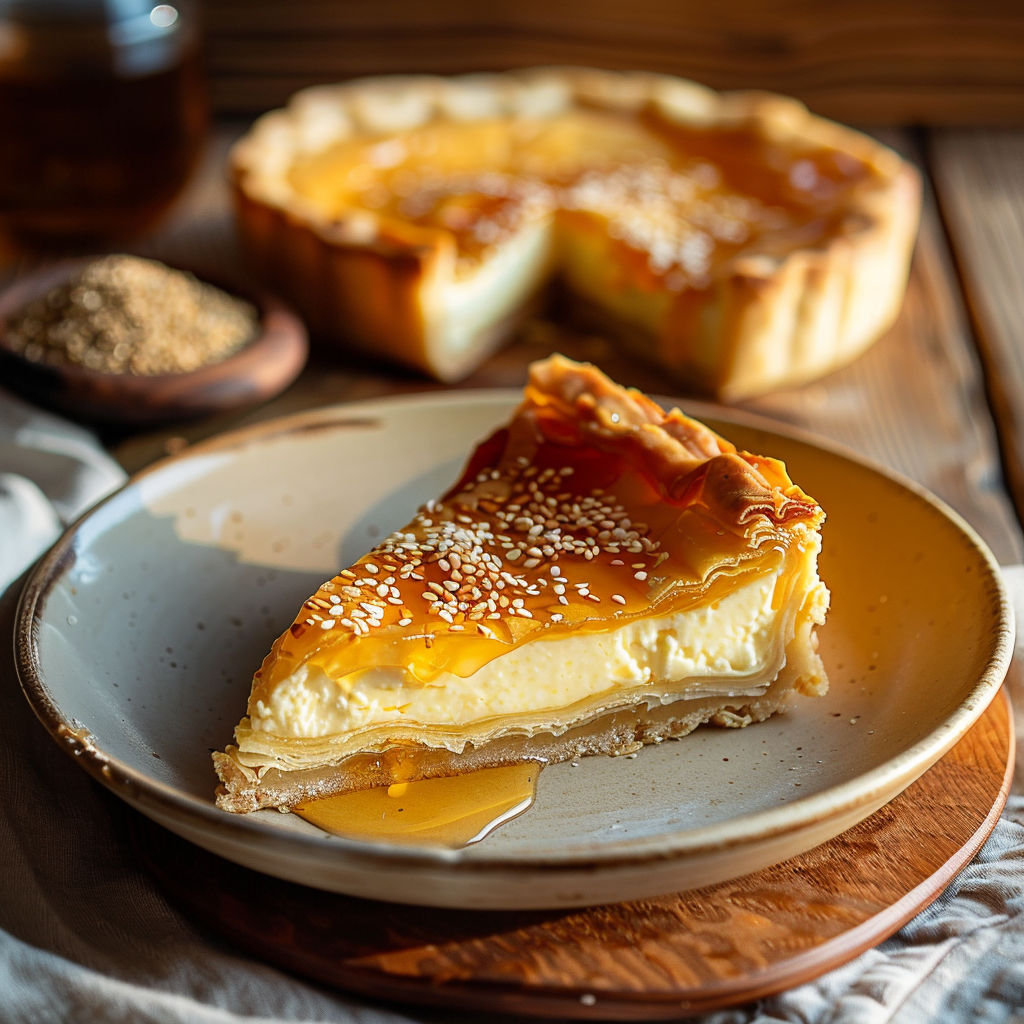
Toasted sesame seeds, chopped pistachios, or sliced almonds are all excellent alternatives to walnuts. A scoop of thick Greek yogurt on the side is also traditional in some regions.
