 Pin it
Traditional Spotted Dick with English Custard Sauce is old-fashioned in the best way. The pudding is soft and sturdy at once, with little currants through the crumb and a warm citrus smell when you lift the foil.
This is not a fast dessert, but most of the time is hands-off steaming. The custard takes a little attention at the end, and it is worth it because the warm vanilla sauce soaks into every slice.
Currants, Suet, And Zest
The ingredient list is plain, so each piece matters. Fresh citrus zest wakes up the pudding, and proper shredded suet gives the crumb its classic steamed texture.
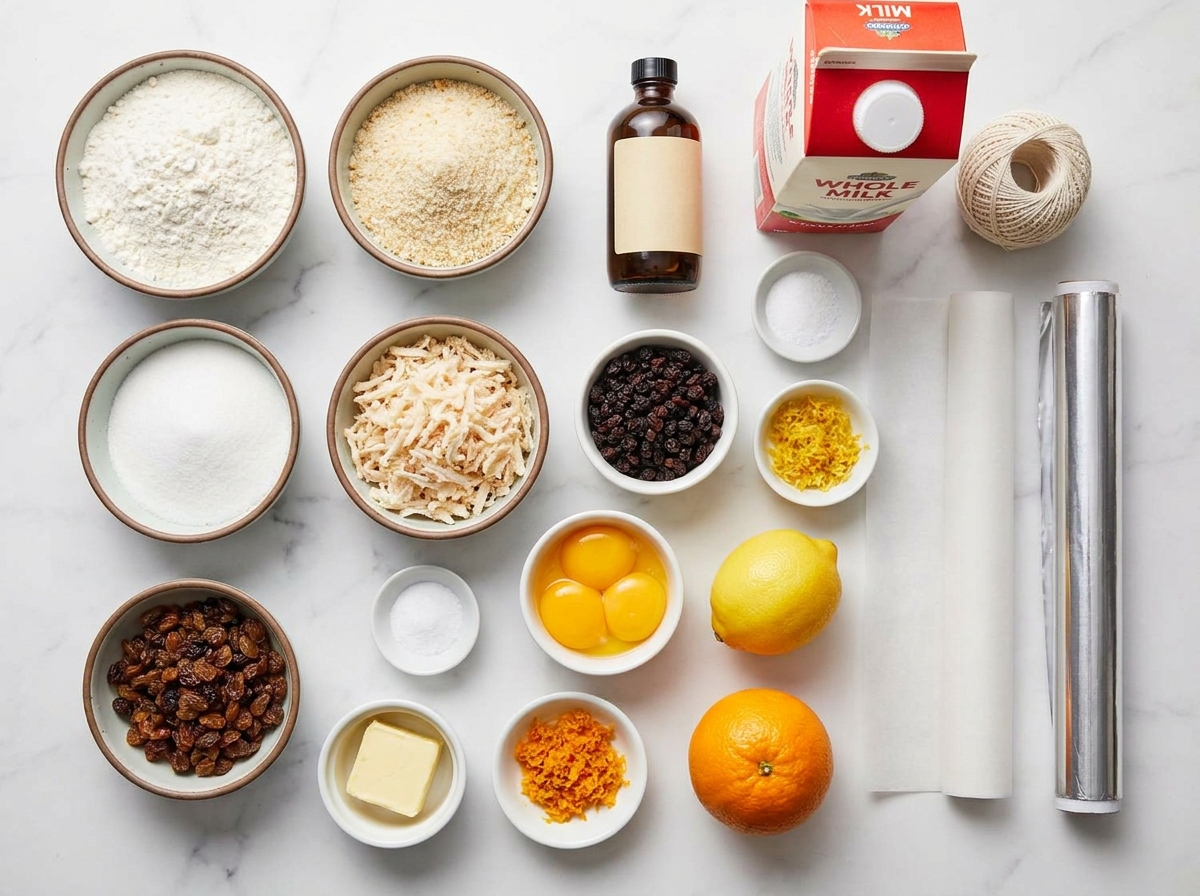
- Self-rising flour. Builds the sponge and keeps the pudding tender without extra fuss.
- Fresh breadcrumbs. Lighten the crumb so it slices softly instead of turning dense.
- Shredded suet. Gives traditional steamed puddings their lift and rich, old-school texture.
- Currants. Make the little dark spots and add chewy sweetness through every slice.
- Lemon and orange zest. Brighten the pudding so the suet and custard do not feel heavy.
- Whole milk. Brings the dough together into a soft, spoonable mixture.
- Egg yolks and vanilla. Turn milk and cream into a smooth English custard sauce.
Steam It The Old Way
- Prepare the basin. Butter a 1 quart pudding basin well and set a folded towel or trivet in the bottom of a deep pot.
- Mix the pudding. Stir the dry ingredients, currants, suet, and zest together, then add milk until you have a soft dough that drops from the spoon.
- Cover for steaming. Spoon the mixture into the basin and cover it tightly with pleated parchment and foil, then tie it with kitchen string.
- Steam gently. Set the basin in the pot, add boiling water halfway up the sides, cover, and steam for 1 hour 45 minutes, topping up with more hot water as needed.
- Make the custard. Warm milk and cream, temper them into egg yolks and sugar, then cook gently until the sauce coats a spoon.
- Rest and serve. Let the pudding stand for 10 minutes, turn it out, slice thickly, and pour over warm custard.
Traditional Spotted Dick Texture
A good spotted dick should slice cleanly but still feel soft under the fork. The suet melts slowly as the pudding steams, leaving tiny pockets that make the crumb lighter than it looks. This is why a gentle simmer matters. A hard boil can rattle the basin, push water under the cover, and make the outside gummy before the middle cooks.
If you enjoy classic British desserts, serve this after a simple dinner and save English Trifle for the next gathering. They share that same cozy custard-and-fruit feeling, but the texture is completely different.
Custard That Stays Silky
English custard sauce is simple, but it asks for patience. Warm the milk and cream until steamy, not boiling. Whisk a little of that hot liquid into the yolks first, then pour everything back into the pan. Low heat is the whole trick. The sauce should thicken enough to coat a spoon and still pour in a slow ribbon.
If you like custard desserts, the creamy filling in Vanilla Custard Cream Squares is a useful comparison. This sauce is looser and warmer, made to soak into pudding rather than hold a slice.
Swaps That Keep It Honest
Currants are the most traditional fruit, but raisins or sultanas are easy swaps. Use the same weight and chop large raisins if you want the spots to spread evenly. Vegetarian suet also works well if you want to avoid beef suet. Cold grated butter can stand in when suet is impossible to find, but the pudding will be a little richer and less springy.
For a researched baseline on the classic steamed style, the BBC Good Food spotted dick recipe is a helpful reference. The method here keeps the same traditional spirit and adds a homemade custard sauce.
Serving It Warm
Let the pudding rest before turning it out. Ten minutes helps the crumb settle and makes unmolding cleaner. Slice it with a serrated knife and pour custard over each piece at the table. The sauce should be warm enough to flow but not so hot that it splits.
For another soft dessert with a fruit sauce, Panna Cotta with Berry Sauce sits at the cooler, lighter end of the dessert table. Spotted dick is the one for cold evenings and proper bowls.
Storing And Reheating
Cool leftover pudding completely, wrap it well, and refrigerate it for up to three days. Reheat slices in the microwave with a spoonful of custard or steam the whole pudding again for 25-30 minutes. The custard keeps for two days in the fridge. Warm it slowly and whisk in a splash of milk if it thickens too much.
For more background on the pudding and its traditional custard pairing, The Daring Gourmet's traditional spotted dick guide gives useful historical context.

Summary
Serve this pudding warm, sliced thick, with plenty of custard. Leftovers reheat well with a splash of milk or extra custard.

FAQs
- What is spotted dick?
Spotted dick is a traditional British steamed pudding made with suet and dried fruit, usually currants or raisins. The spots are the fruit, and the pudding is usually served warm with custard.
- Can I make spotted dick without suet?
You can use cold grated butter or vegetable shortening, but the texture will be a little different. Suet gives the pudding its light, slightly springy crumb and is the most traditional choice.
- Can I use raisins instead of currants?
Yes. Currants are smaller and spread more evenly through the pudding, but raisins or sultanas work well. If your fruit is very dry, soak it in hot water for 10 minutes, then drain before mixing.
- How do I stop the custard from curdling?
Keep the heat low and stir constantly once the egg mixture goes back into the pan. Do not let it boil. The custard is ready when it coats the back of a spoon.
- Can I make this pudding ahead?
Yes. Steam the pudding, cool it, and chill it covered for up to two days. Reheat it by steaming for 25-30 minutes until hot all the way through.
- What should I serve with spotted dick?
Warm English custard is classic. You can also add a spoonful of cream, but the pudding is best with something pourable that sinks into the currant-studded sponge.
