 Pin it
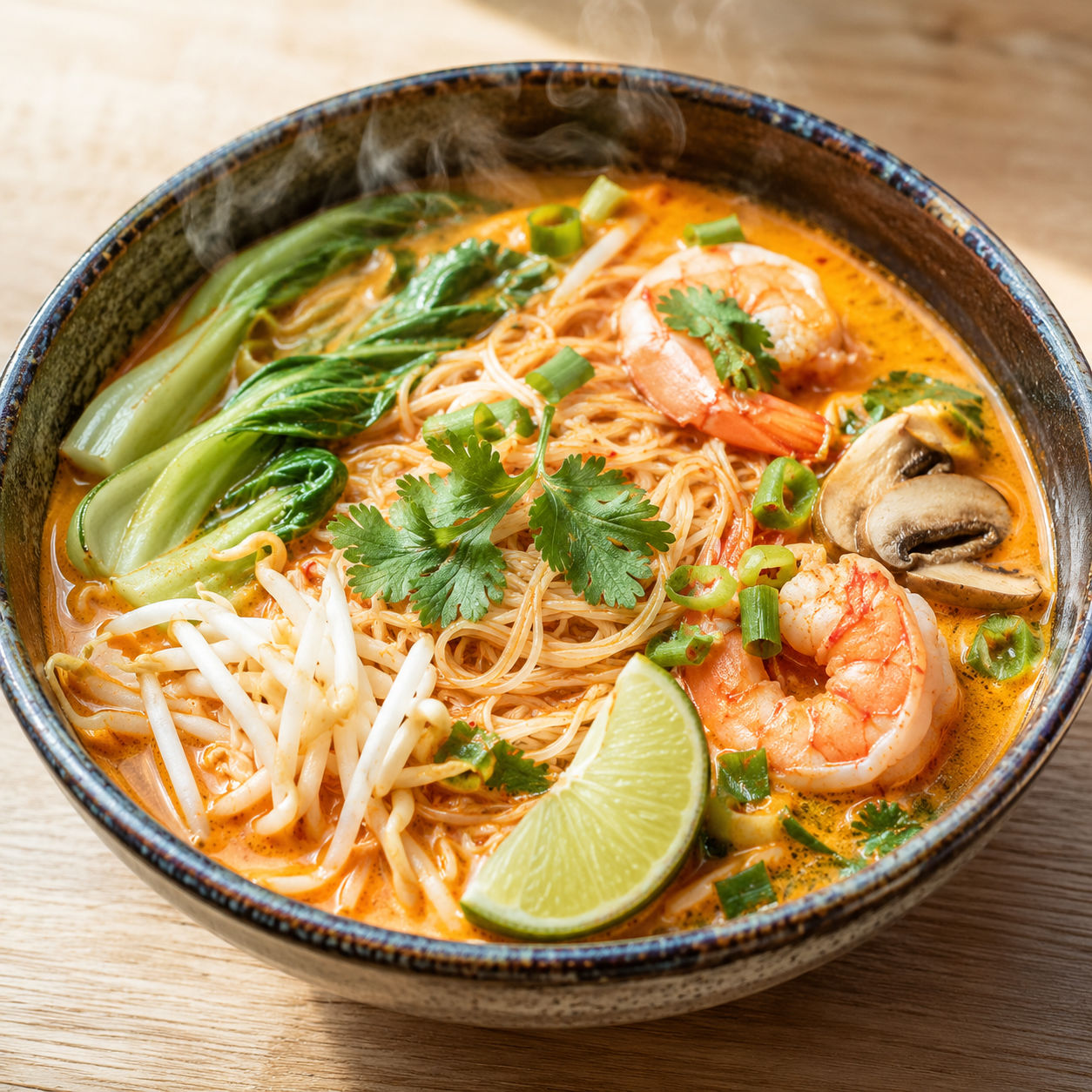
Easy Thai Red Curry Soup with Noodles is the kind of dinner that smells like you planned ahead, even when you did not. The broth turns creamy and fragrant fast because red curry paste brings chiles, lemongrass, garlic, and warm spice in one spoonful.
I like this version with shrimp because it cooks in minutes and gives the coconut broth a clean, savory finish. Rice noodles soak up the curry nicely, while bok choy, mushrooms, bean sprouts, lime, and cilantro keep the bowl fresh.
Curry Bowl Building Blocks
The ingredient list is short, so the curry paste and coconut milk matter. Choose full-fat coconut milk for a smooth broth, and use a red curry paste you already like because its heat level will shape the whole pot.
- Red curry paste. Gives the soup its chile heat, lemongrass aroma, and deep orange color.
- Coconut milk. Softens the spice and makes the broth rich without any dairy.
- Shrimp. Adds quick protein and a sweet seafood flavor that fits the curry broth.
- Rice noodles. Turn the soup into a full meal and stay light in the coconut broth.
- Mushrooms. Bring earthiness and a little chew.
- Bok choy. Adds fresh green crunch and tender leaves.
- Garlic and ginger. Wake up the curry paste before the liquid goes in.
- Fish sauce and brown sugar. Balance salt, savoriness, and gentle sweetness.
- Lime, cilantro, and bean sprouts. Finish the bowl with brightness, freshness, and crunch.
Easy Thai Red Curry Method
- Soak the noodles. Cover the rice noodles with hot water until just pliable, then drain. They will finish softening in the soup.
- Bloom the curry paste. Cook the garlic, ginger, and red curry paste in oil for about a minute. It should smell bold and toasty, not burnt.
- Build the broth. Stir in coconut milk, broth, fish sauce, and brown sugar. Simmer long enough for the curry paste to dissolve into a smooth, orange broth.
- Cook the vegetables. Add mushrooms and bok choy stems first so they soften while the broth stays lively.
- Add shrimp and noodles. Stir in the shrimp, bok choy leaves, and noodles. Cook just until the shrimp are pink and the noodles are tender.
- Finish the bowls. Remove from the heat and add lime juice. Serve with cilantro, bean sprouts, and extra lime wedges.
Bloom The Curry Paste
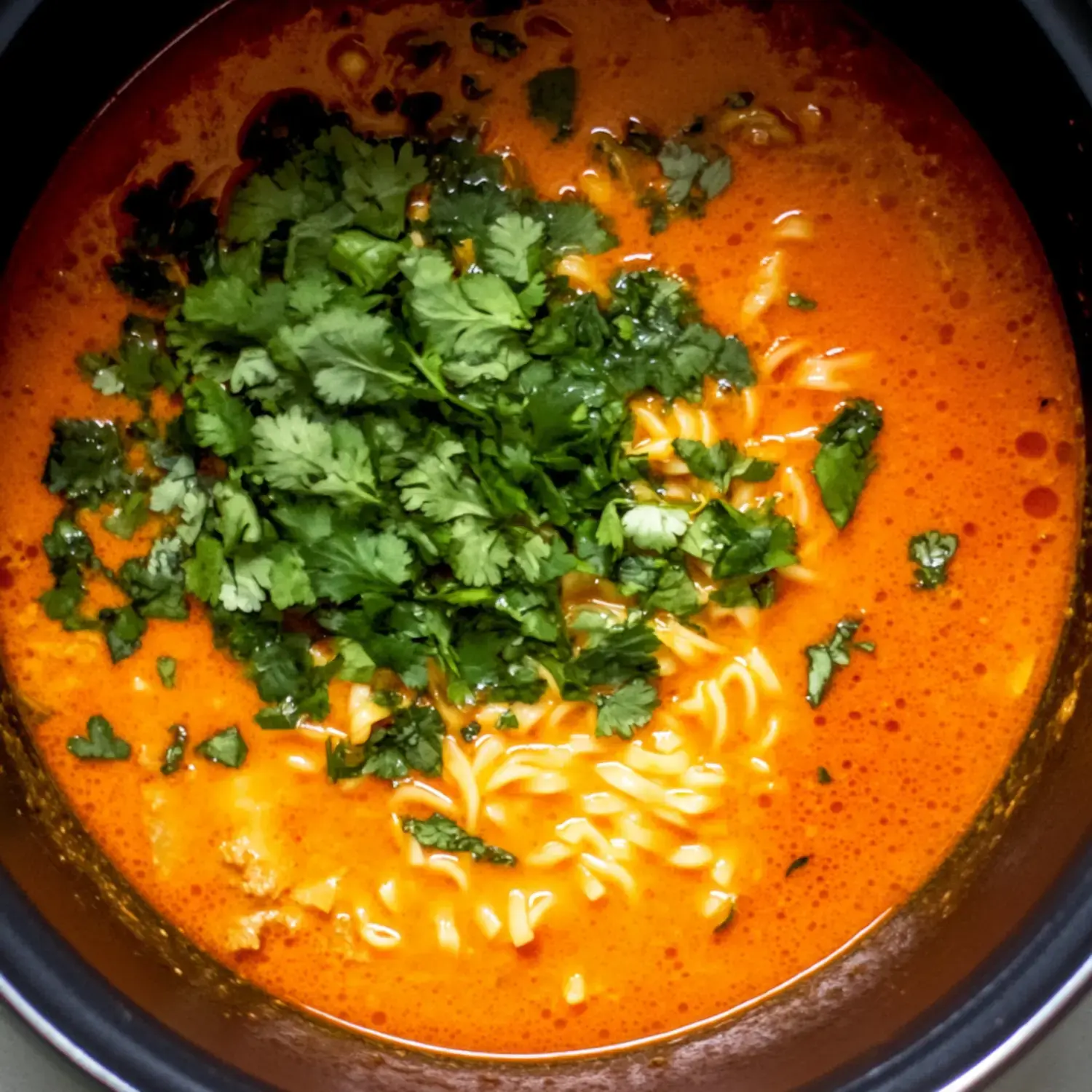
The biggest difference between a flat curry soup and a fragrant one happens in the first two minutes. Red curry paste tastes sharper straight from the jar. When you cook it briefly in oil with garlic and ginger, the paste loosens, darkens a shade, and smells rounder. That short step helps the coconut milk taste integrated instead of pasted onto the broth.
Keep the heat at medium and stir constantly. If the paste sticks hard to the pot, add a spoonful of coconut milk and scrape the bottom. For more curry bowls with a similar base, try the site's Thai Curry Soup or the cozy Easy Thai Red Curry Dumpling Soup.
Keep Noodles From Going Soft
Rice noodles keep cooking as they sit in hot liquid. That is why I soak them until flexible, then let them finish in the soup for only a minute or two. If your noodles are very thin, add them after the shrimp. If they are wider, give them a little more time before the shrimp goes in.
For leftovers, store the noodles apart from the broth whenever possible. The same trick helps with other noodle-heavy dinners like Easy Sesame Garlic Ramen Noodles and Classic Homemade Pad Thai. Hot broth plus time will keep softening any noodle, no matter how carefully it was cooked.
Shrimp Timing Matters
Shrimp are fast. In this soup, they usually need 2-3 minutes total. Look for curled bodies, pink edges, and opaque centers. Pull the pot from the heat as soon as they are done because carryover heat will finish the last bit.
If you want to check with a thermometer, the FDA seafood guidance lists 145°F as the safe temperature for shrimp and other seafood. You can read the FDA seafood-safety guide for more detail. I usually rely on visual cues here because small shrimp cook too quickly for repeated probing.
Smart Swaps For The Pot
This soup can bend around what you have. Swap shrimp for shredded rotisserie chicken, cubed tofu, or sliced mushrooms. Use snap peas, bell pepper, spinach, napa cabbage, or baby corn in place of bok choy. Add firm vegetables early and delicate greens at the end.
For a vegan bowl, use tofu, vegetable broth, and soy sauce or tamari instead of fish sauce. Check the curry paste too, since some brands include shrimp paste. If you want to understand what is usually inside the paste, this Thai red curry paste guide is a useful ingredient reference.
Serving And Reheating Notes
Serve the soup right away in deep bowls with cilantro, bean sprouts, and lime wedges. A few sliced scallions or a small spoonful of chili crisp also works if you want more heat and texture. Keep the garnish fresh and simple because the broth is already rich.
To reheat, warm the broth gently on the stove until steaming, then add noodles and shrimp only long enough to heat through. Avoid a hard boil. It can make the shrimp tough and break down the noodles.
Summary
Serve this soup right away while the noodles are tender and the broth is glossy. Keep extra lime nearby because a final squeeze wakes up the curry, coconut, and shrimp.

FAQs
- What noodles work best in Thai red curry soup?
Thin rice noodles or rice vermicelli work best because they soften quickly and do not make the broth heavy. If you use ramen or wheat noodles, cook them separately and add them to each bowl so they do not soak up all the soup.
- Can I make this soup without shrimp?
Yes. Use sliced chicken, tofu, or extra mushrooms instead. Chicken needs a few more minutes to cook through, while tofu can go in near the end just long enough to warm.
- Is Thai red curry soup spicy?
It depends on the curry paste. Start with 2 tablespoons if your paste is very hot or if you are cooking for kids. Add more at the end by whisking it with a little hot broth before stirring it into the pot.
- Can I make it ahead?
You can make the broth a day ahead and refrigerate it. Cook the noodles and shrimp right before serving, since both are best fresh and can turn soft or rubbery if they sit too long.
- How do I store leftovers?
Store the broth and noodles separately if you can. The broth keeps for up to 3 days in the fridge, and the noodles are best reheated gently with a splash of hot water.
- How can I make it gluten-free?
Use rice noodles and check that your red curry paste and fish sauce are labeled gluten-free. Most simple fish sauces are naturally gluten-free, but some curry pastes can include additives, so the label matters.
