 Pin it
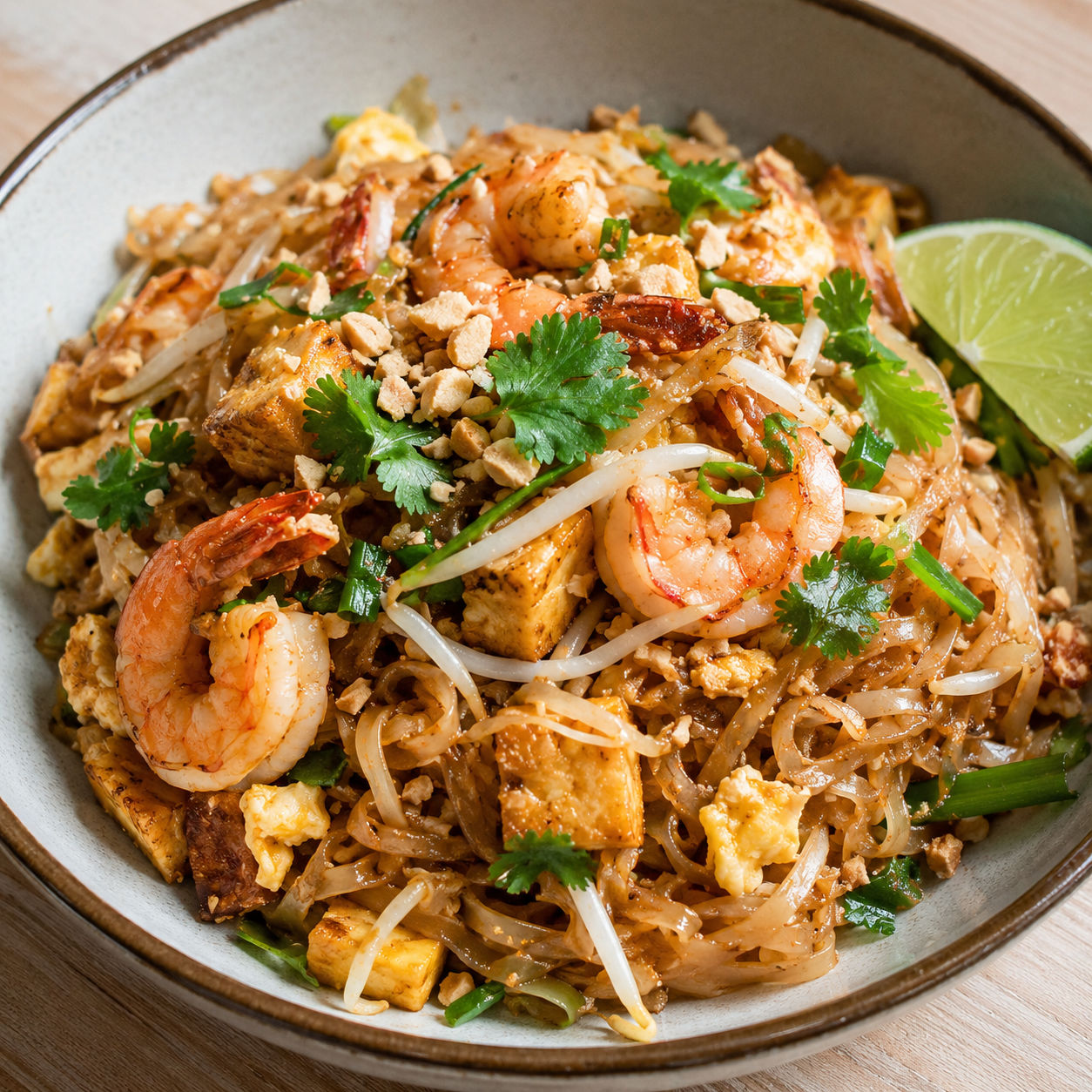
Easy Homemade Pad Thai is the kind of dinner that feels faster once you stop trying to make it all at once. Mix the sauce first. Soak the noodles until they bend. Keep every ingredient beside the stove before the pan gets hot.
This version keeps the classic balance of tangy tamarind, salty fish sauce, a little sweetness, tender shrimp, egg, tofu, peanuts, and crisp bean sprouts. It tastes bright and full without leaning on bottled sauce.
What Makes This Pad Thai Work
The ingredient list is short, so each piece matters. Use tamarind concentrate if you can find it, fresh bean sprouts for crunch, and rice noodles labeled stir-fry or Pad Thai width.
Once the pan is hot, the cooking moves quickly. Measure everything first and keep the garnishes ready.
- Rice noodles. They turn chewy and glossy when soaked first and finished in the sauce.
- Shrimp. Adds sweetness and cooks fast enough for a weeknight pan dinner.
- Firm tofu. Brings soft chew and soaks up the tamarind sauce.
- Eggs. Scramble into the noodles and give the dish richness.
- Tamarind concentrate. Gives Pad Thai its sour, fruity backbone.
- Fish sauce. Adds salt and savory depth without making the dish taste fishy.
- Brown sugar. Balances the tamarind and helps the noodles shine.
- Bean sprouts and green onions. Stay crisp and fresh when added at the end.
- Roasted peanuts and lime. Add crunch, aroma, and a sharp finish.
How To Cook Pad Thai
- Soak the noodles. Cover the rice noodles with warm water until flexible but not soft, usually 20-30 minutes. Drain them well so the sauce can cling.
- Mix the sauce. Whisk tamarind concentrate, fish sauce, brown sugar, water, and chili flakes until the sugar mostly dissolves.
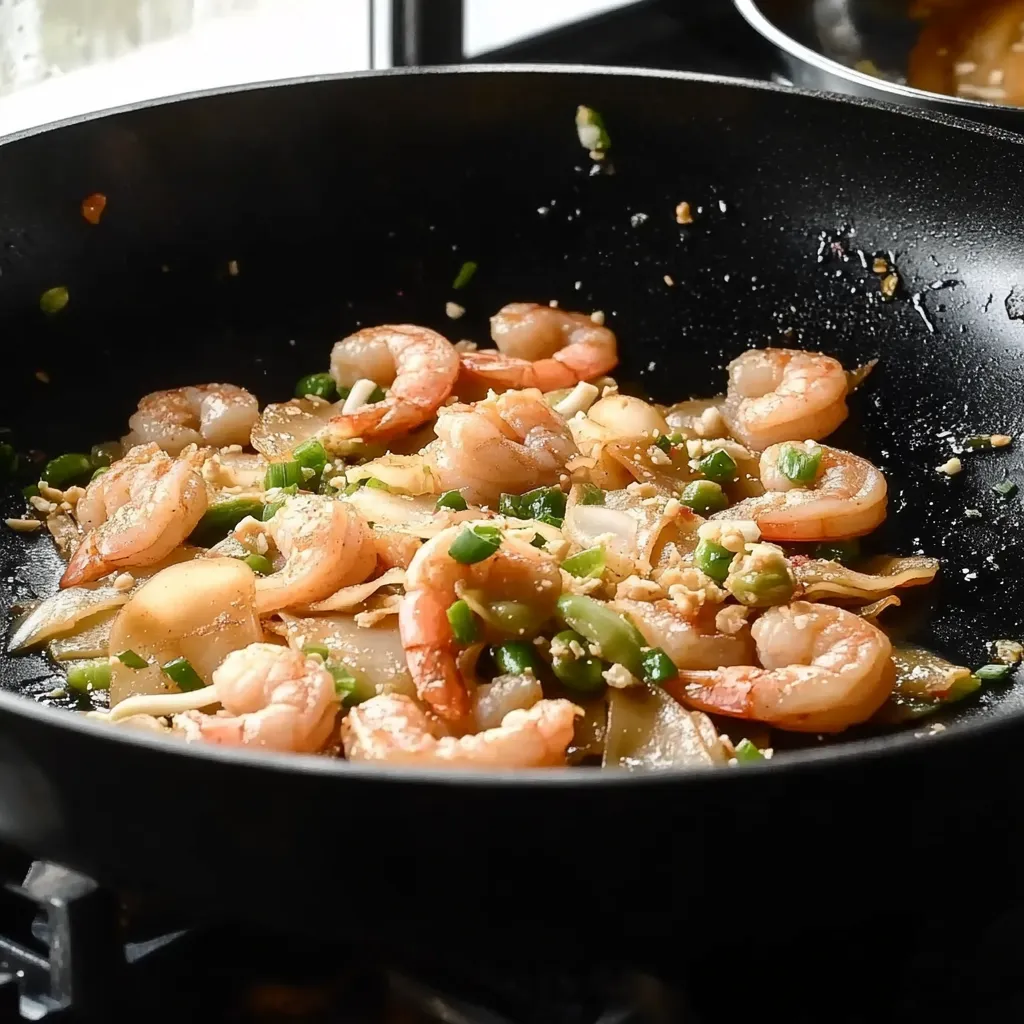
- Sear shrimp and tofu. Heat oil in a wok or large skillet. Cook the shrimp until just pink, then remove them. Brown the tofu in the same pan.
- Scramble the eggs. Push the tofu aside, add a little more oil if the pan looks dry, and scramble the eggs into soft curds.
- Toss the noodles. Add noodles and sauce. Toss over medium-high heat until the noodles absorb the sauce and turn tender with a little bite.
- Finish fresh. Return the shrimp, then fold in bean sprouts and green onions for less than a minute. Serve with peanuts, lime, and cilantro.
Easy Homemade Pad Thai Sauce
Easy Homemade Pad Thai should taste sour first, then salty, then lightly sweet. Tamarind concentrate is the easiest way to get there at home. It is thicker and stronger than tamarind water, so a few tablespoons go a long way.
Whisk the sauce before you start cooking and taste it on a spoon. It will seem bold. That is fine because the noodles dilute it. If your tamarind is very sharp, add one more teaspoon of sugar. If the sauce tastes flat, add a small splash of fish sauce.
If you like Thai noodle dishes, the site's Classic Homemade Pad Thai is a good companion recipe to compare sauce balance and toppings.
Keep The Noodles Springy
The biggest mistake is boiling rice noodles until they are fully tender. For Pad Thai, they need to finish in the pan. Warm water gives you more control than boiling water. The noodles should bend easily around your finger but still feel slightly firm in the center.
If the noodles stick while cooking, do not panic. Add one or two tablespoons of water and keep tossing. If they seem wet and limp, stop adding liquid and let the pan heat drive off moisture. A wide skillet works if you do not own a wok, but avoid crowding the pan.
Shrimp, Tofu, Or Chicken
Shrimp is the fastest option. Cook it only until pink and opaque, then take it out while the noodles cook. The FDA seafood safety guide recommends cooking seafood to 145°F, which is useful if your shrimp are especially large. You can read more in the FDA seafood-safety guide.
Chicken works too, but slice it thin so it cooks quickly. For a meatless dinner, use extra tofu and swap fish sauce for a vegetarian fish sauce alternative. For a lighter noodle bowl, try Zucchini Pad Thai or the lower-carb Zucchini Pad Thai Low Carb.
Finish With Crunch And Lime
Pad Thai wakes up at the table. Crushed peanuts add rough crunch, lime cuts through the sauce, and chili flakes let each person control heat. Bean sprouts should still snap when you bite them, so they go in right before serving.
Cilantro is optional, but I like a small handful. Garlic chives are more traditional if you can find them. If you are building a Thai-style dinner, this pairs well with Easy Thai Red Curry Soup with Noodles or Grilled Thai Coconut Chicken Skewers.
Storage And Reheating
Pad Thai is at its best right after cooking. Leftovers keep for up to three days in an airtight container in the fridge. The noodles firm up as they chill, so reheat them gently in a skillet with a splash of water.
The microwave works in a pinch, but use short bursts and stir between them. Add fresh lime, peanuts, and a handful of bean sprouts after reheating so the leftovers do not taste dull.
Summary
This homemade Pad Thai is quick, balanced, and built for a regular kitchen. The key is soaking the noodles just enough and tossing everything over high heat in short, confident steps.

FAQs
- What makes Pad Thai taste like Pad Thai?
The sauce is the main thing. Tamarind brings the sour edge, fish sauce adds salt and depth, and sugar rounds it out. Lime, peanuts, and bean sprouts finish the dish so it tastes fresh instead of heavy.
- Can I make Easy Homemade Pad Thai without shrimp?
Yes. Use thinly sliced chicken, extra firm tofu, or a mix of mushrooms and tofu. Cook chicken fully before adding the noodles, and press tofu well so it browns instead of crumbling.
- Why did my Pad Thai noodles get mushy?
The noodles were probably soaked too long or cooked too slowly after the sauce went in. Soak them until flexible but still firm in the center. They finish cooking in the pan as they absorb the sauce.
- Can I make the sauce ahead?
Yes. Whisk the tamarind concentrate, fish sauce, sugar, and water up to a week ahead and refrigerate it in a jar. Shake it before using because the sugar can settle at the bottom.
- Is this Pad Thai gluten-free?
It can be gluten-free if your fish sauce, tamarind concentrate, and rice noodles are labeled gluten-free. Rice noodles usually are, but sauces vary by brand. Skip soy sauce unless you use certified gluten-free tamari.
- What should I serve with Pad Thai?
It is filling on its own, but cucumber slices, Thai-style salad, or steamed greens are good beside it. For a bigger Thai-inspired meal, serve smaller portions with soup or grilled chicken.
