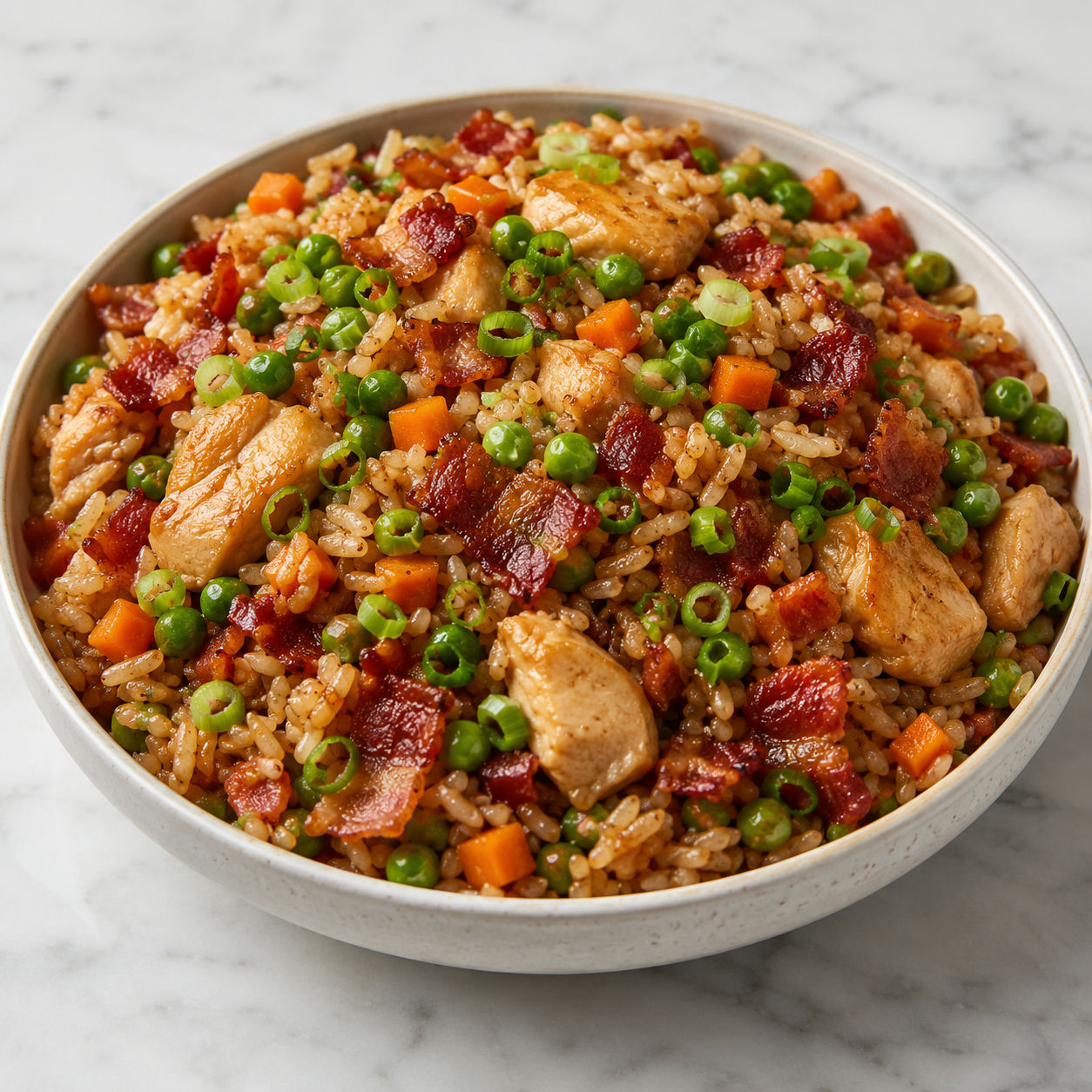
 Pin it
Some dinners come together because you planned them. This one comes together because you have leftover rice in the fridge and a pack of bacon that needs to be used up.
Bacon fat does a lot of the heavy lifting here. It seasons the pan before the chicken goes in, and by the time you add the rice, the whole skillet smells like something worth sitting down for. The bacon gets folded back in at the end so it stays crispy instead of going soft in the sauce.
If you have only ever made plain egg fried rice before, this version will feel like a genuine upgrade. The chicken adds substance, the bacon adds smoke and crunch, and the whole thing is done in under 35 minutes.
Everything That Goes Into the Pan
A short list, but the order you cook these ingredients matters more than anything else. Start with cold bacon in a cold pan and don't rush anything until the fat has fully rendered and the pieces are genuinely crispy.
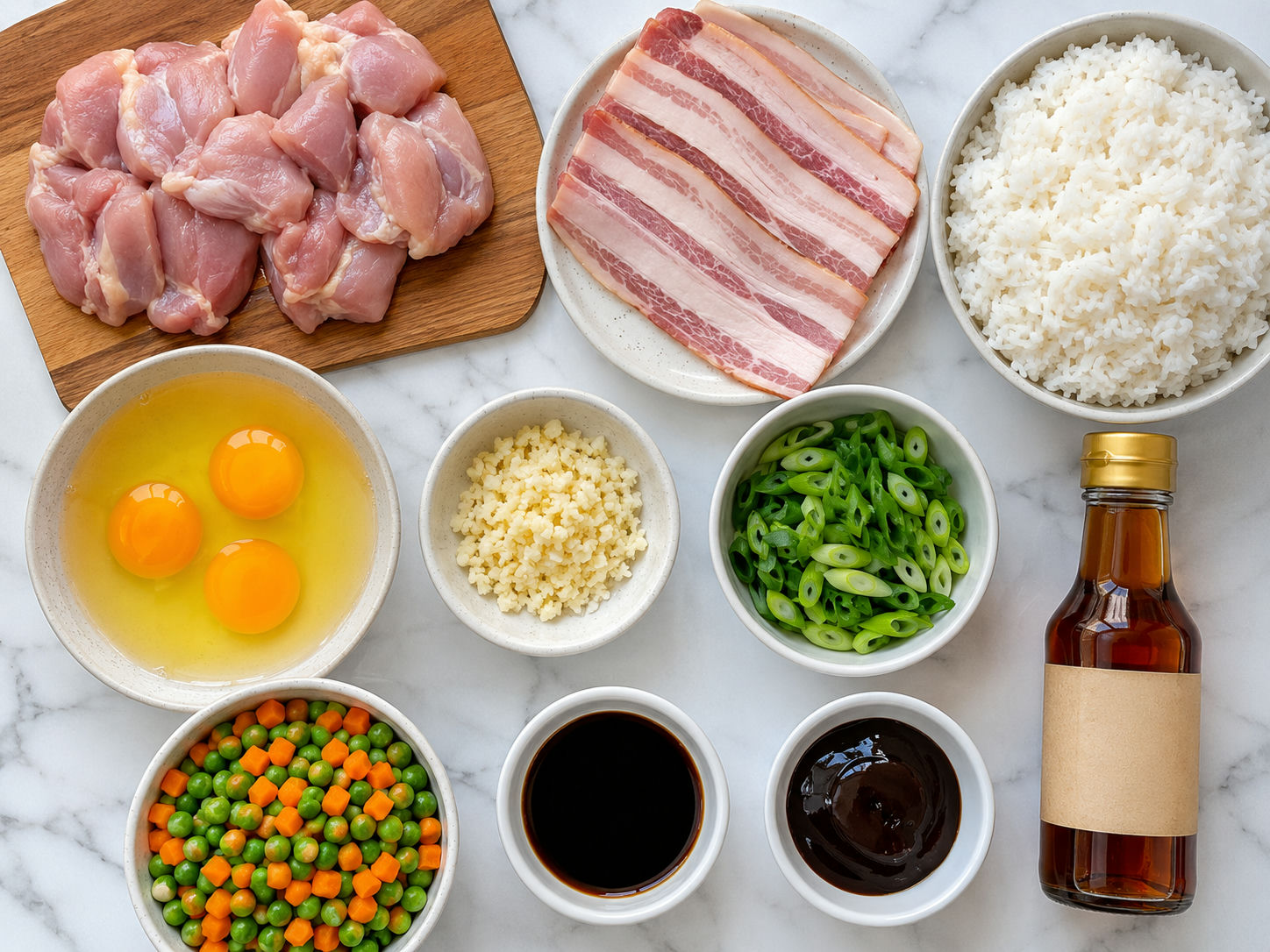
- Day-old cooked rice. Cold, dry rice fries up with a little chew and separates cleanly. Fresh rice steams and clumps instead of crisping against the hot pan.
- Thick-cut bacon. Renders down to smoky, crispy bites and leaves behind fat that carries flavor through every other ingredient in the dish.
- Boneless chicken thighs. More forgiving than breast at high heat. Cut into bite-size pieces so they sear and cook through evenly in just a few minutes.
- Eggs. Scrambled right in the pan and folded into the rice. They add a soft richness and body that balances out the salty bacon.
- Soy sauce. Seasons the rice and gives it that deep golden-brown color. Use a good all-purpose soy sauce rather than a low-sodium version here.
- Oyster sauce. Adds a savory sweetness that soy sauce alone doesn't quite reach. Just one tablespoon makes a real difference to the depth of the finished dish.
- Sesame oil. Goes in at the very end, off the heat. A small amount transforms the aroma of the whole bowl.
- Garlic and green onions. Garlic goes in early for flavor. The green tops of the onion go on at the very end so they stay fresh and bright.
- Frozen peas and carrots. Easy to keep on hand and no prep needed. Let them thaw before adding so they heat through without dropping the pan temperature.
Building It in the Right Order
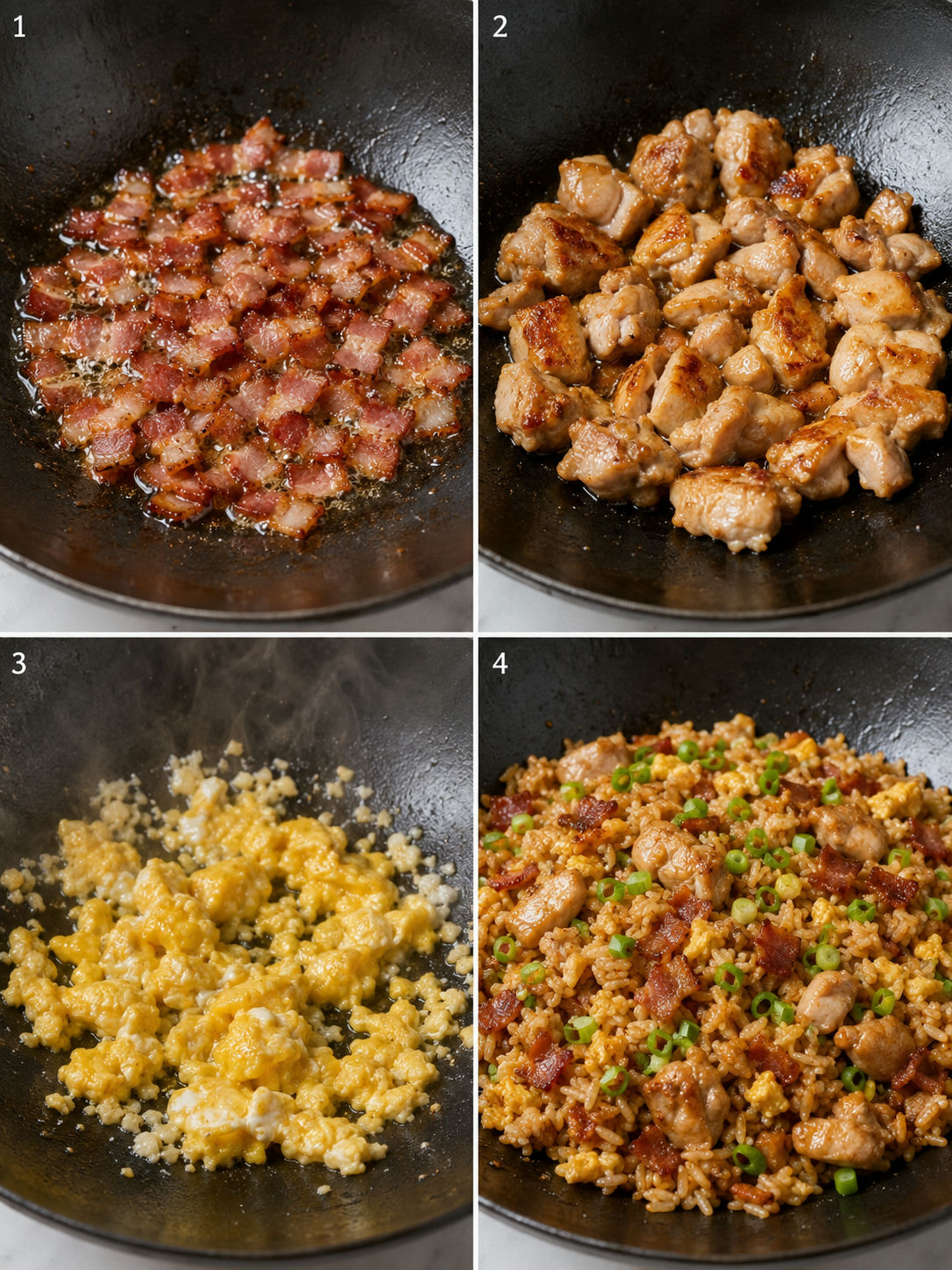
- Render the bacon. Add the chopped bacon to a cold wok or large skillet. Set over medium heat and cook, stirring occasionally, until the fat has fully rendered and the pieces are crispy and golden, about 7 to 8 minutes. Use a slotted spoon to move the bacon to a plate, leaving about 1 tablespoon of fat in the pan.
- Sear the chicken. Raise the heat to medium-high. Season the chicken pieces with salt and pepper and add them to the hot bacon fat. Cook without stirring for 2 minutes to build color, then stir and cook another 2 to 3 minutes until cooked through to 165°F per the USDA food safety guidelines. Move the chicken to the plate with the bacon.
- Scramble the eggs. Add a splash of vegetable oil if the pan looks dry. Pour in the beaten eggs and let them sit for about 20 seconds, then scramble loosely into soft, uneven chunks. Do not cook them all the way through. Push them to one side of the pan without removing.
- Cook the aromatics. Add the garlic and the white parts of the green onions to the center of the pan. Stir constantly for about 30 seconds until fragrant. Keep the heat high throughout.
- Fry the rice. Add the cold rice and break up any clumps with the back of your spatula. Let it sit undisturbed for 60 seconds so the bottom can start to crisp, then toss and let it sit again. Repeat for 3 to 4 minutes total until the grains separate and some pick up a little color.
- Season and finish. Add the peas and carrots, soy sauce, and oyster sauce. Toss well to coat the rice. Return the chicken and bacon to the pan and toss again until everything is evenly combined. Take the pan off the heat, drizzle with sesame oil, and scatter the green onion tops over the top. Serve right away.
Why Cold Rice Changes Everything
Freshly cooked rice holds a lot of moisture inside each grain. When it hits a hot pan, that steam releases all at once and you end up with a sticky, clumped mass that tastes more like rice porridge than fried rice.
Day-old rice that has sat uncovered in the fridge has lost most of that surface moisture. The grains separate easily and each one makes full contact with the hot pan, which is where the toasted, slightly nutty flavor comes from. It takes planning ahead but it is the single biggest thing you can do for better results. For the food science behind why this works, Serious Eats covers fried rice technique in excellent detail. And if you want a simpler egg-only version to practice the method, the Quick 6-Ingredient Egg Fried Rice is a great baseline.
The Case for Starting With Cold Bacon
Adding bacon to a cold pan rather than a preheated one is intentional. Starting it cold gives the fat time to render slowly so the pieces cook all the way through before the outside can burn. You end up with evenly crisped bacon rather than a mix of charred edges and pale rubbery centers.
That rendered fat stays in the pan after the bacon comes out and carries smokiness into the chicken and eventually into every grain of rice. Pouring it off and starting fresh with plain oil would lose all of that. If you love this flavor combination, the Flavor-Packed Chicken Fried Rice shows a slightly different take with a bolder sauce profile worth comparing.
Smart Swaps That Still Work
Chicken breast works in place of thighs if that is what you have. Slice it a little thinner and watch it closely since breast meat dries out fast at high heat. It usually needs about 3 minutes total, no more.
Turkey bacon is a fine swap and crisps up well, though it renders less fat than pork bacon, so add an extra tablespoon of oil to the pan after removing it. For a gluten-free version, use tamari in place of soy sauce and look for a certified gluten-free oyster sauce. If you want to take the flavors in a completely different direction, Bang Bang Chicken with Fried Rice adds a spicy-sweet sauce that changes the whole character of the bowl.
Storing and Reheating Leftovers
Leftovers keep in an airtight container in the fridge for up to 3 days. The best way to reheat is in a skillet over medium heat with a small splash of water or soy sauce to loosen things up. The microwave works in a pinch but tends to make the rice gummy and the bacon loses its crunch.
This dish does not freeze well since the rice texture falls apart after thawing. Make what you plan to eat within a few days, or halve the recipe if you are cooking for two.
FAQs
- Can I use freshly cooked rice instead of day-old?
Fresh rice holds too much moisture and will clump and steam instead of fry. If that is all you have, spread the hot cooked rice on a rimmed baking sheet in a thin layer and refrigerate uncovered for 30 to 60 minutes. It won't be as dry as overnight rice, but it is a workable shortcut that beats using it straight from the pot.
- What cut of chicken works best for this recipe?
Boneless chicken thighs are the best choice. They stay juicy at high heat and don't dry out the way breast meat can if you get distracted for a moment. Chicken breast works fine too if you slice it thin and keep a close eye on timing, about 3 to 4 minutes total at high heat.
- Can I make chicken and bacon fried rice ahead of time?
You can cook the bacon and chicken ahead and refrigerate them separately. The rice obviously benefits from being cold going in. But fried rice is really best cooked fresh and served right away. Reheated fried rice loses some of its texture and the bacon softens. Make it fresh when you can.
- What can I use instead of oyster sauce?
Hoisin sauce is the closest swap, though it is slightly sweeter. A little extra soy sauce with a small pinch of sugar is another option that works well. Fish sauce mixed with a drop of soy sauce is a third choice if you have it on hand. The flavor shifts a bit but the dish holds together in any of these cases.
- How do I store and reheat leftovers?
Store leftovers in an airtight container in the fridge for up to 3 days. Reheat in a skillet over medium heat with a small splash of water or soy sauce to loosen things up. Avoid the microwave if you can. It tends to make the rice gummy and the bacon loses its crispiness.
- Can I add more vegetables to the fried rice?
Absolutely. Diced red bell pepper, corn, shredded cabbage, baby spinach, or edamame all work well here. Add them after the garlic and before the rice so they have time to soften slightly. Just don't overload the pan or the heat will drop and the rice will steam rather than fry.
- Is this recipe gluten-free?
Not as written, since regular soy sauce and most oyster sauces contain wheat. To make it gluten-free, swap soy sauce for tamari and either find a certified gluten-free oyster sauce or leave it out entirely. Everything else in the recipe is naturally gluten-free.
- Can I use turkey bacon instead of pork bacon?
Yes, turkey bacon crisps up nicely in this recipe. It renders less fat than pork bacon though, so add an extra tablespoon of vegetable oil to the pan after removing it. The smokiness will be a little lighter but the dish still holds up well.
