 Pin it
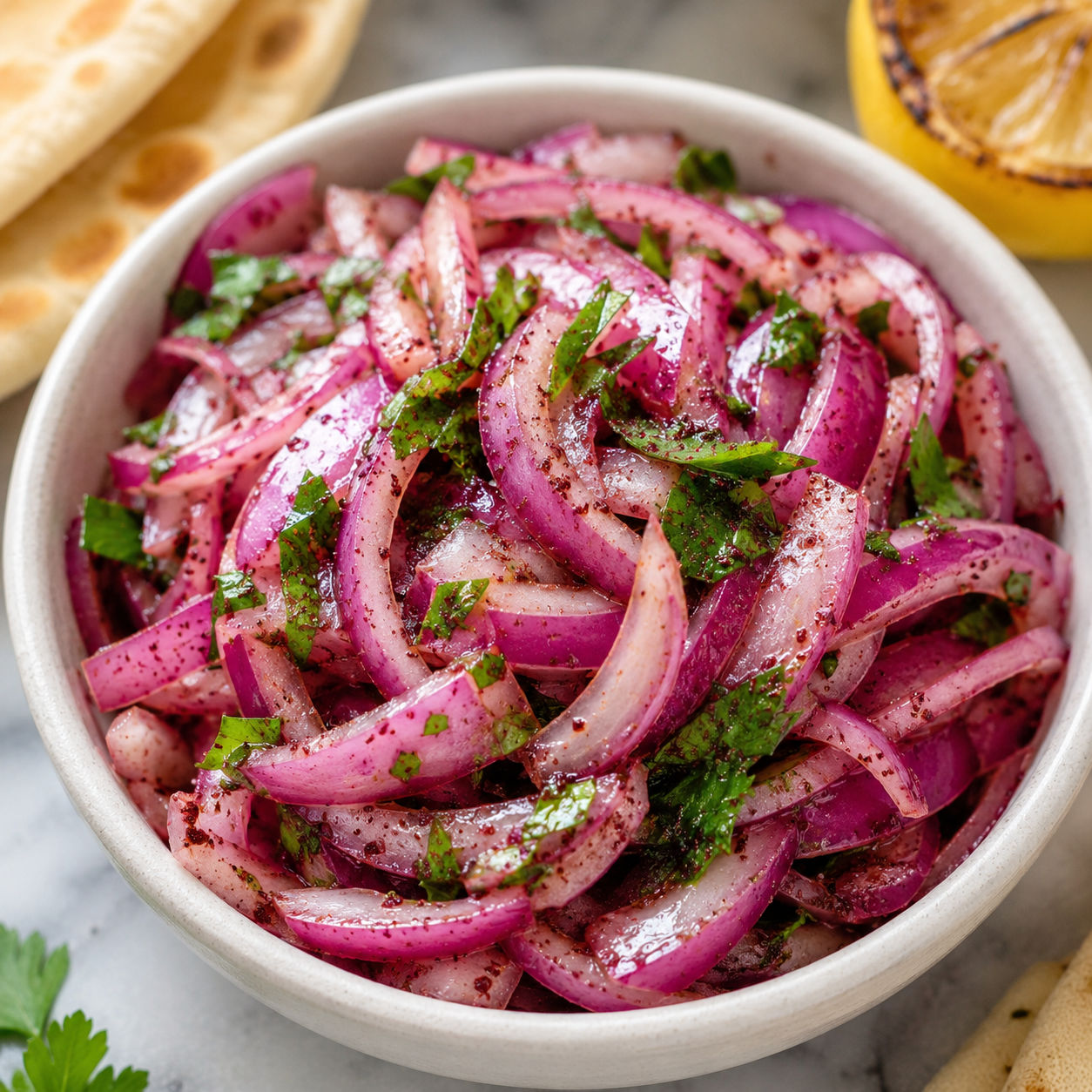
Quick Sumac Onions are the little bowl I want next to anything rich or smoky. The onions stay crisp, but the sumac and lemon tame their bite and give them that tart, deep red edge you get with Turkish kebab plates.
You do not need a stove or a long pickle brine. Slice the onions thin, rub them briefly with salt and sumac, and let the seasoning do the work while you finish the rest of dinner.
The Bright Onion Lineup
Use firm red onions with tight skins and no soft spots. Good sumac should smell tart and fruity, not dusty or flat.
- Red onions. Their color and mild sweetness make the prettiest, cleanest-tasting salad.
- Ground sumac. Adds a tart, lemony flavor and stains the onions a deep ruby color.
- Fine salt. Pulls out a little onion juice and helps the slices soften fast.
- Fresh lemon juice. Brightens the bowl and makes the onions taste lightly pickled.
- Extra virgin olive oil. Rounds off the sharp edges and carries the spice.
- Fresh parsley. Brings green freshness and keeps the condiment from tasting heavy.
- Aleppo pepper. Optional, but a small pinch gives gentle warmth without taking over.
Make Quick Sumac Onions
- Slice the onions. Halve the onions from root to tip, peel them, and slice into very thin half moons. A sharp knife works, but a mandoline gives the softest texture.
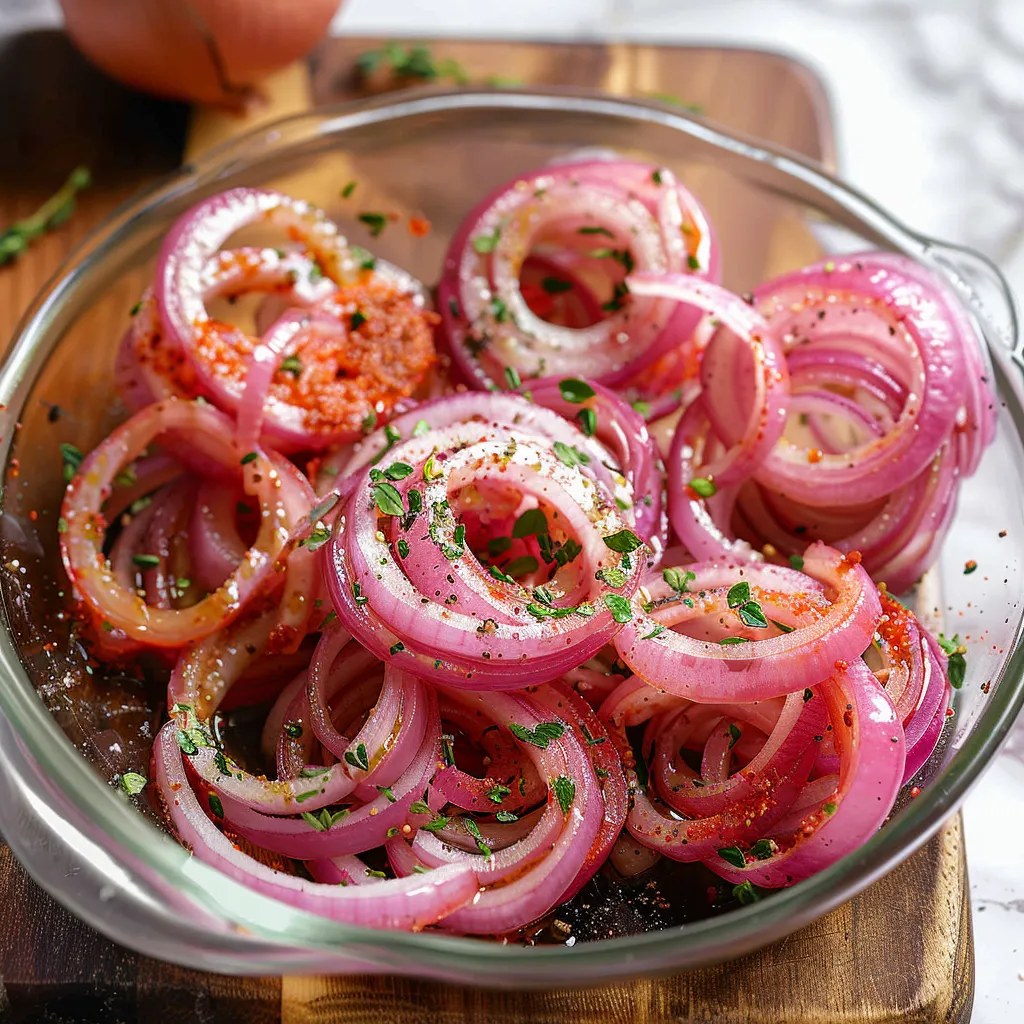
- Massage the seasoning. Add the onions, sumac, salt, and Aleppo pepper to a bowl. Rub with your fingers for 30-45 seconds until the onion looks glossy and starts to relax.
- Add the fresh finish. Toss in lemon juice, olive oil, and chopped parsley. Taste and adjust with more lemon or salt.
- Rest or serve. Serve right away for crunch, or rest 10-15 minutes for softer onions and a deeper red color.
Why The Massage Matters
Raw onion can be loud. A quick rub with salt and sumac changes that fast. The salt draws out a little moisture, and the sumac coats every slice instead of sitting in dry clumps at the bottom of the bowl. You want glossy strands that bend but still snap when you bite.
Do not crush the onions into mush. Use your fingertips, not your whole palm, and stop once the bowl smells lemony and the onions look lightly stained. If you already make Easy Sumac Marinated Onions, this version is the faster table-side cousin.
Taming A Strong Onion
If your onion makes your eyes water before it hits the bowl, soak the slices in ice-cold water for 10 minutes. Drain well and pat dry before adding the seasoning. This small step removes some sulfur bite, but it also mutes flavor, so I only do it with very sharp yellow or white onions.
Red onions usually need no soak. The lemon and salt handle enough of the edge. For a sweeter pickle-style onion, try the brinier pickled sweet peppers and onions when you have a little more time.
Best Ways To Serve Them
These onions belong anywhere you want brightness. Pile them into chicken shawarma wraps, tuck them beside grilled steak, spoon them over hummus, or scatter them on a grain bowl with cucumbers and yogurt. They are also excellent with fried eggs and warm flatbread.
They cut through rich, cheesy food too. Try them with Quick Baked Pizza Wraps for a tangy bite, or serve them beside grilled shishito peppers as a small appetizer plate.
Getting Sumac Right
Sumac is made from dried sumac berries, and its flavor should read as tangy, earthy, and a little fruity. Britannica's sumac overview is useful if you want the plant background. In the kitchen, the main thing is freshness. Old sumac loses its scent and starts tasting dusty.
Buy it from a shop with decent spice turnover. Store it tightly sealed away from heat. If your sumac is very salty, taste before adding the full amount of salt in the recipe.
Make-Ahead And Storage
Quick Sumac Onions are best in the first few hours, when the onions still have snap. They are still useful after a night in the fridge, especially in sandwiches and bowls. Store them covered for up to 3 days, following general cold storage guidance from FoodSafety.gov.
If the onions look dry after chilling, stir in a teaspoon of lemon juice and a small drizzle of olive oil. Add fresh parsley at the end, since herbs darken faster than the onions.
Summary
Serve these onions right away for crunch, or let them sit 15 minutes for a softer, juicier condiment.
FAQs
- What are Quick Sumac Onions?
Quick Sumac Onions are thinly sliced onions tossed with ground sumac, salt, lemon juice, parsley, and olive oil. They are common with Turkish-style kebabs and wraps because they cut through rich meat with a tart, fresh crunch.
- Can I use white or yellow onions instead of red onions?
Yes. Red onions give the best color and a nice raw sweetness, but white onions work if sliced very thin. Yellow onions are sharper, so soak them in cold water for 10 minutes before mixing.
- Do I have to soak the onions first?
No, soaking is optional. If your onion tastes harsh, a short soak in cold water softens the burn. Drain and pat the slices dry so the sumac and lemon do not get watery.
- How long do sumac onions last?
They keep in an airtight container in the fridge for 3 days. The flavor stays good, but the onions soften as they sit. Stir in a little fresh parsley before serving if you want them to taste brighter.
- What can I serve with sumac onions?
They are great with grilled chicken, lamb, beef, falafel, tuna bowls, hummus plates, and warm pita wraps. They also wake up fried eggs or a simple bean salad.
- Is there a substitute for sumac?
There is no exact match for sumac's tart berry flavor. In a pinch, use extra lemon zest with a tiny pinch of smoked paprika for color. The onions will still be good, just less earthy and less Turkish in flavor.
