 Pin it
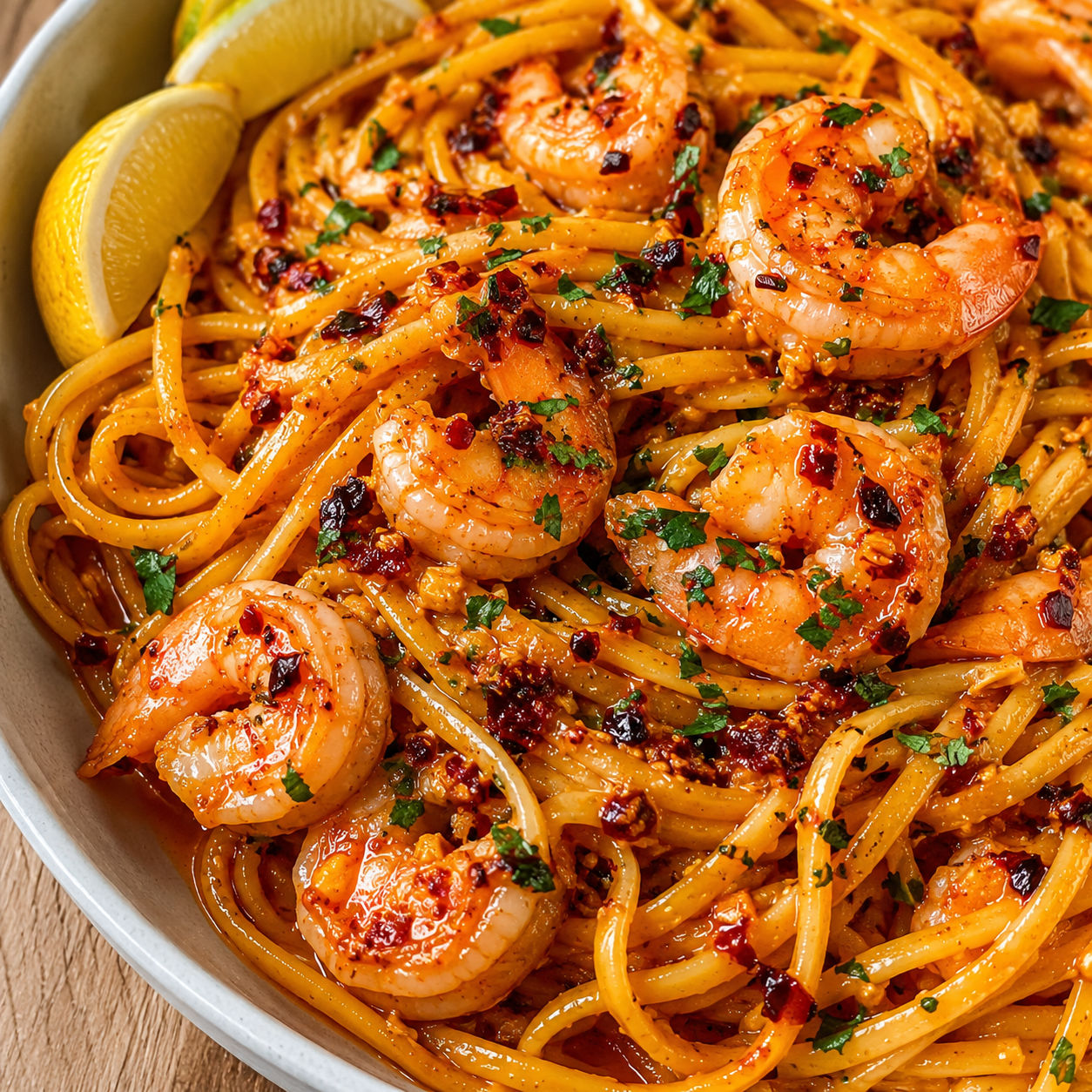
Spicy Shrimp Scampi with Gochujang and Chili Crisps is what I make when classic scampi sounds good but I want the sauce to hit harder. The butter and garlic stay familiar. The gochujang brings a deep red savoriness, and chili crisp leaves little crunchy bits in the folds of pasta.
The key is timing. Shrimp cook fast, gochujang can darken if the pan is too hot, and butter needs starchy pasta water to turn silky. Keep those three things in check and this lands on the table in about half an hour.
The spicy scampi lineup
Use plump shrimp, fresh garlic, and a chili crisp with visible crunchy bits. The ingredient list is short, so each one has to pull its weight.
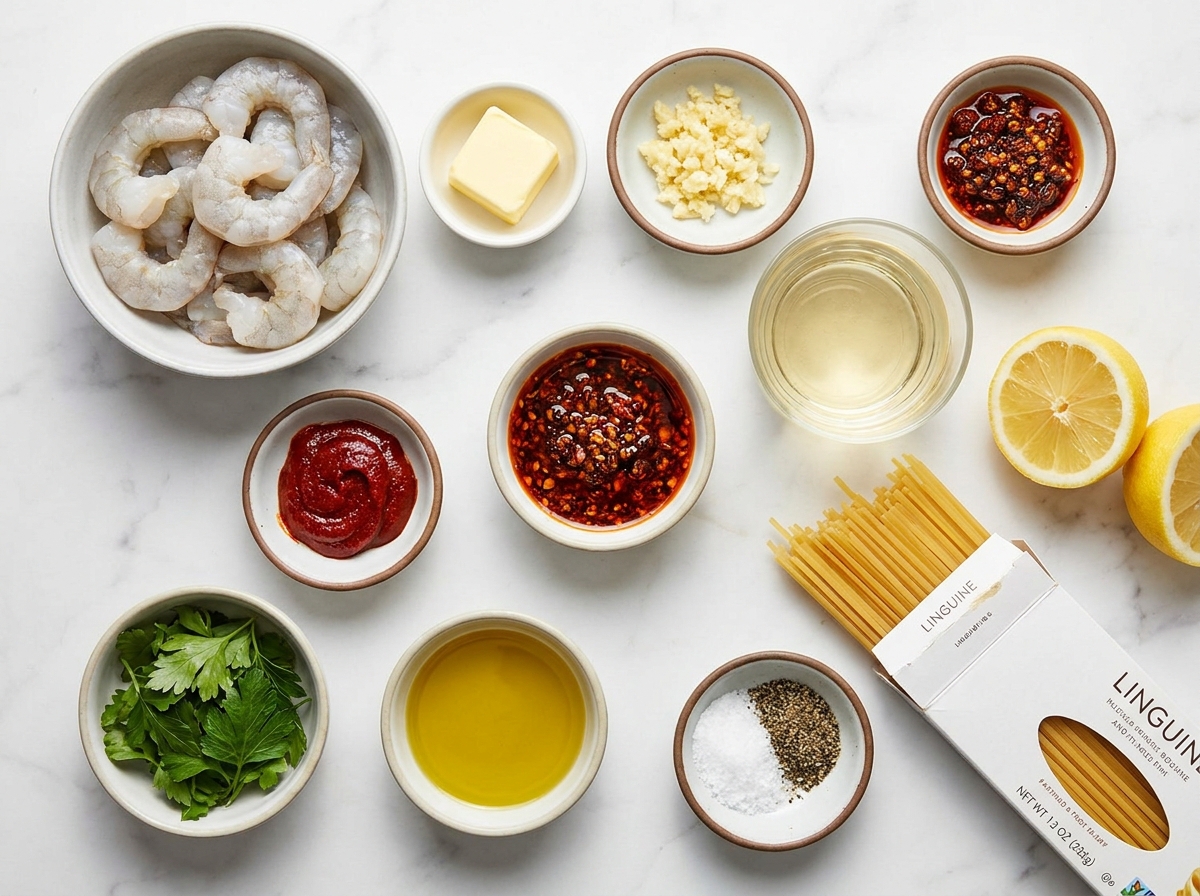
- Large shrimp. They stay juicy when seared quickly and give the pasta its sweet seafood flavor.
- Gochujang. This Korean chili paste adds heat, salt, gentle sweetness, and a deep red color.
- Chili crisp. It brings chile oil, toasted bits, and a little crunch that plain hot sauce cannot give.
- Garlic. Fresh minced garlic keeps the dish rooted in scampi territory.
- Unsalted butter. It softens the chile heat and helps the sauce cling to the noodles.
- Dry white wine. It loosens the pan and adds brightness before the lemon goes in.
- Linguine. Long pasta catches the glossy sauce. Spaghetti or fettuccine work too.
- Lemon and parsley. They wake up the buttery sauce right before serving.
Toss it while glossy
- Cook the pasta. Boil linguine in well-salted water until just shy of al dente. Reserve 1 cup of pasta water before draining.
- Sear the shrimp. Pat shrimp dry, season lightly, and sear in olive oil for 1-2 minutes per side. Move them to a plate when pink and barely cooked through.
- Start the sauce. Lower the heat and melt the butter. Add garlic and cook for 30-45 seconds until fragrant.
- Bloom the chiles. Stir in gochujang and half the chili crisp. Add wine and simmer for 2-3 minutes, scraping the skillet as the sauce loosens.
- Finish the pasta. Add linguine and a splash of pasta water. Toss until the sauce looks shiny, then return the shrimp with lemon juice and parsley.
- Serve hot. Spoon the remaining chili crisp over the bowls and eat right away while the shrimp are tender.
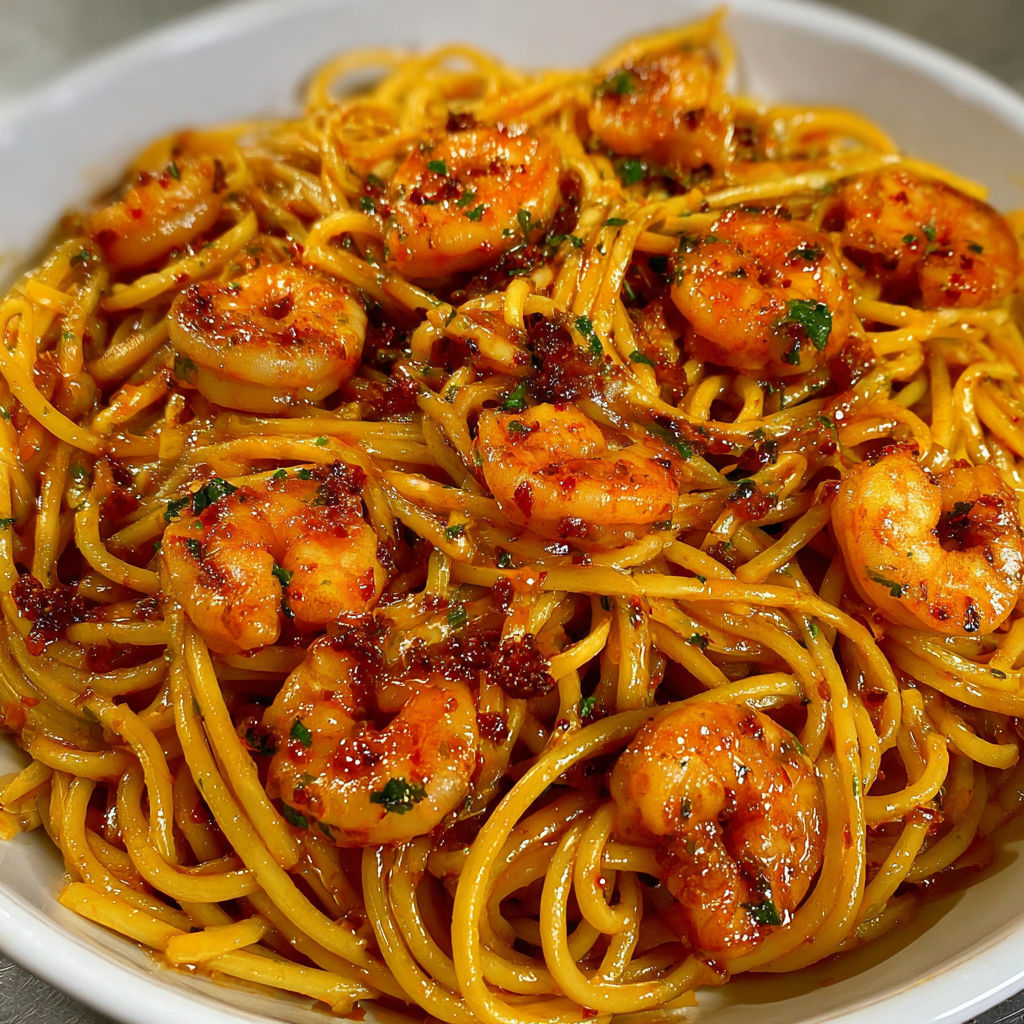
Spicy Shrimp Scampi Gochujang Chili Crisps
The sauce works because gochujang is more than heat. It has fermented depth and a little sweetness, which gives the butter something savory to hold onto. Chili crisp does the opposite job. It stays louder and more textured, especially when some of it is saved for the finish.
Keep the heat moderate when the paste hits the pan. If the skillet is screaming hot, the sugars in the gochujang can scorch before the wine has a chance to loosen them. Stir until the butter turns brick-orange, then pour in the wine and scrape. If you like this kind of bold noodle bowl, the site has a similar spicy lane with Spicy Peanut Chili Oil Noodles.
Shrimp timing matters most
Shrimp are done before they look dramatic. Once they curl into a loose C shape and turn opaque, take them out. They will get one more minute of heat when they go back into the pasta. That rest keeps them snappy instead of tight.
The FDA advises cooking seafood to 145 degrees F, and shrimp should look pearly and opaque when done. You can read more in the FDA seafood-safety guide. For a milder garlic-butter direction, try Easy Classic Shrimp Scampi or Garlic Shrimp Pasta with Butter and Herbs.
Getting the sauce to cling
Pasta water is not optional here. The starch pulls butter, chile oil, wine, and gochujang into a sauce that coats the noodles. Start with a quarter cup, toss hard, and add more only if the pan looks dry. The pasta should slide through the skillet with a shiny coating.
If the sauce breaks and looks oily, take the pan off the heat and add another splash of pasta water. Toss for 20 seconds before deciding it needs more butter. Most of the time it needs motion, not more fat.
Swaps that make sense
No linguine in the cabinet? Spaghetti, bucatini, or fettuccine all work. Rice noodles taste good with the sauce too, but they soak it up faster and need a lighter hand with pasta water. For a gluten-free dinner, use gluten-free pasta and check the gochujang label because many brands contain wheat.
You can replace the wine with broth. You can also use scallops instead of shrimp, but sear them separately and do not toss them hard with the noodles. For another sweet-savory shrimp dinner, Honey Garlic Shrimp with Sausage and Broccoli leans less spicy and more family-style.
Leftovers and serving ideas
This pasta is best right away, when the chili crisp still has texture and the shrimp are just cooked. Leftovers are still good, but the noodles will drink up the sauce. Reheat in a skillet with water or broth over low heat. The microwave works in a pinch, but use short bursts and stir between them.
Serve it with something cool or crisp. Cucumber salad, steamed greens, roasted asparagus, or a simple lettuce salad all balance the butter and chile oil. If you want to stretch the meal, add garlic bread and put extra lemon wedges on the table.
Summary
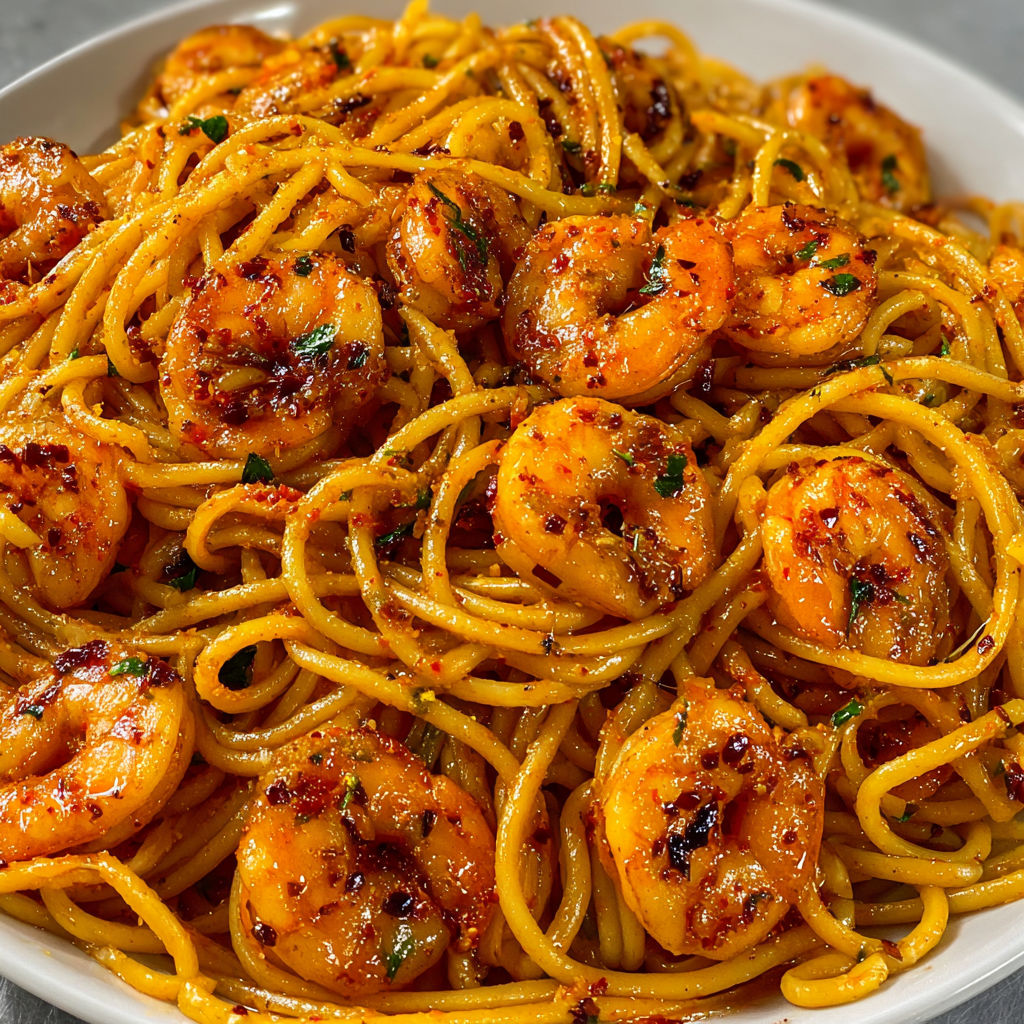
Bold, buttery shrimp scampi gets a spicy Korean-inspired twist with gochujang and chili crisp. The method stays quick, but the sauce tastes deeper than a standard weeknight pasta.
FAQs
- Can I make this shrimp scampi without wine?
Yes. Use low-sodium chicken broth or seafood stock in the same amount. Add an extra squeeze of lemon at the end because broth does not bring the same acidity as dry white wine.
- What can I use instead of gochujang?
Use a smaller amount of sriracha mixed with a teaspoon of miso if you have it. The flavor will be sharper and less earthy, but it still gives the sauce heat and body.
- How spicy is this recipe?
It is medium-spicy with 2 tablespoons gochujang and 1 tablespoon chili crisp. For a gentler pan, use 1 tablespoon gochujang and save the chili crisp for topping. For more heat, add another spoonful of chili crisp at the table.
- Can I use frozen shrimp?
Yes. Thaw frozen shrimp under cold running water, then dry them well with paper towels. Wet shrimp steam in the skillet and make the sauce watery.
- How do I store and reheat leftovers?
Store leftovers in an airtight container in the fridge for up to 2 days. Reheat gently in a skillet with a splash of water. Stop as soon as the pasta is hot so the shrimp do not turn rubbery.
- What should I serve with this pasta?
A crisp cucumber salad, simple greens, or roasted broccoli works well because the pasta is rich and spicy. Garlic bread is good too, especially if you want something to drag through the leftover sauce.
