 Pin it
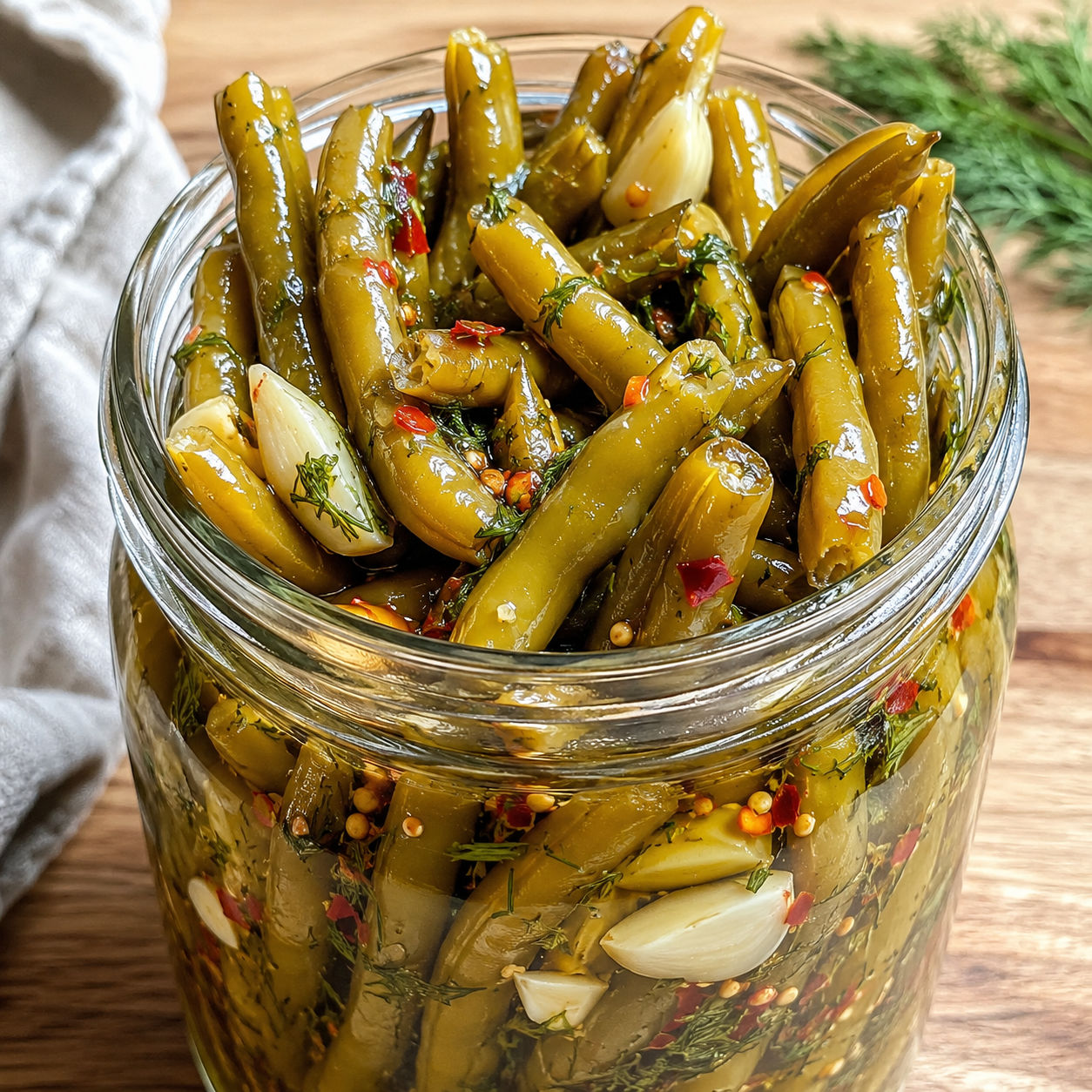
Spicy Dilly Beans with Garlic & Dill are what I reach for when I want the snap of a pickle without another cucumber jar on the shelf. The beans stay firm, the brine is bright, and the garlic settles into the dill instead of taking over.
This version keeps the canning ratios close to tested pickled bean guidance. That matters. You get a jar that tastes bold and homey, while the vinegar, salt, and processing time still do their job.
Beans, Dill, Garlic, Heat
Choose slender green beans that feel firm and squeak a little when you handle them. Fresh dill heads give the strongest pickle flavor, but good dill sprigs still work when seed heads are hard to find.
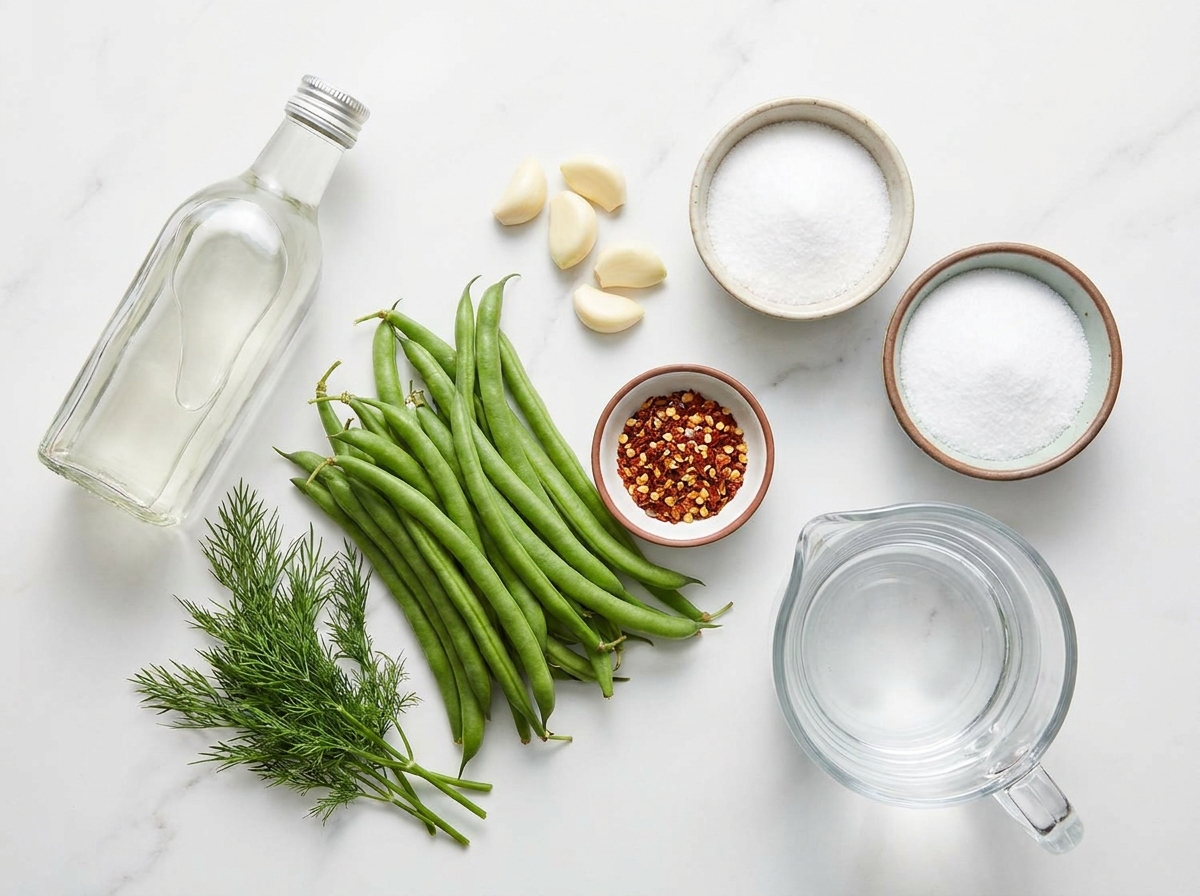
- Fresh green beans. They bring the crisp bite that makes dilly beans worth canning.
- Fresh dill heads. They perfume the brine with that classic pickle flavor.
- Garlic cloves. One clove per pint gives the jars a savory edge without muddying the brine.
- White vinegar. Use 5 percent vinegar for the right acidity in shelf-stable jars.
- Canning or pickling salt. It seasons the beans cleanly and dissolves without clouding like iodized salt can.
- Red pepper flakes. They add a dry, steady heat that blooms as the jars rest.
- Water. It balances the vinegar so the beans taste sharp but not harsh.
Pack The Jars Tight
- Prepare the canner. Wash pint jars, keep them hot, and bring a boiling-water canner to a simmer before you start packing.
- Trim the beans. Wash the beans, remove the stem ends, and cut them to fit upright in pint jars with 1/2-inch headspace.
- Add the flavor. Place 1 to 2 dill heads and 1 garlic clove in each hot pint jar, then pack the beans upright as snugly as you can without crushing them.
- Boil the brine. Combine vinegar, water, pickling salt, and red pepper flakes in a saucepan. Bring it to a full boil and stir until the salt dissolves.
- Fill and de-bubble. Ladle hot brine over the beans, leaving 1/2-inch headspace. Slide a clean bubble remover around the jar, then adjust brine if needed.
- Process the jars. Wipe rims, apply lids and bands, and process pints in a boiling-water canner for 5 minutes at 0-1,000 feet, 10 minutes at 1,001-6,000 feet, or 15 minutes above 6,000 feet.
Keep The Brine Tested
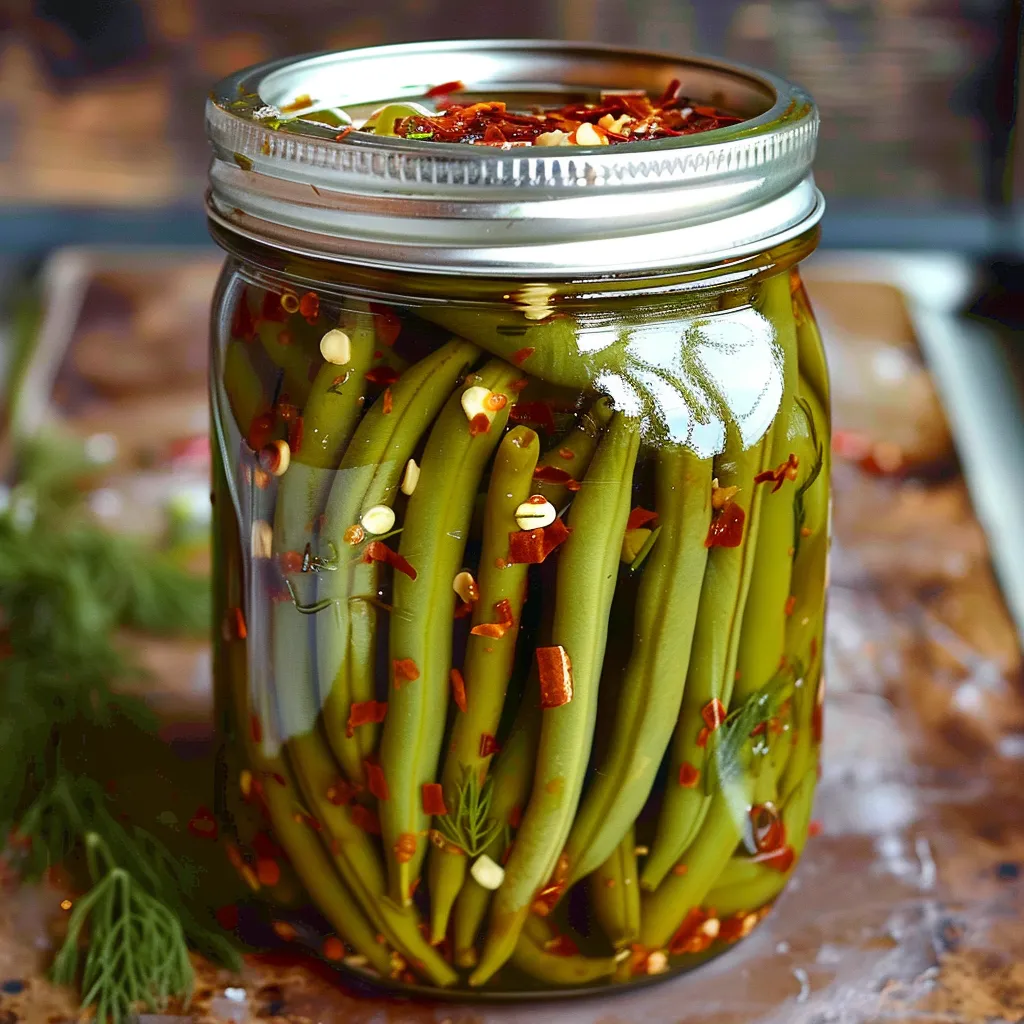
Dilly beans are pickles, so the vinegar is not just there for tang. It is part of the preservation. The National Center for Home Food Preservation dilled beans guidance uses equal parts 5 percent vinegar and water with canning salt. I keep that backbone intact and add the heat through dried pepper flakes.
Do not stretch the batch with extra beans or dilute the brine because the jars look a little short. If you run out of brine, make more at the same ratio. If you have extra brine, discard it or use it for a refrigerator-only quick pickle.
How To Keep Them Crisp
The best texture starts at the market or in the garden. Pick beans that are thin enough to pack neatly, but not so young that they collapse in the jar. Overgrown beans can be stringy, and tired beans go limp no matter how carefully you process them.
Pack them upright with the cut ends down. It looks tidy and helps you fit more beans into each jar. For another green bean side with a very different cozy flavor, try Cheesy Garlic Green Beans.
Heat You Can Control
One teaspoon of red pepper flakes across the batch gives a noticeable bite after the jars rest. If your flakes are especially fresh, the heat may be stronger than expected. For mild jars, use half. For hotter refrigerator jars, you can add more after opening, but keep canned shelf-stable batches close to the recipe.
If spicy snacks are your thing, these beans fit right next to Spicy Chili Garlic Deviled Eggs on a party tray. The beans cut through rich foods with vinegar and crunch.
Serving Ideas Beyond Snacking
These spicy dilly beans are easy to eat straight from the jar, but they do more than snack duty. Lay them beside grilled cheese, tuck them into a picnic plate, or chop a few into potato salad for crunch. They are also very good with tomato dishes, especially something fresh like Tomato Garlic Salad with Dill.
For drinks, use one bean as a Bloody Mary garnish. The brine is sharp and garlicky enough to wake up the glass without adding a heavy pickle spear.
Storage And Safe Seals
After processing, let the jars stand undisturbed for 12-24 hours. Check the seals, remove the bands, wipe the jars, and store them in a cool dark place. Any jar that does not seal should go into the fridge and be eaten within about one month.
For canning basics, follow a current guide like the NCHFP boiling-water canner instructions. Once opened, keep a jar refrigerated and use clean utensils so the brine stays clear.
Summary
These spicy dilly beans are crisp, garlicky, and built on a tested vinegar brine. Keep the vinegar ratio steady, trim the beans to fit the jars, and give them a short rest before opening.
FAQs
- Can I make these spicy dilly beans without canning them?
Yes. Pack the beans in clean jars, pour the hot brine over them, cool, and refrigerate. They should stay refrigerated and are best eaten within about one month.
- Can I use frozen green beans?
Fresh beans are much better here. Frozen beans soften after thawing and will not give you that crisp, snappy dilly bean texture.
- How spicy are these?
They have a steady, pickle-style heat rather than a hot sauce burn. Use the full teaspoon of red pepper flakes for a clear kick, or cut it in half for a milder jar.
- How long should dilly beans sit before eating?
Give the jars at least two weeks if you can. The beans are safe to open once properly processed and cooled, but the garlic, dill, and pepper taste rounder after resting.
- Can I reduce the salt?
For shelf-stable canned jars, use the recipe amount of canning or pickling salt. If you want to experiment with less salt, make a refrigerator-only batch instead.
- What do I serve with spicy dilly beans?
They are great on snack boards, with grilled sandwiches, next to burgers, or chopped into tuna salad. They also make a sharp garnish for Bloody Marys.
