 Pin it
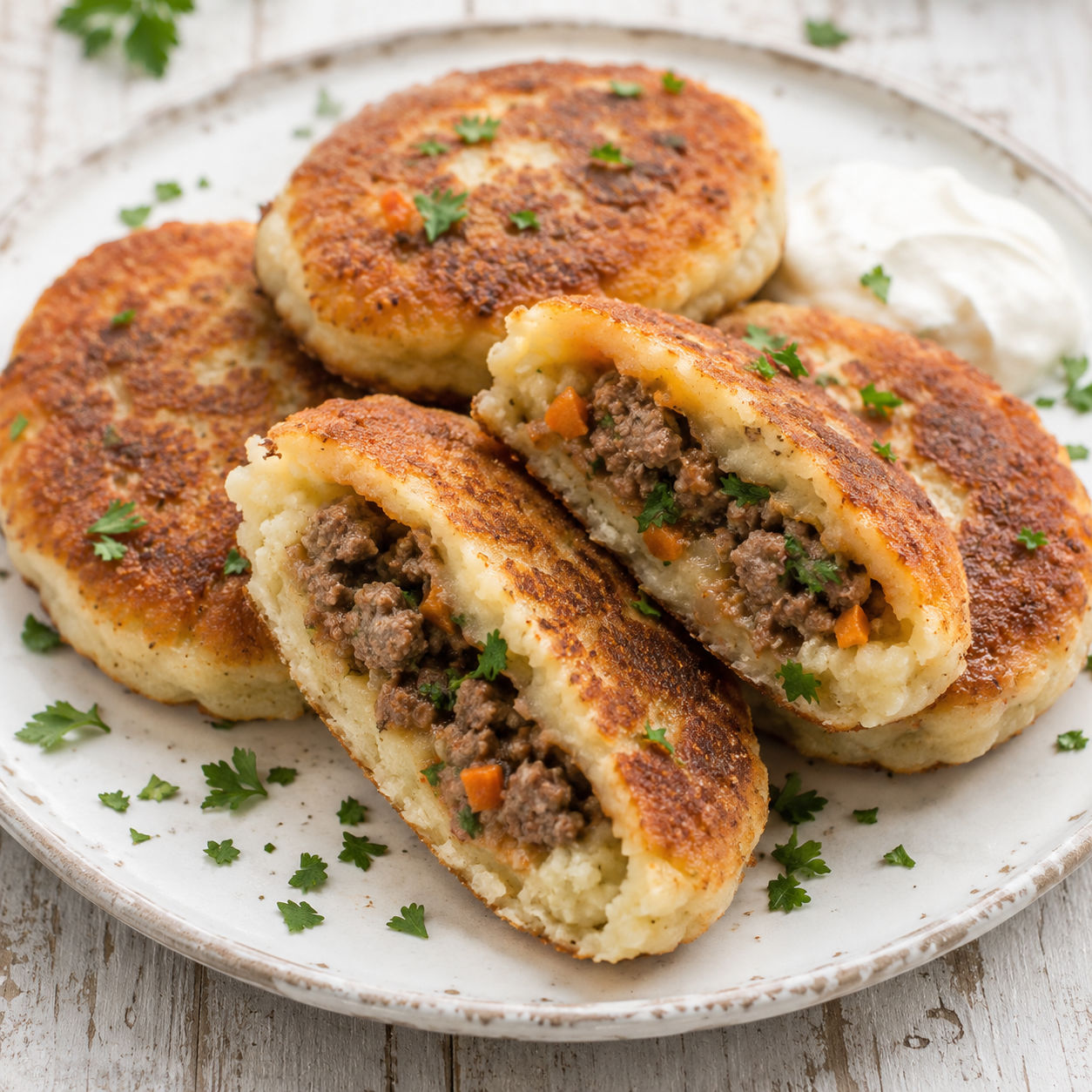
Mashed Potato Pancakes with Savory Meat Filling are the kind of leftovers dinner that does not feel like leftovers. Cold mashed potatoes turn into a soft dough, the meat filling stays tucked inside, and the outside fries up golden and crisp.
I like these best with ground beef, onion, carrot, garlic, and a little parsley. The carrot gives the filling sweetness and moisture, while the bread crumb coating keeps the potato shell from sticking to the pan.
Potatoes, Beef, And Crisp Edges
Start with cold mashed potatoes that are thick enough to hold a spoon mark. Russet or Yukon Gold mash works especially well because it sets up firm once chilled. For the filling, use ground beef with enough fat to stay juicy, then cook it with onion, carrot, garlic, and parsley.
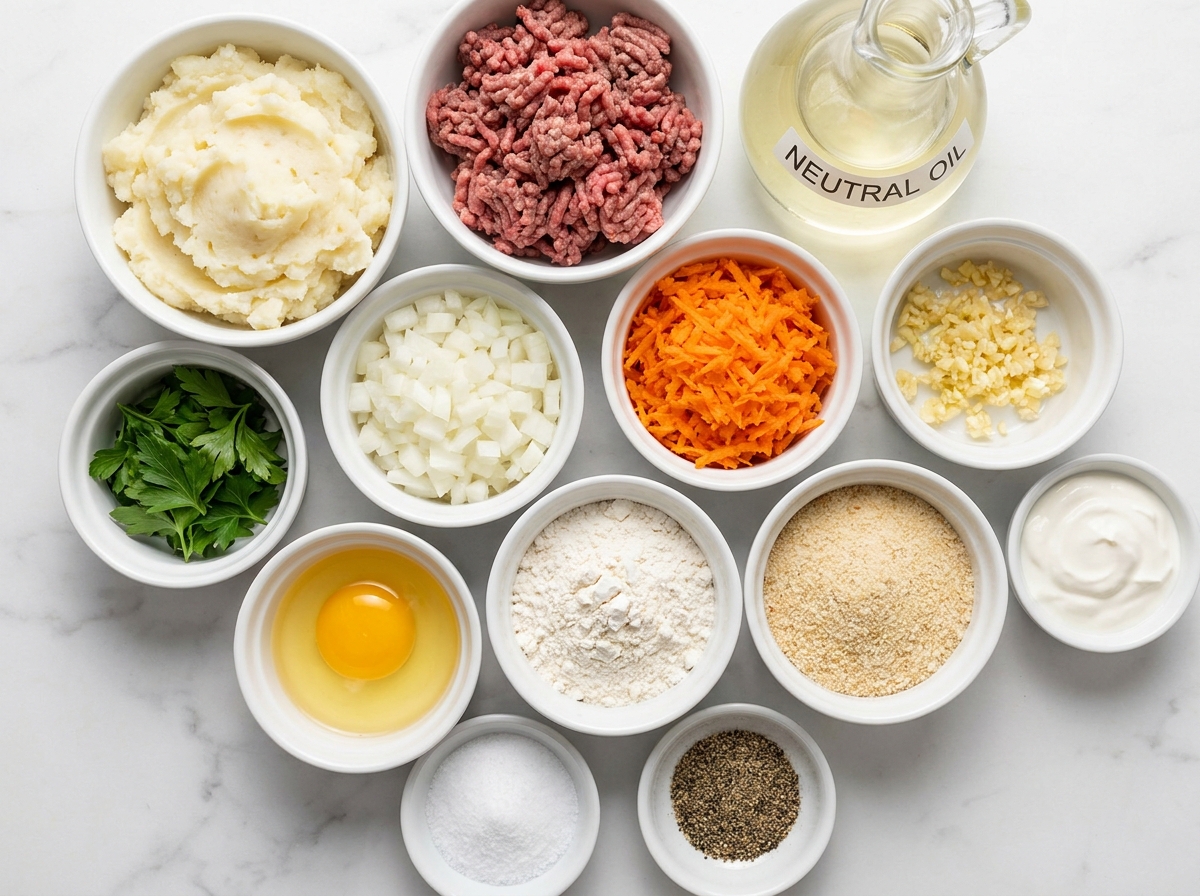
- Cold mashed potatoes. Form the tender shell around the filling and give the pancakes their creamy center.
- Egg. Helps the potato dough hold together when you shape and fry it.
- All-purpose flour. Firms the mash just enough so it can be handled without falling apart.
- Ground beef. Makes the filling savory, hearty, and dinner-worthy.
- Onion and carrot. Add sweetness, moisture, and a little color to the meat filling.
- Garlic and parsley. Keep the filling from tasting flat.
- Fine bread crumbs. Create a dry outer layer so the pancakes brown instead of sticking.
- Oil. Gives the potato cakes their crisp, golden crust.
Shape, Fill, And Pan-Fry
- Cook the meat filling. Brown the beef in a skillet, then soften the onion and carrot in the same pan. Add garlic and parsley at the end so they stay fresh.
- Mix the potato dough. Stir cold mashed potatoes with egg and flour until the mixture feels soft but workable. Keep extra flour nearby for your hands.
- Flatten the potato. Scoop a portion into a floured palm and pat it into a thick disk. Make the middle slightly wider than you think you need.
- Add the filling. Spoon cooked meat into the center, then bring the potato edges up and around it. Pinch closed and flatten gently.
- Coat and fry. Press each pancake into bread crumbs and fry in a thin layer of oil for 3-4 minutes per side until deep golden.
Keep The Potato Dough Firm
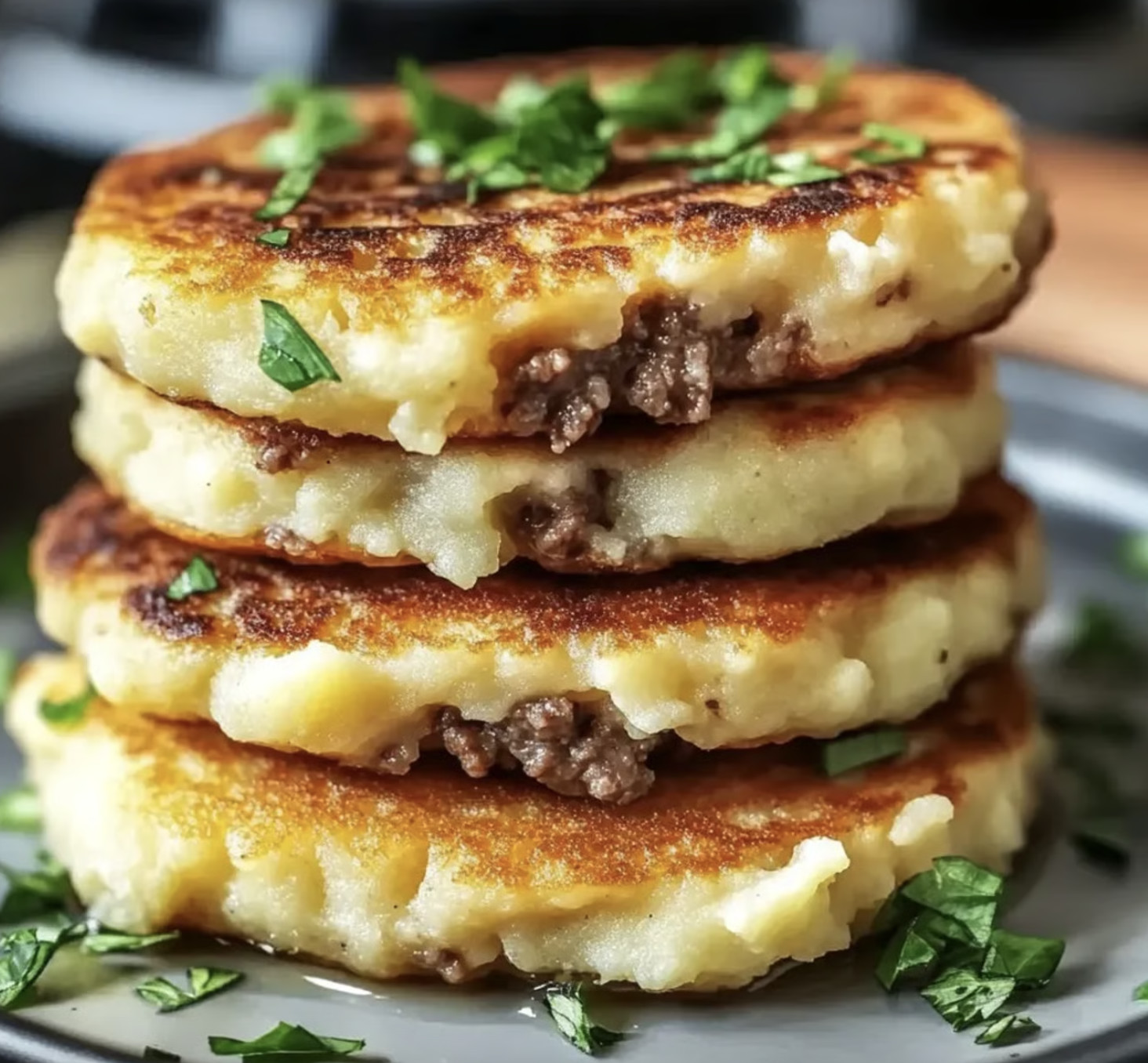
The mashed potatoes matter more than anything else here. A loose, buttery mash makes wonderful dinner potatoes, but it fights you when you try to stuff it. If your mash is soft, chill it well and add flour slowly. You want a dough that is still tender, not stiff like bread dough.
Flour your hands before every pancake. It sounds fussy, but it keeps the potato from smearing and tearing. For another crisp potato idea that uses a similar leftover-friendly spirit, try Crispy Mashed Potato Cheese Bites or Cheesy Stuffed Potato Cakes.
Cook The Filling First
The meat filling needs to be fully cooked before it goes inside the potato shell. The pancakes only fry long enough to brown the outside and heat the center. They do not spend enough time in the pan to safely cook raw meat from scratch.
Break the beef into small pieces as it browns, then drain off excess fat if the skillet looks oily. The USDA lists 160°F as the safe internal temperature for ground beef in its safe temperature chart. If you want a bigger beef-and-potato bake instead, Ground Beef and Potato Casserole with Cheddar is a good fit.
Seal Without Overstuffing
The first pancake usually teaches you the limit. A heaping tablespoon of filling is enough for a palm-size cake. If you add too much, the seam opens in the pan and the meat spills out. Keep the filling in the center and leave a potato border all the way around.
After sealing, flatten the pancake with light pressure. Do not press hard. A thick cake stays creamy inside and gives the filling room to stay juicy. If a tiny crack appears, patch it with a small dab of potato dough before coating it in bread crumbs.
Serving Ideas That Fit
These are rich, so something cool and tangy helps. Sour cream is classic. Plain Greek yogurt with lemon, dill, and a pinch of salt works too. For dinner, add cucumber salad, pickles, or a simple green salad with vinegar dressing.
If you want to keep the meal in the same cozy lane, serve the pancakes with roasted vegetables or a small bowl of soup. The flavor also pairs well with the meat-and-potato comfort of Lemon Herb Butter Steak with Mashed Potatoes, especially when you have extra mash to use up.
Storage And Reheating
Let cooked pancakes cool, then store them in an airtight container in the fridge for up to 3 days. Place parchment between layers so the crust does not pull away. Reheat in a skillet with a little oil, flipping once, until the outside crisps again.
You can freeze them after frying. Cool completely, freeze on a sheet pan, then move to a freezer bag. Reheat from frozen in a 375°F oven until hot in the center. The crust will not be quite as fresh as the first day, but it still beats a soggy microwave lunch.
Summary
Serve these stuffed potato pancakes warm with sour cream, yogurt sauce, or a simple green salad. They also reheat well in a skillet, which makes them useful for next-day lunches.
FAQs
- Can I use fresh mashed potatoes instead of leftovers?
Yes, but chill them first. Warm mashed potatoes are softer and harder to shape. Spread them in a shallow dish and refrigerate until cold before adding the egg and flour.
- What meat works best for the filling?
Ground beef is hearty and easy to season, but ground pork, turkey, chicken, or leftover cooked roast meat also work. If you use a lean meat, add a small splash of broth so the filling does not taste dry.
- Why is my potato dough too sticky?
The mashed potatoes may have a lot of milk, cream, or butter in them. Add flour a tablespoon at a time until the dough can be handled with floured hands. Do not add so much that the pancakes taste bready.
- Can I make the pancakes ahead?
You can cook the filling a day ahead and chill it. You can also shape the pancakes a few hours ahead, keep them covered in the fridge, then coat and fry just before serving.
- How do I reheat stuffed potato pancakes?
Reheat them in a lightly oiled skillet over medium-low heat until hot in the center and crisp outside. The oven also works at 350°F for about 12 minutes. The microwave softens the crust.
- Can I make these without gluten?
Yes. Use a cup-for-cup gluten-free flour blend in the potato dough and gluten-free bread crumbs for coating. Check that your mashed potatoes and any seasonings are also gluten-free.
