 Pin it
These soft cut-out sugar cookies with crisp edges are the batch I reach for when the cookies need to taste as good as they look. They bake up sturdy enough for decorating, but the middle stays tender instead of dry.
The trick is simple. Cream the butter well, roll the dough before it gets cold, then chill the sheets until firm. The cutters glide through clean dough, the shapes stay sharp, and the edges get that tiny snap.
Buttery Dough, Clean Shapes
A good cut-out cookie does not need a long ingredient list. Use cool room-temperature butter, fresh baking powder, and real vanilla so the dough tastes rich before any icing goes on.
Measure the flour carefully. Too little flour makes the cookies spread, while too much makes them tough.
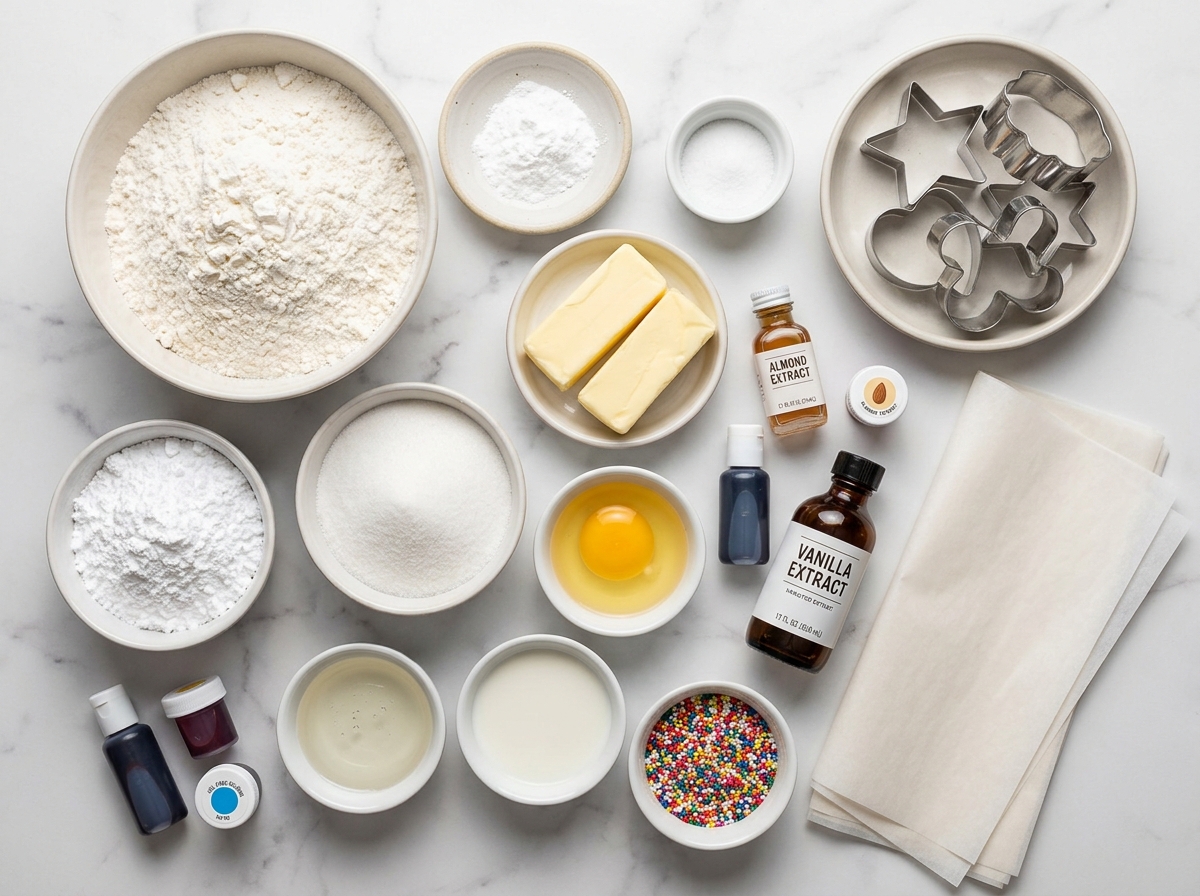
- All-purpose flour. Gives the cookies enough structure to hold cut edges and detailed shapes.
- Baking powder. Adds a small lift so the centers stay soft without puffing too much.
- Fine salt. Balances the sugar and keeps the butter flavor from tasting flat.
- Unsalted butter. Creates the tender bite and crisp edge when it is creamed with sugar.
- Granulated sugar. Sweetens the dough and helps the edges set with a light crunch.
- Egg. Binds the dough and gives the cookies a smooth surface for icing.
- Vanilla and almond extracts. Bring that classic bakery sugar-cookie flavor.
- Powdered sugar glaze. Adds a simple sweet finish without needing special decorating tools.
Soft Cut-Out Sugar Cookies with Crisp Edges
- Mix the dry bowl. Whisk flour, baking powder, and salt so the leavening is evenly spread before it touches the butter.
- Cream the butter. Beat cool softened butter with sugar until lighter and fluffy. This builds the fine, tender texture.
- Finish the dough. Beat in the egg and extracts, then mix in the flour on low only until no dry streaks remain.
- Roll before chilling. Divide the dough, roll it between parchment to 1/4 inch thick, and chill the sheets until firm.
- Cut cold shapes. Stamp the cookies with sharp cutters and move them to lined baking sheets. Chill again if the dough softens.
- Bake and cool. Bake at 350 F until the edges are set and barely golden, then cool before glazing.
Why Rolling First Works
Freshly mixed sugar cookie dough is soft, but it is also easy to roll. Once the butter hardens in the refrigerator, rolling gets harder and you end up pressing too much flour into the dough. Roll it right away between parchment sheets, then chill the flat dough until it feels firm.
This little order change gives you cleaner edges. The cookie cutters slice through cold dough instead of dragging through soft butter. If you like this style of decorating cookie, you may also want the classic Soft Cut-Out Sugar Cookies or the holiday-friendly Best Soft Christmas Cookies.
The Bake Window Matters
Sugar cookies can go from tender to dry quickly. Look at the edges, not the tops. The tops should stay pale and matte, while the very outside edge should feel set. A tiny hint of gold on the bottom is enough.
Leave the cookies on the hot baking sheet for 5 minutes after baking. That short rest finishes the centers without drying them out in the oven. For a thinner, snappier cookie, roll closer to 1/8 inch and cut a minute or two from the bake time.
Decorating Without Softening Them
Let the cookies cool completely before icing. Even a little warmth melts glaze and leaves a sticky surface. A simple powdered sugar glaze is easy, but royal icing gives cleaner lines for detailed designs. For more decorating ideas, try the swirl method from Cinnamon Roll Sugar Cookies or the bright colors from Tie-Dye Sugar Cookies.
If kids are helping, keep the icing thicker than you think you need. Thick icing stays where it lands and keeps the cookie edges visible.
Flavor Swaps That Fit
Vanilla and almond are the standard pair, but this dough takes small changes well. Add 1 teaspoon lemon zest for a bright spring cookie. Use maple extract in place of almond for fall shapes. A pinch of nutmeg gives the dough an old-fashioned bakery smell without turning it into a spice cookie.
For chocolate fans, replace 1/4 cup of the flour with unsweetened cocoa powder and add a tablespoon of milk if the dough feels dry. Keep the same chilling method. Clean edges come from cold dough and a lined baking sheet, not from complicated ingredients.
Storing, Freezing, Gifting
Plain baked cookies keep well in an airtight container at room temperature for about 5 days. Decorated cookies should sit uncovered until the icing is dry, then they can be layered with parchment. The edges stay nicest when the container is not overcrowded.
To freeze, stack fully cooled cookies between parchment in a freezer-safe container. Thaw them at room temperature before opening the container so condensation does not spot the icing. Baked undecorated cookies are the easiest to freeze, then you can decorate them when the busy part of the week is over.

Summary
Serve these plain, dusted with sanding sugar, or finished with a simple vanilla glaze. The dough can be made ahead, and the baked cookies freeze well before or after decorating.

FAQs
- How do I get crisp edges without hard cookies?
Roll the dough about 1/4 inch thick and bake until the edges look set with the faintest color. The cookies should still look pale on top when you pull them. They firm as they cool.
- Can I make the dough ahead?
Yes. Roll the dough between parchment sheets, cover it well, and chill it up to 2 days. You can also freeze wrapped dough sheets for about 2 months, then thaw in the refrigerator before cutting.
- Why did my cut-out cookies spread?
The dough was likely too warm, the butter was too soft, or the baking sheet was hot from a previous batch. Chill the cut shapes for 10-15 minutes before baking and always use a cool sheet pan.
- Can I skip the almond extract?
Yes. Almond extract adds a bakery-style flavor, but vanilla alone is still delicious. You can replace it with lemon extract, maple extract, or a little orange zest.
- What icing works best for decorating?
Royal icing gives the sharpest lines and dries firm. A powdered sugar glaze is softer and easier for casual decorating. Let any icing set completely before stacking the cookies.
- Can I make these gluten-free?
A cup-for-cup gluten-free flour blend can work, but the dough may need a little extra chill time. Pick a blend that contains xanthan gum and cut the shapes while the dough is very cold.
