 Pin it
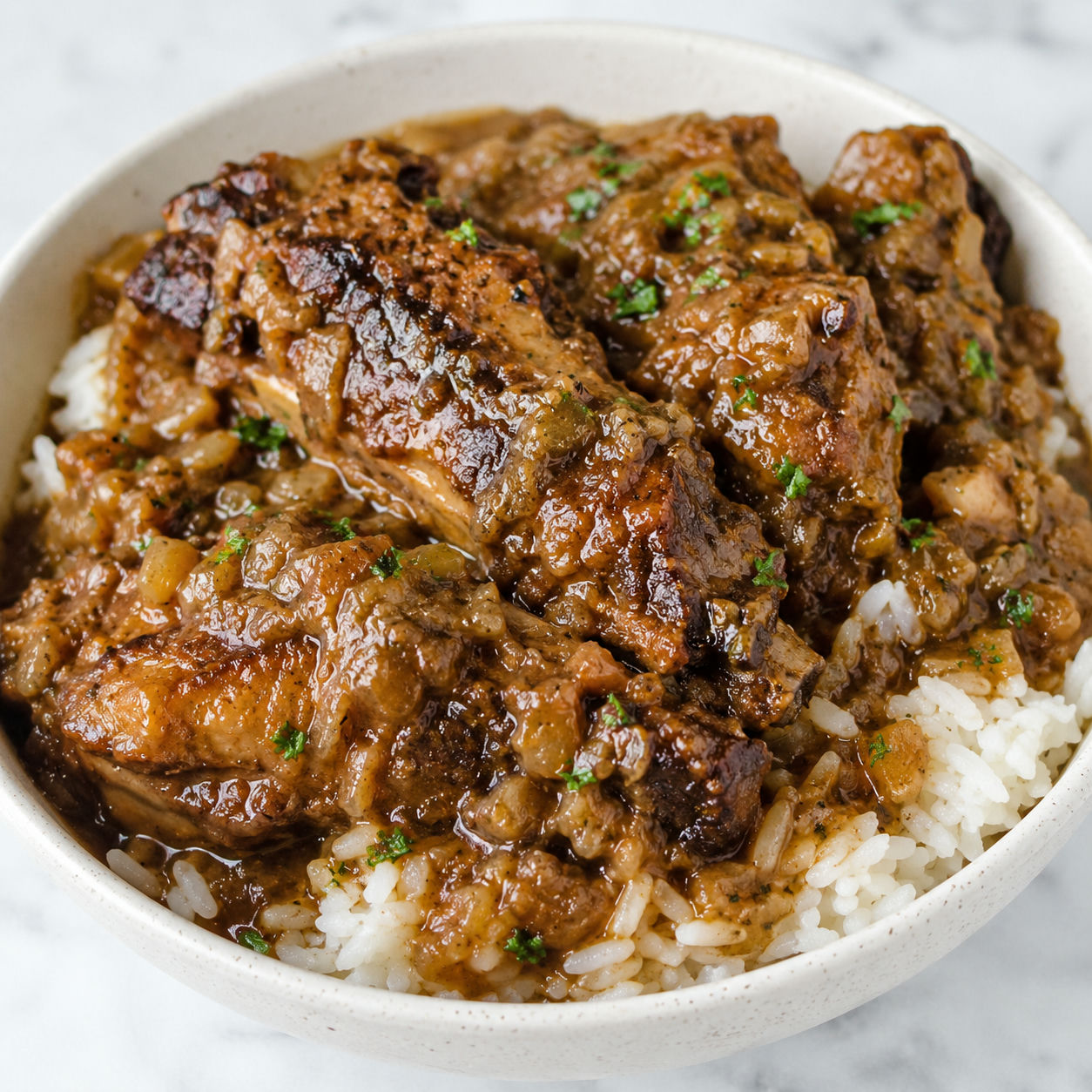
This smothered turkey wings recipe is for the nights when you want turkey dinner flavor without wrestling with a whole bird. The wings turn rich and tender in the oven, and the gravy cooks right around them.
I like this with white rice or mashed potatoes because the sauce is the whole point. It is savory, peppery, and thick enough to cling, with browned edges on the wings peeking through the gravy.
What Builds The Gravy
Choose meaty turkey wings that are close in size so they finish together. Split wings are easier to brown and serve, but whole wings work if your pan is wide enough.
The gravy needs a real stock, fresh aromatics, and enough time in the oven to pull flavor from the bones. Low-sodium chicken or turkey stock gives you control over the salt.
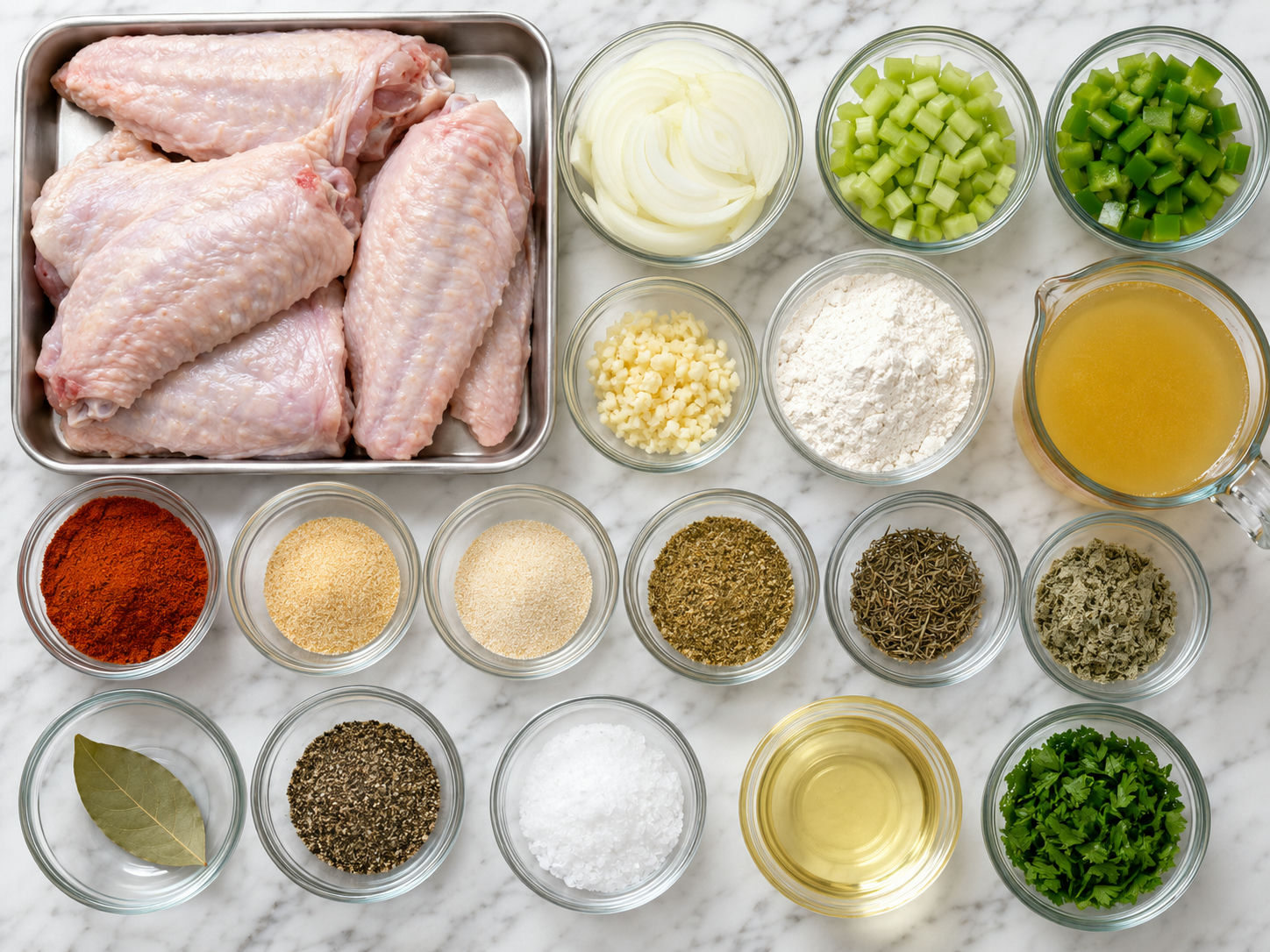
- Turkey wings. Meaty dark poultry that stays juicy during a slow bake.
- Kosher salt and black pepper. Season the meat early so the flavor reaches past the surface.
- Smoked paprika. Adds warm color and a quiet smoky note.
- Garlic powder and onion powder. Give the seasoning a steady savory base.
- Neutral oil. Browns the wings and forms the fat for the roux.
- All-purpose flour. Thickens the gravy and turns nutty when cooked until tan.
- Yellow onion, celery, and bell pepper. Bring sweetness, aroma, and Southern-style backbone.
- Garlic. Adds a sharper fresh note after the vegetables soften.
- Chicken or turkey stock. Turns the roux into a spoon-coating gravy.
- Thyme, sage, and bay leaf. Give the dish that familiar roasted turkey flavor.
Smothered Turkey Wings Recipe Notes
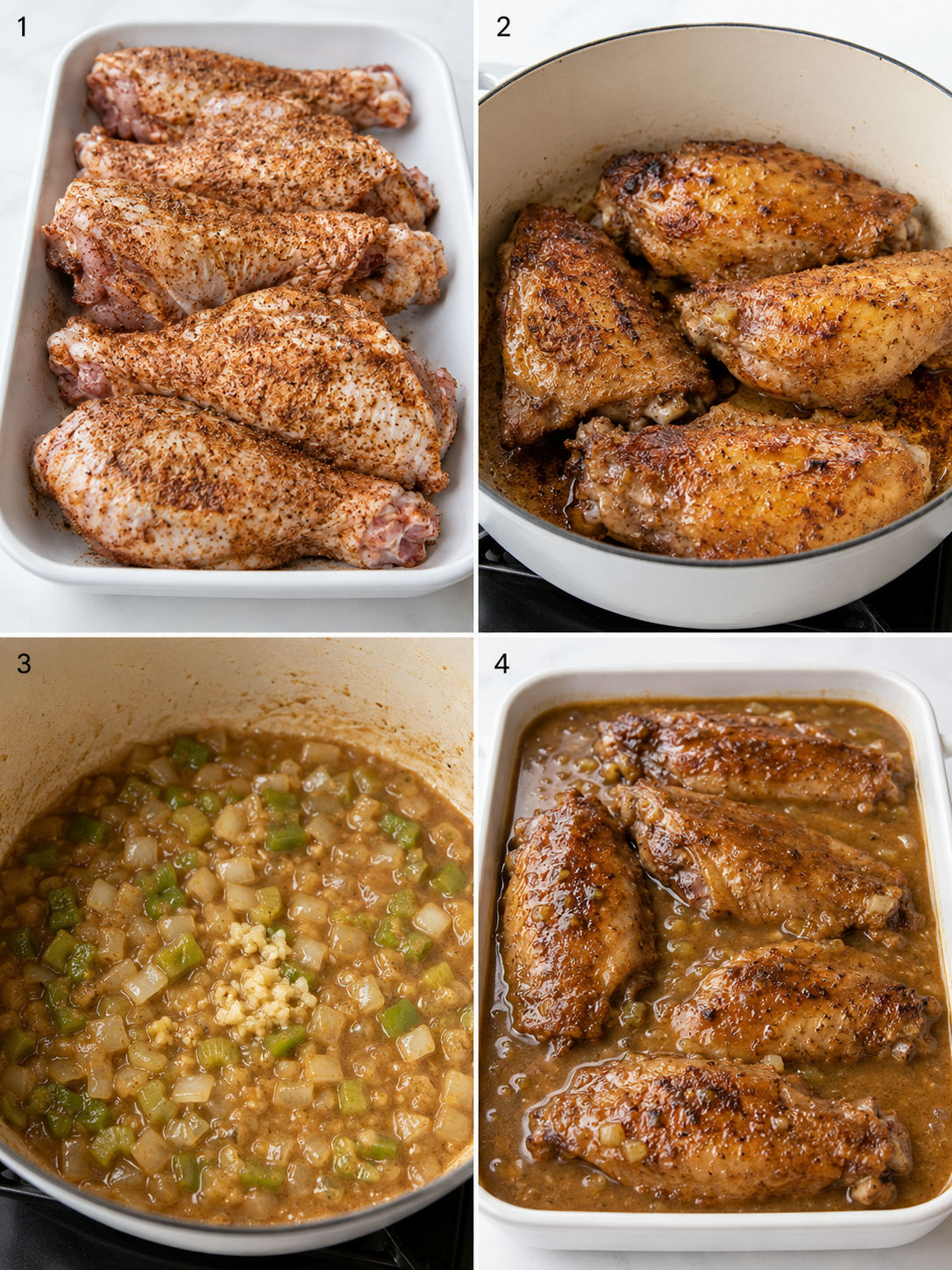
- Season the wings. Pat the wings dry, then rub them with salt, pepper, smoked paprika, garlic powder, onion powder, and poultry seasoning. Let them sit while the oven heats so the surface browns better.
- Brown the meat. Sear the wings in hot oil until both sides are deep golden. Work in batches so the pan stays hot instead of steaming.
- Cook the vegetables. Soften onion, celery, bell pepper, and garlic in the same pot. Scrape the browned bits from the bottom as the vegetables release moisture.
- Make the roux. Stir flour into the oil and vegetables, then cook until the flour smells toasted and turns light brown. This keeps the gravy from tasting pasty.
- Whisk in stock. Add stock slowly while stirring. The gravy should look loose at first because it will thicken in the oven.
- Bake until tender. Nestle in the wings, cover tightly, and bake until the meat is fork-tender. Uncover near the end so the gravy reduces and the wing tops darken.
Why The Roux Matters
The roux is the part you can taste if you rush it. Flour needs a few minutes in hot fat to lose its raw edge. Keep stirring until it turns the color of peanut butter and smells toasty. That small step gives the gravy a rounder flavor.
Add the stock in small pours at first. Whisk well before adding more. If the gravy looks thin, do not panic. The flour keeps working in the oven, and the wings release collagen that helps the sauce feel richer. Serious Eats uses the same idea in its smothered turkey wings method, where browning and a medium-dark roux build the body of the gravy.
Tender Is The Goal
Turkey wings are dark meat with connective tissue, so they reward a covered braise. A thermometer should read at least 165°F, which matches USDA poultry safety guidance, but the texture gets better when the meat cooks longer and softens around the joints.
Do not judge this dish by the clock alone. Small split wings may be ready in about 1 hour 45 minutes. Big whole wings can need more than 2 hours. Look for meat that pulls with a fork and gravy that coats the back of a spoon. If you already love the site's Southern smothered turkey wings with savory gravy, this version leans into the same comfort food lane with a slightly deeper roux.
Make-Ahead Gravy Plan
This is a friendly make-ahead dinner because the gravy protects the meat from drying out. Cook the wings fully, cool them uncovered for a short time, then refrigerate them with the gravy. The next day, skim off any firm fat from the top if you like.
Reheat in a covered dish at 325°F until hot, adding a splash of stock if the gravy has tightened too much. The flavor is often better after a night in the fridge. For another cozy plate with the same smothered style, try smothered chicken thighs with gravy.
Good Swaps And Fixes
No bell pepper? Use more onion and celery. No turkey stock? A good low-sodium chicken stock works. If you need gluten-free gravy, replace the flour with a gluten-free all-purpose blend and cook it the same way. Cornstarch can thicken the sauce too, but it gives a glossier finish and less toasted flavor.
If the gravy tastes dull, it usually needs salt or a little time uncovered in the oven. If it tastes too salty, whisk in unsalted stock and let it simmer for a few minutes. For a smaller holiday spread, serve these wings beside classic roast turkey instead of making a second whole bird.
What To Serve Beside Them
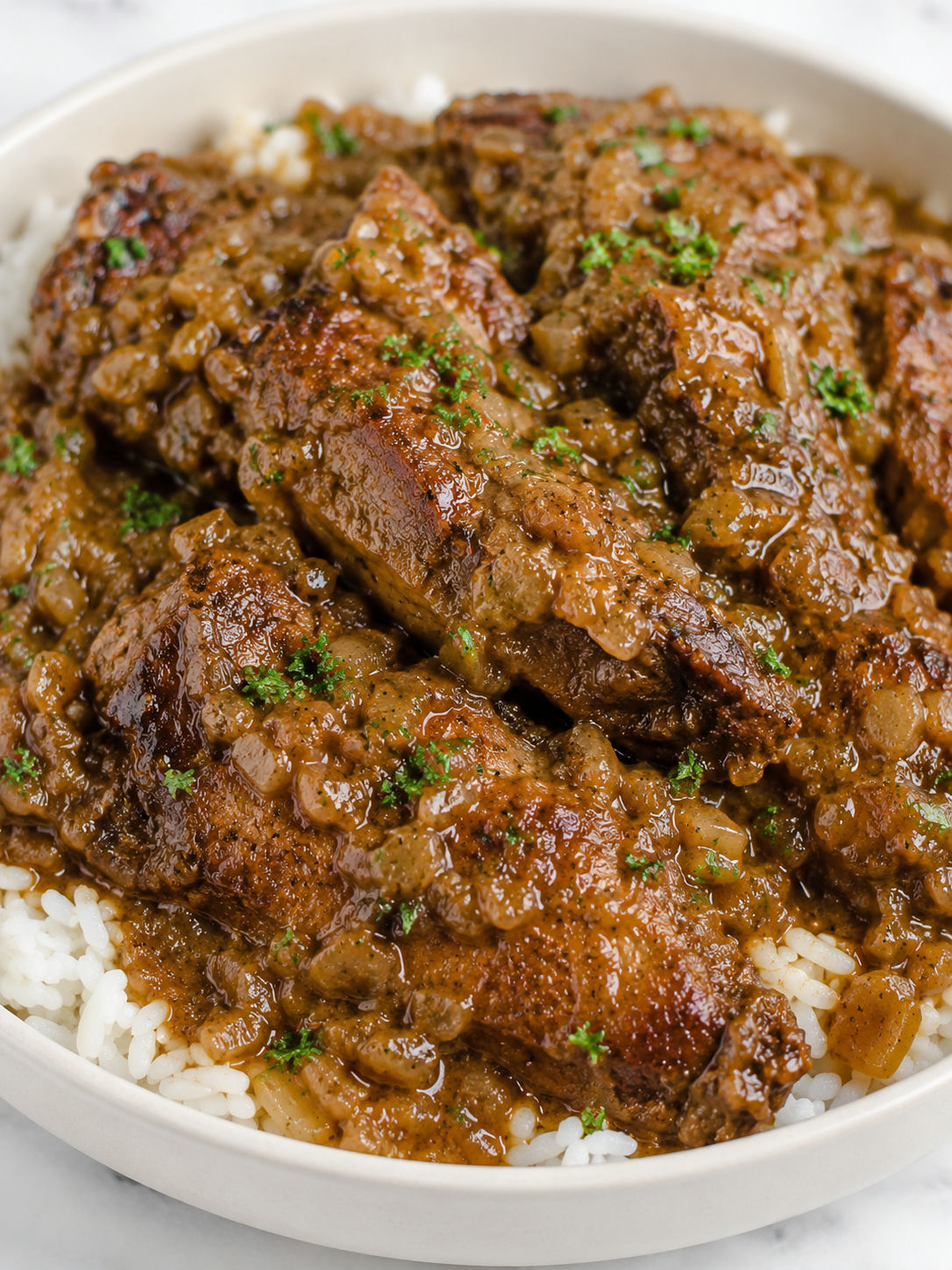
White rice is the classic choice at my table because every grain catches gravy. Mashed potatoes, cornbread dressing, egg noodles, and spoonbread all work too. Keep the sides simple because the wings bring plenty of richness.
For vegetables, go sharp or green. Collards with vinegar, roasted green beans, cabbage, or a crisp salad cut through the gravy. If you have leftover wing meat, pull it from the bone and stir it into soup the next day. The flavor fits right into easy turkey vegetable soup.
FAQs
- Can I make smothered turkey wings without browning them first?
You can, but the gravy will taste flatter. Browning the wings leaves flavorful bits in the pot, and those bits season the roux and stock. If you skip it, add a little extra poultry seasoning and smoked paprika.
- Can I use turkey legs instead of wings?
Yes, turkey legs work with the same gravy. They are usually larger, so plan on a longer covered bake. Start checking for tenderness after 2 hours and add more stock if the gravy gets too thick.
- How do I know when turkey wings are done?
For food safety, poultry should reach 165°F. For smothered wings, tenderness matters too. The best batch usually cooks past that point until a fork slides into the meat easily and the joints feel loose.
- Can I make these turkey wings ahead?
Yes. They reheat very well because the meat sits in gravy. Cool the wings and sauce, refrigerate them in a covered container, then reheat gently in a covered baking dish or saucepan with a splash of stock.
- How can I make the gravy thicker?
Uncover the pan for the last 15-20 minutes so moisture can cook off. If it still seems thin, simmer the gravy on the stove for a few minutes after removing the wings. It also thickens slightly as it rests.
- What should I serve with smothered turkey wings?
Rice, mashed potatoes, cornbread dressing, buttered noodles, or roasted vegetables all work. Choose something that can catch the gravy. A sharp green salad or vinegary greens are good beside the rich sauce.
