 Pin it
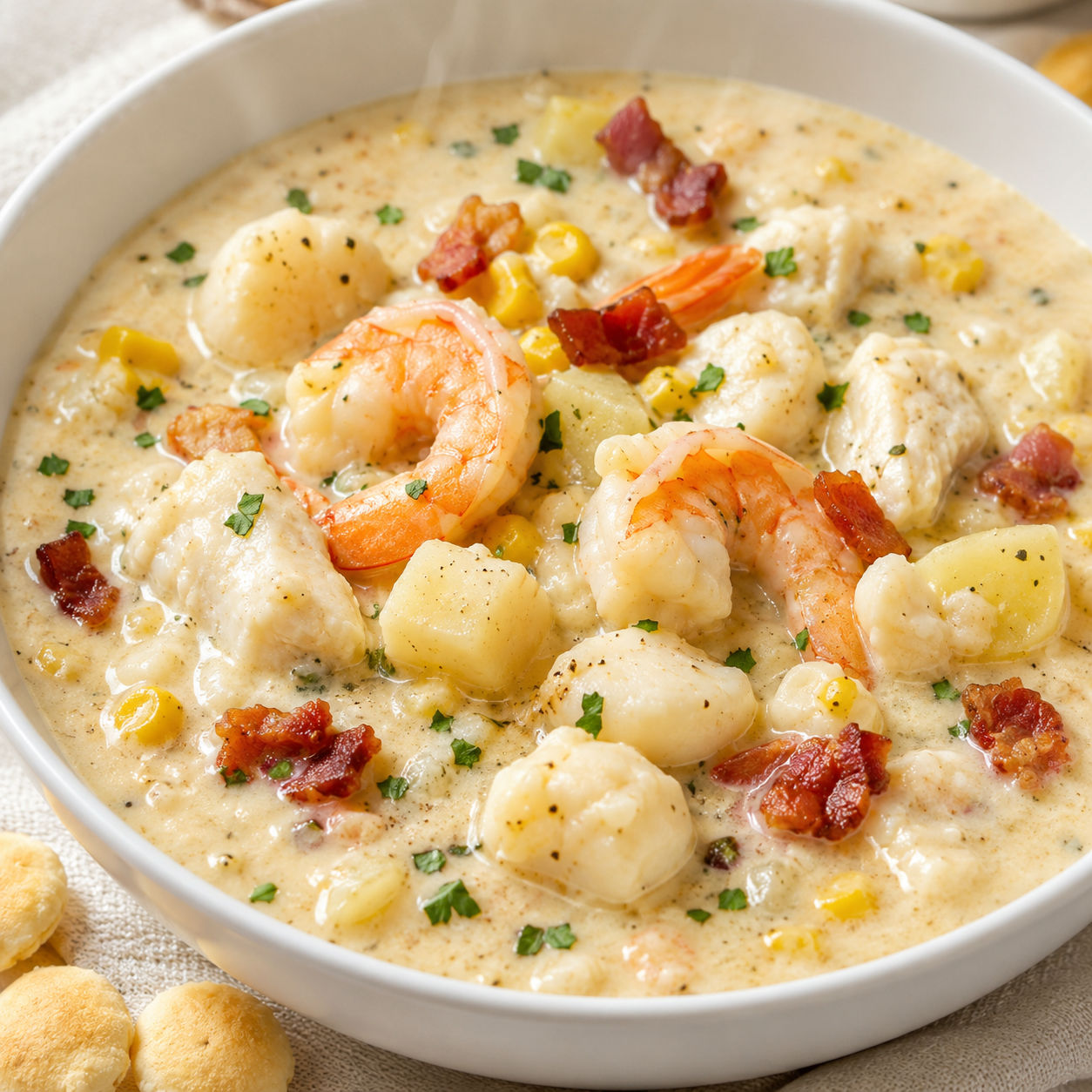
Easy Creamy Seafood Chowder is the kind of soup that makes a regular night feel slower and warmer. It has tender potatoes, sweet corn, smoky bacon, and a creamy broth that tastes like it simmered longer than it did.
The important part is timing. Build the base first, then add the seafood near the end. Shrimp, scallops, and white fish only need a few minutes, and that short cook keeps every bite soft instead of rubbery.
What Makes It Creamy
Good chowder starts with a sturdy base and seafood that still tastes fresh. Choose firm fish, dry-packed scallops if you can find them, and shrimp that smell clean and briny, not sharp.
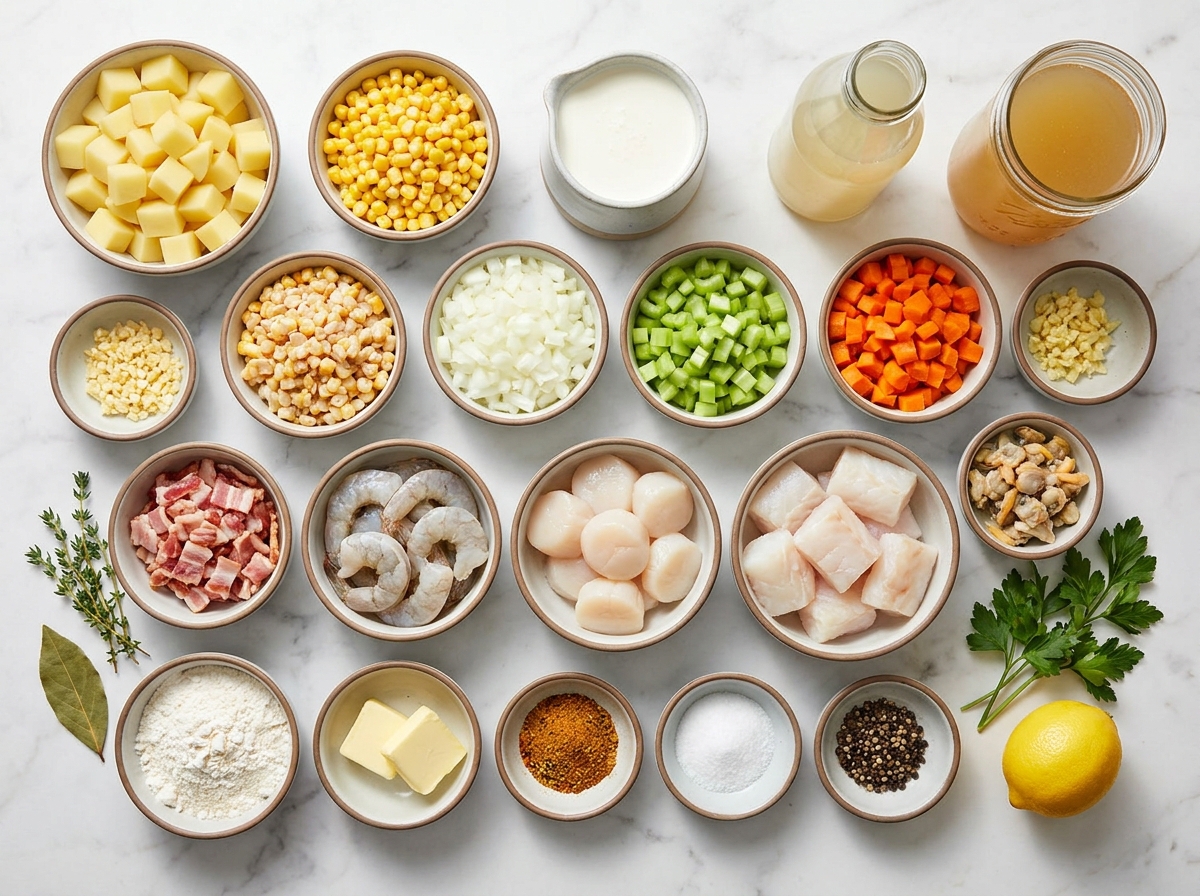
- Bacon. Adds smoky depth and gives you flavorful fat for the vegetables.
- Onion, celery, and carrot. Build a sweet, savory base before the broth goes in.
- Potatoes. Make the chowder hearty and help the broth feel naturally full.
- Corn. Adds small pops of sweetness that work well with cream and shellfish.
- Butter and flour. Create a light roux so the broth turns silky instead of thin.
- Clam juice and seafood stock. Give the soup real ocean flavor without needing a long simmer.
- Shrimp, scallops, cod, and clams. Bring a mix of sweet, flaky, and briny bites.
- Heavy cream. Rounds out the chowder at the end and softens the seasoning.
How The Chowder Cooks
- Brown the bacon. Cook it in a heavy pot until crisp, then scoop it out and leave a little fat behind for the vegetables.
- Soften the vegetables. Cook onion, celery, carrot, and garlic until the onion looks glossy and the garlic smells mellow.
- Make the base. Stir in butter and flour, cook for one minute, then slowly add clam juice and stock so the broth stays smooth.
- Simmer the potatoes. Add potatoes, corn, Old Bay, thyme, bay leaf, salt, and pepper. Cook until the potatoes are just tender.
- Add the seafood. Lower the heat and slide in the cod, shrimp, scallops, and clams. Simmer gently until the shrimp turn pink and the fish flakes.
- Finish with cream. Stir in the cream and reserved bacon. Warm it through, then finish with parsley and a squeeze of lemon.
Keep The Seafood Tender
The easiest way to ruin seafood chowder is to boil it after the fish goes in. Build flavor before that point. Let the bacon, vegetables, potatoes, stock, and seasonings do the simmering. Once the seafood is added, the pot should move slowly with a few small bubbles at the edge.
Cut the fish into 1-inch pieces so it cooks at the same pace as the shrimp and scallops. If your scallops are large, halve them. The FDA recommends cooking seafood to 145°F, and their seafood safety guide is helpful if you are working with mixed seafood.
A Broth That Feels Silky
This chowder uses a small amount of flour, just enough to give the broth body. It should coat a spoon lightly, not sit in the bowl like gravy. If you like a thicker soup, mash a few potato pieces against the side of the pot before the seafood goes in.
For a soup night with more sweet corn flavor, try the site's creamy corn chowder. If you want something more shellfish-forward later, lobster scallop chowder leans richer and makes a good special-occasion bowl.
Swaps That Make Sense
You can change the seafood mix based on what looks good. Cod, haddock, shrimp, scallops, crab, canned clams, and cooked lobster all fit. Add cooked lobster or crab at the very end so it only warms through. For buying tips, NOAA FishWatch is a useful place to check seafood choices.
No clam juice? Use seafood stock, chicken stock, or vegetable stock. The chowder will be milder, so taste before adding cream. If you love seafood with garlic butter flavor, the creamy garlic butter shrimp bowl is an easy match for another night.
Storing Without Splitting
Seafood chowder keeps for up to two days in the refrigerator. Cool it quickly, store it airtight, and reheat it over low heat. Add a splash of milk or stock if it thickens in the fridge.
Try not to microwave it on high. Cream can separate and seafood can toughen. A small pot on the stove gives you more control. Freezing is not my first choice because potatoes turn grainy and cream sauces often break after thawing.
Make It A Meal
Serve generous bowls with oyster crackers, toasted sourdough, or warm dinner rolls. A lemony green salad balances the cream and bacon. For a bigger seafood spread, start with smaller cups of chowder before classic Creole seafood gumbo or a baked seafood main.
Summary
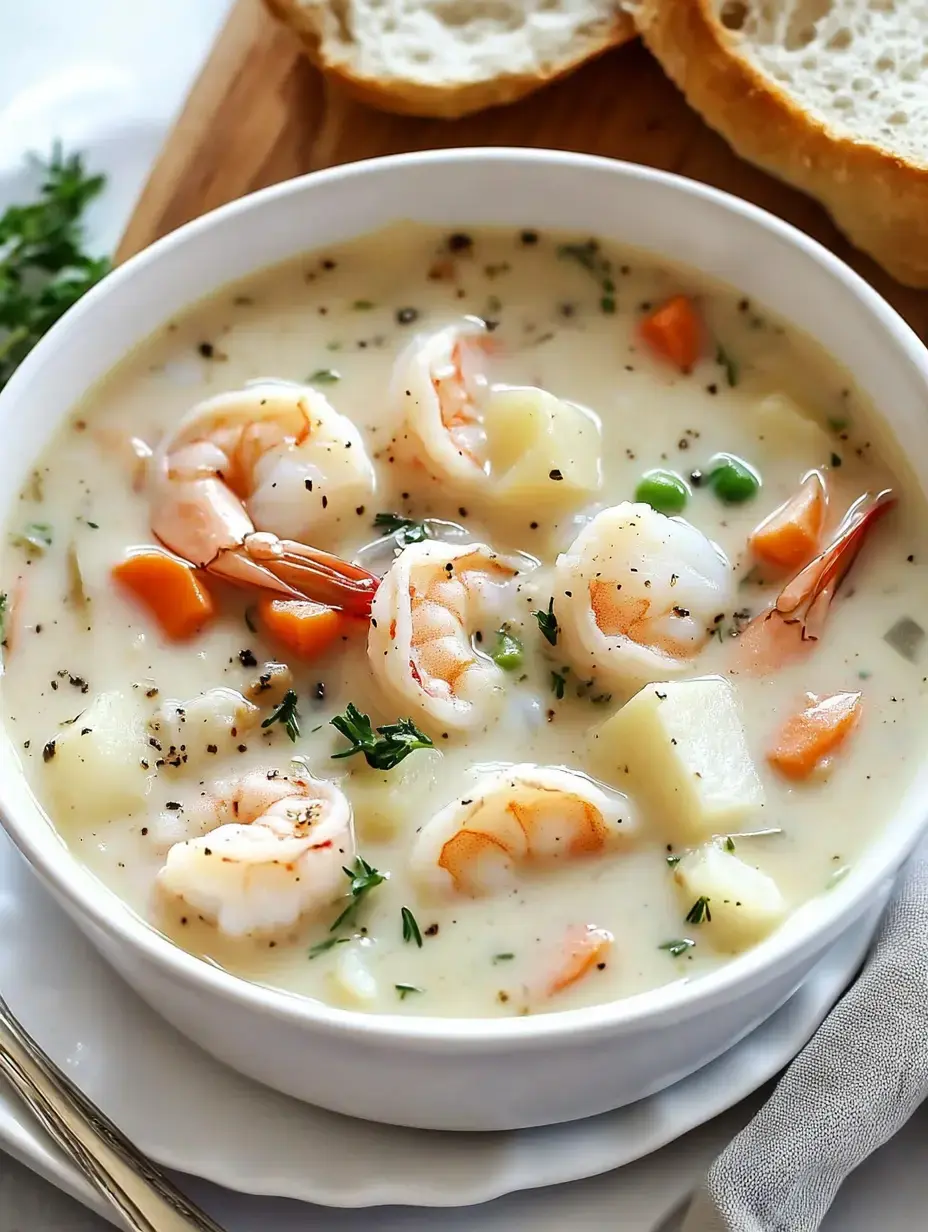
Serve this chowder hot with oyster crackers, crusty bread, or a simple green salad. Leftovers reheat best over low heat with a splash of milk.
FAQs
- Can I use frozen seafood for seafood chowder?
Yes. Thaw frozen shrimp, scallops, and fish in the refrigerator or under cold running water, then pat them dry. Add them at the end so they warm through without overcooking.
- What fish works best in creamy seafood chowder?
Use a firm white fish such as cod, haddock, halibut, or pollock. Soft fish can break apart too quickly, so cut the pieces a little larger and stir gently.
- Can I make this chowder gluten-free?
Yes. Skip the flour and thicken the chowder with 1 tablespoon cornstarch mixed with 2 tablespoons cold water. Stir it into the simmering broth before adding the seafood.
- How do I keep seafood from getting rubbery?
Add seafood after the potatoes are tender and keep the heat low. The chowder should barely simmer. Shrimp and scallops are done when they turn opaque and the fish flakes easily.
- Can seafood chowder be made ahead?
You can make the broth and potato base a day ahead. Reheat it gently, then add the cream and seafood right before serving. This gives you fresher texture than fully cooking the chowder in advance.
- What should I serve with seafood chowder?
Oyster crackers, warm bread, garlic toast, or a crisp salad all work well. For a fuller seafood meal, serve smaller bowls before pasta or a simple baked fish dish.
