 Pin it
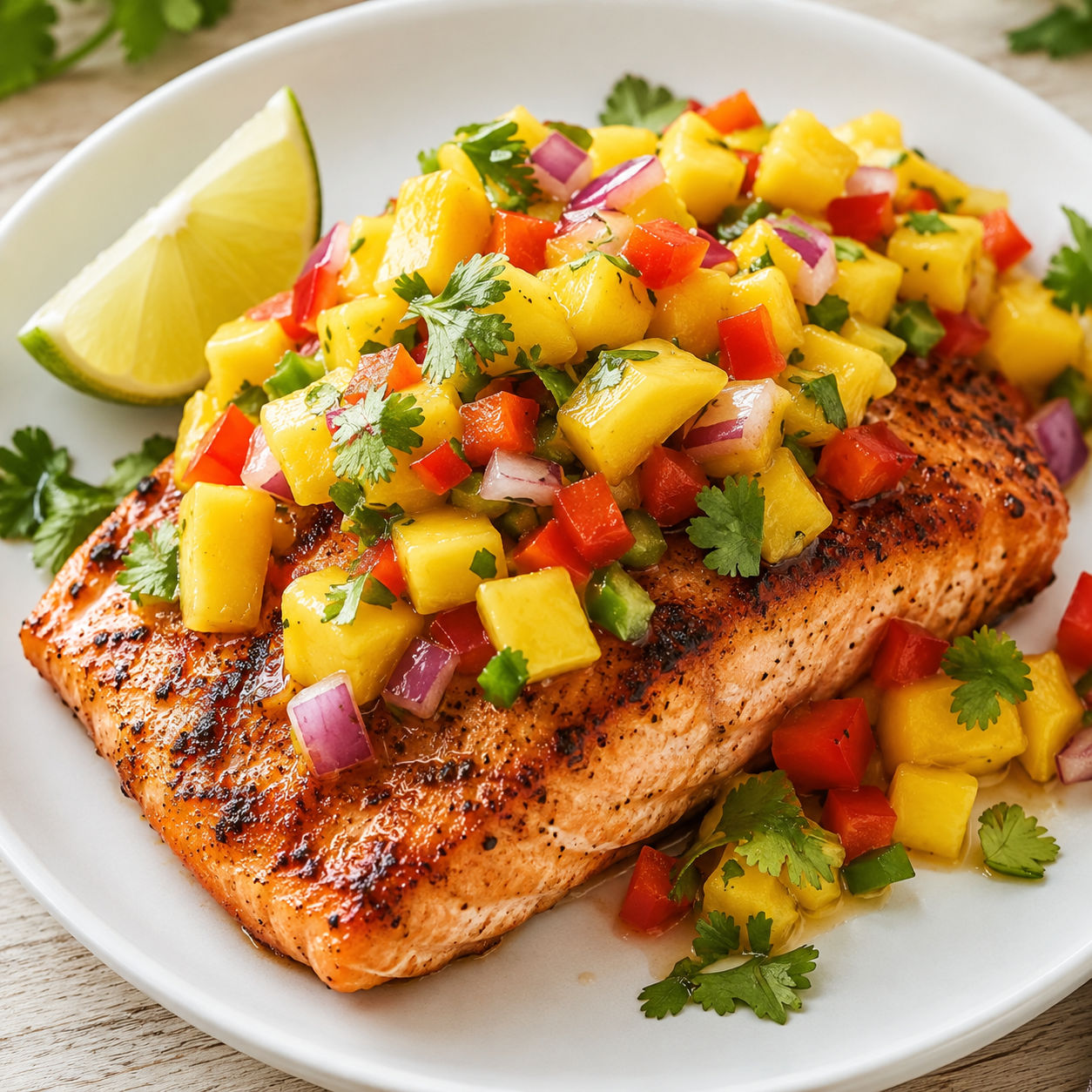
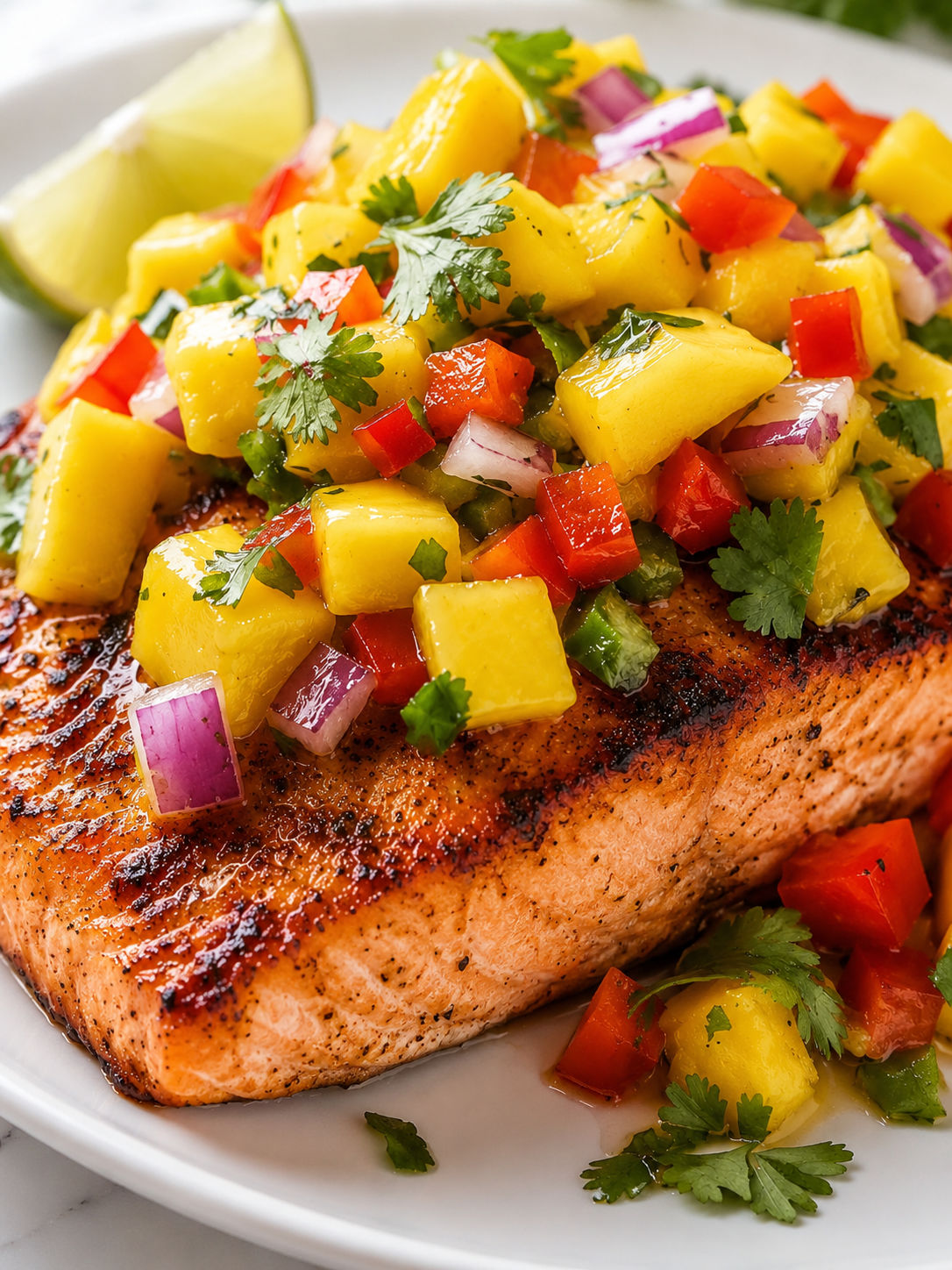
Salmon With Mango Salsa is the kind of dinner that feels sunny even when it comes from a skillet on a busy night. The fish gets a simple smoky spice rub, then the cool mango salsa brings lime, crunch, and a little heat.
I like this recipe because it does not need a sauce that simmers or a long marinade. Most of the work is chopping, and the salmon cooks in less than ten minutes.
Bright mango salsa basics
Choose salmon fillets that are similar in thickness so they finish at the same time. For the salsa, use mango that is ripe but still sturdy enough to hold its shape.
- Salmon fillets. Rich, tender fish that stands up well to sweet fruit and lime.
- Mango. Adds juicy sweetness and soft texture without needing sugar.
- Red bell pepper. Brings crunch and a fresh, clean flavor.
- Red onion. Gives the salsa a sharp bite that keeps it from tasting flat.
- Jalapeno. Adds gentle heat. Remove the seeds for a milder salsa.
- Lime juice. Brightens the mango and balances the richness of the fish.
- Cilantro. Adds a fresh finish that makes the salsa taste lively.
- Smoked paprika and cumin. Give the salmon a warm, savory crust.
Sear, spoon, serve
- Mix the salsa. Stir together mango, bell pepper, red onion, jalapeno, cilantro, lime juice, and salt. Chill it while the salmon cooks so the flavors settle.
- Season the fish. Pat the salmon dry, then rub it with olive oil, smoked paprika, cumin, garlic powder, salt, and pepper. Dry fish browns better.
- Sear the salmon. Set the fillets skin side down in a hot skillet. Cook until the sides turn opaque, then flip and finish briefly on the second side.
- Finish the plate. Rest the salmon for a minute, then spoon the mango salsa over the top. Add lime wedges and serve right away.
Salmon With Mango Salsa Cues
The best cue is the side of the fillet. Watch the color climb from deep coral to pale pink as it cooks. When the opaque line is about two-thirds of the way up, flip it and finish the second side for 1-2 minutes. The fish should flake easily but still look moist in the center. The FDA seafood safety guide gives 145 degrees F as the safe internal temperature for fish.
Picking the right fish
Center-cut fillets are easiest because they cook evenly. Skin-on salmon is useful in a skillet because the skin protects the flesh and helps the fillet hold together. If you are comparing options at the store, the Seafood Watch guide is a practical place to check sourcing. For another fresh salmon dinner, try lemon herb grilled salmon quinoa.
Keep the salsa crisp
Cut the mango and pepper into small pieces so each bite gets fruit, crunch, and lime. Salt the salsa lightly at first, then taste after ten minutes. Mango releases juice as it sits, and that juice carries the seasoning. If the salsa tastes too sweet, add more lime. If it tastes too sharp, add a few more mango cubes.
Grill or bake it
This recipe is written for a skillet, but the same seasoning works on the grill or in the oven. For grilling, oil the grates well and cook over medium-high heat until the salmon releases on its own. For baking, place the seasoned fillets on a lined sheet pan and bake at 400 degrees F for 10-12 minutes. If you want a more tropical plate, grilled salmon mango coconut rice leans into the same sweet-savory pairing.
Leftovers that still taste fresh
Store the salmon and salsa in separate airtight containers for up to three days. Warm the salmon gently in a skillet over low heat, or serve it cold over greens. The salsa is best cold and should be spooned on after reheating. Leftover flakes also work well in tacos, much like crispy salmon tacos slaw.
Easy ways to serve it
Rice is the obvious base, but this salmon also works over quinoa, couscous, cauliflower rice, or a pile of crisp romaine. For a party plate, slice the salmon into chunks and serve it with warm tortillas and extra lime. If you like fruit salsas, pair it with fresh pineapple salsa on the side for a brighter spread.
Summary
Serve the salmon warm and the salsa chilled for the cleanest contrast. Rice, quinoa, greens, or warm tortillas all work well underneath.

FAQs
- Can I use frozen salmon?
Yes. Thaw it overnight in the fridge, then pat it very dry before seasoning. Extra moisture keeps the surface from browning.
- What mango is best for salsa?
Use a ripe mango that gives slightly when pressed. It should be sweet but still firm enough to dice cleanly, not soft like jam.
- Can I grill the salmon instead?
Yes. Heat the grill to medium-high, oil the grates, and cook the salmon for about 3-4 minutes per side. Leave it alone until it releases easily.
- How do I know salmon is done?
The thickest part should flake with a fork and look opaque. For food safety, the FDA lists 145 degrees F as the safe internal temperature for fish.
- Can I make the mango salsa ahead?
You can make it up to one day ahead. Add avocado, if using, right before serving so it stays bright and does not soften too much.
- What can I serve with this?
Cilantro lime rice, coconut rice, quinoa, roasted sweet potatoes, or a simple green salad all work. For a lighter meal, serve the salmon over mixed greens.
