 Pin it
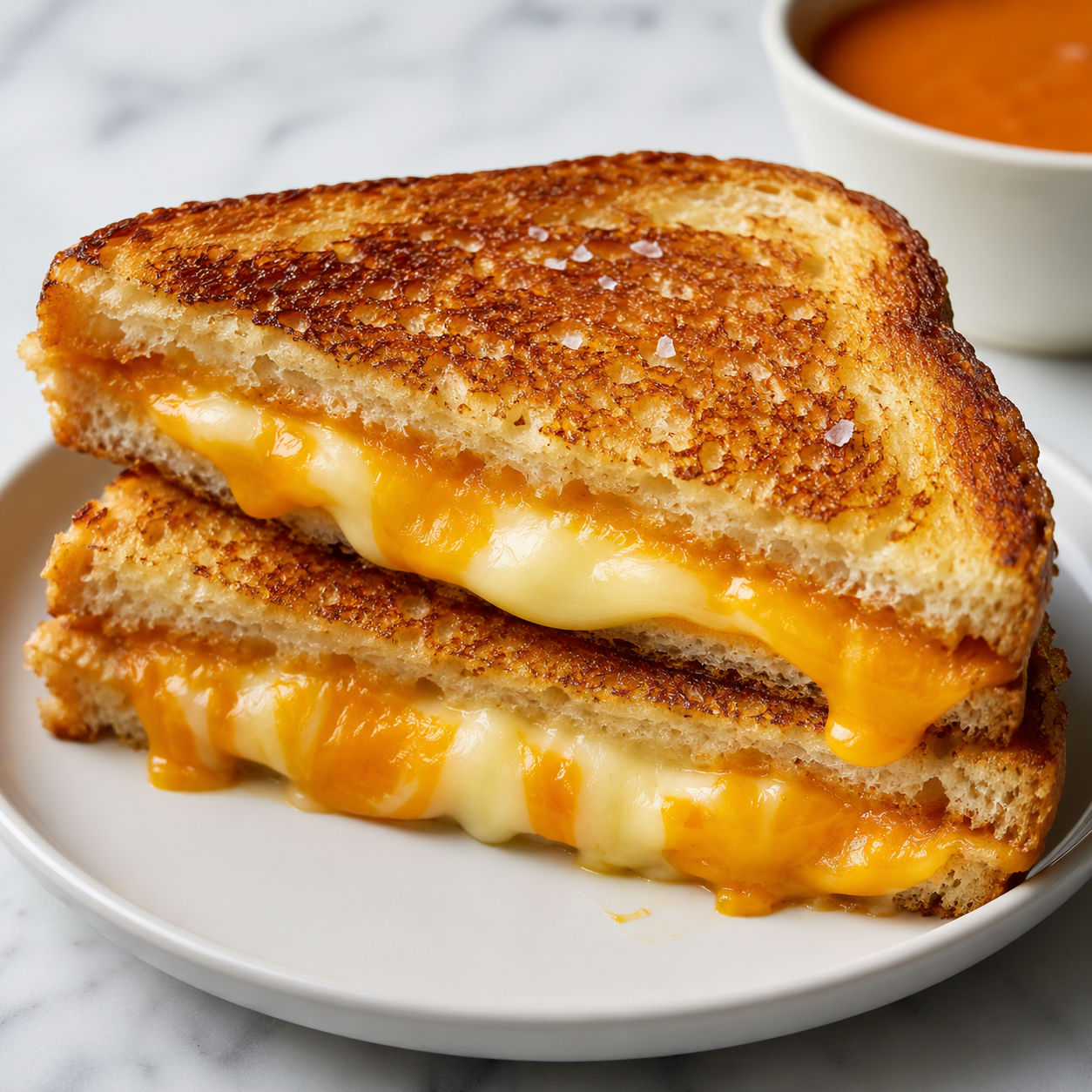
This is the grilled cheese I make when a regular slice-and-skillet sandwich will not do. It is buttery at the edges, crisp across the whole surface, and packed with cheese that melts into every corner.
The trick is not more heat. It is the opposite. Start with a warm pan, give the cheese time to soften, and let the bread brown slowly so you get a crunchy crust without a cold middle.
The cheesy skillet lineup
Use bread with enough structure to hold the cheese without collapsing. Sourdough is my pick because it gets crisp and stays chewy inside.
For the cheese, mix one smooth melter with one stronger cheese. That gives you a pull-apart center and a deeper flavor than a single cheese can manage.
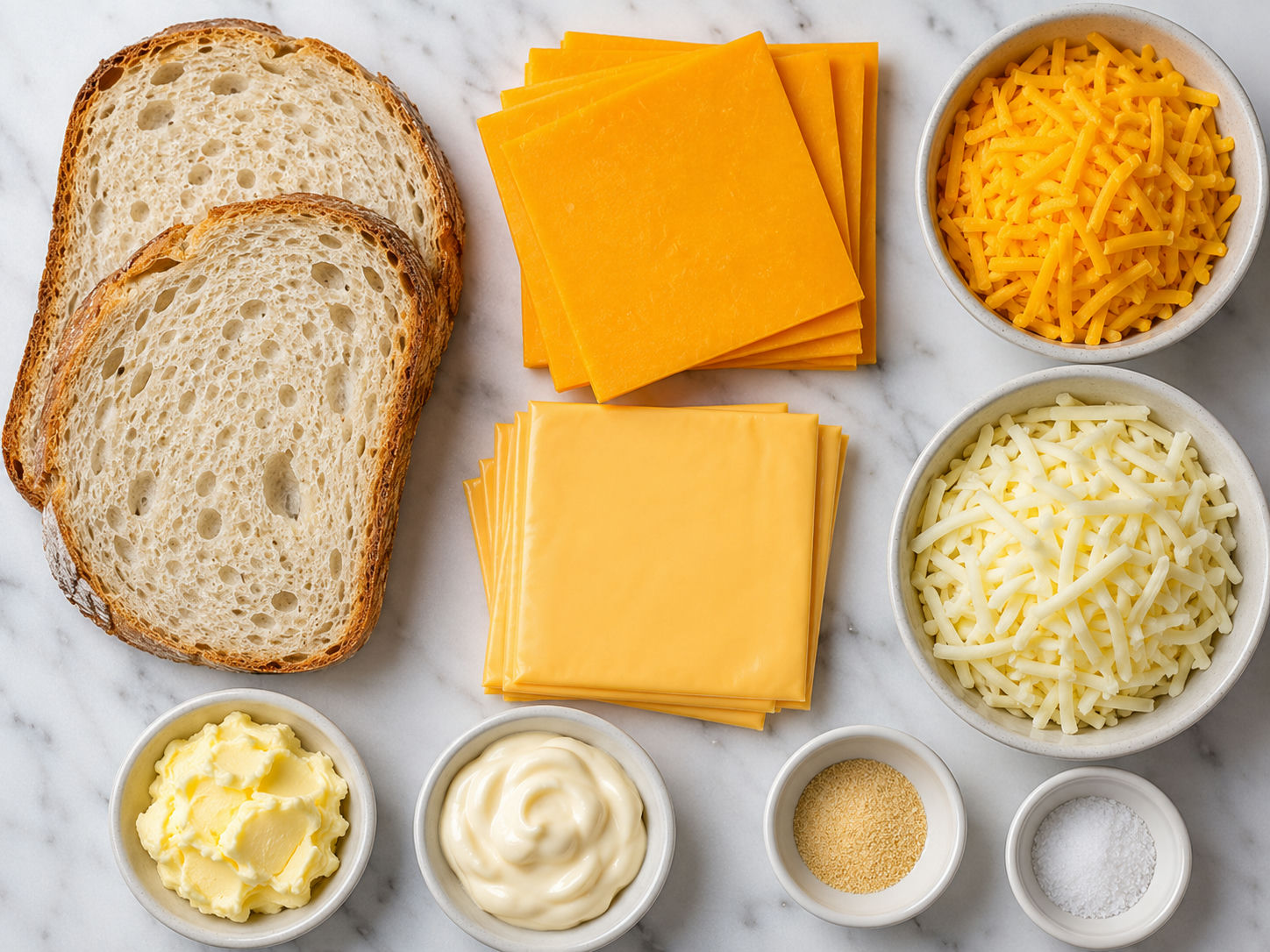
- Sourdough bread. Holds the filling well and browns into a crisp, sturdy crust.
- Sharp cheddar. Brings the bold, salty cheese flavor that makes the sandwich taste rich.
- Mozzarella. Adds stretch and a soft, milky melt.
- American cheese. Melts smoothly and helps the other cheeses bind together.
- Softened butter. Gives the crust its classic grilled cheese flavor.
- Mayonnaise. Helps the bread brown evenly and spread edge to edge.
- Garlic powder. Adds a quiet savory note without making the sandwich taste garlicky.
Build the melt slowly
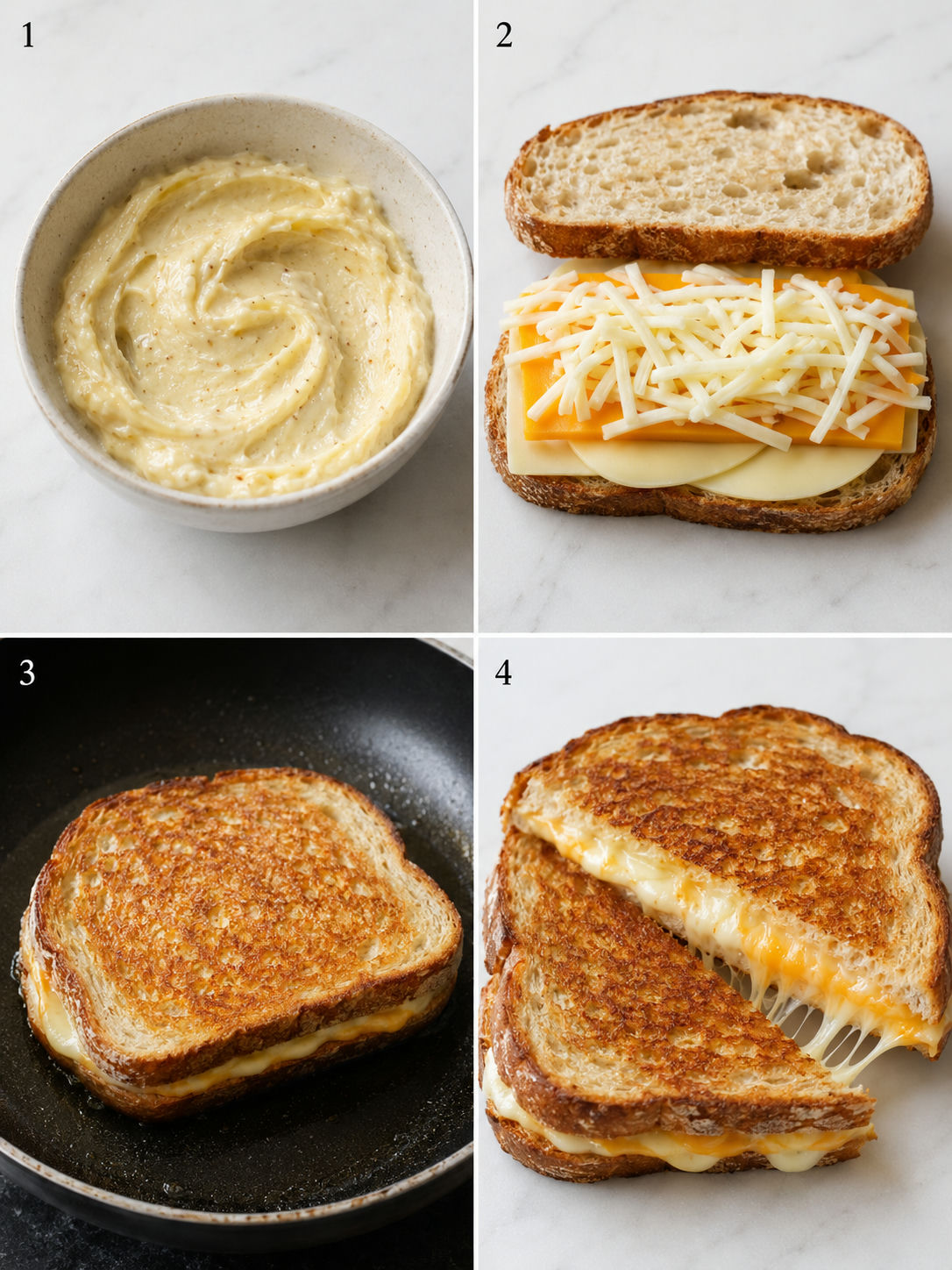
- Mix the spread. Stir softened butter, mayonnaise, and garlic powder until smooth so it coats the bread evenly.
- Layer the cheese. Spread the butter mixture on the outside of each bread slice, then stack cheddar, mozzarella, and American cheese inside.
- Start in a warm skillet. Set the sandwich in a skillet over medium-low heat and cook until the first side is golden, about 4 minutes.
- Flip and finish. Turn the sandwich gently and cook another 3-5 minutes until the bread is crisp and the cheese is fully melted.
- Rest and slice. Let it sit for 1 minute, then cut diagonally so the cheese settles instead of spilling out too fast.
Why low heat wins
High heat gives you a browned outside and a stubborn block of cheese in the middle. Medium-low heat gives the sandwich time to warm from edge to center. I like to flip it more than once because each side gets steady contact with the pan without scorching.
If you are making two sandwiches, use a wide skillet or a griddle so they are not crowded. Crowding traps steam, and steam is what turns crisp bread soft. For a loaded version with the same cozy spirit, try the French dip grilled cheese with onions and au jus.
Butter plus mayo matters
Butter gives grilled cheese the flavor people remember. Mayo helps with even browning because it spreads thinly and reaches the corners without tearing the bread. Together, they make a crust that is crisp but not dry.
Keep the layer thin. A thick coating makes the bread feel heavy and greasy. The method is similar to the butter-mayo approach discussed in this Allrecipes grilled cheese guide, but this version adds mozzarella and American cheese for a softer, stretchier center.
Cheese swaps that work
You can shift the cheese blend without losing the point of the recipe. Use Monterey Jack instead of mozzarella for a creamier melt. Swap sharp cheddar for white cheddar, Colby, or Gruyere if you want a nuttier flavor.
Keep at least one smooth melter in the mix. If you use only aged cheeses, the filling can turn oily before it gets gooey. For another big cheese moment, the garlic bread grilled cheese leans harder into garlic and crisp edges, while avocado mozzarella tomato grilled cheese adds a fresher bite.
Keep the crust crisp
Serve the sandwich as soon as it is sliced. If it sits on a plate too long, steam collects underneath and softens the bottom. A wire rack helps if you need to hold one while the next sandwich cooks.
For leftovers, cool the sandwich before refrigerating so it does not sweat in the container. FoodSafety.gov has a useful cold food storage chart if you keep cooked foods on hand. Reheat this sandwich in a skillet, not the microwave.
Make it a meal
This sandwich is rich, so it likes something sharp or brothy next to it. Tomato soup is the easy answer. Dill pickles, peppery greens, or a spoonful of pepper jelly on the side also cut through the butter.
If you are cooking for serious cheese lovers, add a small bowl of tomato soup and a plate of five-cheese mac and cheese for a full comfort-food dinner. It is not light, but it is the kind of meal people remember.
Summary
Serve hot from the skillet with tomato soup, pickles, or a simple salad. The sandwich is best fresh, but the filling and spread can be prepped ahead.
FAQs
- What cheese melts best for grilled cheese?
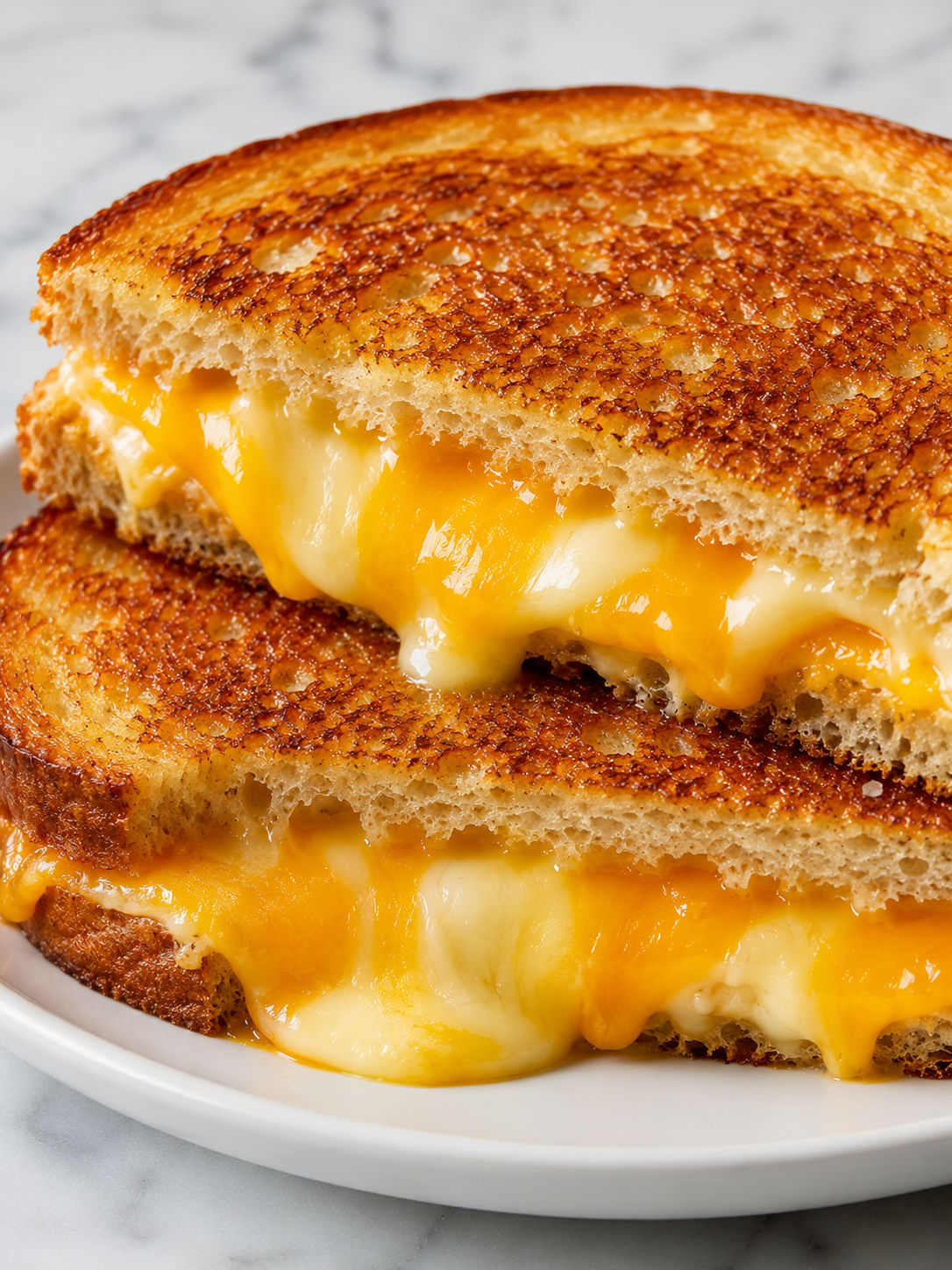
American cheese melts the smoothest, which is why it works so well in this sandwich. Sharp cheddar adds flavor, and mozzarella brings the stretch. Using all three gives you a gooey center that still tastes like real cheese.
- Can I make this without mayonnaise?
Yes. Use all softened butter on the outside of the bread instead. The crust will taste rich and classic, though it may brown a little less evenly than the butter-mayo mix.
- Why is my grilled cheese burned before the cheese melts?
The pan is too hot. Start over medium-low heat and flip the sandwich a few times as it cooks. If the bread is browning fast, lower the heat and cover the pan for one minute to trap warmth around the cheese.
- Can I use regular sandwich bread instead of sourdough?
You can, but choose a sturdy white or wheat bread rather than very soft bread. Soft bread compresses quickly and can turn greasy. Sourdough holds its shape and gives the sandwich a better crunch.
- How do I store and reheat leftovers?
Grilled cheese is best right away, but leftovers can be refrigerated for up to 3 days. Reheat in a dry skillet over low heat until the bread crisps again and the cheese warms through.
- What should I serve with this grilled cheese?
Tomato soup is the classic choice, but pickles, kettle chips, or a green salad work well too. For a bigger meal, serve it with roasted tomato soup or a bowl of chili.
