 Pin it
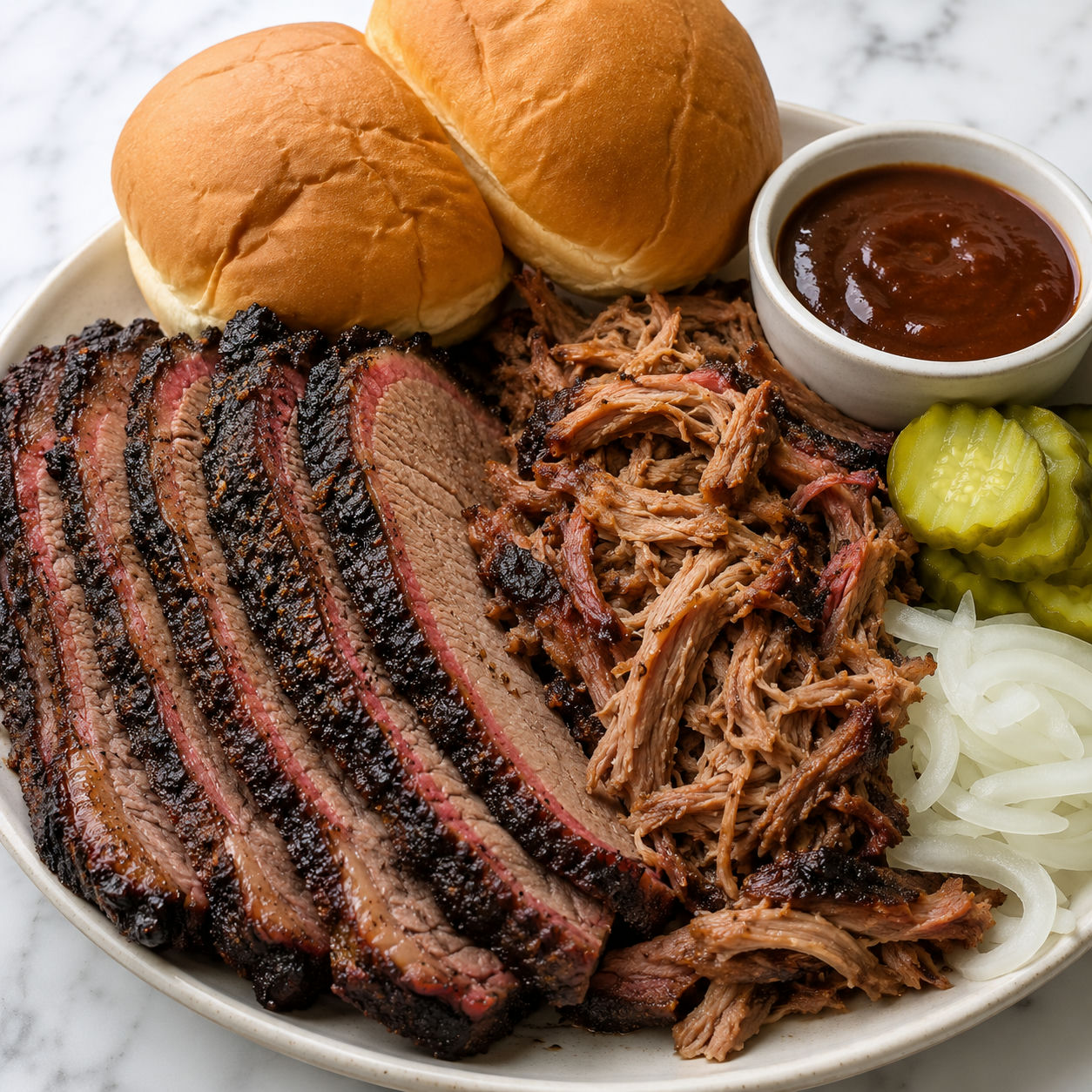
The smell of smoked brisket and pulled pork drifting through the air is basically the signal that dinner will be worth waiting for. This platter gives you both barbecue classics in one cook, with a peppery brisket bark and pork shoulder that pulls into juicy strands.
It is a long recipe, but it is not fussy. Keep the smoker steady, wrap when the bark is set, and give the meat a real rest before serving. That last part matters more than people think.
The Smokehouse Lineup
Choose a brisket with a good fat cap and a pork shoulder with plenty of marbling. You do not need a complicated rub here. Salt, pepper, paprika, garlic, and brown sugar give you bark, color, and balance.
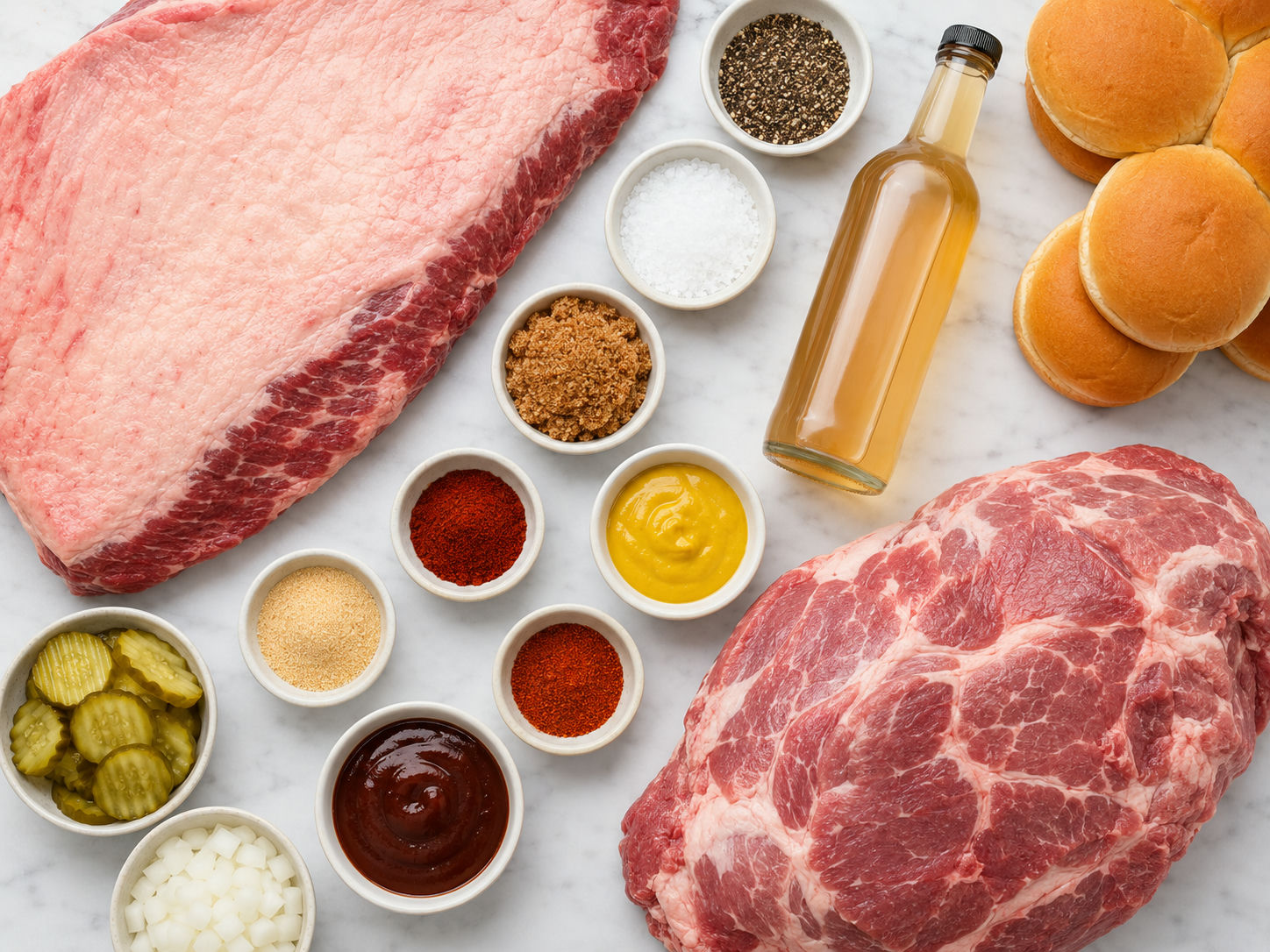
- Whole brisket. The beef centerpiece with a rich fat cap and deep smoke flavor.
- Pork shoulder. A forgiving cut that turns tender after a long cook.
- Kosher salt. Seasons both meats deeply and helps build bark.
- Coarse black pepper. Gives brisket its classic bite and rough crust.
- Paprika. Adds warm color and mild sweetness to the rub.
- Brown sugar. Helps the pork shoulder bark caramelize without making it candy-sweet.
- Garlic and onion powder. Round out the smoke with savory flavor.
- Yellow mustard. Works as a thin binder and disappears as the meat cooks.
- Apple cider vinegar. Keeps the pork shoulder surface lightly moist during smoking.
- BBQ sauce. Served on the side so the bark stays in charge.
Smoke Both Cuts Right
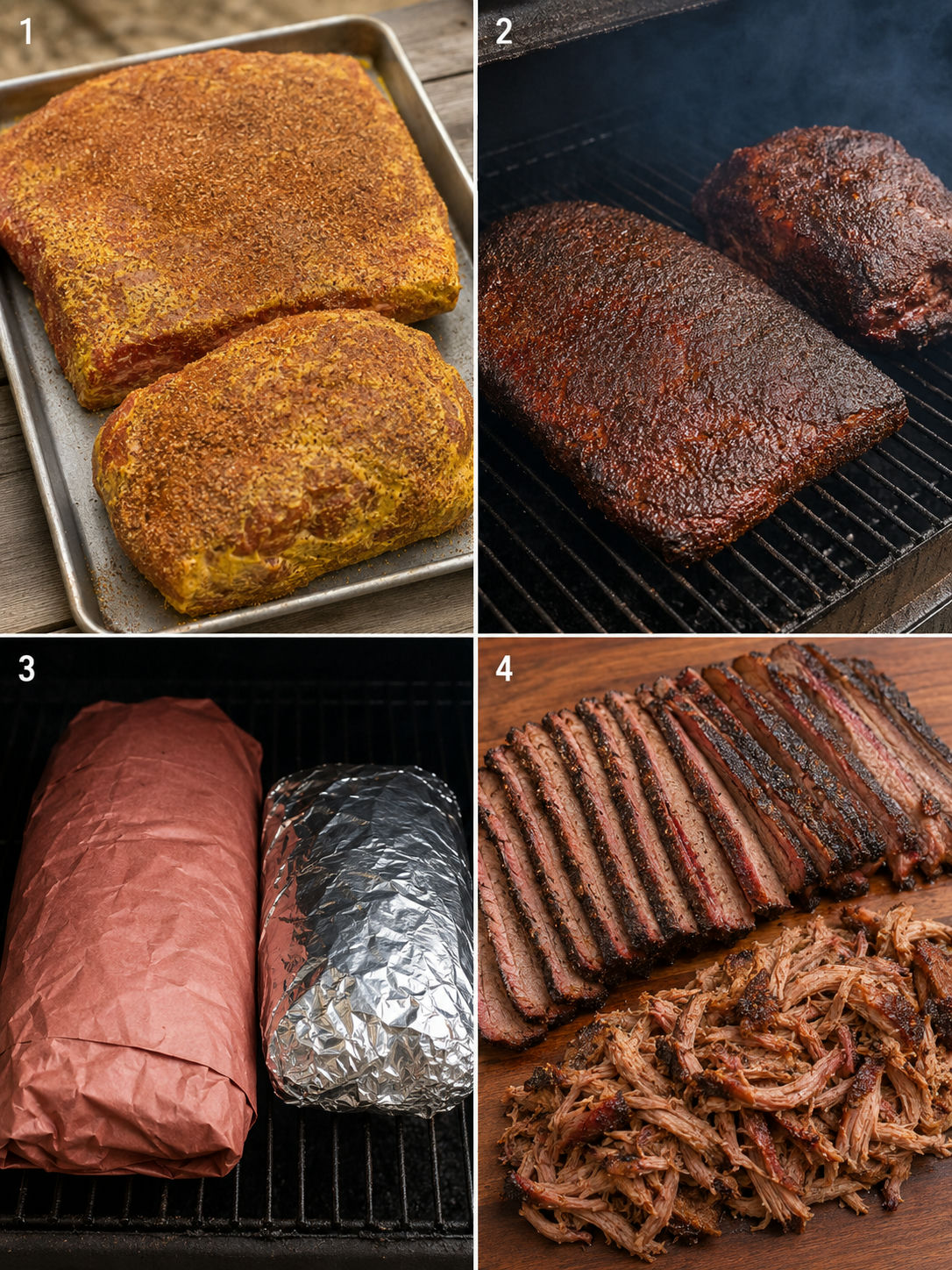
- Trim and season. Trim the brisket fat cap to about 1/4 inch and remove hard fat. Rub the pork shoulder and brisket with mustard, then coat evenly with the spice rub.
- Start the smoker. Heat the smoker to 250°F with oak, hickory, apple, or a mix. Place the brisket fat-side up or toward the heat and set the pork shoulder beside it.
- Build the bark. Smoke until the surfaces are dark and set, usually 5-6 hours. Spritz the pork with apple cider vinegar if it looks dry.
- Wrap and finish. Wrap the brisket in butcher paper and the pork in foil or paper. Keep cooking until the pork reaches about 200°F and shreds easily, and the brisket probes tender around 200-205°F.
- Rest properly. Rest the pork at least 45 minutes and the brisket at least 1 hour. A dry cooler lined with towels works well for holding both meats.
- Slice and pull. Slice brisket across the grain. Pull the pork into chunks and strands, then moisten it with a little cooking juice and sauce if you like.
Timing The Two Meats
Brisket usually decides the schedule. A full packer brisket can take 10-12 hours at 250°F, sometimes longer if it stalls hard. Pork shoulder is usually done in 8-10 hours, depending on size. Put the brisket on first if it is much larger than the pork.
The good news is that both cuts rest well. If the pork finishes early, keep it wrapped in a towel-lined cooler. It will stay hot for hours and pull better after the juices settle. If you love leftover barbecue dishes, save a little extra for pulled pork mac and cheese or braised brisket tacos.
The Bark Matters Most
Do not wrap too early. The bark should look dark, dry, and set before the meat goes into paper or foil. If the rub wipes off when you touch it, keep smoking. That crust is where salt, pepper, rendered fat, and smoke come together.
For brisket, butcher paper keeps the bark firmer. For pork, foil is fine because you will pull it anyway and mix those juices back through the meat. Food safety guidance from the USDA Food Safety and Inspection Service is worth checking any time you are handling large cuts for a crowd.
Sauce Without Hiding Smoke
Serve sauce on the side. A good brisket slice should taste like beef, smoke, salt, and pepper before anything else touches it. Pulled pork can handle a little more sauce, especially a tangy vinegar-style one that cuts the richness.
If you want a party table, set out warm buns, pickles, sliced onions, jalapeños, and slaw. A cheesy appetizer like Texas Twinkies egg rolls fits the same smoky mood without stealing attention from the platter.
Leftovers Stay Useful
Store brisket and pork separately in airtight containers with their juices. They keep for 3-4 days in the refrigerator. For longer storage, freeze in small portions so you can reheat only what you need.
Warm leftovers covered in a 275°F oven, or use a skillet over low heat with a splash of broth. Avoid hard boiling or high microwave heat. That squeezes moisture out of the meat and turns good barbecue into dry shreds.
Easy Serving Ideas
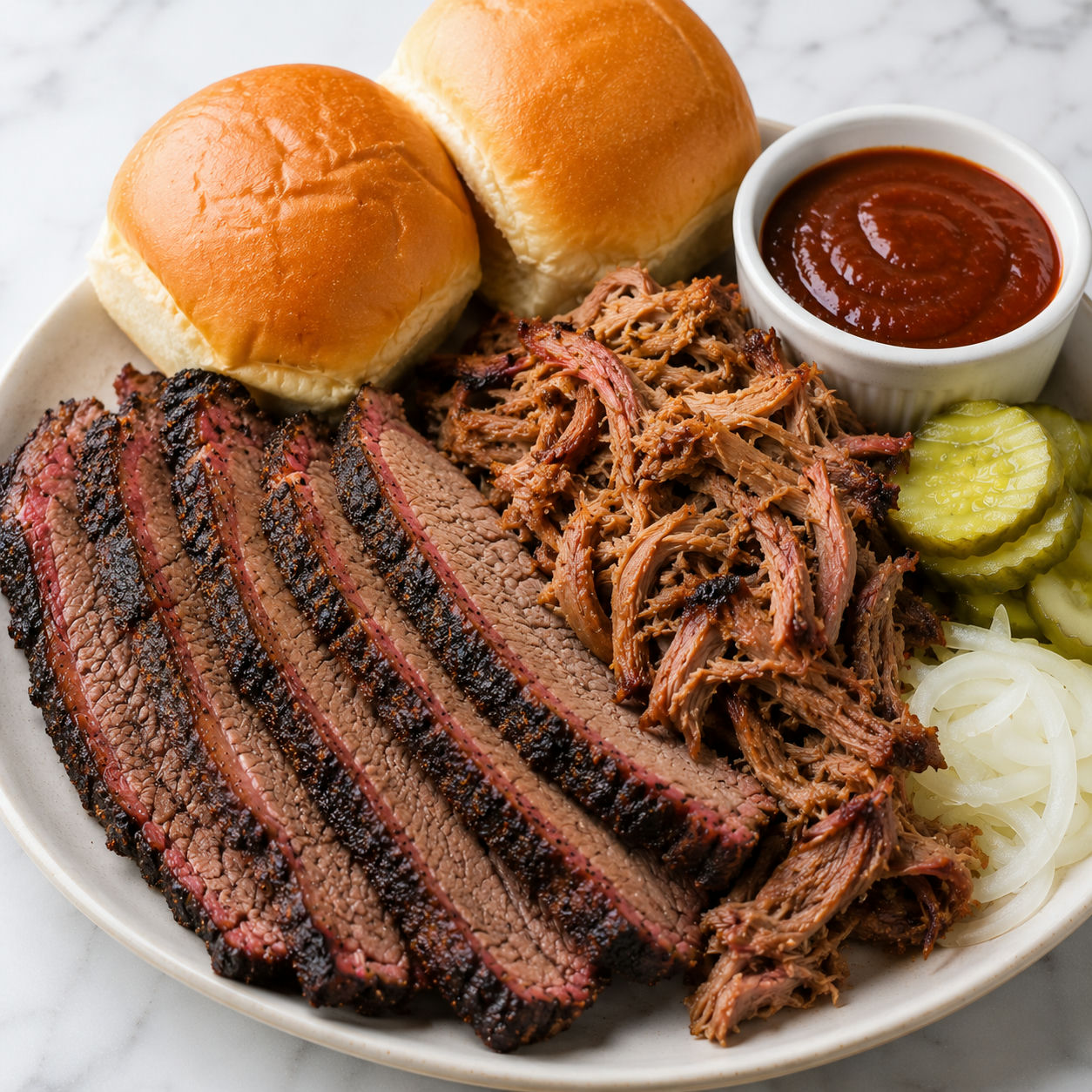
Build plates with sliced brisket, pulled pork, pickles, onions, and two sides. For sandwiches, use soft buns that can soak up juice without falling apart. For a loaded dinner, pile pulled pork over baked potatoes or spoon chopped brisket into queso.
The best platter has contrast. Smoky meat wants something cold, sharp, and crunchy beside it. Slaw, pickles, and a little vinegar sauce wake everything up.
Summary
This smoked brisket and pulled pork BBQ platter is built for weekends, parties, and anyone who wants a generous barbecue spread without juggling two separate cook days.
FAQs
- Can I smoke brisket and pulled pork at the same time?
Yes. Keep the smoker around 250°F and put the brisket on first if it is large. Pork shoulder is more forgiving, so it can wait in a cooler longer if it finishes before the brisket.
- What wood is best for this BBQ platter?
Oak is a steady choice for brisket and works well with pork too. Hickory adds a stronger smoke flavor. Apple or cherry can soften the edge if you want a sweeter pork aroma.
- Do I have to wrap the meat?
No, but wrapping helps push both cuts through the stall and protects the bark from getting too dry. Use butcher paper for a drier bark or foil for a softer, juicier finish.
- How do I know the brisket is done?
Temperature is only a guide. Start checking around 195°F. The brisket is done when a probe slides into the thick flat with very little resistance, usually somewhere between 200°F and 205°F.
- Can I make this the day before?
Yes. Rest the meats, chill them whole or in large pieces, then reheat gently covered at 275°F with a splash of broth or reserved juices. Slice brisket after reheating so it stays moist.
- What should I serve with smoked brisket and pulled pork?
Pickles, onions, buns, coleslaw, beans, mac and cheese, and potato salad all fit. For a bigger spread, add a warm pasta side like brisket mac and cheese.
- Can I make this gluten-free?
The meats and rub are naturally gluten-free if your spices and sauce are certified gluten-free. Serve with gluten-free buns or skip the bread and build plates with slaw, beans, and pickles.
