 Pin it
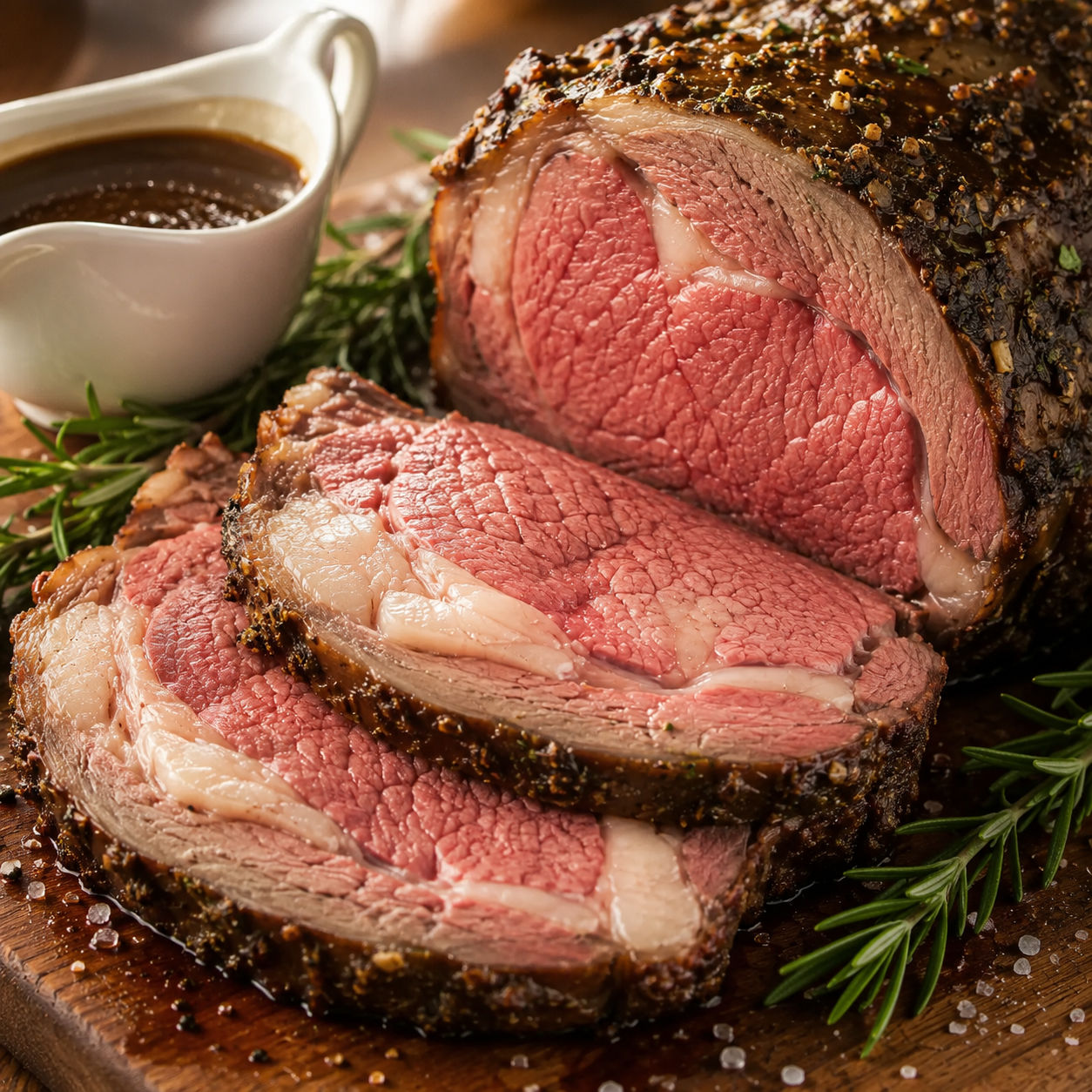
Classic Prime Rib Roast with Pan Gravy is the roast I save for the meal where everyone lingers at the table. It looks grand, but the cooking is mostly patience, a thermometer, and not rushing the rest.
The method here gives you a deeply browned outside and a warm pink center. The gravy is built right in the roasting pan, so none of those browned bits go to waste.
The Roast And Gravy Lineup
Start with a well-marbled standing rib roast and simple seasonings. Prime rib has plenty of flavor on its own, so the goal is to help the beef taste more like itself.
- Bone-in prime rib roast. The bones help shield the meat and make the roast easier to position in the pan.
- Kosher salt. Seasons the meat deeply and helps dry the surface for a better crust.
- Black pepper. Adds a sharp, warm bite to the browned exterior.
- Garlic. Rubbed over the outside for a savory aroma without hiding the beef.
- Rosemary and thyme. Classic roast herbs that hold up well in the oven.
- Beef stock. Loosens the browned drippings and gives the gravy body.
- All-purpose flour. Thickens the pan gravy into a smooth spoonable sauce.
- Red wine. Adds depth to the gravy and helps deglaze the pan.
Roast It With Confidence
- Season the beef. Pat the roast dry, rub it with salt, pepper, garlic, and herbs, then chill uncovered overnight if you can. This gives the surface time to dry.
- Take off the chill. Let the roast stand at room temperature for 1 1/2 to 2 hours before cooking. A very cold center cooks less evenly.
- Start hot. Roast at 500°F for 15 minutes to begin browning the fat cap and edges.
- Finish lower. Reduce the oven to 325°F and roast until the center reaches 118-120°F for medium-rare, usually 1 1/2 to 2 hours for a 6-pound roast.
- Rest before carving. Move the roast to a board and tent it loosely for 25-30 minutes. The juices settle and the temperature keeps climbing.
- Make the gravy. Spoon off excess fat, whisk flour into the drippings, then add wine and stock. Simmer until smooth and rich.
Salt Early, Brown Better
The easiest improvement is salting the roast before cooking day. Salt first draws a little moisture to the surface, then that seasoned moisture moves back into the beef. The outside dries as it sits uncovered in the fridge, which helps the crust brown instead of steam.
If you only have a few hours, salt it as soon as you can. Even a short rest helps. Do not coat the roast in wet paste right before it goes into the oven. Garlic, herbs, and pepper are fine, but keep the surface as dry as possible. For another holiday centerpiece with a similar rest-and-carve rhythm, see this classic roast turkey.
The Thermometer Decides
Prime rib is too expensive for guesswork. Insert a probe or instant-read thermometer into the thickest part of the roast, away from bone and fat pockets. For medium-rare slices, pull at 118-120°F. For medium, pull closer to 128°F. The roast will continue rising as it rests.
Official food-safety guidance uses higher temperatures for whole cuts of beef, and you can check the USDA safe temperature chart if you are cooking for guests with stricter needs. At home, many cooks choose medium-rare for prime rib because the meat is tender and juicy there. The important part is knowing your number before you carve.
Pan Gravy Without Lumps
Once the roast is resting, set the roasting pan over medium heat. Spoon off most of the fat, but keep about 1/4 cup in the pan. Whisk in flour and cook it for a minute until it smells toasty. That quick cooking step keeps the gravy from tasting raw.
Add wine first if you are using it, scraping hard along the bottom of the pan. Then whisk in warm beef stock a little at a time. The gravy will look thin at first, then it tightens as it simmers. If you love a beefy sauce, the same pan-scraping idea shows up in hamburger steaks with onion gravy and classic beef tips and gravy.
Carving Clean, Juicy Slices
Do not carve as soon as the roast leaves the oven. Resting is not optional here. A large roast needs time for the hot juices to settle back through the meat. If you cut too early, the board floods and the slices eat dry.
For a bone-in roast, cut along the bones first to remove them in one piece. Save those bones for the cook who likes the best snack. Then slice the roast across the grain into thick slabs. I like to serve the center slices with gravy and the end cuts for anyone who wants more crust. For a cozy beef dinner with a softer braised texture, try classic slow cooker pot roast.
Sides, Leftovers, And Timing
Prime rib wants sides that can handle gravy. Mashed potatoes, roasted carrots, green beans, and sharp horseradish cream all make sense. If the oven is busy, choose sides you can bake earlier and rewarm while the roast rests.
Leftovers are a gift if you treat them gently. Slice only what you need for dinner, then chill the remaining roast as a larger piece. Thin cold slices make excellent sandwiches. For reheating, low heat and a little gravy are better than a hot skillet. The goal is warm beef, not a second roast.
FAQs
- What size prime rib roast should I buy?
Plan on about 1 pound per person for a bone-in roast, or a little less if you have several sides. A 6-pound, 3-bone roast usually serves 6 to 8 people with a few end slices and center cuts.
- Can I make this with a boneless prime rib roast?
Yes. Boneless prime rib cooks a little faster and is easier to carve. Tie it with kitchen twine so it holds a round shape, then start checking the temperature early.
- What temperature should I pull prime rib from the oven?
For medium-rare, pull the roast around 118-120°F in the thickest part. It will usually rise another 5-10 degrees while resting, depending on the size of the roast.
- Can I make the gravy ahead?
You can make beef gravy ahead with stock, but the best flavor comes after the roast is done. To save time, measure the flour and stock earlier, then whisk the gravy while the beef rests.
- How do I store leftover prime rib?
Cool leftovers, then wrap slices tightly and refrigerate for up to 3 days. Keep extra gravy in a separate container so the meat does not sit in liquid.
- How do I reheat prime rib without overcooking it?
Warm slices gently in a covered dish with a spoonful of gravy or beef stock at 250°F. Stop as soon as the meat is warm. High heat will push the pink center toward gray.
