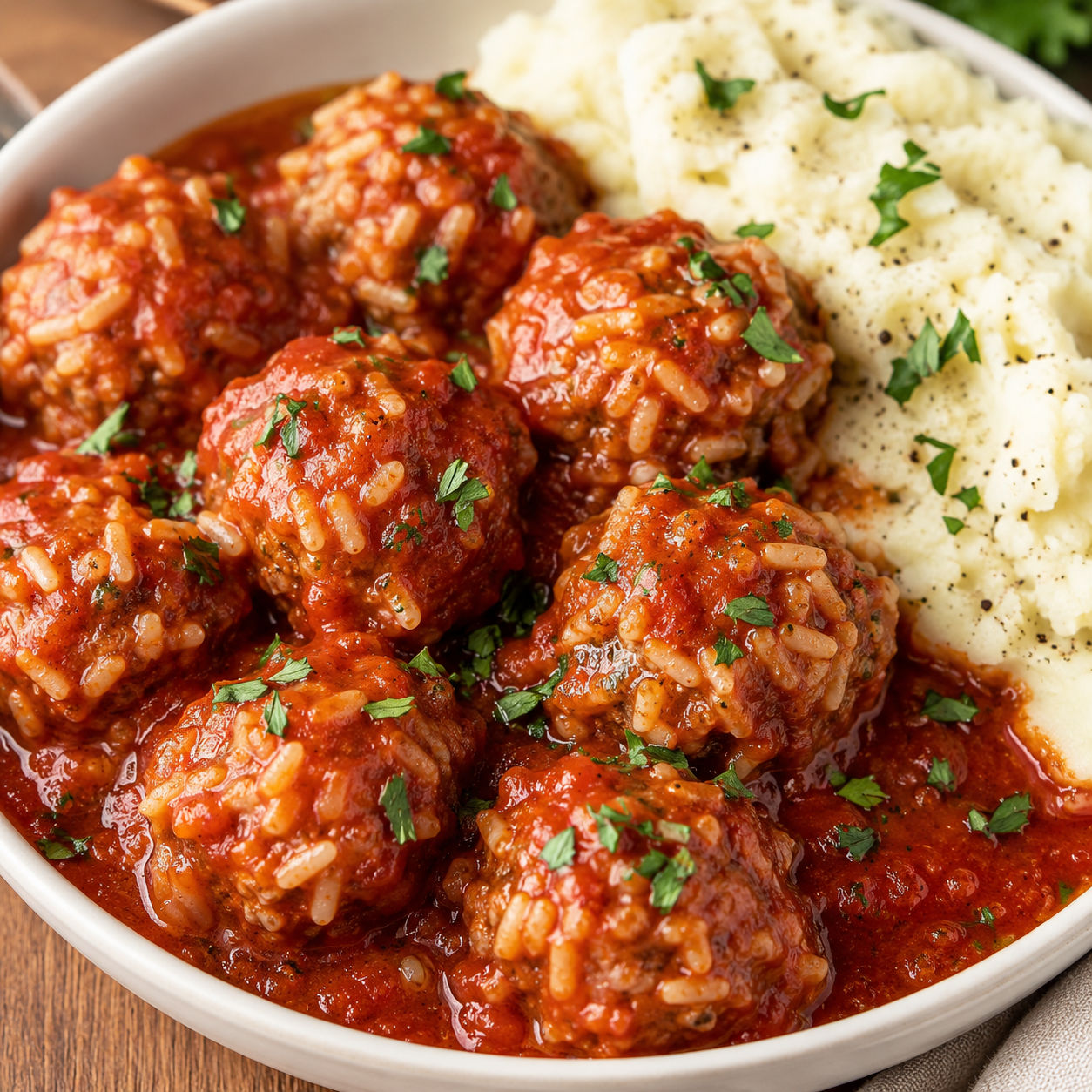
 Pin it
Delicious and Easy Porcupine Meatballs are the kind of dinner that feels old-school in the best way. The meatballs are soft and savory, the tomato sauce gets thick around the edges, and the rice pokes out as it cooks.
I like this recipe because it uses pantry basics but still tastes like a full meal. Serve it with mashed potatoes, buttered noodles, or a green vegetable and dinner is handled.
The Cozy Meatball Lineup
Use lean ground beef that still has a little fat, since very lean beef can make dry meatballs. Long-grain white rice is the right choice here because it cooks inside the meatball without falling apart.
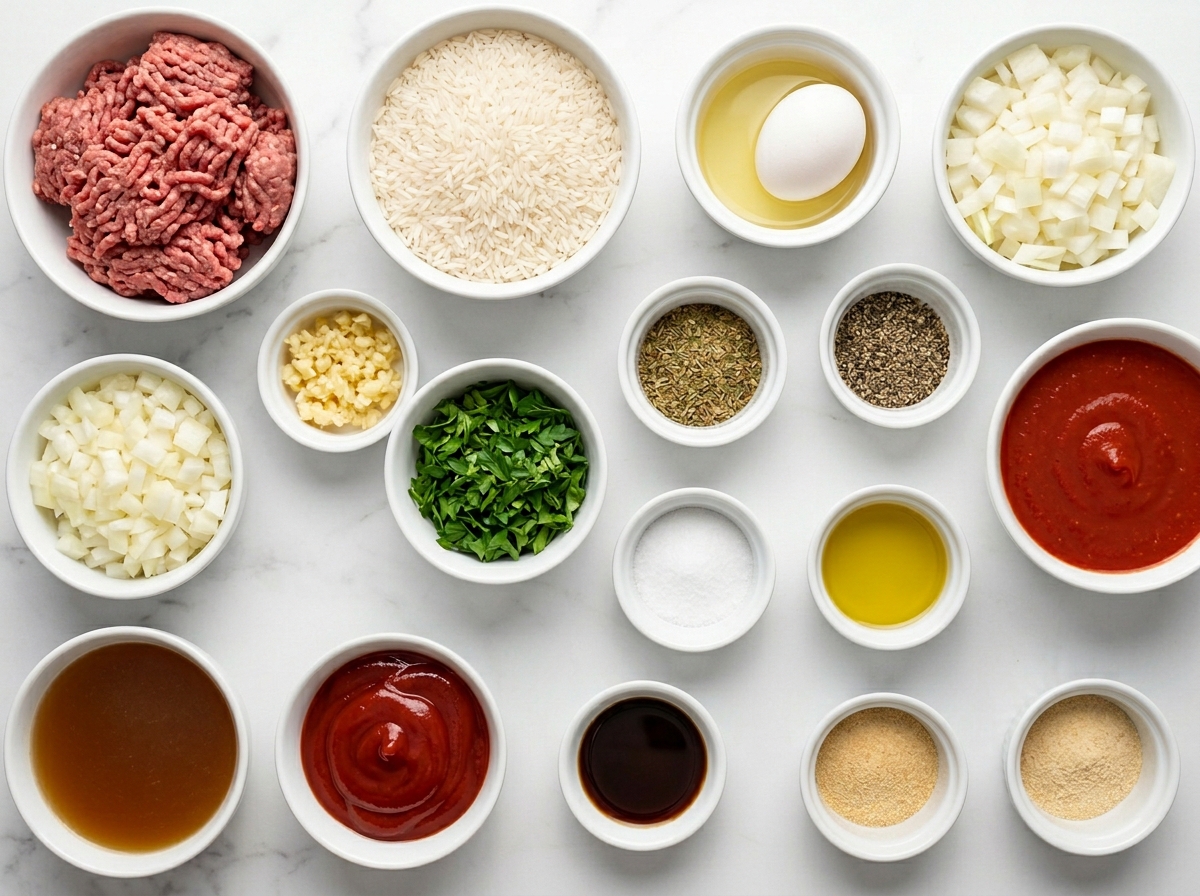
- Ground beef. Gives the meatballs their savory base and enough richness to stay tender.
- Long-grain white rice. Cooks inside the meatballs and creates the little porcupine quills.
- Egg. Helps bind the meat mixture so the meatballs hold together.
- Onion and garlic. Add gentle sweetness and a deeper homemade flavor.
- Tomato sauce. Simmering liquid that thickens into a simple, cozy sauce.
- Beef broth. Gives the rice enough moisture to cook through.
- Ketchup. Adds mild sweetness and helps round out the tomato sauce.
- Parsley. Brightens the finished dish and keeps the sauce from tasting flat.
Shape, Brown, And Simmer
- Mix the meatballs. Combine beef, rice, egg, onion, garlic, parsley, salt, pepper, and Italian seasoning with a light hand. Overmixing makes the meatballs firm.
- Roll evenly. Shape the mixture into 18-20 meatballs. Keep them close in size so the rice cooks at the same pace.
- Brown the outside. Sear the meatballs in a deep skillet until lightly browned. They do not need to be cooked through yet.
- Stir the sauce. Whisk tomato sauce, broth, ketchup, Worcestershire sauce, and a pinch of seasoning in the skillet around the meatballs.
- Simmer until tender. Cover and cook gently until the rice is soft and the meatballs reach 160°F. Spoon sauce over the top before serving.
Keep The Meatballs Tender
The main trick is gentle mixing. Once the beef hits the bowl, use your fingertips instead of squeezing the mixture like dough. You want the rice and seasonings evenly tucked through the meat, but you still want the texture loose. A packed meatball turns bouncy after it simmers.
Size matters too. I aim for meatballs a little smaller than a golf ball. Bigger ones can work, but the rice needs more time and the outside may dry before the center is ready. If you love saucy meatballs, this is also a good night to browse Spaghetti and Meatballs for another tomato-rich dinner.
Why The Rice Cooks Right
The rice cooks because it is tucked into a moist meat mixture and surrounded by simmering tomato sauce. Keep the pan covered for most of the cook time so steam stays trapped. If the sauce gets too thick before the rice is tender, add two or three tablespoons of water and keep simmering.
Long-grain white rice is dependable here. Brown rice needs more liquid and a longer cook time, so it is not a simple swap. For food safety, ground beef should be cooked to 160°F according to the USDA safe temperature chart.
Sauce With Better Balance
Tomato sauce can taste sharp if it only simmers for a few minutes. The ketchup and broth soften that edge without making the dish taste sugary. Worcestershire sauce adds a quiet savory note that makes the sauce taste more rounded.
Do not boil the pan hard. A steady simmer is enough. Hard bubbling can break the meatballs apart and make the sauce splatter. If you want a sweeter, brighter meatball supper later in the week, try Sweet and Sour Meatballs with pineapple and bell pepper.
Easy Swaps That Work
Ground turkey works, but choose one with some fat and add a teaspoon of olive oil to the mixture. You can use chicken broth instead of beef broth if that is what you have. For a gluten-free dinner, check the labels on broth, ketchup, and Worcestershire sauce.
Italian seasoning is easy, but paprika, dried thyme, or a little onion powder all fit. If you like a meatball dinner with more creamy comfort, the Salisbury Meatballs with Mashed Potatoes go in a richer direction.
Storage And Reheating
Leftovers keep well for up to 4 days in an airtight container in the refrigerator. The rice will keep soaking up sauce as it sits, so add a splash of water or broth when reheating. Warm the meatballs covered in a skillet over low heat until hot in the center.
You can freeze cooked porcupine meatballs for up to 2 months. Thaw overnight in the refrigerator, then reheat gently. If you enjoy beef and rice dinners that make good leftovers, Easy Chicken and Rice Casserole is another cozy one to keep nearby.
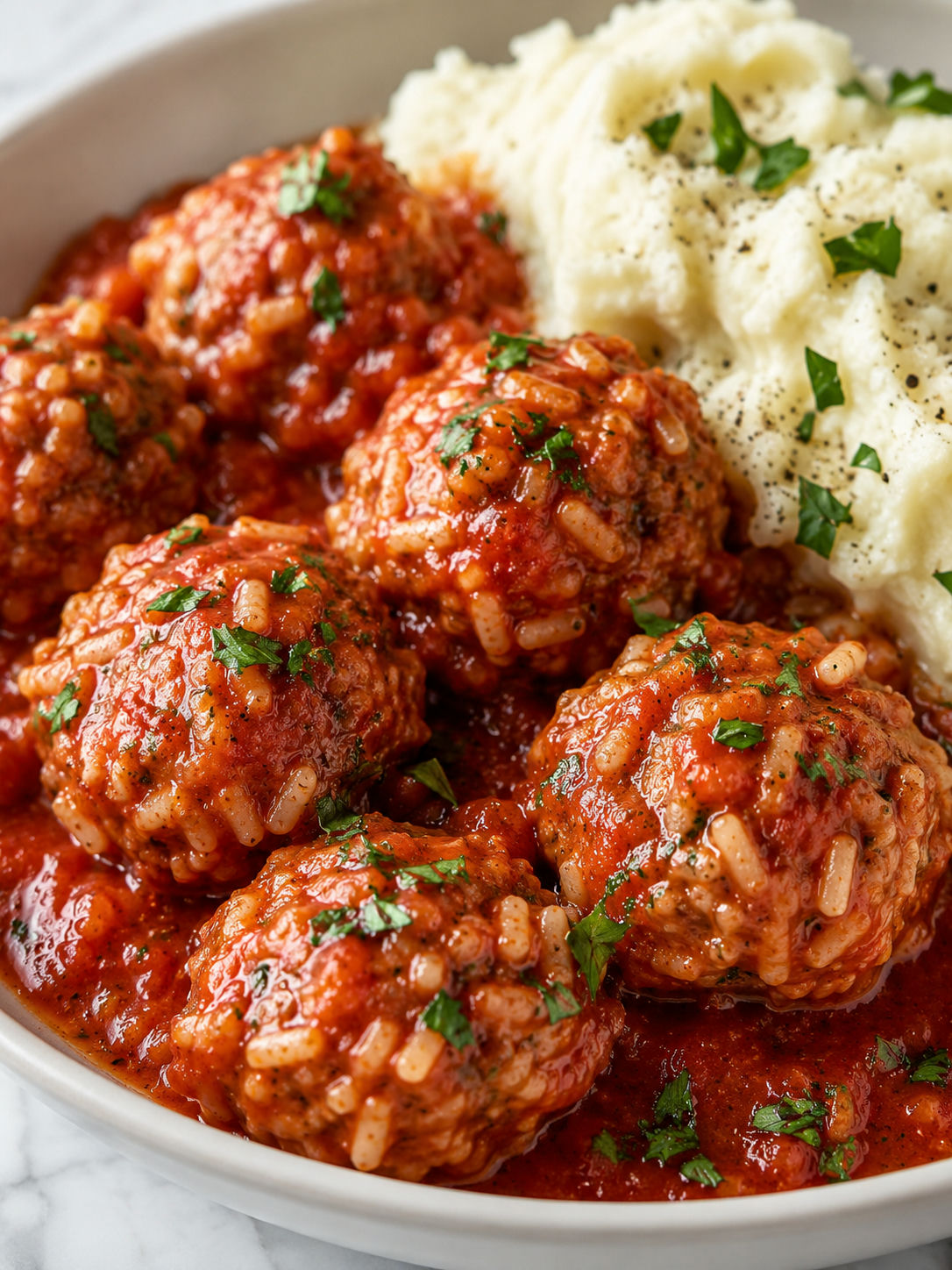
Summary
These porcupine meatballs are browned, simmered, and finished in a rich tomato sauce for a cozy family meal.

FAQs
- Why are they called porcupine meatballs?
The name comes from the rice. As the meatballs simmer, the grains swell and poke out from the beef a little, which makes them look like tiny quills.
- Can I use instant rice instead of long-grain rice?
Long-grain white rice gives the best texture because it cooks slowly with the beef. Instant rice can turn soft and mushy, so use it only if you shorten the simmer slightly and expect a softer meatball.
- Can I make porcupine meatballs ahead of time?
Yes. Shape the raw meatballs up to one day ahead and keep them covered in the refrigerator. You can also cook the whole dish, chill it, and reheat it gently on the stove with a splash of water.
- How do I know the meatballs are done?
The rice should be tender and the beef should reach 160°F in the center. Cut one open if needed. There should be no raw pink beef in the middle.
- Can I bake these instead of simmering on the stove?
Yes. Brown the meatballs in an oven-safe skillet, add the sauce, cover tightly, and bake at 350°F for about 45-50 minutes. Check that the rice is tender before serving.
- What should I serve with porcupine meatballs?
Mashed potatoes are classic because they catch the tomato sauce. Steamed green beans, roasted carrots, rice, or buttered egg noodles also work well.
