 Pin it
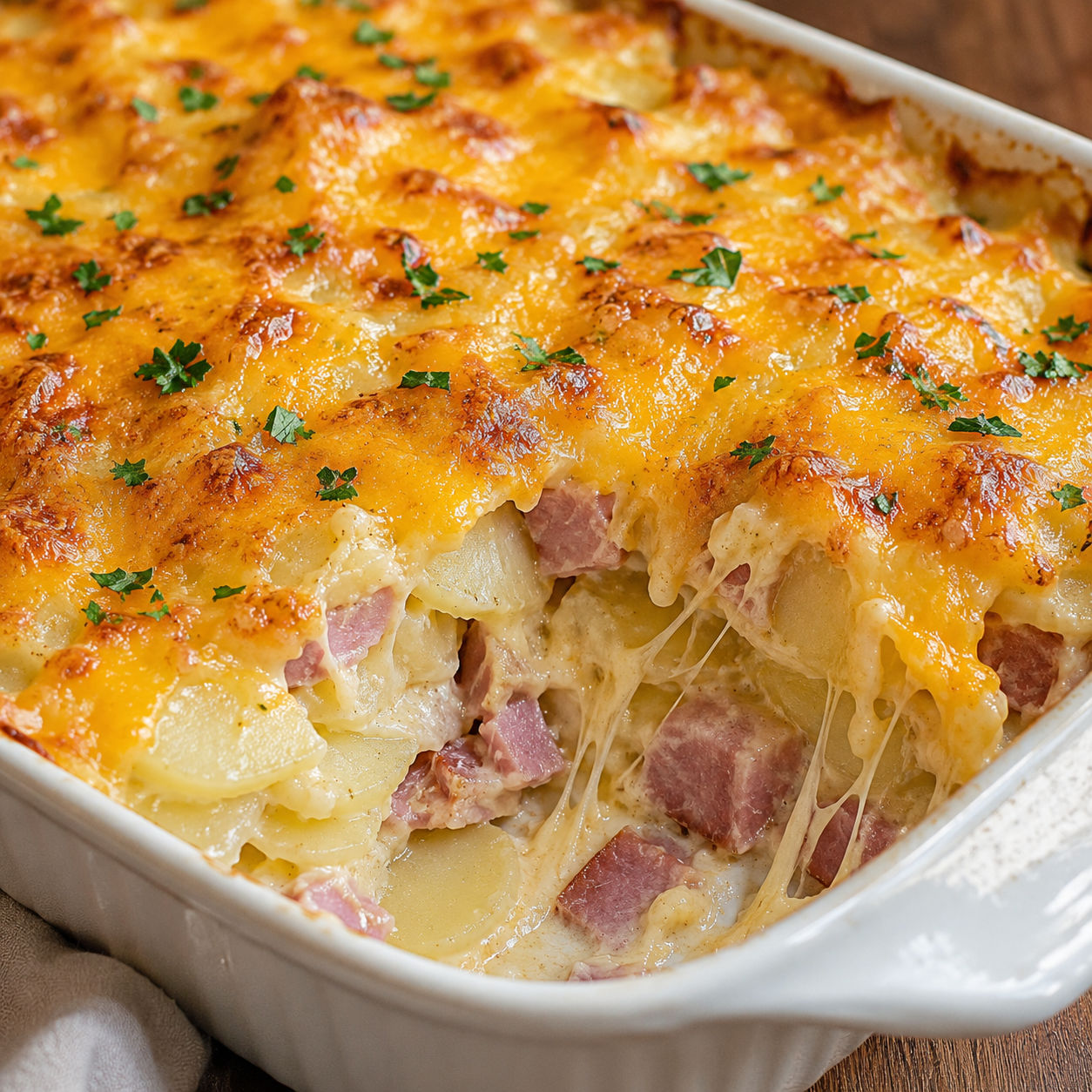
This is the kind of casserole that turns a container of leftover ham into the main event. Thin slices of potato soak up a creamy sauce while diced ham adds salty richness in every forkful. It bakes hands-off while you set the table or decompress from the day.
I make this when I want something filling without standing at the stove for an hour. The prep is mostly slicing and stirring, and the oven does the rest. If you have a mandoline, now is the time to pull it out.
What builds the creamy layers
Stick with starchy russet potatoes for the creamiest texture. They soften into the sauce instead of holding firm like waxy varieties. A sharp cheddar melts smoothly and gives the top that golden crust everyone fights over.
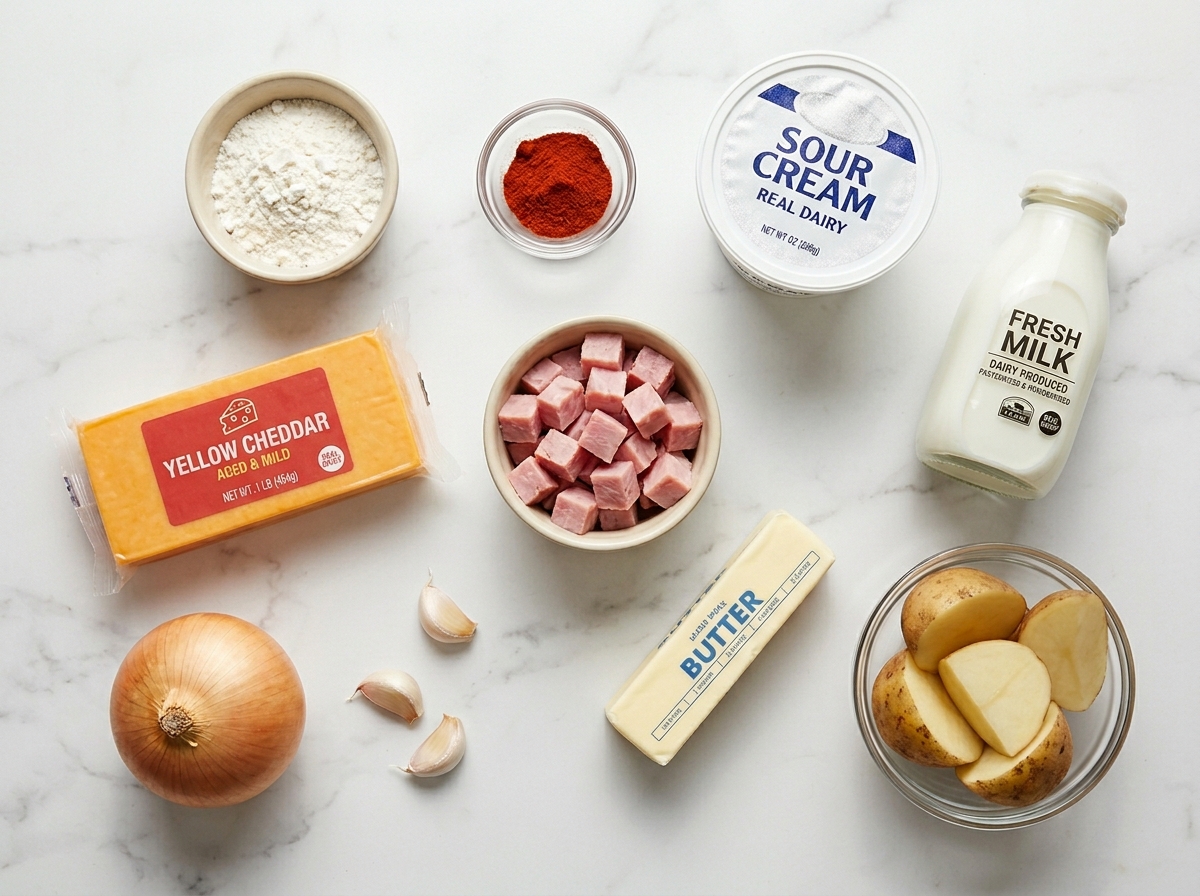
- Russet potatoes. Starchy and absorbent, they collapse slightly into the sauce and create that spoonable texture.
- Diced cooked ham. Smoked or honey-baked both work. Cut it into small cubes so every bite gets a little salt and savor.
- Yellow onion. Adds a sweet backbone that keeps the sauce from tasting flat.
- Butter and flour. A quick roux thickens the milk into a real sauce, not a soup.
- Whole milk. Gives body without the heaviness of all cream. You can use half-and-half if you want it richer.
- Sour cream. A spoonful adds tang and helps the sauce stay stable while it bakes.
- Sharp cheddar cheese. Grate it fresh from the block for smooth melting and that blistered top.
- Garlic and paprika. Just a hint of each warms the background without stealing attention.
Build it in one dish
- Prep the potatoes. Peel the russets and slice them about a quarter-inch thick. A mandoline makes this fast, but a sharp knife and steady hand work fine too.
- Start the sauce. Melt butter in a large skillet and cook the onion until soft. Stir in the garlic and flour and cook for one minute so the raw taste disappears.
- Whisk in the dairy. Pour in the milk slowly, whisking constantly until the mixture bubbles and thickens. Remove from heat and stir in the sour cream, half the cheddar, and a pinch of paprika.
- Layer and bake. Toss the potato slices and ham with the sauce in a greased 9-by-13-inch baking dish. Spread it evenly, cover tightly with foil, and bake at 375 degrees F for forty-five minutes.
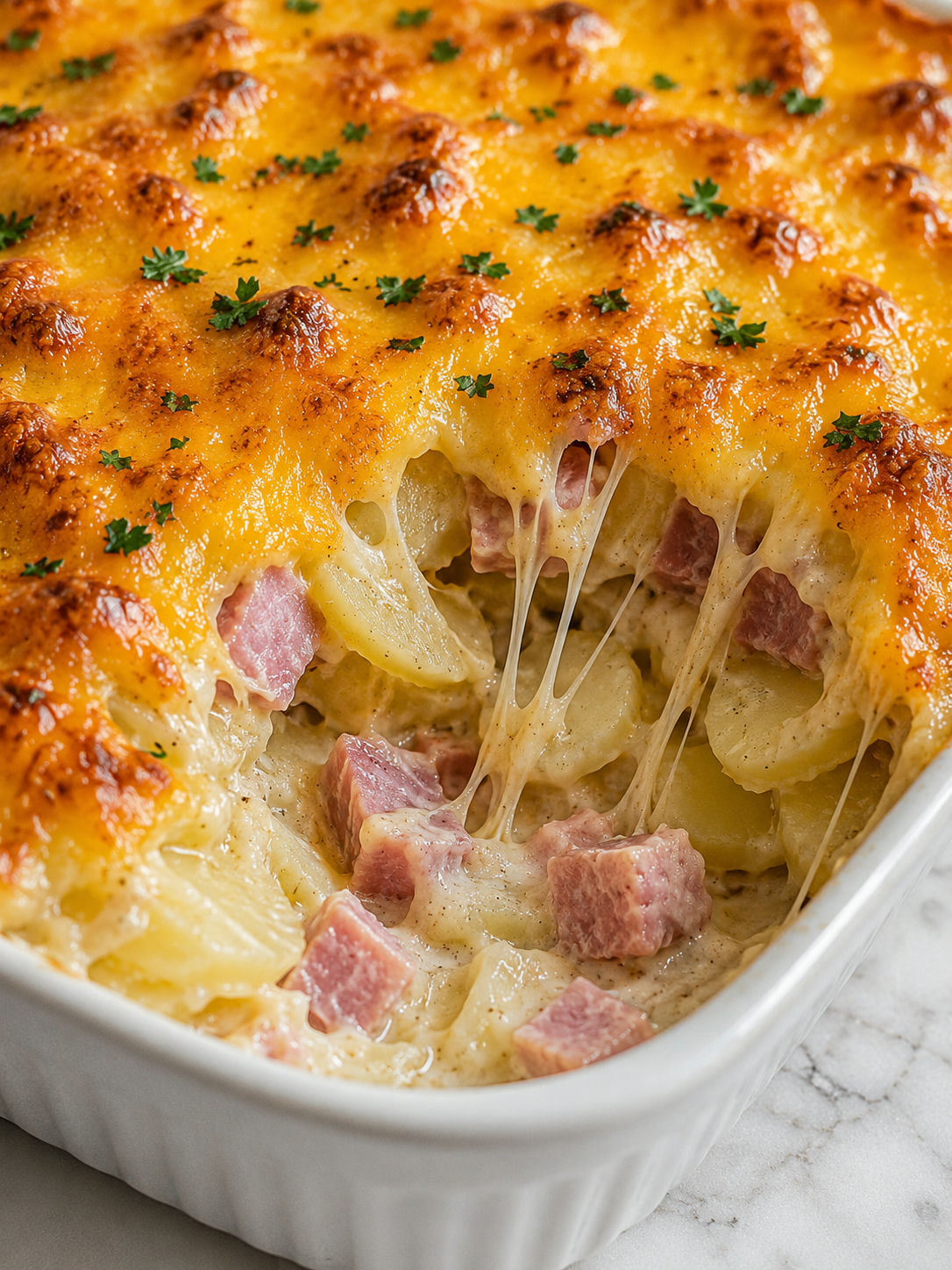
- Top and finish. Uncover, scatter the remaining cheese on top, and bake another fifteen to twenty minutes until the potatoes are tender and the top is deeply golden. Let it rest ten minutes before serving so the sauce sets.
Slice the potatoes evenly
If the slices vary wildly, you end up with mush next to crunch. Aim for a consistent quarter-inch thickness. A mandoline set to that width removes all guesswork and saves time. If you are slicing by hand, tuck a cut-resistant glove in your non-knife hand and go slow. Even layers mean the whole casserole finishes at the same moment.
Tame the salt from ham
Ham already carries plenty of salt, so I hold back on adding more to the sauce. Taste the roux after you whisk in the milk. If your ham is especially salty, give the diced cubes a quick rinse under cold water and pat them very dry before folding them in. The dish stays savory without crossing into briny territory. The U.S. Department of Agriculture offers safe guidance on storing and reheating leftover cooked ham at their food-safety page.
Cheese and dairy swaps
Sharp cheddar is the classic choice, but gruyere or a mix of colby and monterey jack melt beautifully too. For a lighter sauce, swap the sour cream for plain greek yogurt and use two percent milk instead of whole. If you want to bulk it up with more protein, stir in a cup of thawed frozen peas or chopped broccoli with the ham. For another hearty potato dinner, try our cheesy ham and potato casserole or the savory hamburger potato casserole.
Sides that complete the plate
A simple green salad with vinaigrette cuts through the richness. Roasted green beans or steamed broccoli also work well. If you are feeding a crowd, set out a basket of warm rolls and let people spoon the casserole right over them. On cooler nights, I like to pair this with a mug of soup. Our loaded broccoli potato soup is a natural match if you want to double down on comfort.
Storing and reheating right
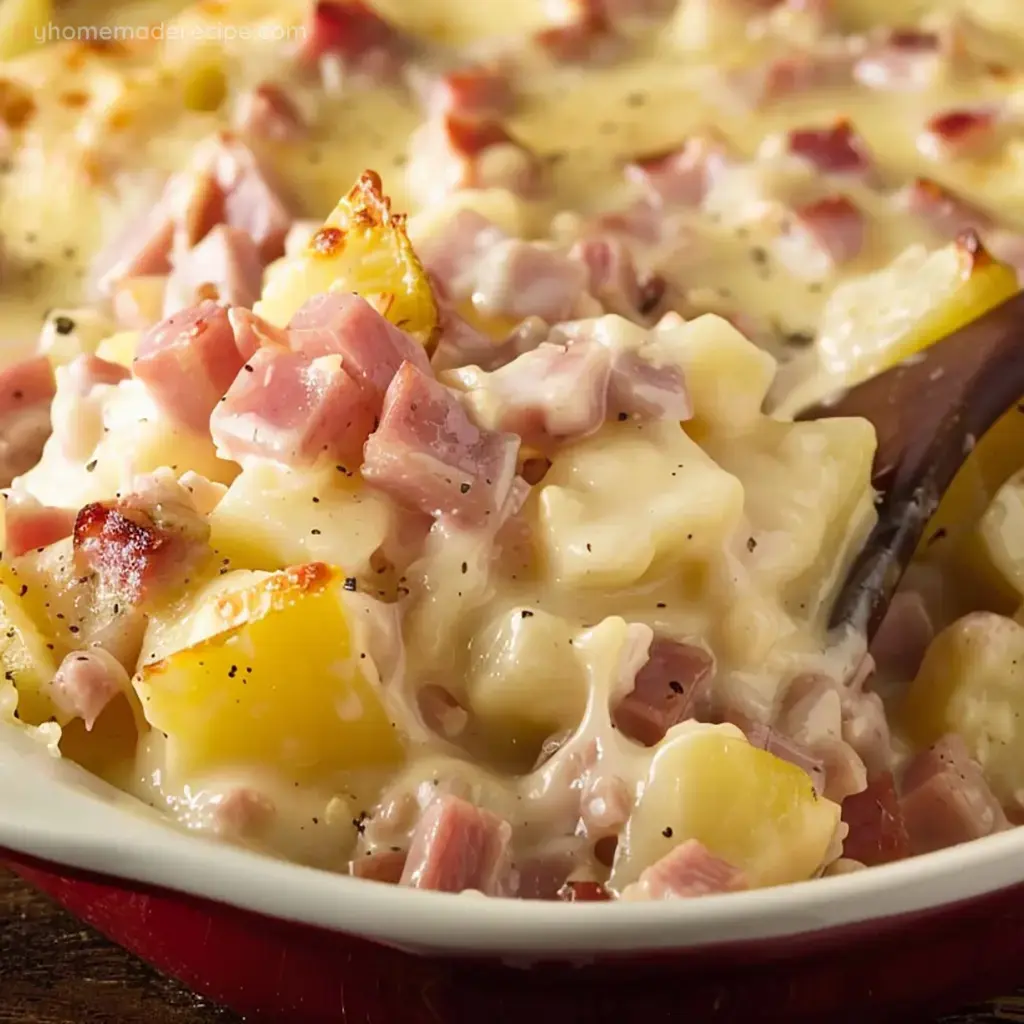
Leftovers keep airtight in the refrigerator for up to four days. The flavors actually improve overnight as the ham and potatoes absorb more sauce. Reheat individual portions in a skillet with a splash of milk to restore the creamy texture. The microwave works too, but go in thirty-second bursts and stir between each one so the sauce does not separate.
FAQs
- Can I use frozen hash browns instead of fresh potatoes?
Yes. Thaw them completely and squeeze out excess moisture with a clean kitchen towel so the casserole does not turn watery. Reduce the initial covered bake time by about ten minutes since the potatoes are already partially cooked.
- What kind of ham works best?
Any fully cooked ham works. Smoked ham gives the boldest flavor, while honey-baked adds a subtle sweetness. Dice it into small cubes so it distributes evenly. Avoid raw ham, which requires different handling and longer cooking.
- Can I make this casserole ahead of time?
Absolutely. Assemble it through the layering step, cover tightly, and refrigerate up to twenty-four hours. Let it sit at room temperature while the oven heats, then bake as directed, adding a few extra minutes if needed.
- Why did my casserole turn out watery?
Excess moisture from the potatoes or undercooking the roux are the usual culprits. Slice the potatoes evenly, cook the flour-and-butter mixture for a full minute, and drain any rinsed ham thoroughly. Letting the casserole rest after baking also helps the sauce thicken.
- Can I freeze leftovers?
Yes. Cool the casserole completely, then wrap individual portions or the whole dish in plastic wrap and foil. Freeze for up to three months. Thaw overnight in the refrigerator and reheat covered in a low oven until bubbly throughout.
- What can I add to stretch this for a bigger crowd?
Stir in a cup of frozen peas, chopped broccoli, or sliced mushrooms with the ham. You can also add an extra potato and increase the milk by half a cup without changing the baking time significantly.
