 Pin it
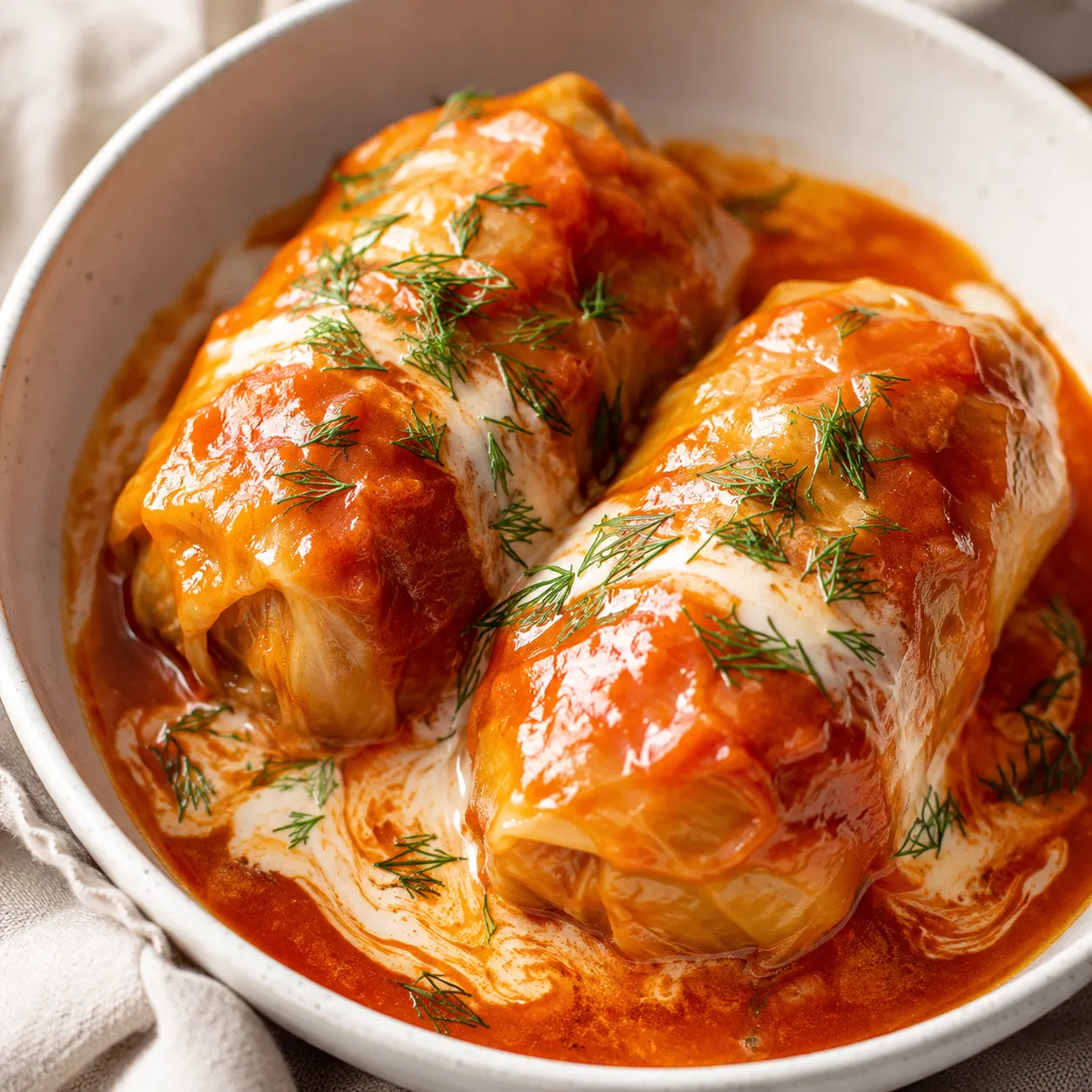
Gołąbki, pronounced roughly "gwa-WOON-ki," are what Polish grandmothers make when they want to feed everyone at the table and still have leftovers for tomorrow. The name means "little pigeons," which is an odd and charming thing to call a stuffed cabbage roll, but the dish itself is entirely straightforward. Ground pork and cooked rice, seasoned simply, rolled inside tender cabbage leaves and simmered in a gently sweet tomato sauce until everything is soft and unified.
Two steps need real attention. Getting the cabbage leaves pliable without tearing, and rolling the bundles tight enough that they hold together in the pot. Both are easy once you have done them once. Everything else is hands-off time on the stove.
This is cold-weather, weekend, feed-a-crowd food. A big pot on Sunday will feed you comfortably through Wednesday.
What goes into classic gołąbki
Buy the largest, densest head of green cabbage you can find. Tightly packed leaves are more pliable after blanching and give you bigger, cleaner wrappers. For the meat, ground pork with moderate fat content keeps the filling moist through the long simmer.
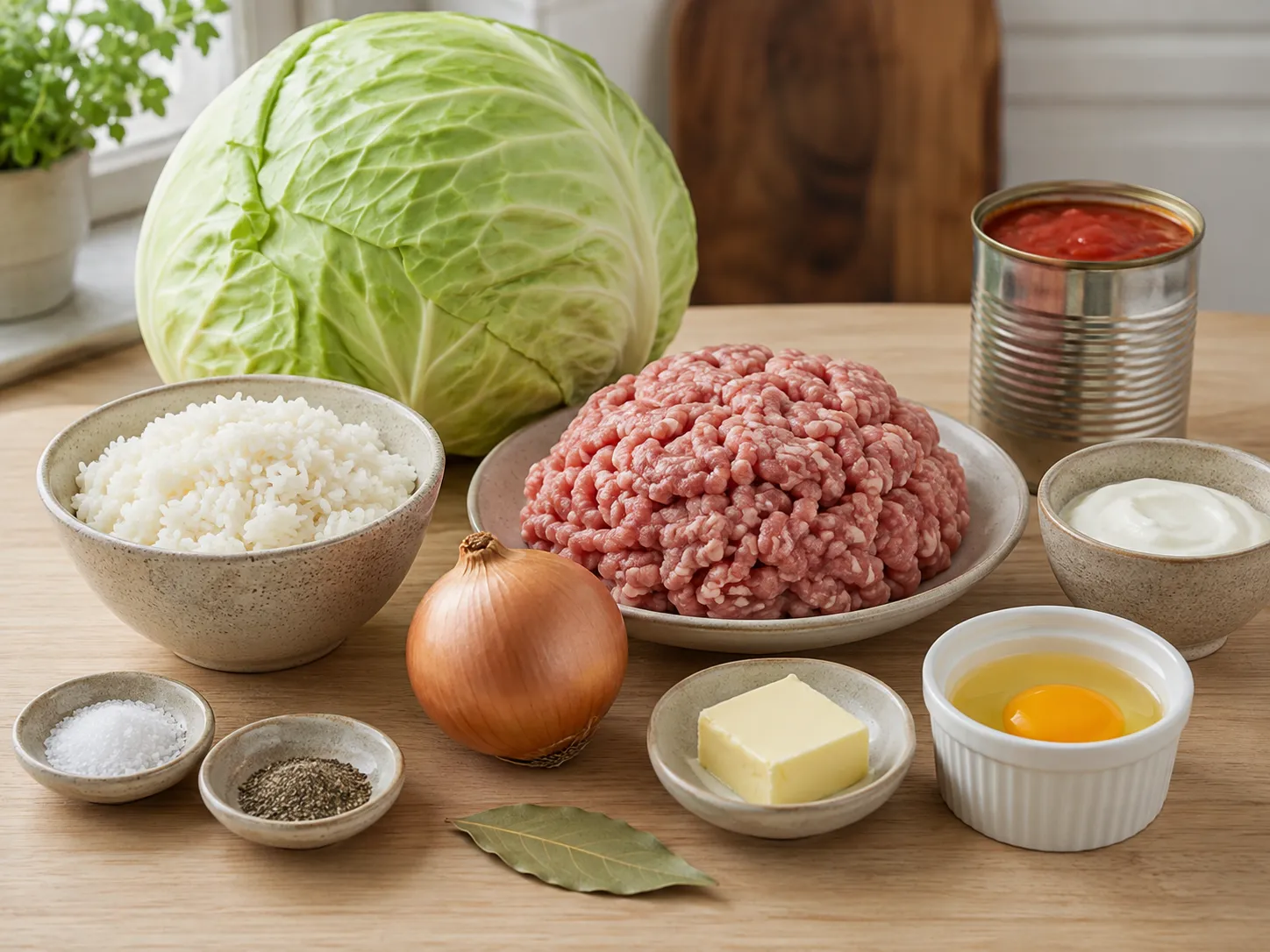
- Green cabbage. The wrapper. Dense, large heads give you more pliable leaves with fewer tears.
- Ground pork. The heart of the filling. Fatty enough to stay juicy after 90 minutes of simmering, where lean meat would turn dry.
- Cooked white rice. Lightens the filling and gives it the right texture. Must be fully cooked and cooled before mixing.
- Onion. Sautéed in butter first. Raw onion releases water during cooking and makes the filling loose.
- Egg. Binds the filling so each roll holds together when you cut into it.
- Crushed tomatoes. The base of the sauce. A good canned brand makes a real difference here.
- Sour cream. Stirred in at the end, off the heat. Softens the acidity and gives the sauce a gentle richness.
Wrapping and simmering the rolls
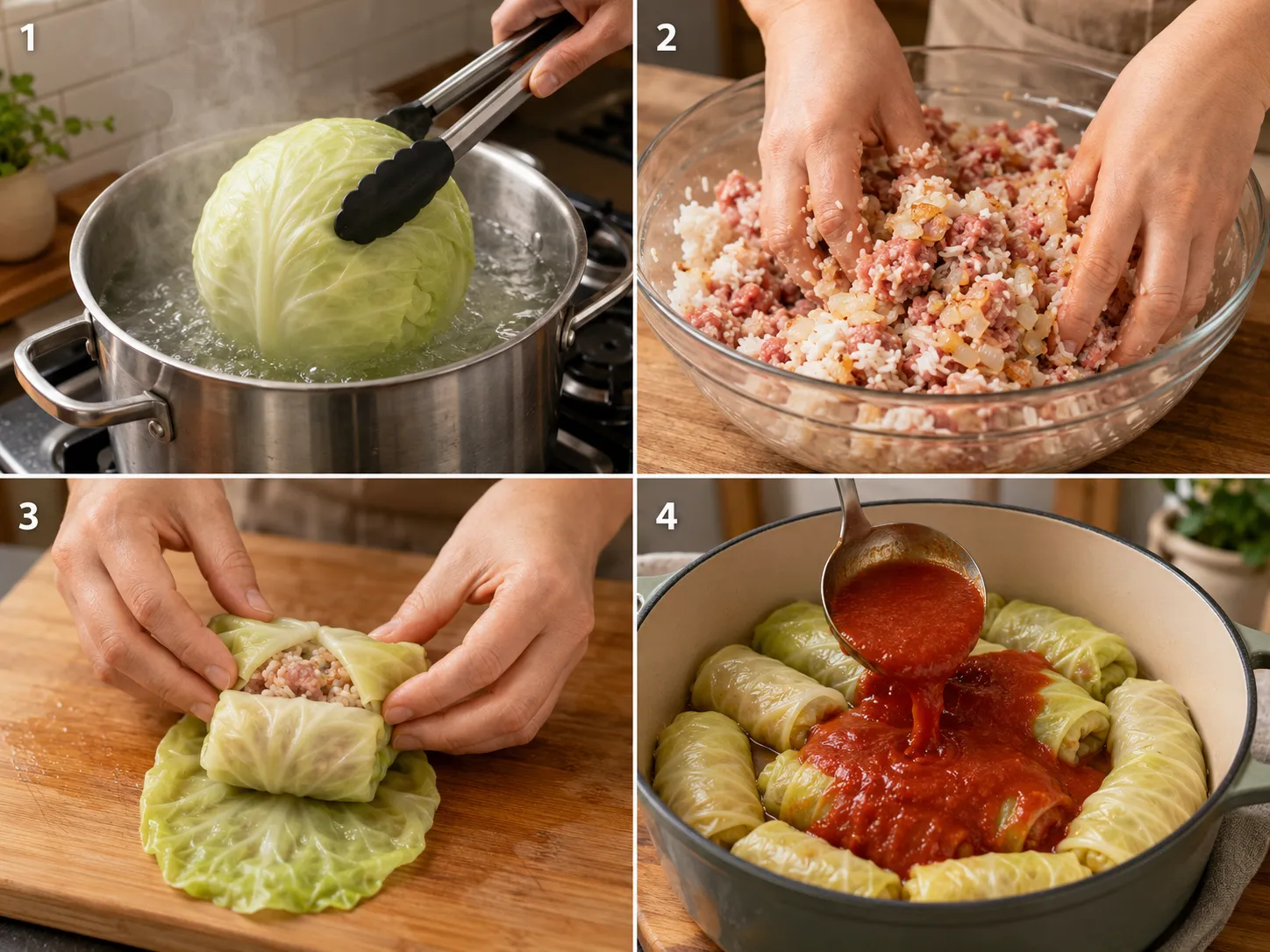
- Blanch the cabbage. Cut out the core with a paring knife. Lower the whole head into a large pot of salted boiling water. Cook for 8-10 minutes until the outer leaves soften. Lift out with tongs and peel away the loosened leaves. Return the head to the pot and repeat until you have 12-14 usable leaves. Cool on a rack, then shave down the thick central rib of each leaf so it lies flat.
- Make the filling. Cook the diced onion in butter over medium heat for 5-6 minutes until soft and translucent. Cool slightly. Combine the ground pork, cooked rice, sautéed onion, egg, salt, and pepper in a large bowl. Mix with your hands just until uniform. Do not overwork it.
- Roll the gołąbki. Lay a cabbage leaf flat with the trimmed side facing you. Spoon 3-4 tablespoons of filling into the center near the base. Fold the left and right sides inward, then roll upward away from you, tucking firmly. Set seam-side down. Repeat with remaining leaves and filling.
- Line the pot. Lay any torn or leftover cabbage leaves across the bottom of a heavy pot or Dutch oven. This layer prevents scorching and adds flavor to the sauce.
- Add the sauce. Arrange the rolls snugly seam-side down. Stir together the crushed tomatoes, broth, sugar (if using), salt, and pepper. Pour over the rolls until nearly covered. Tuck in the bay leaf.
- Simmer low and slow. Cover and cook over low heat for 90 minutes. Check once halfway through. If the liquid has dropped below the tops of the rolls, add a splash of broth. The rolls are done when the cabbage is completely tender and the filling reaches 160°F (71°C).
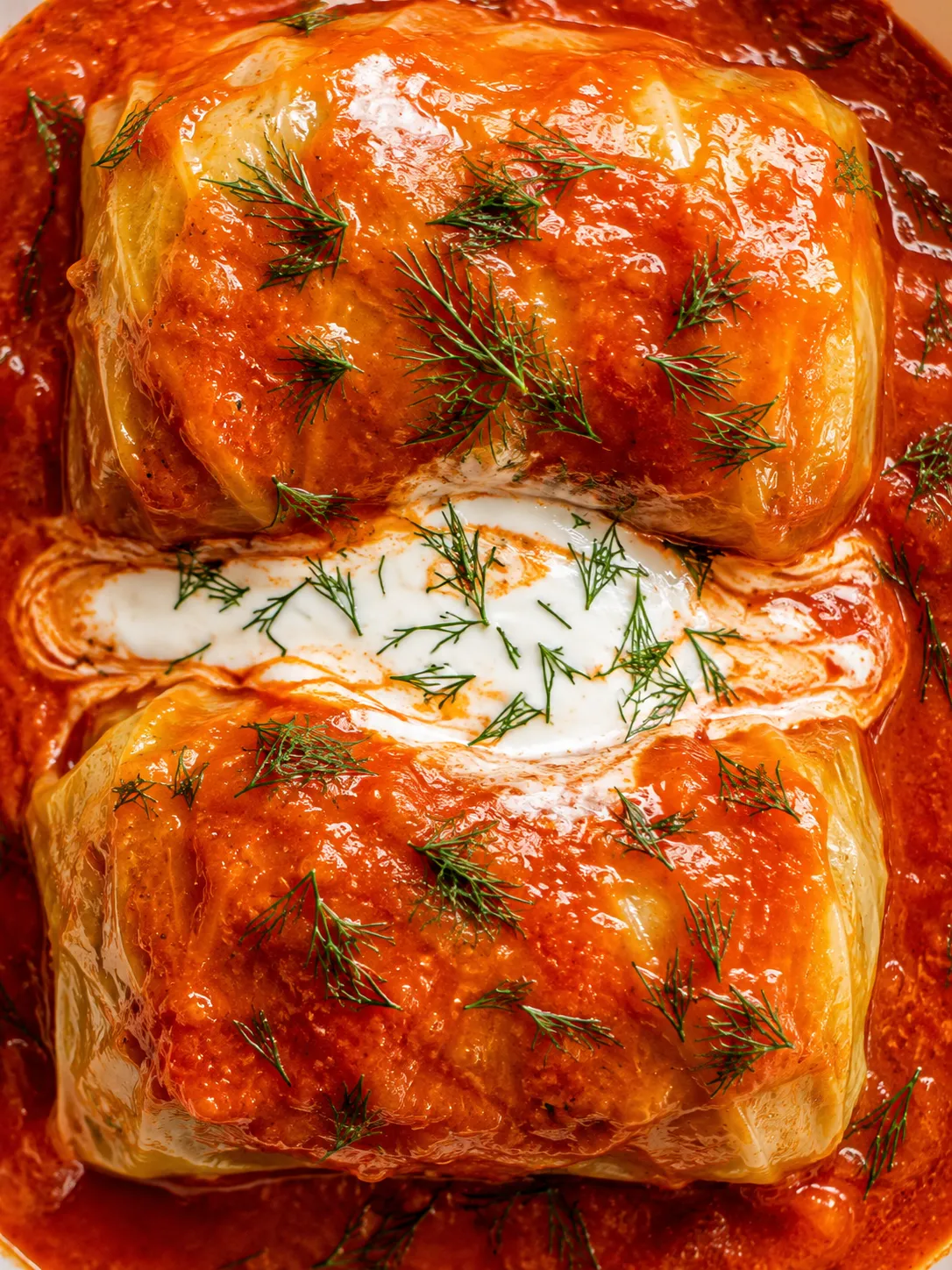
- Finish and serve. Remove the bay leaf. Stir the sour cream into the sauce. Taste and adjust salt and pepper. Serve with sauce spooned generously over the top.
Getting the cabbage leaves right
The blanching method is the one that actually works. Lower the cored head into boiling water and work in batches, peeling leaves as they soften. You get clean, unbroken wrappers every time. Trying to peel raw leaves leads to tears and frustration.
Once the leaves are cool, shave down the thick central rib with a sharp knife so it lies level with the rest of the leaf. A thick rib cracks the leaf when you fold the sides in, which means the roll comes apart in the pot. It takes thirty seconds per leaf. If one still tears, patch it by overlapping a smaller leaf and rolling them together.
Why the filling ratio matters
The ratio here is roughly 3 parts meat to 1 part rice by volume. Too much rice and the rolls taste starchy. Too little and they are dense enough to feel heavy after two. The rice must be fully cooked before mixing. Raw rice absorbs too aggressively during the simmer and leaves the filling dry and uneven.
Mixing time matters too. Combine the filling just until it holds together. If you mix it too long, the proteins tighten and the filling comes out rubbery after 90 minutes of heat. A minute by hand is plenty.
Building the tomato sauce
The sauce starts simple and gets more interesting as the rolls cook in it. After 90 minutes absorbing flavor from the pork and cabbage, it tastes richer than when it started.
The sour cream goes in only at the end with the heat off. Hot acidic liquid can curdle dairy if you rush it. Stir slowly and the sauce comes together smooth and slightly creamy. Ground pork should reach 160°F (71°C), which happens well before 90 minutes in most cases. For thicker rolls or larger batches, check with a thermometer. The USDA FSIS pork safety guide covers the details, and the FoodSafety.gov temperature chart is a handy quick reference.
Make-ahead, storage, and freezing
Gołąbki improve with time. Assemble the uncooked rolls the night before, cover the pot, and refrigerate overnight. The rolls hold their shape better after chilling and the flavors have a head start.
Cooked gołąbki keep in the fridge for up to four days with their sauce. Reheat covered in a 300°F (150°C) oven for 20-25 minutes, or gently on the stovetop with a splash of broth. Freeze in their sauce for up to three months. Thaw overnight in the refrigerator before reheating.
What to serve alongside them
Boiled potatoes with butter and parsley are the classic Polish pairing. The plain, starchy flavor soaks up the tomato sauce without competing with the rolls. Mashed potatoes work just as well.
A simple cucumber salad (thinly sliced cucumber in white vinegar with fresh dill and salt) cuts the richness of the pork and sauce. Rye bread is good for mopping the plate. Nothing elaborate is needed. The gołąbki are the whole meal.
FAQs
- Can I use a mix of ground pork and beef?
Yes, and many Polish cooks prefer it. A half-and-half mix gives the filling a slightly deeper flavor while the pork keeps it moist. Use a combined total of 1.5 lbs (680 g) and proceed exactly as the recipe states.
- Does the rice need to be cooked before mixing it into the filling?
Yes, always. Raw rice will not cook through properly inside the rolls and absorbs too much moisture from the filling, leaving the texture gummy. Use fully cooked, cooled rice. About half a cup cooked comes from roughly 3 tablespoons dry.
- How do I stop the rolls from falling apart in the pot?
Set them seam-side down and pack them snugly so the rolls support each other. If a few still want to open, a toothpick through each one holds it closed. Pull the toothpicks before serving. The filling also firms up as it cooks.
- Can I make gołąbki ahead of time?
Yes. Assemble the uncooked rolls the night before, cover the pot, and refrigerate until ready to cook. Or cook the whole batch and refrigerate for up to four days. The flavor deepens noticeably after a day in the sauce.
- Can I freeze gołąbki?
They freeze very well. Cool completely, then freeze in an airtight container with plenty of sauce. They keep for up to three months. Thaw overnight in the refrigerator, then reheat covered in a 300°F (150°C) oven for 25 minutes or gently on the stovetop with a splash of broth.
- What can I substitute for sour cream in the sauce?
Plain full-fat Greek yogurt stirred in at the end works just as well. Heavy cream is a richer option. For a dairy-free version, skip the sour cream entirely or stir a tablespoon of tomato paste into the broth at the start for added depth.
- Why are my cabbage leaves tearing when I try to roll them?
The most common cause is under-blanching. The leaves need a full 8-10 minutes in boiling water to become pliable. The thick central rib also needs to be shaved flat with a knife or it cracks the leaf as you fold the sides in. If a leaf still tears, patch it with a smaller leaf underneath and roll them together.
