 Pin it
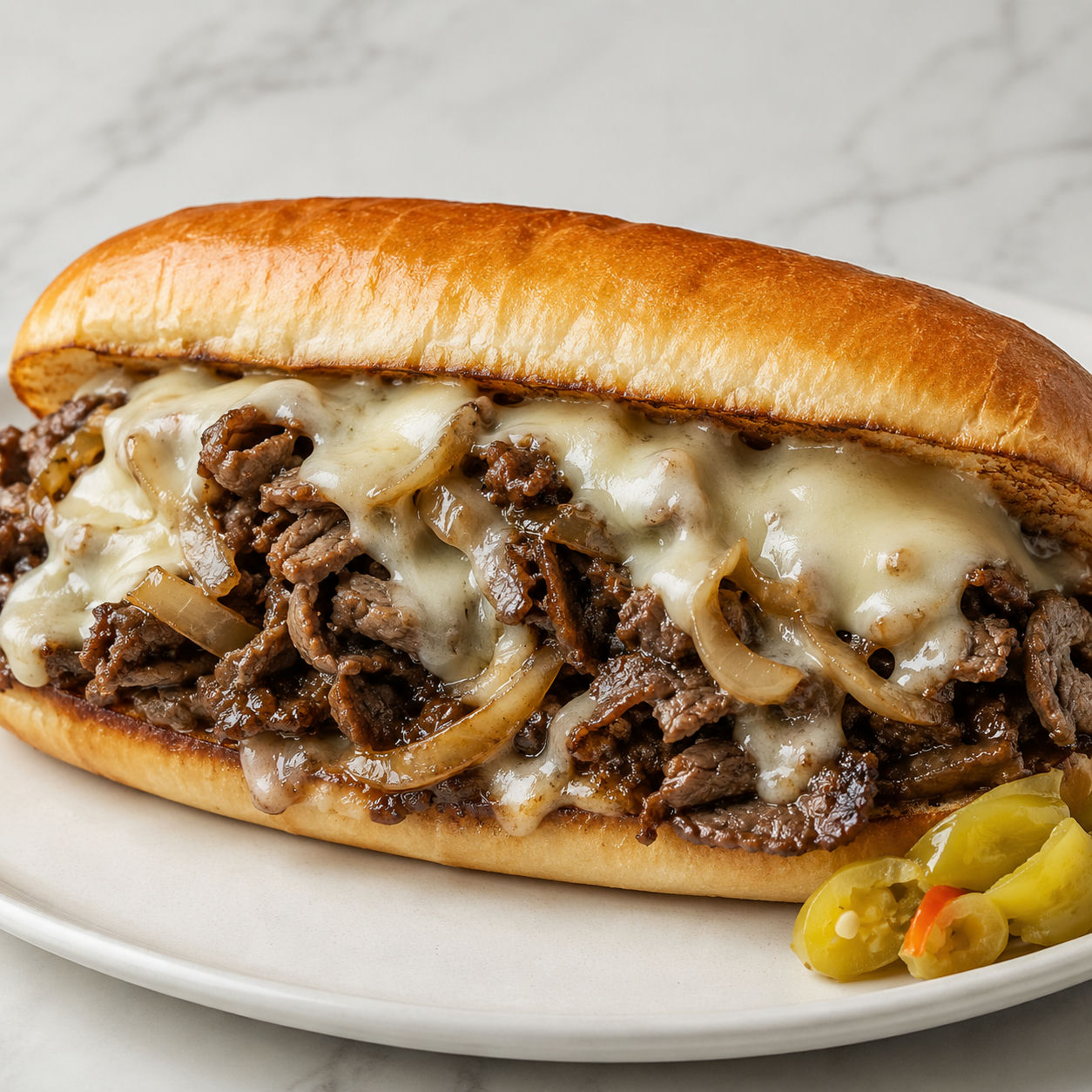
Philly Cheesesteak is one of those sandwiches that needs more care than fuss. The ingredient list is short, so the details matter. Thin beef has to hit a hot pan, the onions need time to soften, and the cheese should melt into the meat before it ever reaches the roll.
I make this version with ribeye, provolone, and onions because it gives you the steak-shop feel without hunting down special equipment. Bell peppers are optional. They are not the old-school choice, but they taste good if your family likes them.
The Cheesesteak Lineup
Use the best roll and beef you can get. A soft hoagie roll with a little chew holds the juices without tearing, and thin ribeye cooks before it has time to dry out.
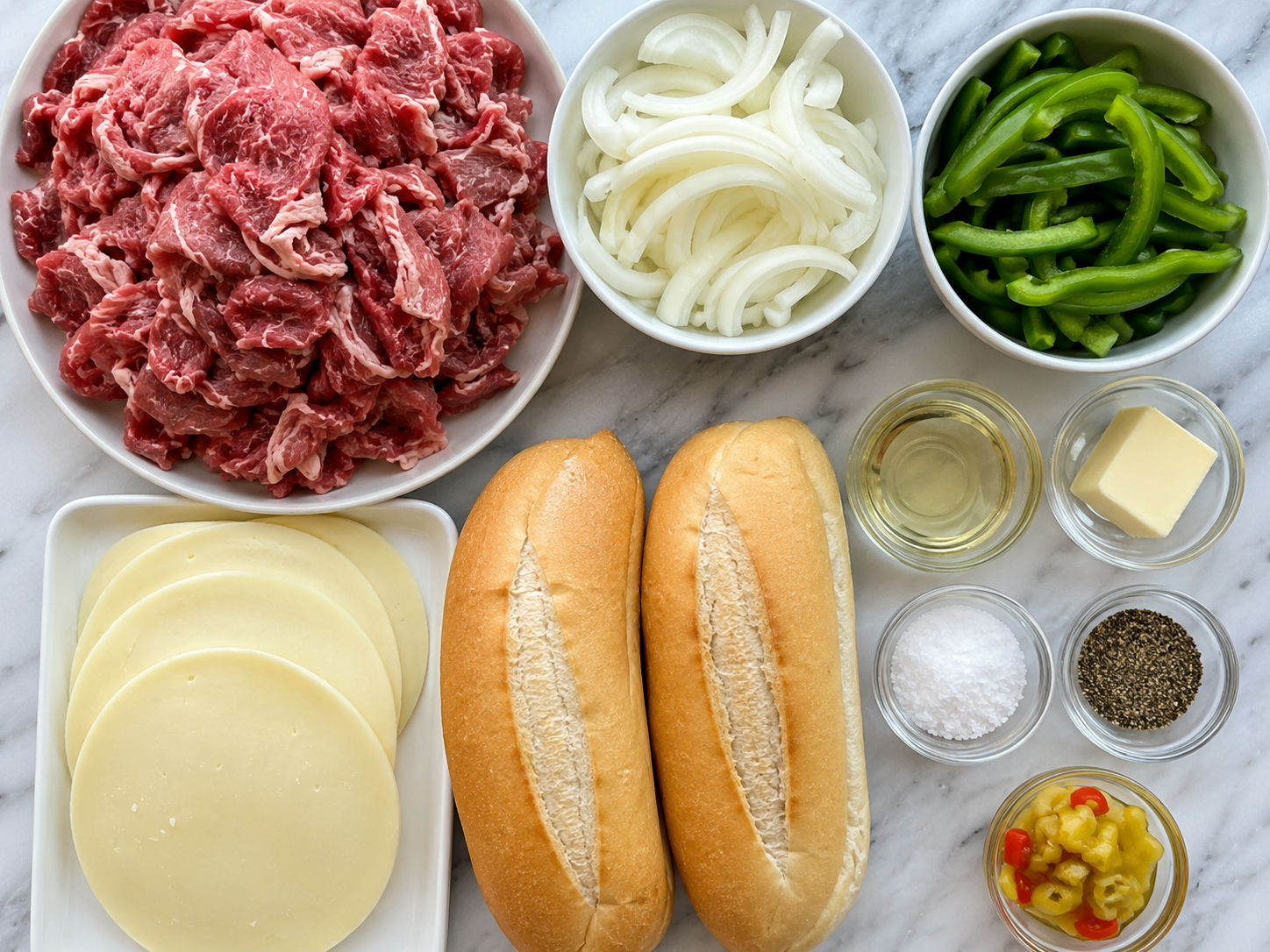
- Ribeye steak. Gives the sandwich rich flavor and stays tender when sliced thin.
- Yellow onions. Cook down sweet and soft, then fold into the steak.
- Provolone cheese. Melts smoothly over the beef and adds a mild sharpness.
- Hoagie rolls. Hold the filling while staying soft inside and lightly crisp outside.
- Neutral oil. Helps the steak brown fast in the skillet.
- Bell pepper. Optional, but it adds color and gentle sweetness.
- Salt and black pepper. Simple seasoning that lets the beef lead.
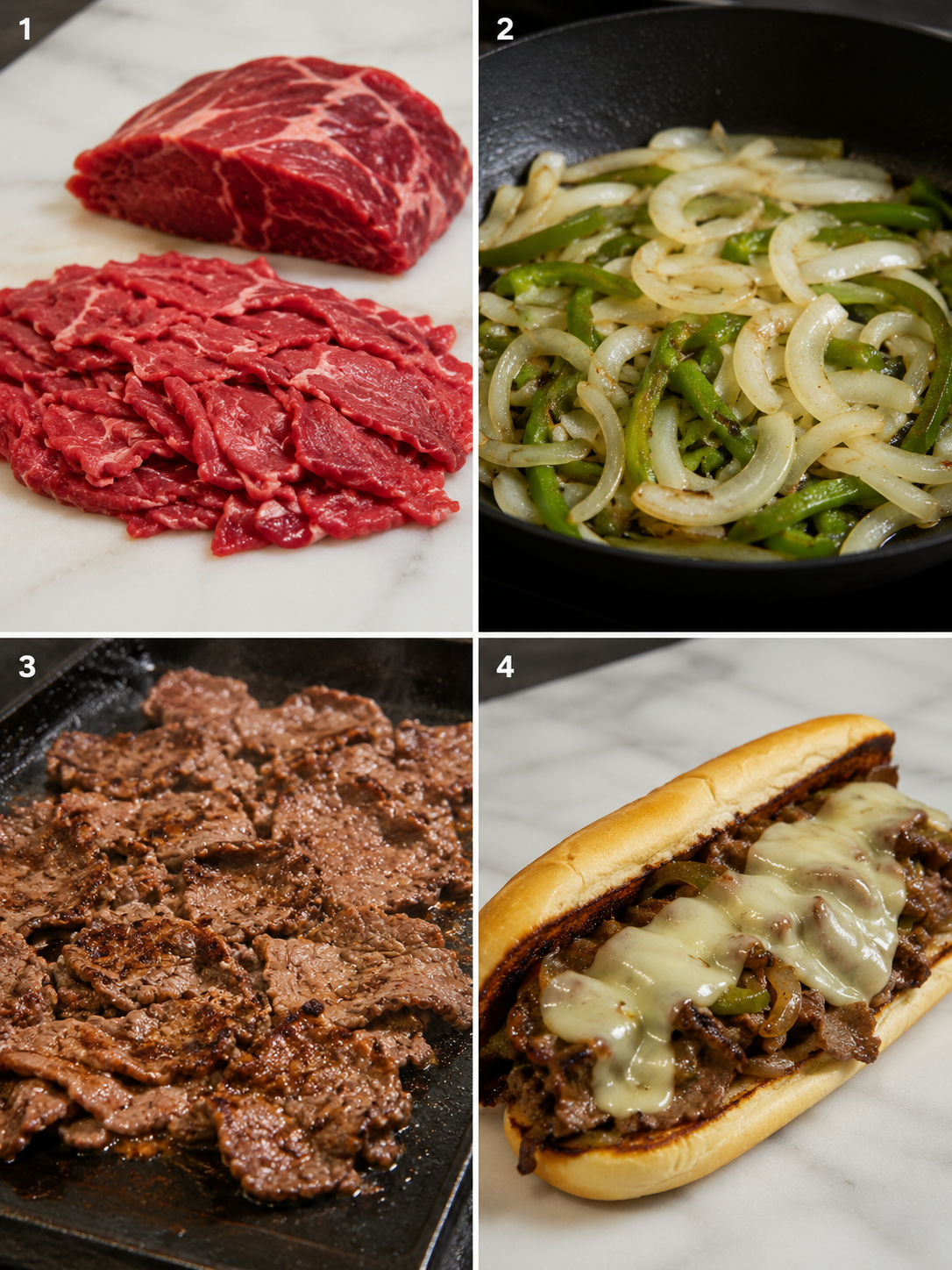
Build A Better Philly Cheesesteak
- Firm and slice the steak. Chill the ribeye until firm, then slice it across the grain as thinly as possible.
- Cook the onions. Soften the onions in a hot skillet until lightly golden and sweet. Add peppers here if using.
- Sear the beef. Cook the steak quickly in the same skillet, spreading it out so it browns instead of steaming.
- Mix and melt. Fold the onions into the beef, divide into piles, and lay cheese over each pile until melted.
- Fill the rolls. Toast the rolls lightly, scoop in the cheesy steak, and serve right away.
Thin Beef Changes Everything
The biggest difference between a good cheesesteak and a chewy one is the cut. Thin ribbons of beef cook in minutes and stay loose enough to mingle with the onions and cheese. Freezing the ribeye briefly makes slicing much easier. If you have a butcher counter, ask for shaved ribeye and save yourself the knife work.
A home skillet is smaller than a sandwich-shop griddle, so cook the beef in two batches if needed. Crowding the pan traps steam. That makes the steak gray and wet instead of browned at the edges. For another fast steak dinner with the same skillet energy, try quick recipes from the site or the Quick Philly Cheesesteak Sandwich.
Cheese Choices That Melt
Provolone gives this Philly Cheesesteak a clean, creamy finish. American cheese melts even softer, and cheese whiz gives you that drippy steak-shop style. The useful move is the same for all three. Put the cheese over the hot beef while it is still in the pan, then cover it for a minute so the heat does the work.
For a looser sandwich, chop the beef a little with your spatula as it cooks. For a meatier bite, leave the slices longer. Allrecipes notes that ribeye, onions, and provolone, American, or cheese whiz are the classic building blocks. If you want a party version with the same flavors, the Philly Cheesesteak Stuffed Cheesy Breadsticks are easy to share.
About Peppers And Extras
Peppers are a personal call. I like a small amount when cooking for kids because they make the filling sweeter and brighter. If you want a cleaner Philly-style sandwich, skip them and stay with onions. Mushrooms work too, but cook them before the beef so their moisture has time to leave the pan.
Keep sauces light. A little mayo on the roll is fine, but too much covers up the steak. Hot cherry peppers, pickled jalapenos, or a spoonful of pepper relish are better choices when you want heat. If you like saucier cheesesteak flavors, the Philly Cheese Steak Dip leans into that creamy side.
Food Safety And Doneness
Thin steak cooks fast, often in 3-4 minutes once it hits the skillet. Because ribeye is a whole-muscle cut, many cooks serve it when it is browned and still juicy. If you want to follow the most conservative guidance, the USDA beef safety guide lists 145°F with a rest for steaks and roasts.
Use your eyes too. The beef should no longer look raw, the edges should have some brown bits, and the cheese should slump over the meat. Pull it from the heat before it looks dry.
Serving And Leftover Plans
Serve Philly Cheesesteak with chips, fries, pickles, or a simple salad. If you are feeding a crowd, keep the cooked steak and onions warm in a covered skillet over low heat, then melt cheese onto small piles as each person is ready to eat.
Leftovers keep for up to three days in the fridge. Store the filling without the roll. Reheat it in a skillet and add fresh cheese if the first round disappeared into the meat. For a softer comfort-food spin, the Philly Cheesesteak Sloppy Joes use the same onion and cheese flavors with ground beef.
Summary
Serve these cheesesteaks hot from the skillet with chips, pickles, or a crisp salad. For the best texture, slice the beef thin and do not crowd the pan.
FAQs
- What cut of beef is best for Philly Cheesesteak?
Ribeye is the best choice because it has enough fat to stay juicy in a hot skillet. Top sirloin can work if you slice it very thin and avoid overcooking it.
- Can I use cheese whiz instead of provolone?
Yes. Provolone, American cheese, and cheese whiz are all common cheesesteak choices. If you use cheese whiz, warm it separately and spoon it over the meat right before serving.
- How do I slice steak thin enough?
Put the steak in the freezer for 25-35 minutes until it firms up but is not frozen solid. Use a sharp knife and cut across the grain into thin ribbons.
- Are bell peppers traditional in a Philly Cheesesteak?
Classic Philadelphia versions usually keep it to steak, onions, cheese, and a roll. Bell peppers are a common home-cook addition, so use them if you like their sweetness.
- Can I make Philly Cheesesteak ahead of time?
You can slice the beef and onions a day ahead. Cook the filling right before serving if possible, because the sandwich is best when the steak is hot and the roll has not softened.
- How should I reheat leftovers?
Warm the steak and onions in a skillet over medium-low heat with a tiny splash of water. Toast a fresh roll and add the reheated filling so the bread does not turn soggy.
