 Pin it
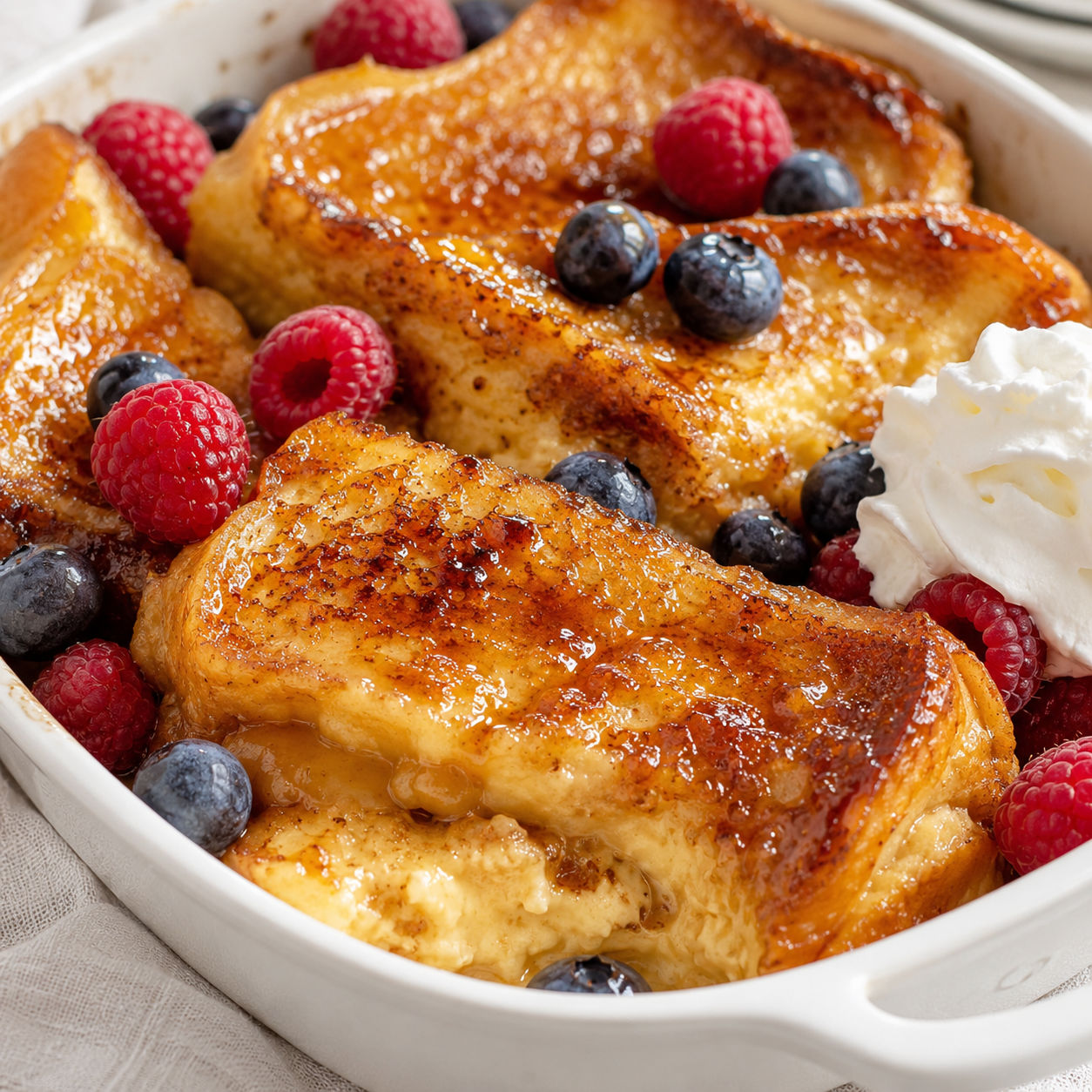
Overnight Crème Brûlée French Toast is the breakfast I make when I want brunch to feel special without waking up early to fuss over a skillet. The bread soaks while you sleep, then bakes into a custardy center with a buttery caramel edge.
The best bites are soft in the middle and a little sticky underneath. A final sprinkle of coarse sugar gives the top that crème brûlée crunch without needing a restaurant kitchen.
Crème Brûlée French Toast Ingredients
Use bread with enough body to hold a custard soak. Soft brioche is lush, challah is sturdy and tender, and day-old French bread gives a firmer bite.
The caramel layer is simple, but let the sugar melt fully so it bakes up glossy instead of gritty.
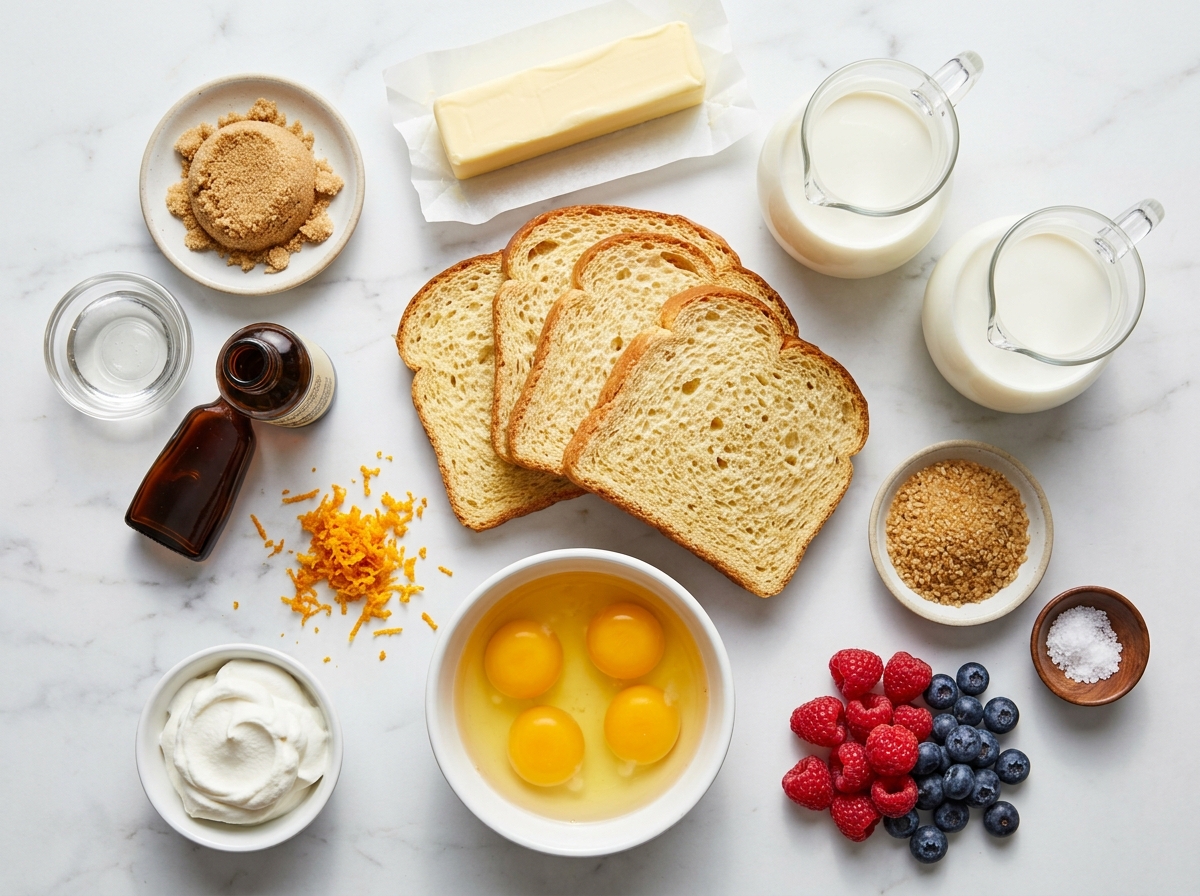
- Brioche or challah. Thick slices soak up the custard while keeping enough structure for clean servings.
- Butter. Melts into the brown sugar and gives the bottom layer its rich caramel flavor.
- Light brown sugar. Creates the crème brûlée style sweetness and a sticky baked edge.
- Corn syrup. Helps keep the caramel smooth and glossy as it bakes.
- Eggs. Set the custard so the French toast slices puff rather than collapse.
- Half-and-half. Makes the soak creamy without becoming as heavy as straight cream.
- Vanilla. Gives the custard its warm bakery smell.
- Orange zest or liqueur. Optional, but it cuts through the richness in a quiet way.
- Turbinado sugar. Adds a crisp brûléed finish on top.
Bake The Custard Toast
- Make the caramel. Melt the butter, brown sugar, and corn syrup together until the sugar looks smooth and shiny, then spread it in the baking dish.
- Arrange the bread. Lay thick slices over the caramel in a snug single layer, trimming a few pieces if needed so the pan is covered.
- Whisk the custard. Beat the eggs, half-and-half, milk, vanilla, salt, and orange zest until no streaks of egg remain.
- Soak overnight. Pour the custard evenly over the bread, cover the pan, and refrigerate for at least 8 hours.
- Bake until puffed. Let the pan sit out briefly while the oven heats, then bake uncovered until the top is golden and the center is set.
- Brûlée the top. Sprinkle with turbinado sugar and broil or torch just until the sugar melts in spots and turns crisp.
Why The Overnight Soak Works
The long soak is not just for convenience. Thick bread needs time for the custard to travel all the way through, especially if you are using challah or a firm bakery loaf. A quick dip leaves dry pockets near the center. Overnight soaking gives you slices that bake up creamy all the way down.
Keep the bread in one layer when you can. If pieces overlap too much, the covered spots stay pale and the custard settles unevenly. For smaller, softer pieces, try the same make-ahead idea in overnight baked banana toast. For a richer pastry-style version, baked chocolate croissant French toast uses the same cozy brunch logic.
Keep The Caramel Silky
The brown sugar layer should look smooth before it goes into the pan. If you still see grains after a minute or two, keep stirring over medium heat. Do not boil it hard. A gentle melt gives the caramel a soft, buttery pull instead of a sandy texture.
Once baked, the caramel sits mostly underneath the bread, so each slice has a glossy bottom. Let the pan rest for 5 minutes before serving. That short pause keeps the custard from tearing and gives the caramel time to thicken slightly. If you love the cinnamon side of French toast, serve this next to cinnamon roll French toast roll-ups for a bigger brunch table.
Bread Choices That Hold Up
Brioche gives the richest result because it already has butter and eggs in the dough. Challah is a little lighter and easier to slice cleanly. A country loaf works if the crust is not too tough. If the crust feels leathery before baking, trim the hardest edges so the custard can soak in.
Fresh bread can work, but slightly stale bread is easier to handle. Leave slices on a rack for an hour if your loaf is very soft. Do not use sandwich bread unless it is thick-cut. Thin slices turn custardy too quickly and can break apart when you lift them from the pan.
Serving A Sweet Brunch
This bake is sweet enough on its own, so skip the syrup at first. Fresh berries, sliced oranges, or barely sweetened whipped cream make the plate feel balanced. A spoonful of tangy Greek yogurt also works if you want something less dessert-like.
For a fuller spread, pair it with a salty egg dish or crisp bacon. If you want another stuffed option for the same table, bacon stuffed French toast leans savory and keeps the meal from feeling like all sugar. Coffee is the obvious drink, but cold milk is honestly great with the caramel edges.
Store And Reheat Gently
Cover leftovers and refrigerate them within 2 hours. The caramel will firm up as it chills, which is normal. Reheat slices on a parchment-lined sheet at 325°F until warm in the center. A microwave works in a rush, but the bread softens and the brûléed sugar loses its snap.
For food-safety timing on cooked leftovers, the USDA food safety section is the source I use. If you are planning ahead for a holiday, bake it the same morning you serve it. Assemble the night before and let the oven do the work.
Summary
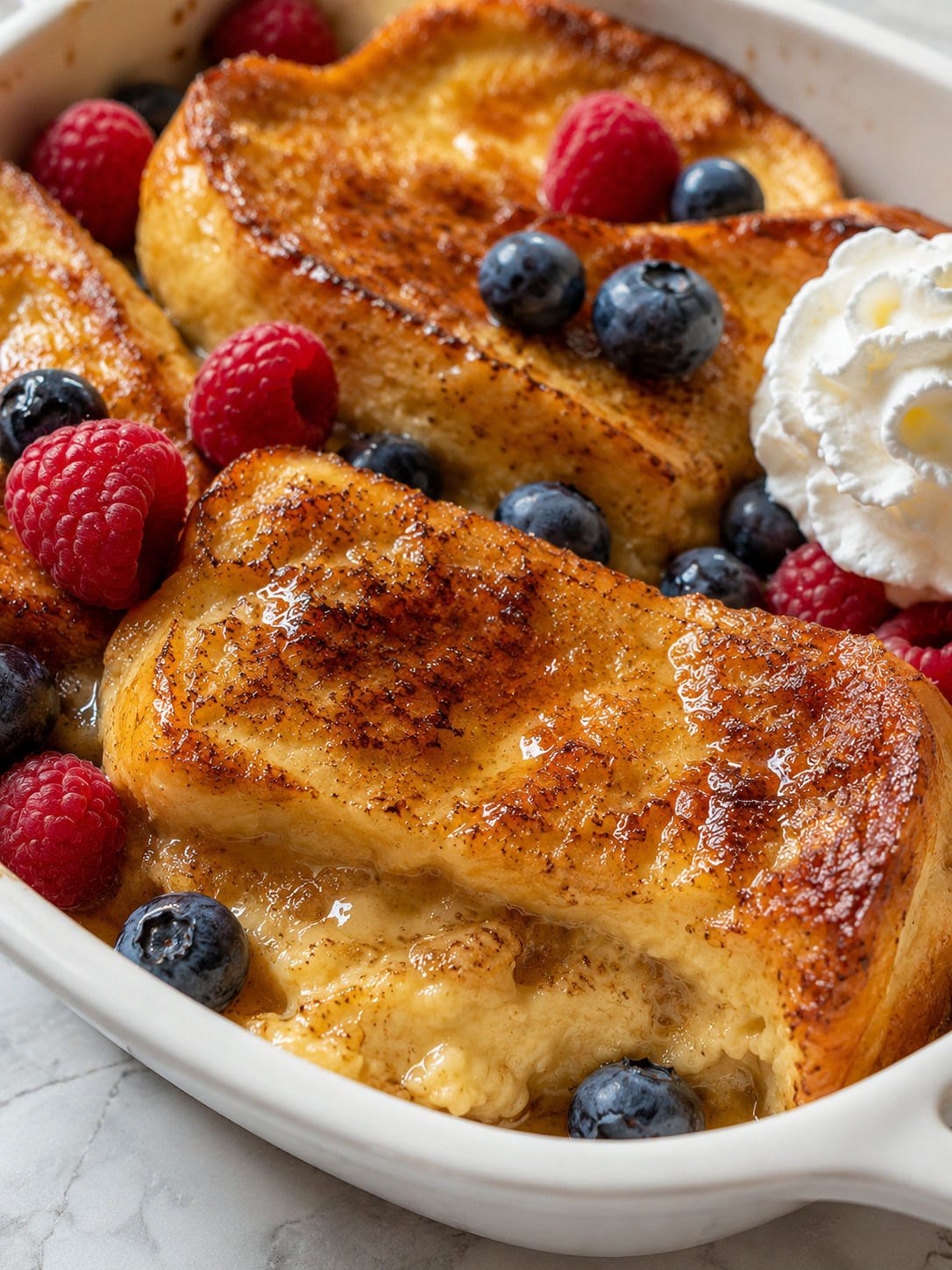
Serve this warm from the oven with berries or lightly whipped cream. It is rich enough that you do not need syrup.

FAQs
- Can I make Overnight Crème Brûlée French Toast without corn syrup?
Yes. Use maple syrup or honey in the caramel layer. Corn syrup helps the brown sugar stay smooth, but the recipe still works without it if you stir the caramel until glossy.
- What bread is best for this recipe?
Brioche and challah give the softest custard texture. French bread works too, especially if it is a day old and sliced thick enough to hold its shape.
- How long should the French toast soak?
Eight hours is ideal. The bread needs time to drink in the custard, but it should not sit much longer than overnight or the center can become too soft.
- Can I assemble it the same morning?
You can, but let it soak at room temperature for at least 45 minutes before baking. The texture will be a little less custardy than the overnight version.
- How do I store leftovers?
Cool leftovers, cover tightly, and refrigerate for up to 3 days. Reheat slices in a 325°F oven until warm so the edges stay better than they do in the microwave.
- Can I freeze it?
Freeze baked slices after they cool. Wrap them well, freeze for up to 2 months, and reheat from thawed in a low oven until warmed through.
