 Pin it
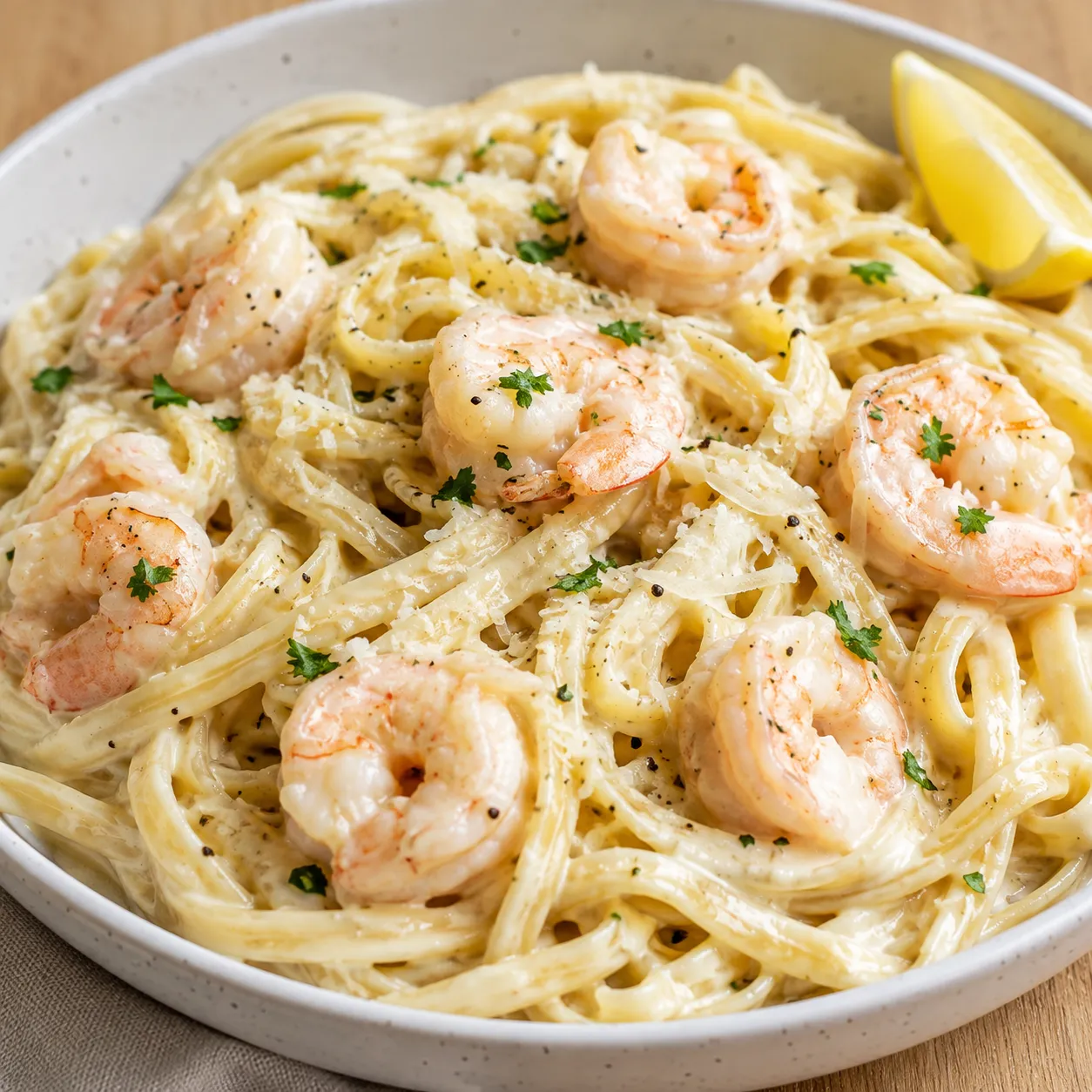
One-Pan Shrimp Fettuccine Alfredo is the kind of dinner that feels generous without making a mess of the kitchen. The shrimp cook quickly in butter, then the dry pasta simmers right in the same pan so it can soak up garlic, broth, and milk.
The sauce turns creamy at the end with heavy cream and freshly grated parmesan. Let it sit for a few minutes before serving and it thickens around the noodles instead of pooling at the bottom of the skillet.
The Creamy Skillet Lineup
Choose large raw shrimp and a block of parmesan you can grate yourself. This short ingredient list depends on good dairy, fresh garlic, and pasta that cooks evenly in a wide pan.
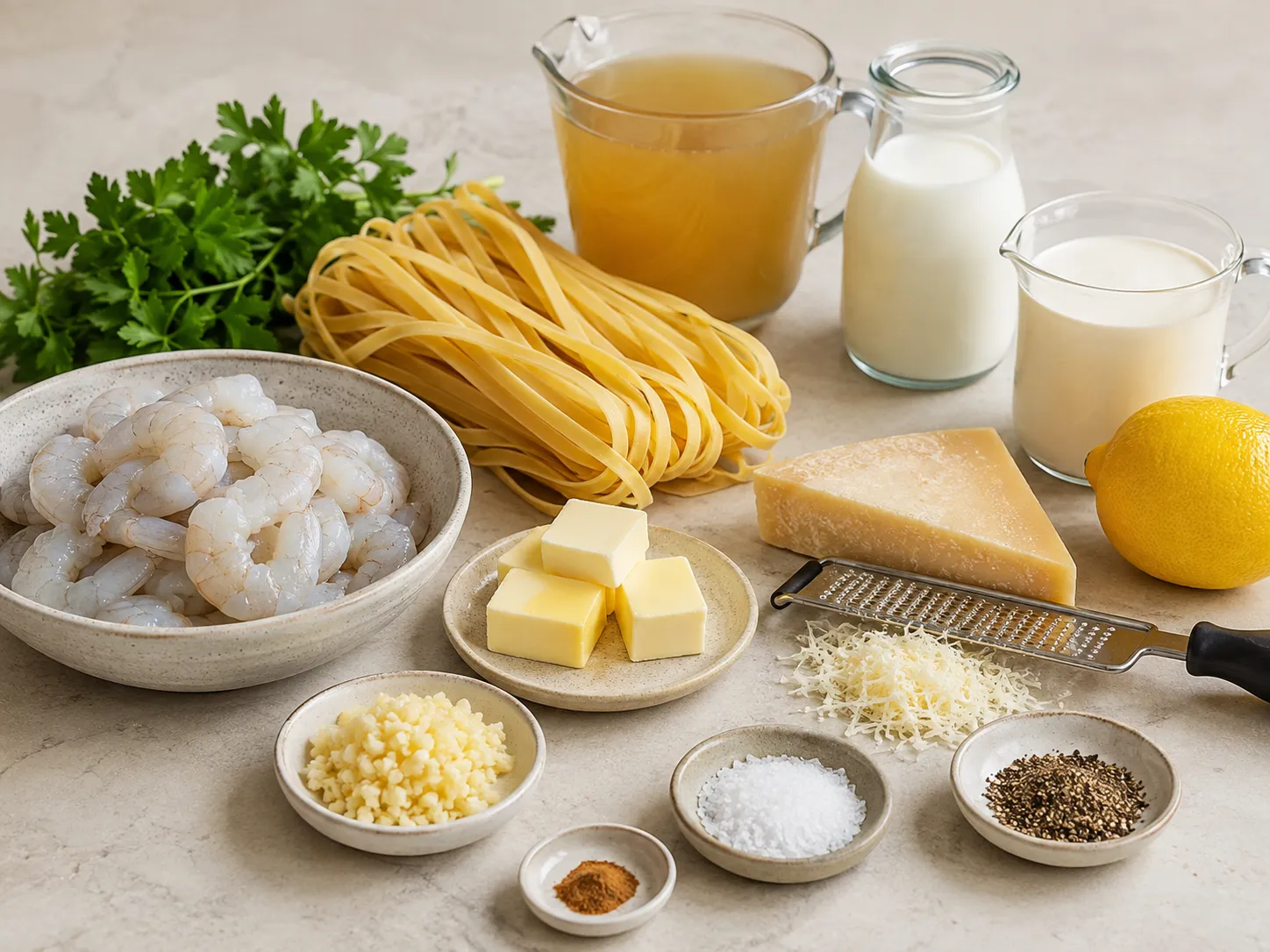
- Large shrimp. They add sweet, briny flavor and cook fast enough for a weeknight skillet dinner.
- Fettuccine. The wide noodles hold the creamy sauce and soften right in the pan.
- Unsalted butter. It gives the shrimp a rich first sear and carries the garlic through the sauce.
- Fresh garlic. A quick 30 seconds in butter gives the sauce its warm savory base.
- Chicken broth. It seasons the pasta from the inside as the noodles simmer.
- Whole milk. It gives enough cooking liquid for the pasta while keeping the sauce smooth.
- Heavy cream. Added near the end, it gives the Alfredo its soft, velvety body.
- Parmesan cheese. Freshly grated cheese melts into the sauce and brings the salty, nutty finish.
- Nutmeg. A tiny pinch rounds out the cream without making the dish taste sweet.
- Parsley and lemon. They cut through the richness and wake up the shrimp.
Cook It In One Pan
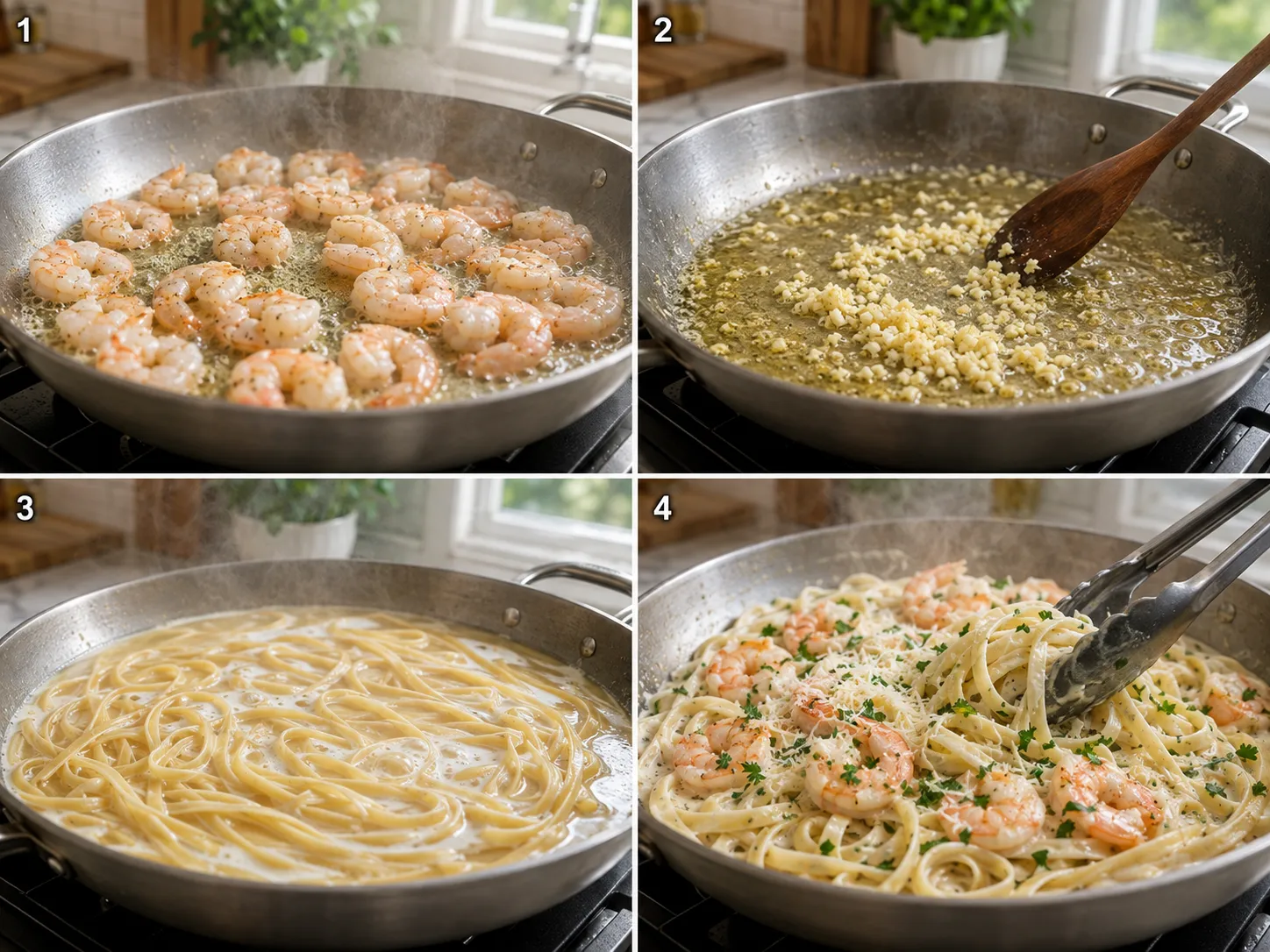
- Sear the shrimp. Melt butter in a wide deep skillet, add seasoned shrimp in one layer, and cook just until pink and opaque. Move them to a plate so they stay tender.
- Wake up the garlic. Add the remaining butter and garlic to the same pan. Stir for about 30 seconds until fragrant, keeping the heat moderate so the garlic does not brown.
- Simmer the pasta. Add broth, milk, salt, pepper, nutmeg, and dry fettuccine. Bring it to a steady simmer, cover, and cook until the noodles are al dente, stirring to loosen the strands.
- Finish the sauce. Stir in the cream, then add parmesan a handful at a time until smooth. Return the shrimp and let the skillet stand off the heat for 5 minutes.
- Serve right away. Toss with parsley and a little lemon juice. Add more black pepper at the table while the sauce is still glossy.
Why The Pasta Simmer Matters
Cooking the fettuccine in the skillet is not just about fewer dishes. The noodles release starch directly into the broth and milk, which helps the sauce cling later. Keep the simmer gentle and stir once after the pasta softens. Early on, dry fettuccine likes to stick together at the edges.
A wide deep skillet is important here. If the pan is too narrow, the noodles stack up and cook unevenly. If the liquid seems low before the pasta is tender, add hot water a few tablespoons at a time. Do not flood the pan. A loose sauce can turn watery fast.
Keep Shrimp Tender
Shrimp go from juicy to tight quickly, so treat the first step like a fast sear instead of a long saute. Pat them dry, season them, and give them enough space in the skillet. They are ready to come out when they turn pink, opaque, and curl into a loose C shape.
The FDA notes that shrimp are done when the flesh is firm, pearly, and opaque, and most seafood should reach 145 degrees F. You can read their seafood safety guidance for safe handling and doneness cues. For this recipe, the shrimp return to the hot sauce at the end, so pulling them early keeps them from turning rubbery.
Smooth Sauce Without Grit
Fresh parmesan melts better than the shaker-style kind. Grate it finely, then add it in small handfuls after the cream goes in. If the skillet is blazing hot, turn the heat off for a minute before adding cheese. High heat can make the sauce separate or feel grainy.
The 5-minute rest is part of the recipe. At first the sauce may look a little loose. Once the pan sits off the heat, the starch from the pasta and the cheese settle into a thicker coating. Toss once more before serving and the noodles should look glossy, not dry.
Swaps Worth Making
You can use seafood broth for a stronger shrimp flavor, or vegetable broth if that is what you keep on hand. Half-and-half can replace the heavy cream in a pinch, but the sauce will be lighter and a little less stable. I would not use skim milk here because the pasta needs enough fat in the pan to keep the sauce soft.
For a little heat, add a pinch of crushed red pepper with the garlic. For greens, stir in a few handfuls of baby spinach after the pasta is tender and before the cream goes in. It wilts quickly and does not change the cooking time much.
Storage And Gentle Reheating
Alfredo is at its best right after cooking, but leftovers can still be good. Pack them in a shallow airtight container and refrigerate once the pasta cools. FoodSafety.gov lists cooked leftovers in the refrigerator at about 3 to 4 days in its cold food storage chart.
Reheat in a skillet over low heat with a splash of milk or cream. Stir slowly until the noodles loosen and the sauce looks creamy again. Avoid a hard boil. Shrimp toughen quickly the second time around, and a cream sauce can break if it is rushed.
What To Serve With It
This skillet is rich, so I like something crisp on the side. A lemony green salad, steamed broccoli, or roasted asparagus makes the plate feel balanced without adding much work. Garlic bread is welcome too, especially if you want to stretch the pasta to feed one more person.
If you are serving this for company, cook the shrimp and pasta just before eating. You can grate the cheese, mince the garlic, chop parsley, and measure the liquids earlier in the day. Once the pan is hot, the whole recipe moves quickly.
Summary
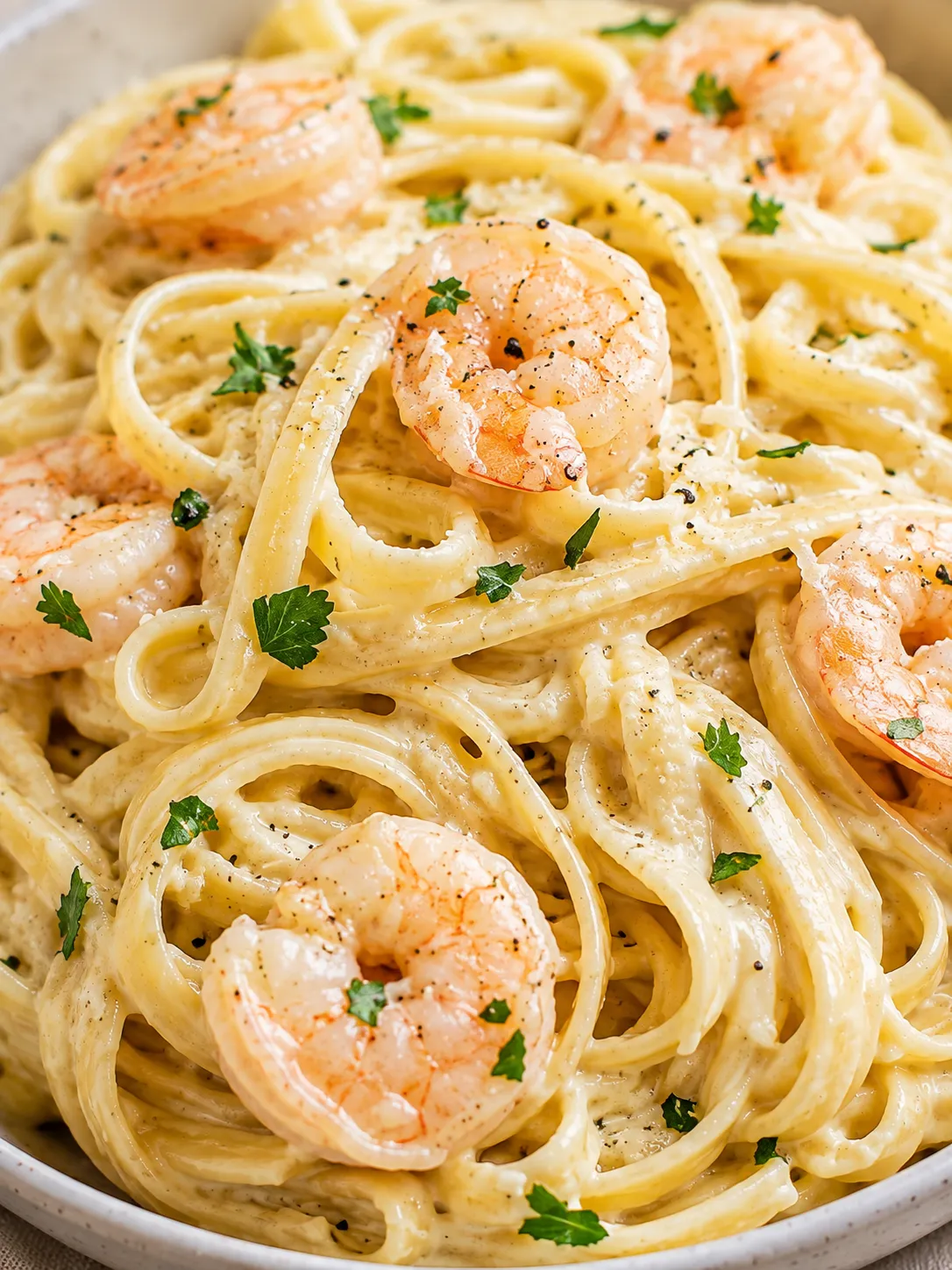
This creamy shrimp pasta is best served right away, with parsley, black pepper, and a small squeeze of lemon to brighten the sauce.
FAQs
- Can I use frozen shrimp for One-Pan Shrimp Fettuccine Alfredo?
Yes. Thaw frozen shrimp in the refrigerator overnight or in a sealed bag under cold running water. Pat them very dry before they hit the pan so they sear instead of steaming.
- Can I use a different pasta shape?
Long pasta works best because it cooks evenly in the shallow liquid. Linguine is the closest swap for fettuccine. Short pasta can work, but the liquid and timing may need adjusting because it absorbs differently.
- Why is my Alfredo sauce thin?
The most common reason is too much liquid or pasta that was not measured. Remove the pan from the heat and let it stand for 5 minutes. The sauce tightens as the starches settle and the cheese cools slightly.
- How do I keep the parmesan from clumping?
Use parmesan grated from a block and stir it in off the heat or over very low heat. Pre-grated cheese often has anti-caking starches that can make creamy sauces feel gritty.
- How long do leftovers keep?
Store leftovers in an airtight container in the refrigerator for up to 3 days. Reheat gently in a skillet with a splash of milk or cream. High heat can make the shrimp tough and the sauce oily.
- Can I make this without chicken broth?
Yes. Vegetable broth or seafood broth both work. If you use low-sodium broth, taste the sauce at the end because the pasta absorbs seasoning as it cooks.
