 Pin it
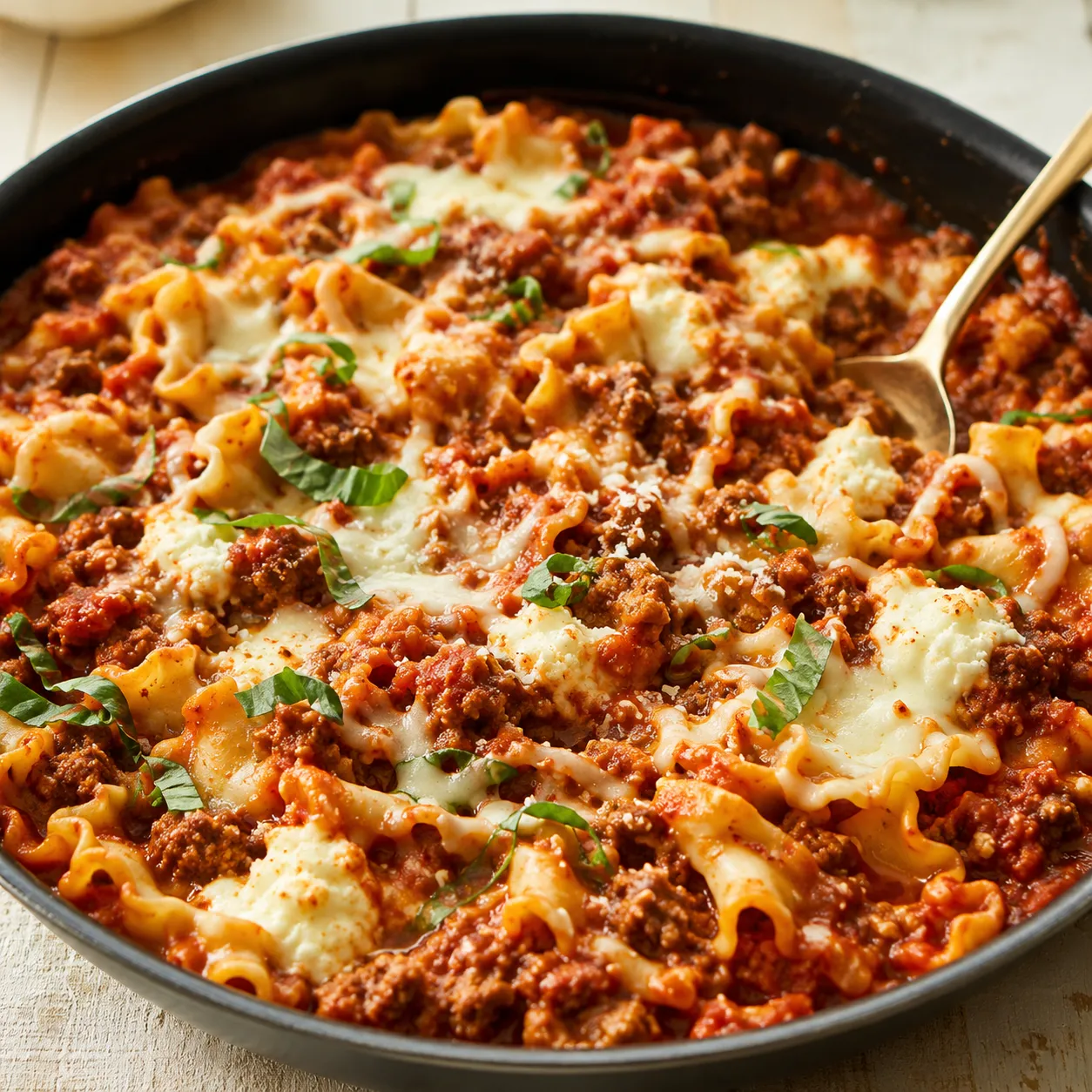
Lazy Lasagna Skillet Meal is what I make when everyone wants lasagna and I do not want a sink full of pans. The noodles cook right in the tomato sauce, so they soak up flavor instead of tasting plain underneath the cheese.
It is hearty, family-friendly, and ready in about 35 minutes. You still get browned beef, soft pasta edges, creamy ricotta pockets, and stretchy mozzarella, just without the careful layering.
What Makes It Taste Like Lasagna
This skillet depends on a few familiar lasagna ingredients doing their jobs well. Use a marinara you like enough to eat by the spoonful, since it becomes the main sauce for the noodles.
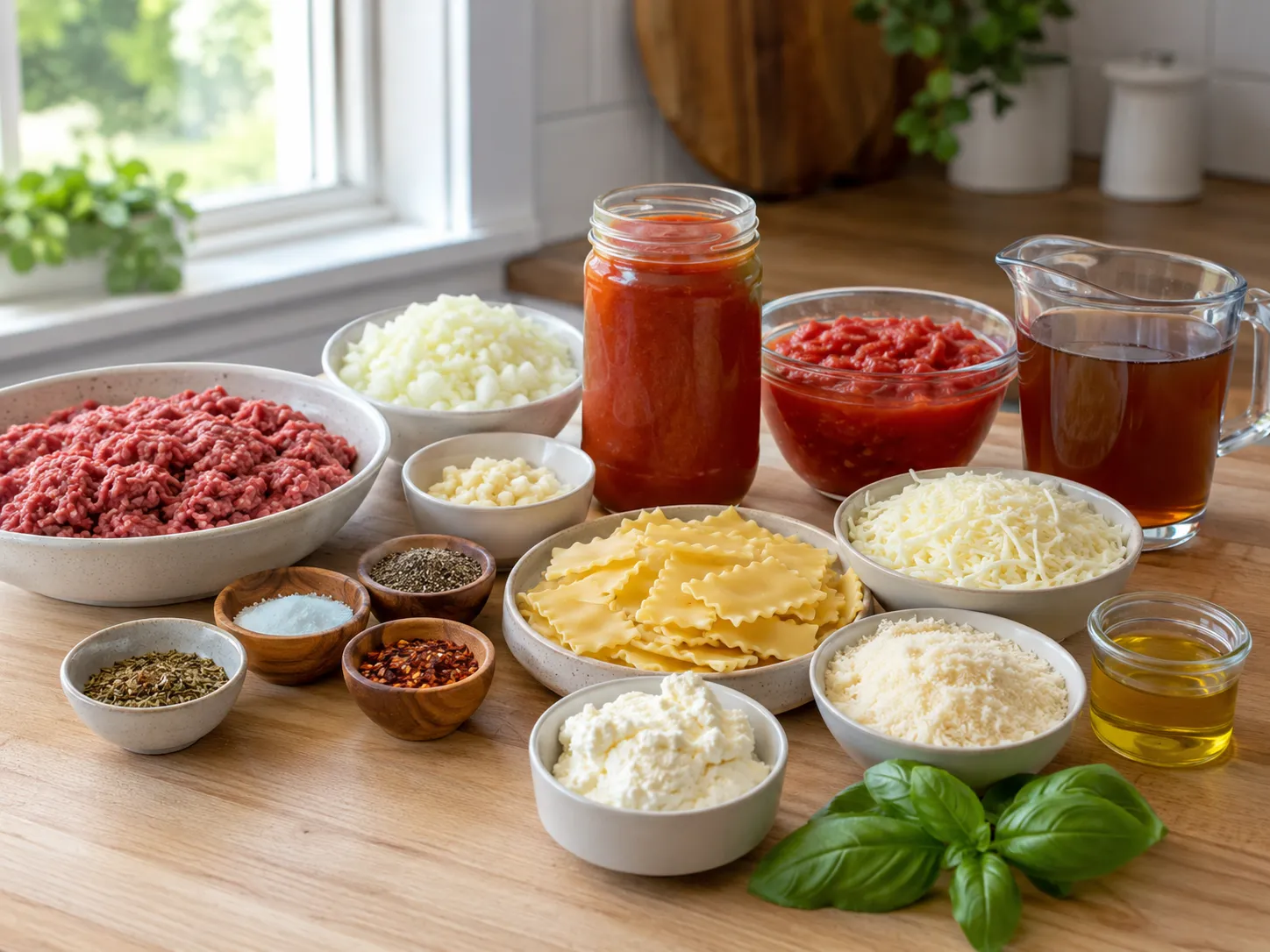
- Ground beef. Gives the sauce a rich, savory base and makes the skillet filling enough for dinner.
- Onion and garlic. Build sweetness and depth before the tomatoes go in.
- Marinara sauce. Seasons the noodles as they simmer and keeps the whole pan saucy.
- Crushed tomatoes. Add body and a fresher tomato taste than sauce alone.
- Beef broth. Gives the pasta enough liquid to cook without watering down the flavor.
- Lasagna noodles. Broken pieces soften right in the skillet and give the dish those classic ruffled edges.
- Ricotta cheese. Melts into creamy pockets instead of disappearing into the sauce.
- Mozzarella and parmesan. Bring the stretchy top and salty finish you expect from lasagna.
- Basil. Freshens the finished skillet and cuts through the richness.
How The Skillet Comes Together
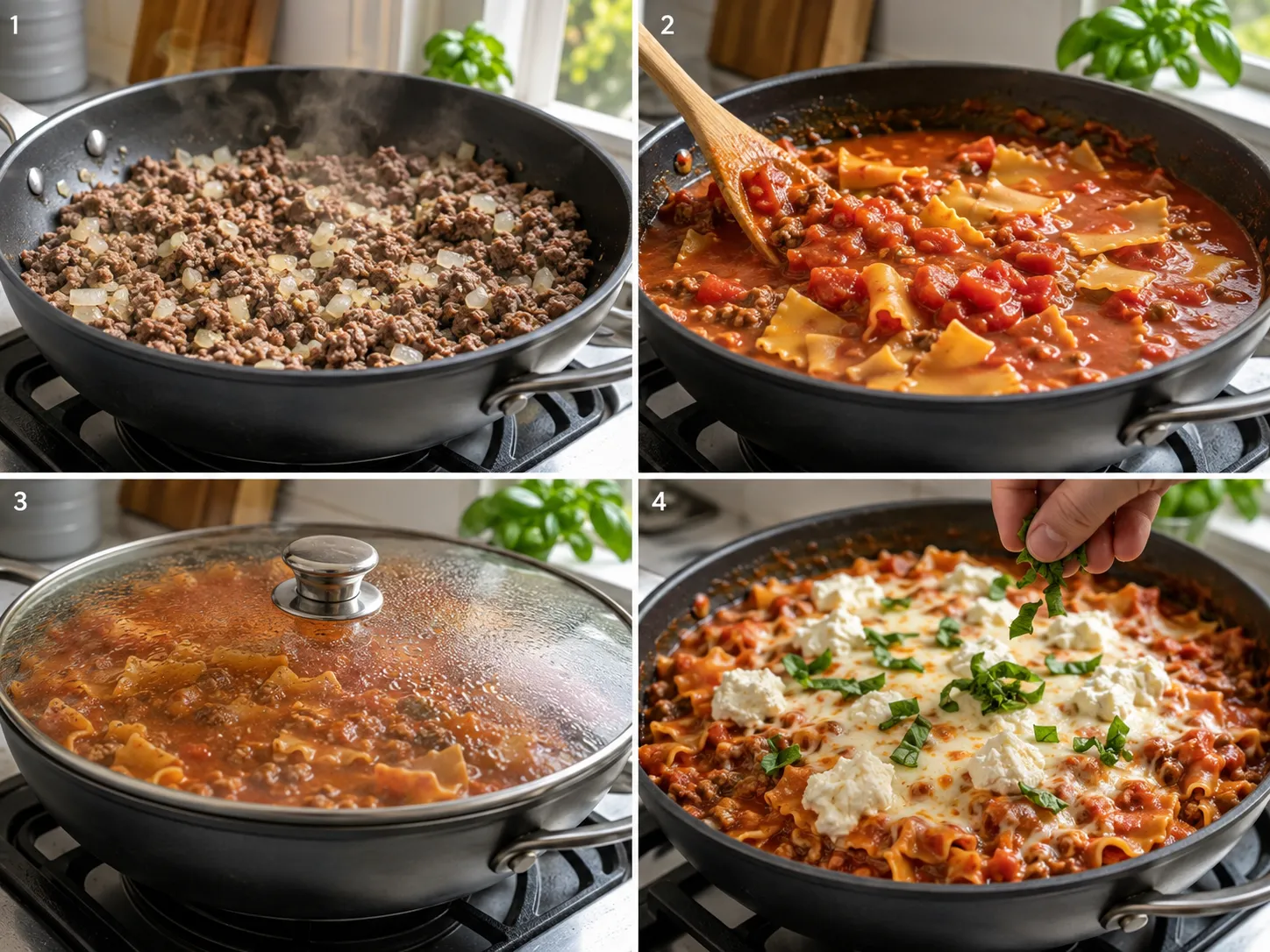
- Brown the beef. Cook the beef with onion in a deep skillet until the meat is no longer pink and the onion softens. Let it get a few browned bits for better flavor.
- Add the aromatics. Stir in garlic, Italian seasoning, salt, pepper, and a pinch of red pepper flakes. Cook just until fragrant so the garlic does not turn bitter.
- Simmer the noodles. Add marinara, crushed tomatoes, broth, and broken lasagna noodles. Cover and simmer gently, stirring often, until the noodles are tender.
- Make it creamy. Spoon ricotta over the top and nudge some of it into the sauce. Leave a few visible pockets for that lasagna feel.
- Melt the cheese. Sprinkle mozzarella and parmesan over the skillet, cover for a few minutes, and let the cheese melt. Rest briefly before serving with basil.
Lazy Lasagna Skillet Fix
The biggest difference between baked lasagna and this Lazy Lasagna Skillet Meal is the liquid. The noodles need enough sauce to cook, but not so much that the pan tastes soupy. Start with the amount listed, then check halfway through. The noodles should be mostly tucked under the sauce.
Keep the simmer gentle. A hard boil makes the bottom stick and leaves the top pieces firm. If your skillet is wide, the sauce may reduce faster. Add broth a few tablespoons at a time until the noodles are tender.
The Cheese Timing Matters
Add the ricotta after the noodles are tender, not at the start. Ricotta can turn grainy if it simmers too long, and you lose those creamy bites that make the skillet taste like lasagna. Spoon it across the surface and gently press some into the sauce.
Mozzarella goes on last. Cover the pan for 2-3 minutes so it melts from trapped steam. If your skillet is broiler-safe, you can slide it under the broiler for a browned top, but watch closely. Cheese can go from golden to scorched fast.
Browning Beef Safely
Break the beef into small pieces and let it cook until no pink remains before the liquid goes in. Ground beef should reach 160°F according to the FoodSafety.gov temperature chart. A quick thermometer check is useful if the meat is in larger chunks.
If the pan has more than a tablespoon or two of fat after browning, spoon off the extra. A little fat carries flavor. Too much makes the tomato sauce feel heavy.
Smart Swaps For Busy Nights
Use ground turkey if you want a lighter skillet, but add an extra teaspoon of olive oil because turkey is leaner. Italian sausage gives a deeper flavor and works especially well with a plain marinara. For a meatless version, skip the beef and stir in sauteed mushrooms, zucchini, or chopped spinach once the noodles are tender.
No lasagna noodles in the pantry? Mafalda, broken pappardelle, or short pasta can work. The cook time will change, so follow the pasta texture rather than the clock. Stop when the noodles are tender with a little bite.
Resting, Serving, And Leftovers
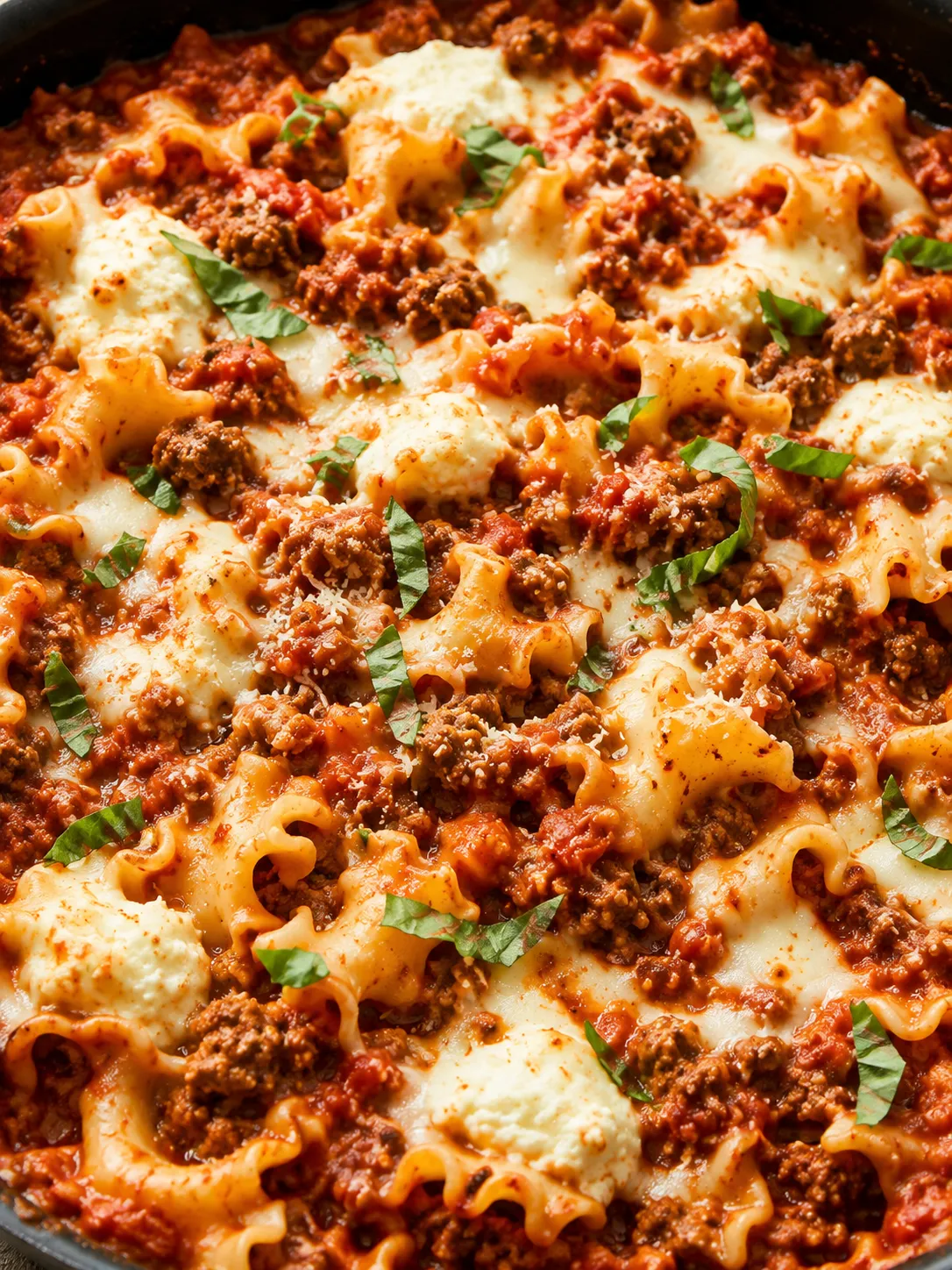
Let the skillet rest for 5 minutes before scooping. The sauce thickens, the cheese settles, and each serving holds together better. I like it with basil, extra parmesan, and a crisp green salad to balance the richness.
For storage, follow the USDA food safety basics and refrigerate perishable leftovers promptly. Reheat in a covered skillet with a splash of water or marinara. The microwave works too, but use medium power and stir once so the pasta heats evenly.
Summary
Serve this skillet straight from the pan with basil, parmesan, and a simple salad. It is saucy at first and thickens as it rests.
FAQs
- Can I use regular lasagna noodles in a skillet?
Yes. Break regular lasagna noodles into rough 1 1/2 to 2 inch pieces so they fit in the pan and stir them often while they simmer. The pieces do not need to be even, but they should stay mostly covered by sauce and broth.
- Can I make Lazy Lasagna Skillet Meal with sausage instead of beef?
Italian sausage works very well. Use mild or hot sausage, remove it from the casing if needed, and brown it the same way as the ground beef. If the sausage releases a lot of fat, spoon some off before adding the tomatoes.
- What can I use instead of ricotta?
Cottage cheese is the easiest swap. For a smoother texture, pulse it briefly in a blender or food processor before adding it to the skillet. You can also skip the ricotta and use extra mozzarella for a stretchier finish.
- How do I keep the noodles from sticking?
Stir well after adding the broken noodles, then stir every few minutes as they cook. Keep the heat at a gentle simmer. If the pan looks dry before the noodles are tender, add another splash of broth or water.
- Can I make this ahead?
You can brown the beef mixture and chop the onion and garlic ahead. For the best texture, cook the noodles shortly before serving. Fully cooked leftovers still reheat nicely, but the pasta will keep absorbing sauce as it sits.
- How should I store leftovers?
Cool leftovers and refrigerate them in a shallow airtight container within 2 hours. They keep for 3-4 days. Reheat gently with a splash of water or marinara until hot all the way through.
