 Pin it
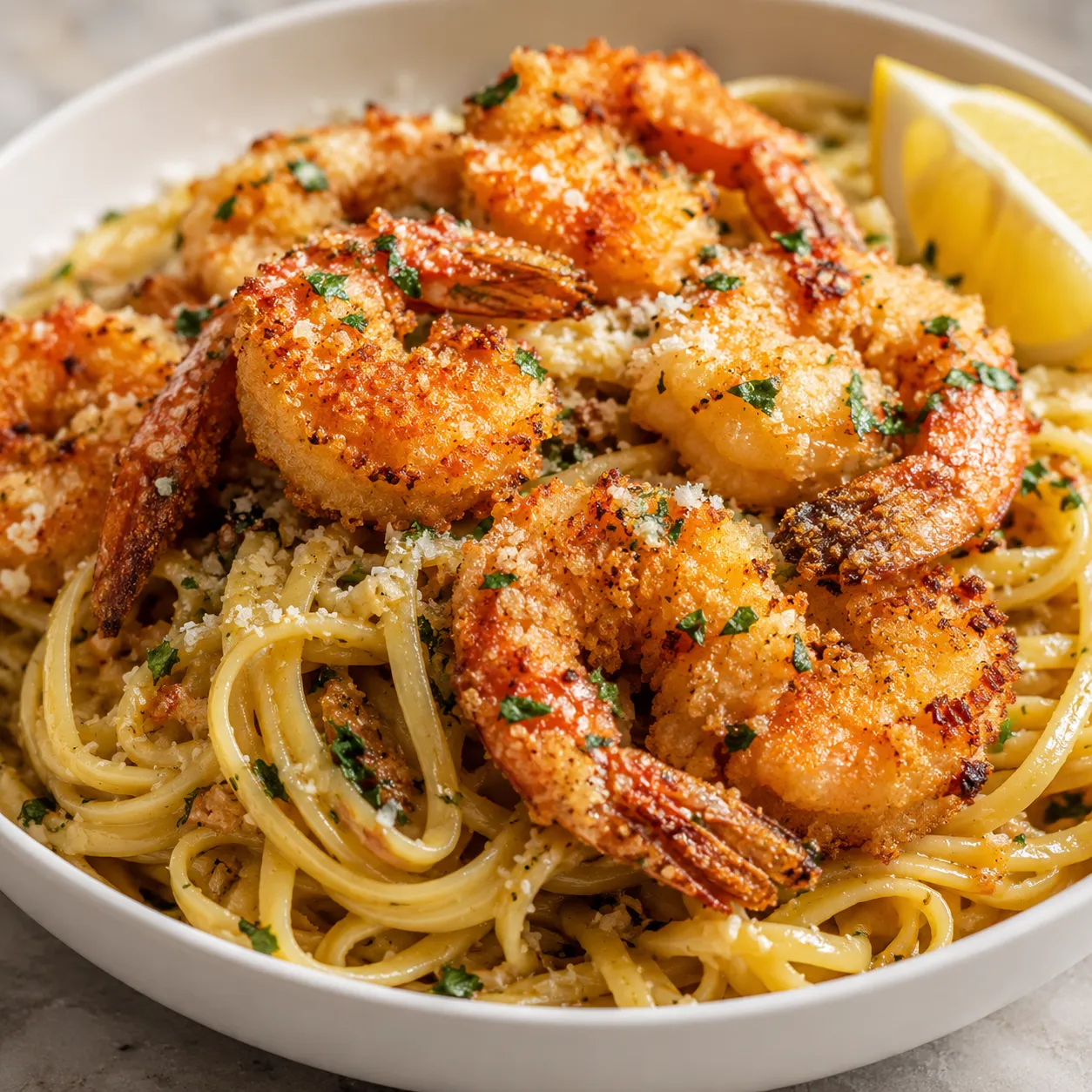
Crispy shrimp scampi linguine gives you the best parts of two dinners in one bowl. You get bright garlic butter pasta underneath and a pile of golden shrimp on top that stays crisp instead of sinking into the sauce.
The trick is simple. Bread and pan-fry the shrimp first, build the scampi sauce in the same skillet, then toss the linguine until it looks shiny and loose. Add the shrimp at the very end so every bite has crunch, lemon, garlic, and tender pasta.
The Scampi Lineup
Choose large shrimp so the coating has time to turn golden before the shrimp overcook. Fresh garlic, lemon, butter, and parsley give the sauce its clean scampi flavor, while panko brings the crunch.
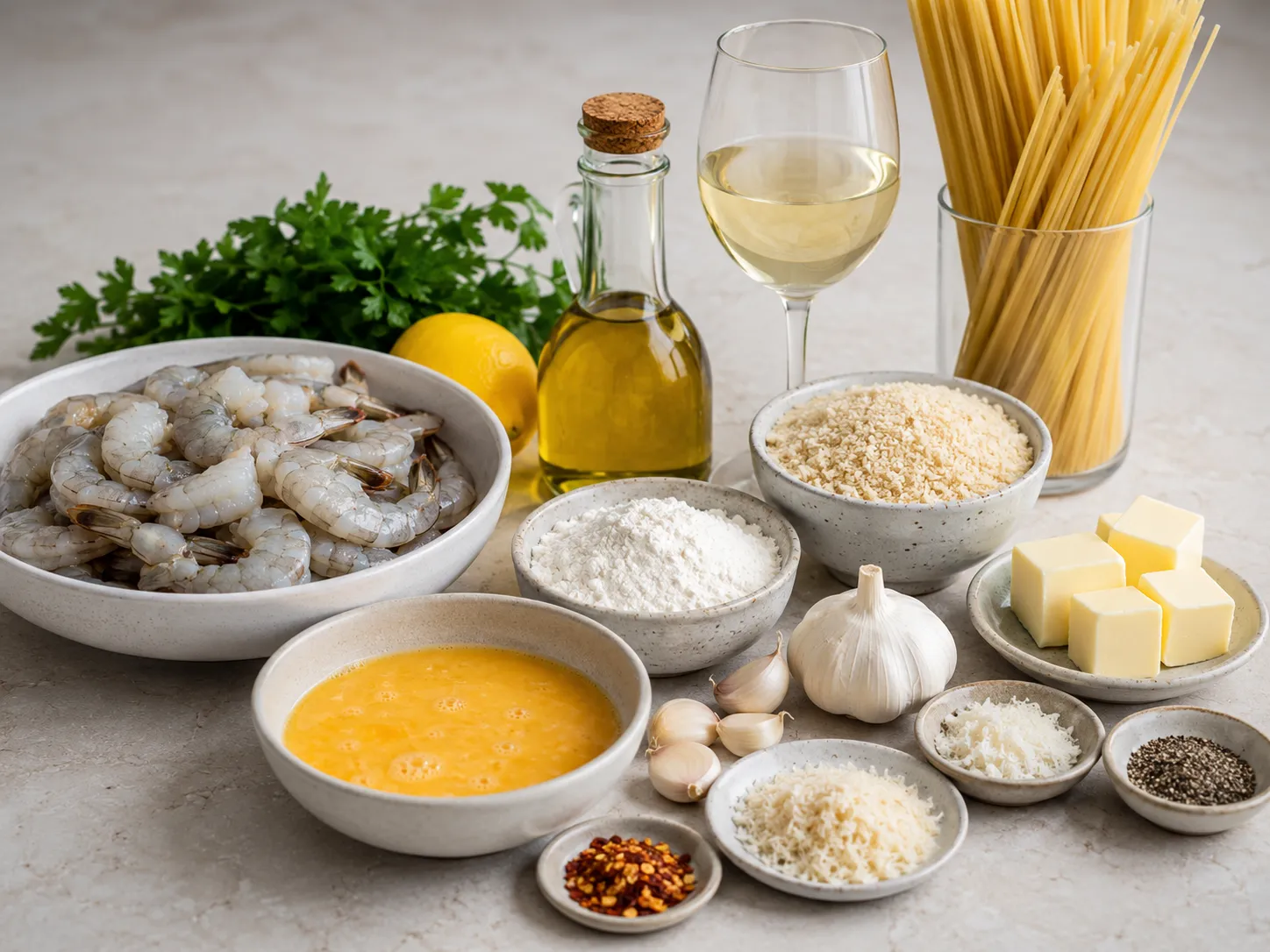
- Large shrimp. They stay juicy inside the crisp coating and feel generous over the pasta.
- Panko breadcrumbs. These make a lighter, crunchier crust than fine dry crumbs.
- Flour and egg. They help the panko stick in an even layer.
- Linguine. The flat strands catch the garlic butter sauce without feeling heavy.
- Garlic. It is the backbone of the sauce, cooked just until fragrant.
- Butter and olive oil. Butter gives richness and olive oil helps the sauce stay balanced.
- White wine or broth. Either one loosens the pan drippings and gives the sauce body.
- Lemon and parsley. They wake up the whole dish at the end.
Make The Shrimp Stay Crisp
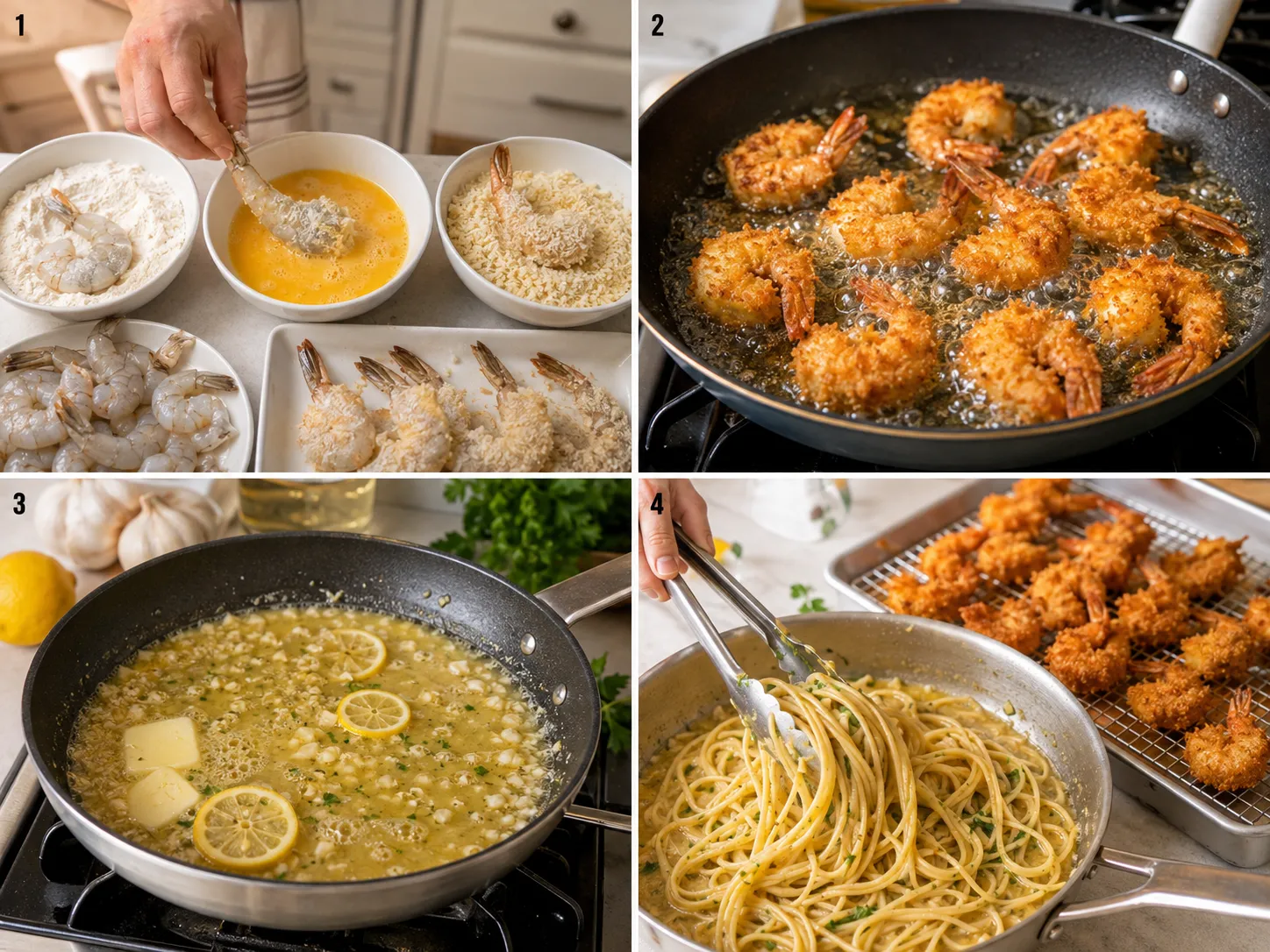
- Cook the linguine. Boil it in well-salted water until just shy of al dente. Save 1 cup of pasta water before draining.
- Bread the shrimp. Pat the shrimp dry, season them, then dip in flour, beaten egg, and panko. Press lightly so the crumbs cling.
- Pan-fry the shrimp. Cook in a thin layer of hot oil until golden and opaque, about 2 minutes per side. Move them to a wire rack, not paper towels, so steam does not soften the crust.
- Start the scampi sauce. Pour off extra oil, melt butter in the skillet, and cook the garlic for about 30 seconds. Add wine or broth and let it bubble briefly.
- Toss the pasta. Add linguine, lemon juice, parsley, and enough pasta water to make the sauce glossy. Toss until the pasta is coated.
- Finish and serve. Divide the pasta into warm bowls and top with the crispy shrimp. Add lemon zest, parsley, and a little parmesan if you like.
Why The Rack Matters
The shrimp coating is fragile when it first comes out of the skillet. A wire rack lets steam escape from the bottom, which keeps the panko from turning damp. Paper towels catch oil, but they also trap heat and moisture right against the crust. If you only have a plate, line it lightly and move the shrimp off the towel after a minute.
The U.S. FDA recommends cooking seafood until it is opaque and reaches 145°F. That happens fast with shrimp, so watch the color and texture instead of walking away. The shrimp should curl into a loose C shape and feel firm but not tight. You can read more in the FDA seafood safety guide.
Getting A Glossy Sauce
Scampi sauce should coat the linguine without sitting in a puddle. The fastest way to get there is pasta water. Add a splash, toss hard, and let the starch help the butter cling to the noodles. If the skillet looks dry, add another spoonful. If it looks watery, keep tossing over low heat for another minute.
Garlic also needs a little care. Cook it gently after the shrimp are done, and stop as soon as it smells sweet and sharp. Brown garlic can taste harsh in a light lemon sauce. Add the lemon juice after the wine or broth has reduced, then taste before adding more salt.
Good Swaps For Busy Nights
No linguine in the pantry? Spaghetti, fettuccine, or thin bucatini all work. For the liquid, dry white wine gives classic scampi flavor, but chicken broth is easier and still tastes good with extra lemon. If you want heat, add red pepper flakes with the garlic. If you want a richer finish, shower a little parmesan over the pasta after it leaves the heat.
For a lighter version, skip the parmesan and use a little more parsley and lemon zest. For a gluten-free version, use gluten-free pasta, flour, and panko. The frying method stays the same, but gluten-free crumbs can brown faster, so keep the heat at medium and watch the color.
Storing Without Soggy Shrimp
Leftovers are best when the shrimp and pasta are stored separately. Keep both in airtight containers in the refrigerator. FoodSafety.gov lists cooked seafood leftovers in the short refrigerator window, so plan to eat them within 3 days and check their cold food storage guidance if you are unsure.
Reheat the pasta in a skillet with a splash of water until loosened. Warm the shrimp in a 375°F oven or an air fryer for a few minutes. The microwave works in a pinch, but it softens the panko and can make shrimp rubbery.
Serving It Like Dinner
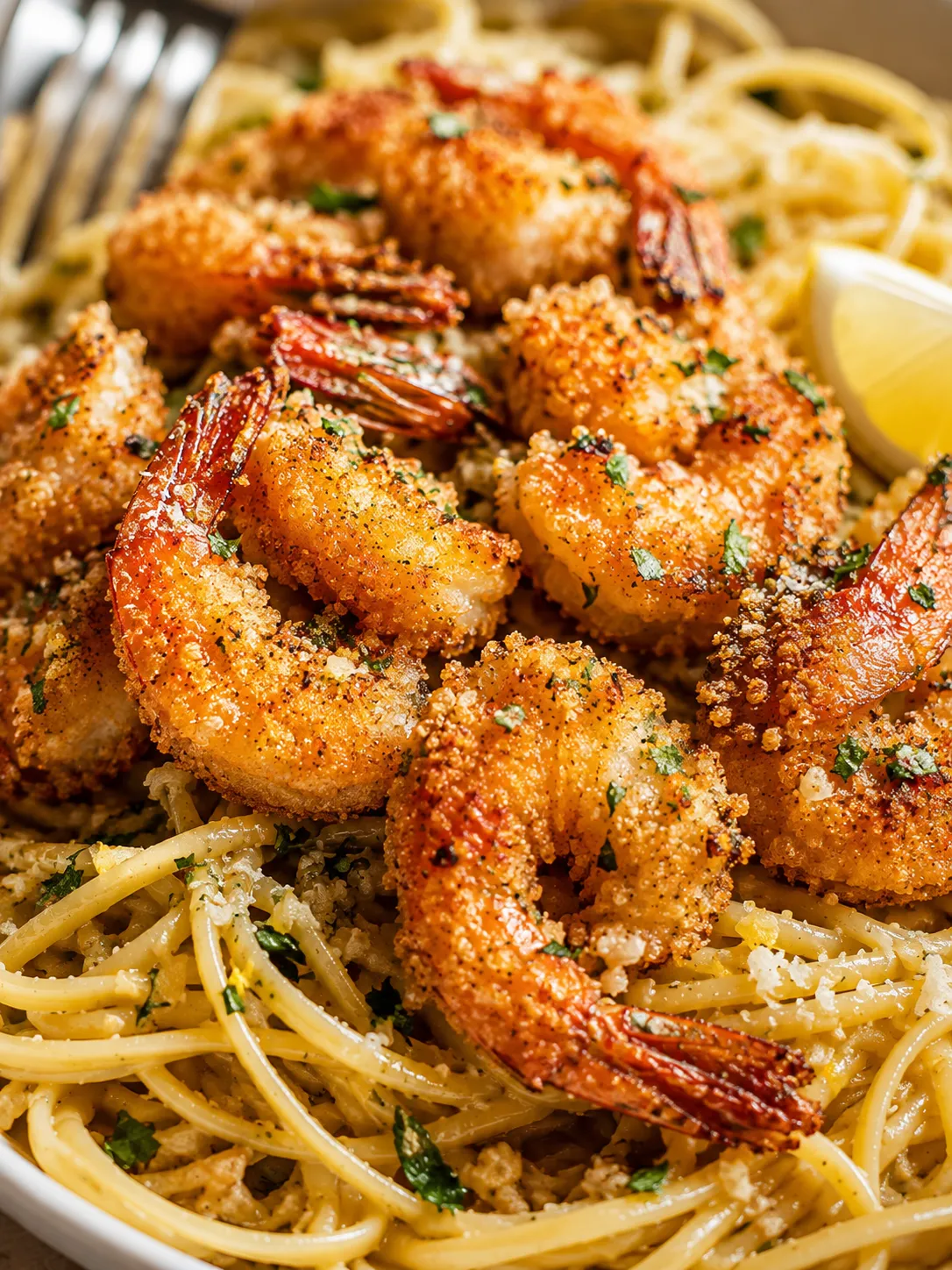
This pasta is rich enough to be the main event, so keep the sides fresh and plain. A lemony green salad, steamed broccoli, roasted asparagus, or sliced tomatoes are all enough. If you are feeding guests, bread the shrimp and chop the parsley ahead of time, then cook everything close to serving. Crispy shrimp scampi linguine is at its best when the pasta is hot and the shrimp are still crackly on top.
Summary
Serve the pasta hot, with the crispy shrimp added at the table if you want the coating to stay at its best.
FAQs
- Can I use frozen shrimp for crispy shrimp scampi linguine?
Yes. Thaw frozen shrimp in the refrigerator overnight or under cold running water, then pat them very dry. Dry shrimp hold the flour, egg, and panko coating better and brown instead of steaming.
- What can I use instead of white wine?
Use low-sodium chicken broth and add an extra squeeze of lemon at the end. The wine adds acidity and a little depth, so broth plus lemon gives you a close balance without changing the method.
- How do I keep the shrimp crispy?
Do not toss the breaded shrimp into the sauce. Rest them on a wire rack after frying and place them over the pasta right before serving. If they sit in the garlicky butter sauce, the panko softens quickly.
- Can I make this gluten-free?
Yes, but you need a few swaps. Use gluten-free linguine, gluten-free flour, and gluten-free panko-style crumbs. The sauce itself is easy to keep gluten-free as long as your broth or wine is safe for your needs.
- How long do leftovers keep?
Store pasta and shrimp separately when possible. The pasta keeps well for up to 3 days in an airtight container in the refrigerator. Reheat the shrimp in an oven or air fryer so the coating has a chance to crisp again.
- What should I serve with it?
A crisp green salad, roasted asparagus, or garlicky green beans all work well. Keep the side simple because the pasta already brings butter, lemon, garlic, and a crunchy shrimp topping.
