 Pin it
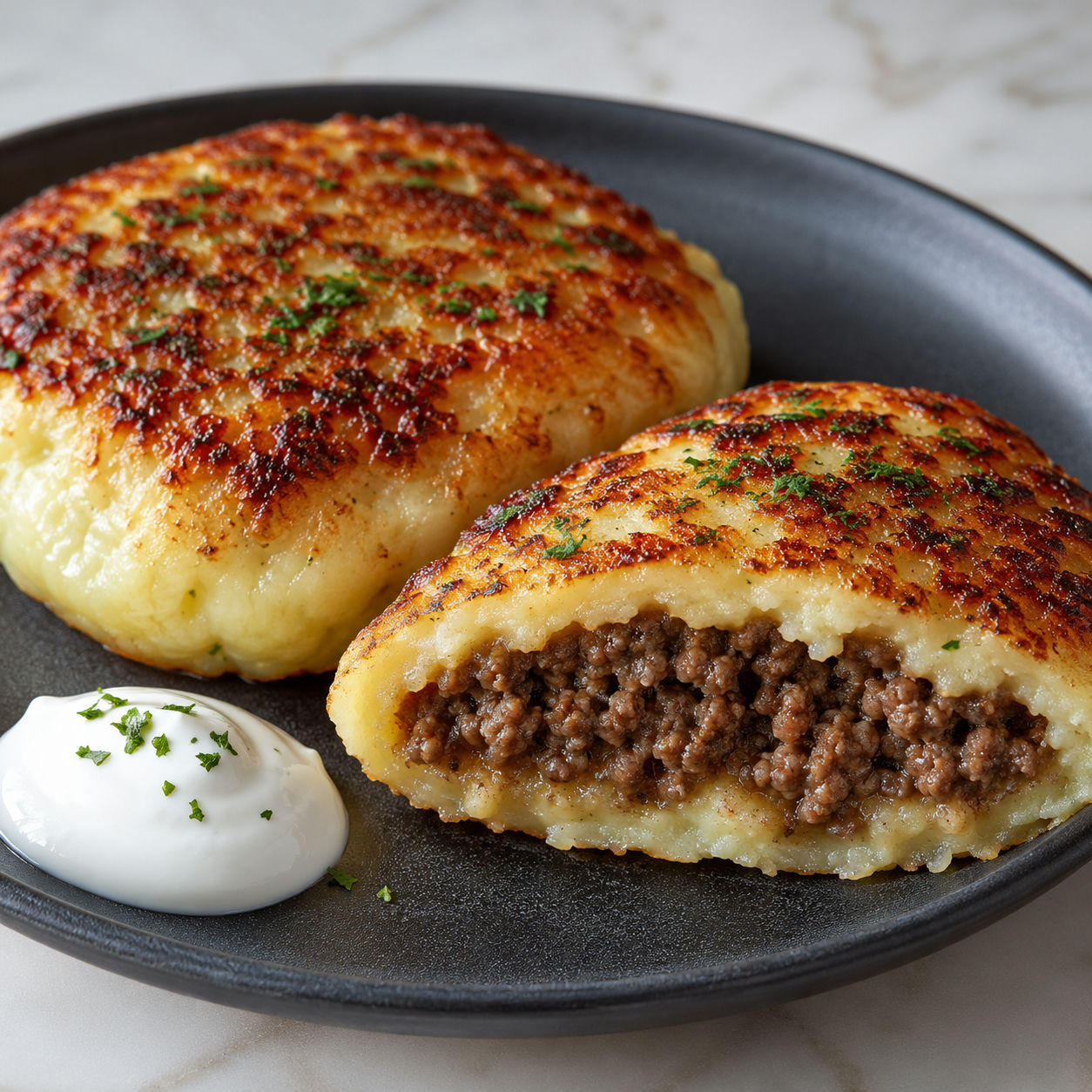
Mashed Potato Pancakes with Ground Beef Filling are the kind of skillet dinner that makes leftovers feel intentional. Cold mashed potatoes turn into a soft dough, the beef gets cooked with onion and garlic, and each patty fries up with a golden crust around a savory center.
I like this recipe when there are two cups of mash in the fridge and not quite enough of anything else for dinner. A spoonful of sour cream, a few scallions, and a crisp salad make it feel complete without much work.
Cold Mash, Savory Beef
Start with mashed potatoes that are cold and firm. Warm potatoes are too soft to handle, while chilled potatoes hold the beef filling without tearing.
The filling should taste a little stronger than plain taco meat because the potato shell is mild. Cook it until the onion is soft and the pan looks almost dry.
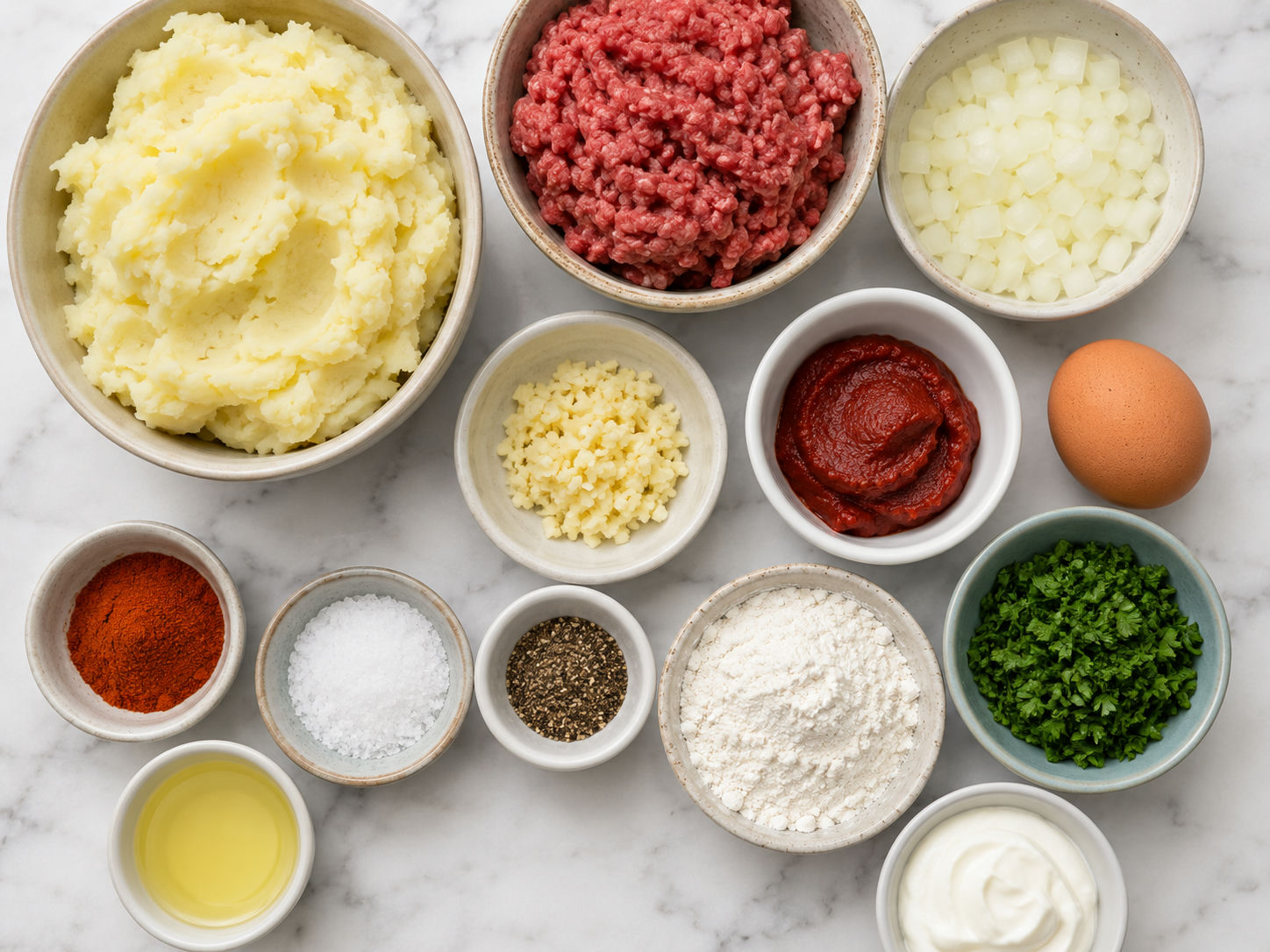
- Cold mashed potatoes. The base of the pancake shell. Chilled leftovers give you the easiest dough to shape.
- Ground beef. Makes the center hearty and savory without a long cook time.
- Onion. Adds sweetness and moisture to the filling once it softens in the skillet.
- Garlic. Gives the beef a warm, rounded flavor.
- Paprika. Adds color and a gentle smoky note without making the filling spicy.
- Egg. Helps bind the potato mixture so the pancakes stay together in the pan.
- Flour. Firms up the mash and gives the outside a light crust.
- Parsley or scallions. Freshens the rich potatoes and beef right before serving.
Shape, Seal, Fry
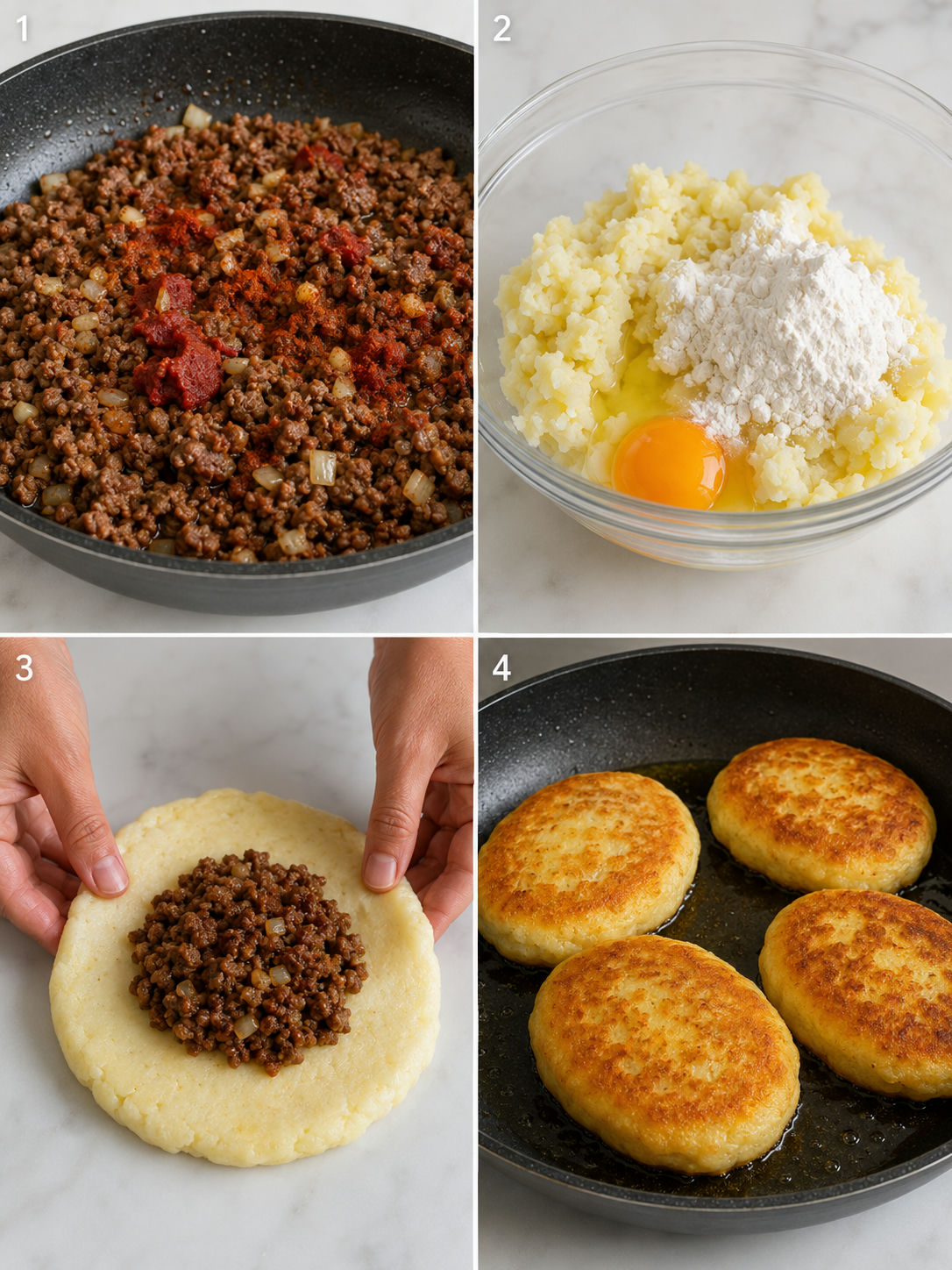
- Cook the beef filling. Brown the ground beef with onion, then stir in garlic, paprika, salt, pepper, and a spoonful of tomato paste. Let it cool so it does not soften the potato dough.
- Mix the potato dough. Stir cold mashed potatoes with egg and flour until the mixture feels thick enough to scoop. Add another spoonful of flour only if needed.
- Portion the patties. Dust your hands with flour and flatten a scoop of potato mixture into a thick round. Make a small hollow in the center.
- Add the filling. Spoon in a small mound of beef, then bring the potato edges up and over it. Pinch closed and gently flatten into a pancake.
- Pan-fry in batches. Cook in a thin layer of hot oil for 3-4 minutes per side. Move them only after the bottom has formed a crust.
- Serve hot. Drain briefly on a rack or paper towel, then finish with parsley, scallions, sour cream, or a spoonful of plain yogurt.
Keep The Dough Cold
The biggest difference between neat stuffed pancakes and a sticky mess is temperature. Cold mashed potatoes are firmer because the starches have set. That gives you a dough that can wrap around the filling instead of smearing across your hands.
If your potatoes were made with lots of milk or butter, they may need extra flour. Add it slowly. Too much flour makes the shell heavy, but too little makes it tear. I aim for a soft dough that still holds a fingerprint. If you enjoy potato leftovers, the same idea shows up in these crispy mashed potato cheese bites, where cold mash is much easier to shape.
Cook The Beef First
Some meat-filled potato pancakes use a raw meat layer and cook it inside the potato batter, like this grated-potato version from Olga's Flavor Factory. For mashed potato dough, I prefer a cooked filling. It gives you better control, and the pancakes only need enough time in the skillet to brown and heat through.
Cook the beef until no pink remains, then keep going for another minute so excess moisture evaporates. A wet filling makes the center slide around. If you want a softer, saucier beef-and-potato dinner another night, try this ground beef and potato casserole.
Seal Without Leaks
Use less filling than you think. A rounded tablespoon is enough for each pancake if you are making eight. The potato layer should be thick enough to hide the beef completely, especially around the rim.
Floured hands help, but do not coat the patties in a thick layer of dry flour. A light dusting keeps the surface manageable and helps browning. If a little beef peeks through, patch it with a small piece of potato dough before it goes into the pan. This same stuffed comfort-food mood is close to mashed potato pancakes with savory meat filling, but this version keeps the seasoning simple and beef-forward.
Getting A Crisp Crust
Use a heavy skillet and enough oil to coat the bottom. The oil should shimmer, not smoke. If the pan is too cool, the pancakes absorb oil before they brown. If it is too hot, the outside darkens while the center stays lukewarm.
Once the pancakes hit the pan, leave them alone. The first side needs time to firm up. When the edge looks golden and the pancake releases with a thin spatula, flip it. A rack keeps the bottoms crisp while you finish the next batch. For another beef-and-potato skillet-style dinner, this picadillo con papa has the same cozy feel with less shaping.
Storage And Reheating
Store cooked pancakes in an airtight container in the refrigerator for up to three days. The USDA recommends refrigerating leftovers within two hours, which is a good rule for anything made with cooked beef and potatoes. You can read more in the USDA leftovers guide.
Reheat in a dry skillet over medium-low heat until hot in the center and crisp outside. A toaster oven works too. The microwave is fast, but it softens the crust.
Summary
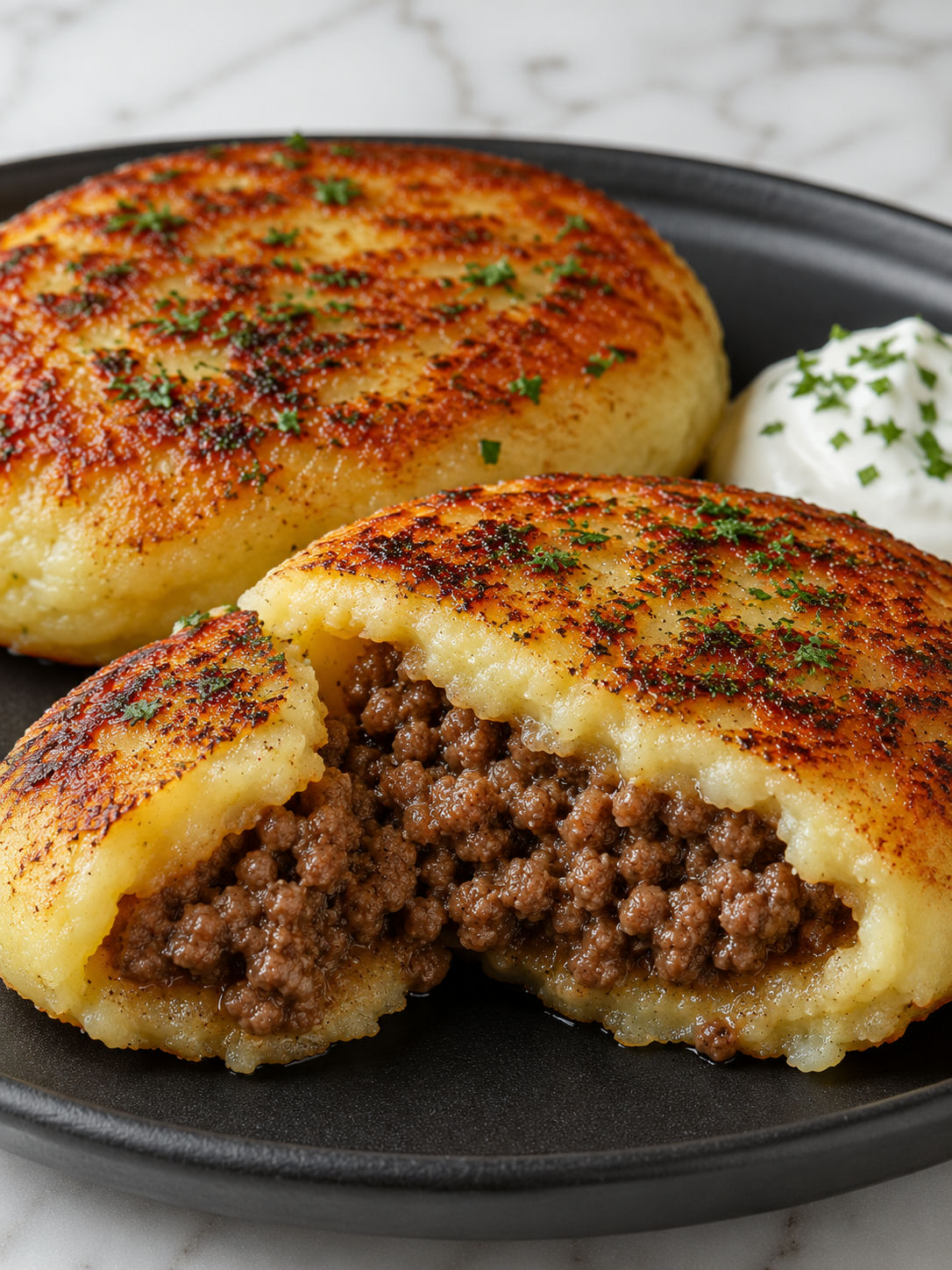
These stuffed potato pancakes are best eaten hot from the skillet, but they reheat well in a dry pan or toaster oven. Keep the filling cool before shaping so the patties seal cleanly.
FAQs
- Can I use instant mashed potatoes for these pancakes?
Yes, as long as they are thick and fully chilled. If the potatoes feel loose or sticky, add flour one tablespoon at a time until the mixture can be shaped without slumping.
- Can I make the ground beef filling ahead?
Yes. Cook the filling up to two days ahead and refrigerate it in an airtight container. Cold filling is easier to seal inside the potato dough, so making it ahead can actually help.
- Why are my stuffed potato pancakes falling apart?
The potatoes may be too warm, too wet, or under-bound. Chill the mashed potatoes, use the egg, and dust your hands with flour before shaping. Also keep the filling spoonful small so the edges can close.
- Can I bake these instead of frying?
You can bake them at 425°F on an oiled sheet pan, flipping once, until browned. They will be softer than skillet-fried pancakes, but still good. Brush the tops with oil for better color.
- What can I serve with mashed potato pancakes?
Sour cream, plain yogurt, scallions, dill, and pickles all work well. For dinner, add a green salad, roasted vegetables, or a bowl of broth-based soup.
- Can I make these gluten-free?
Yes. Replace the all-purpose flour with a 1:1 gluten-free flour blend or potato starch. Start with a little less, then add more only if the dough is too soft to shape.
