 Pin it
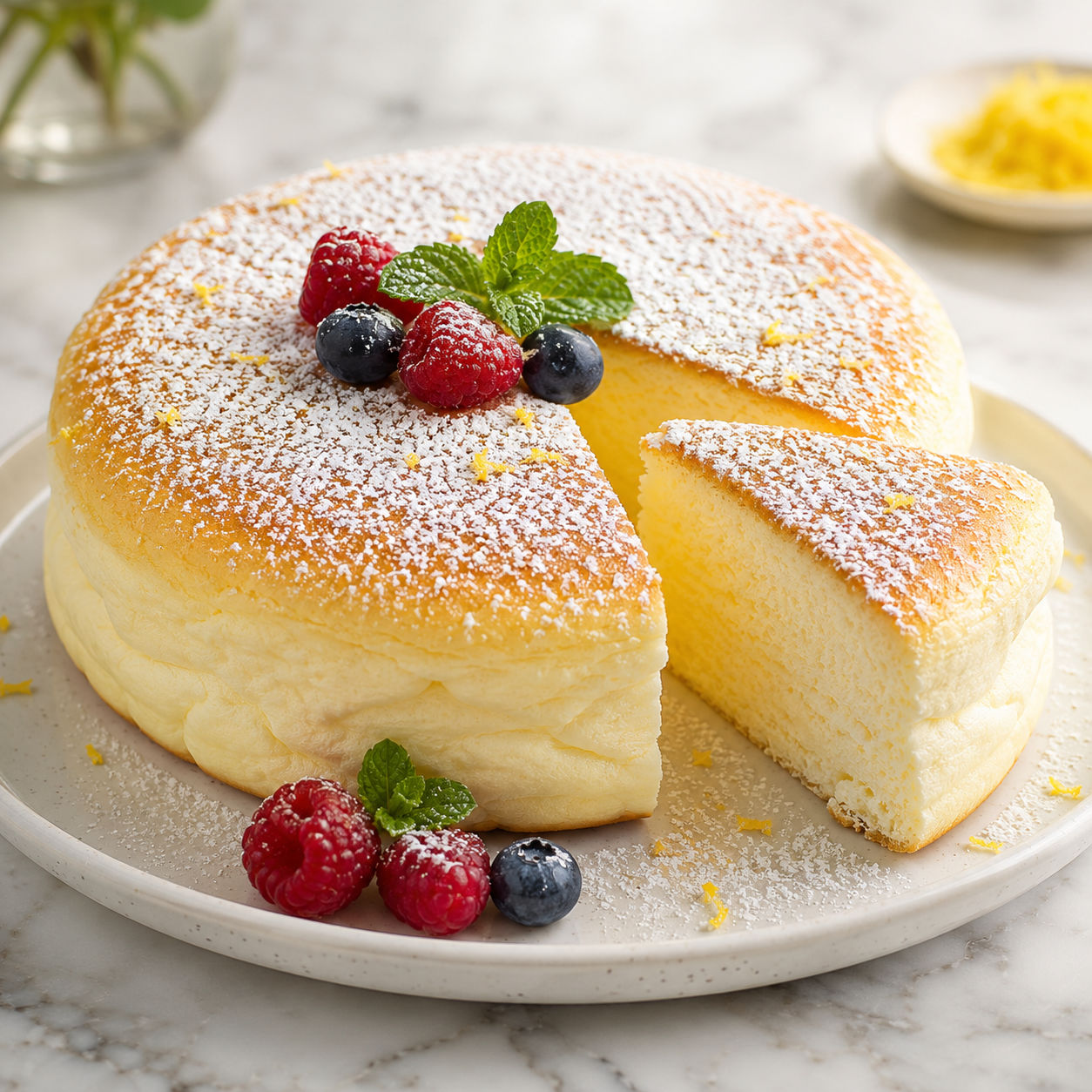
Light and Fluffy Yogurt Cloud Cake sits somewhere between a yogurt cake and a souffle cheesecake. It has a soft, pale crumb, a little lemon lift, and a cool tang from Greek yogurt.
The batter is simple, but the handling matters. Room temperature eggs, gentle folding, and a slow water bath keep the cake tall and tender instead of rubbery or sunken.
The soft cake lineup
Use thick plain Greek yogurt with a clean tang and eggs that have warmed up a bit on the counter. The batter has only a few ingredients, so stale lemon zest or watery yogurt will show.
- Greek yogurt. Gives the cake its creamy body, light tang, and tender set.
- Eggs. Separated eggs create the lift, with yolks adding richness and whites trapping air.
- Granulated sugar. Sweetens the cake and stabilizes the whipped whites as they foam.
- All-purpose flour. Adds just enough structure for clean slices.
- Cornstarch. Keeps the crumb fine and soft instead of bready.
- Lemon zest. Brings a fresh aroma that cuts through the dairy.
- Lemon juice. Helps the egg whites foam and adds a quiet brightness.
- Powdered sugar and berries. Finish the cake without making it heavy.
Build the cloud gently
- Prepare the pan. Line a 6-inch round pan with parchment, leaving the side paper a little taller than the rim. Set it inside a larger roasting pan.
- Make the yogurt base. Whisk egg yolks with part of the sugar, lemon zest, yogurt, flour, and cornstarch until smooth. Stop as soon as the batter is even.
- Whip the whites. Beat the egg whites with lemon juice until foamy, then add the remaining sugar gradually. Whip to medium peaks that bend softly at the tip.
- Fold in stages. Stir one scoop of whites into the yogurt base to loosen it, then fold in the rest with a spatula. Turn the bowl and lift from the bottom so you keep the air.
- Bake in water. Pour the batter into the pan and add hot water to the roasting pan. Bake low and slow until puffed, then finish a little hotter to set the top.
- Cool and chill. Rest the cake in the turned-off oven, cool to room temperature, then chill until firm enough to slice cleanly.
The meringue decides everything
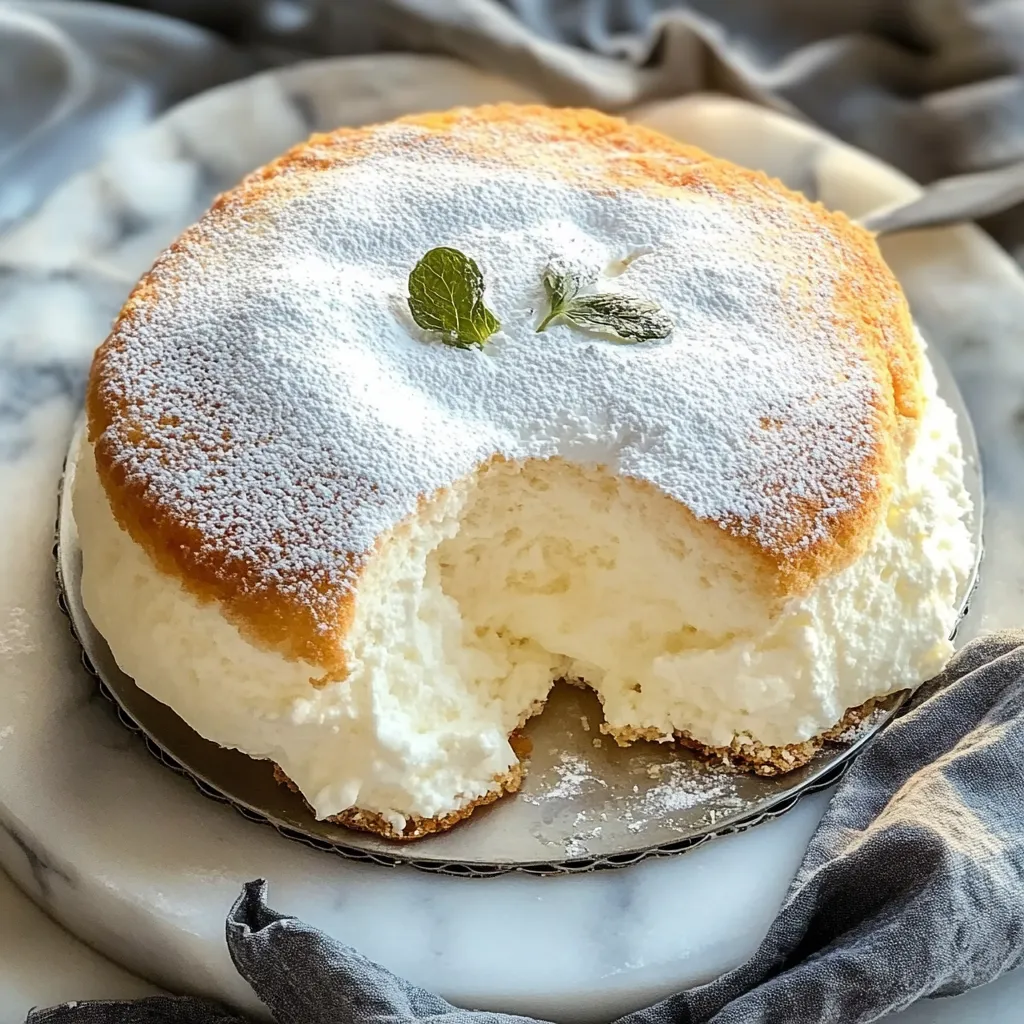
Medium peaks are the goal. The whites should look glossy and hold a soft curve when you lift the beaters. Stiff, chunky whites are harder to fold into the yogurt base, and they can leave dry pockets in the finished cake. If the whites are too loose, the batter will pour thin and the cake will not climb.
Use a clean bowl with no yolk streaks. Even a little fat slows the foam. The USDA has a helpful egg safety overview for storing and handling shell eggs if you bake often with separated eggs, especially for family desserts. You can read it here: USDA shell egg safety.
Why the water bath matters
The water bath keeps the oven heat gentle around the pan. That matters here because the cake is mostly yogurt and eggs, not a sturdy butter cake. Dry heat can set the outside too quickly while the center is still loose. Hot water softens that heat and helps the cake rise evenly.
This style is close to the yogurt cloud cake method shown by Cookist, where a low bake and a brief hotter finish build a soft center with a lightly set top. If you enjoy airy desserts, the site also has Light & Fluffy Yogurt Cake and Blueberry Cottage Cheese Cloud Bread for a similar soft texture.
Smart swaps and flavors
Plain full-fat Greek yogurt gives the richest texture, but 2 percent Greek yogurt still works. Avoid sweetened fruit yogurt because it changes both moisture and sugar. For a stronger citrus note, rub the lemon zest into the sugar with your fingers before mixing. The sugar will smell bright and almost floral.
Vanilla is welcome, but keep it light. A half teaspoon is enough. Orange zest also works, especially if you want to serve the cake with berries. For a spring dessert plate, try it beside Lemon Pistachio Cake or Creamy Strawberry Swirl Cake.
Cooling without collapse
Do not pull the cake straight from a hot oven into a cool room. That shock makes the steam inside contract fast, and the center can wrinkle. Turn the oven off, crack the door, and give it 10 minutes to settle. It will relax a little. That is fine.
Once the pan is cool enough to handle, move the cake to the counter and leave it alone until it reaches room temperature. Then chill it. The cold rest firms the yogurt custard and makes the slices cleaner. A warm slice tastes eggier and feels too fragile, even when the cake is fully baked.
Serving and storage notes
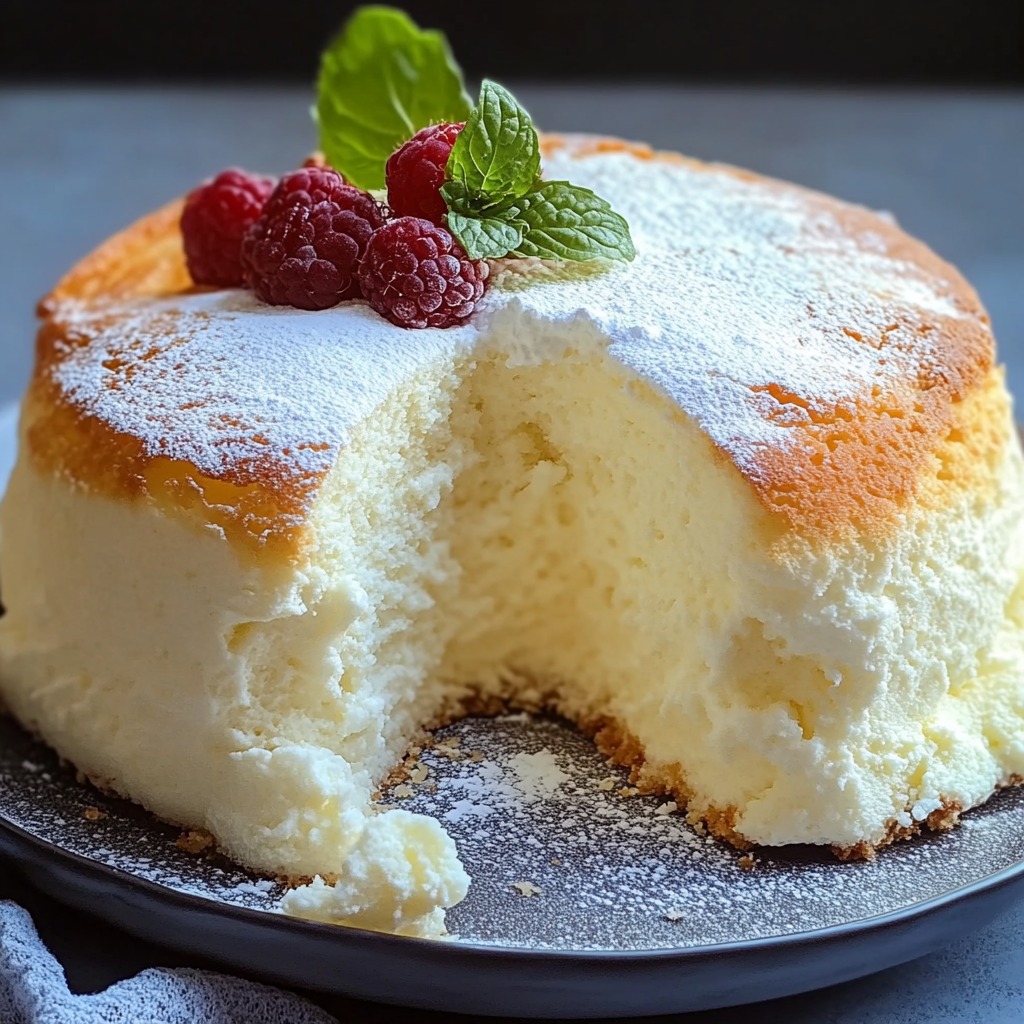
Serve the cake cold or barely cool with powdered sugar sifted over the top. Berries are lovely because they add juice and color without covering the delicate crumb. A spoonful of lightly sweetened yogurt also works if you want a simple plated dessert.
Store leftovers covered in the refrigerator for up to 3 days. The cake tastes best on day two, once the lemon has settled into the yogurt. Freezing is possible, but the texture becomes a little wetter after thawing. If you freeze it, wrap individual slices and thaw them overnight in the fridge.
Summary
This yogurt cloud cake is best when baked gently, cooled slowly, and chilled before serving. Keep the toppings simple so the airy lemon yogurt crumb stays the focus.
FAQs
- Why did my yogurt cloud cake sink?
A little settling is normal, but a deep collapse usually comes from overbeaten egg whites, rough folding, or a sudden temperature change. Let the cake rest in the turned-off oven for 10 minutes before bringing it to the counter.
- Can I use regular yogurt instead of Greek yogurt?
Yes, if it is thick. If your yogurt looks loose or watery, drain it through a fine sieve lined with paper towel for 30 minutes before using it.
- Can I make this cake gluten-free?
You can replace the small amount of all-purpose flour with a 1:1 gluten-free baking blend. Keep the cornstarch in the recipe because it helps the crumb stay soft and delicate.
- How long should yogurt cloud cake chill?
Chill it for at least 2 hours before slicing. Overnight is even better if you want neat pieces and a clean, custardy texture.
- What should I serve with yogurt cloud cake?
Fresh berries, a dusting of powdered sugar, or a spoonful of lemon curd all work well. Keep toppings light so they do not hide the cake's gentle yogurt flavor.
- Can I double the recipe?
It is better to bake two separate 6-inch cakes than one large doubled cake. A bigger pan changes the heat flow, and the center can stay wet while the edges overbake.
