 Pin it
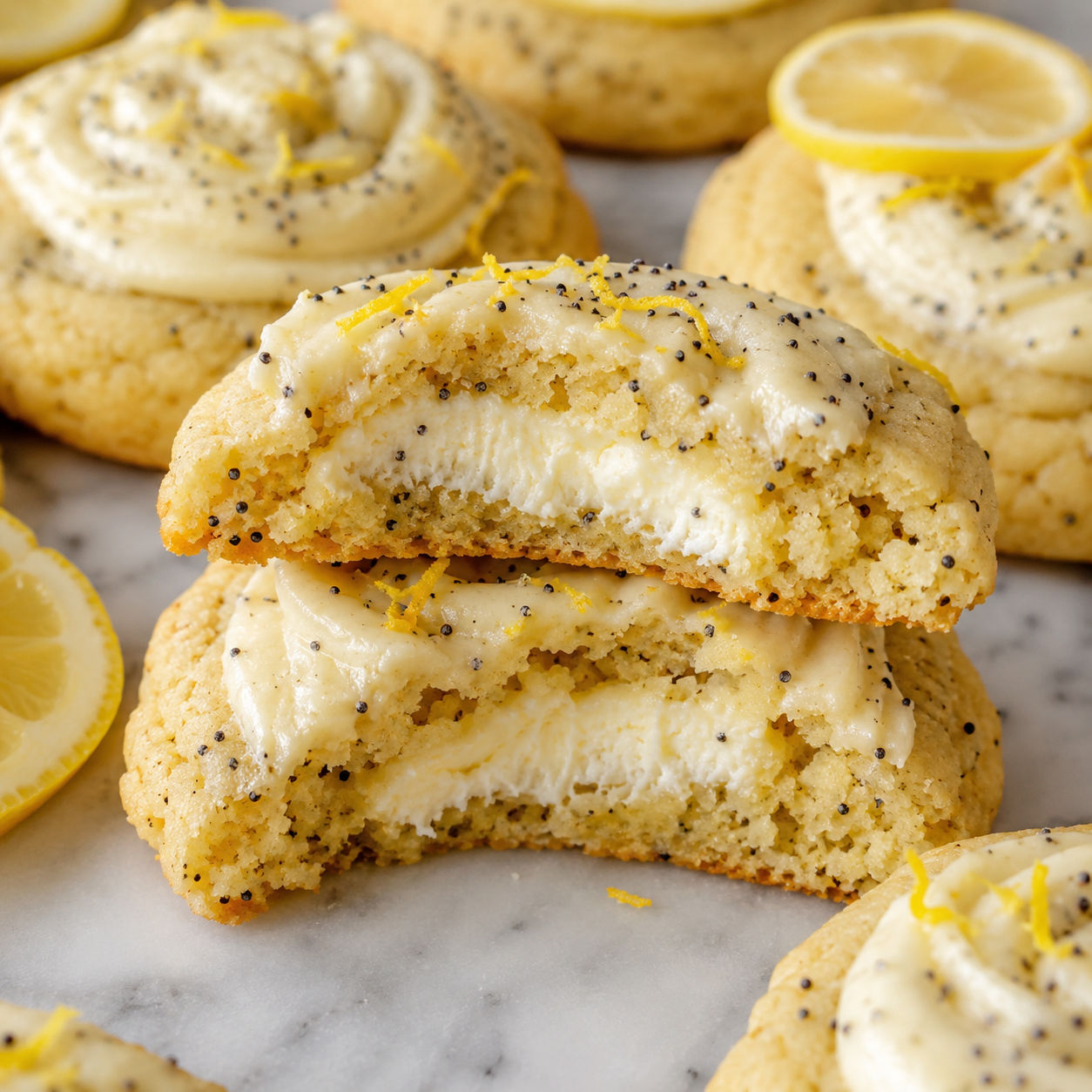
Lemon Poppy Seed Cookies with Cheesecake Filling are the kind of cookie that feels planned, but not fussy once you know the order. The filling goes into the freezer first, so it holds its shape while you mix the dough.
The cookie itself is soft and thick, with lemon zest doing the real work. Poppy seeds add a small crunch that keeps each bite from feeling too sweet.
I like these slightly chilled from the fridge. The center tastes more like cheesecake that way, and the lemon comes through clean.
Bright lemon cookie essentials
Fresh lemon zest matters here more than lemon extract. Rub the zest into the sugar with your fingers before mixing and the whole bowl will smell like lemon oil.
Use block-style cream cheese and real butter. Tub cream cheese is softer and can make the filling loose.
- Cream cheese. Makes the frozen cheesecake center and the frosting creamy without needing a full cheesecake batter.
- Fresh lemon zest. Gives the cookies their clean citrus flavor and keeps them from tasting like plain sugar cookies.
- Poppy seeds. Add tiny crunch and a nutty edge that works well with lemon.
- Unsalted butter. Gives the dough its soft, rich crumb and lets you control the salt.
- Granulated sugar. Sweetens the dough and helps the edges bake lightly golden.
- Egg and yolk. Bind the dough and keep the cookies tender instead of cakey.
- All-purpose flour. Builds a sturdy dough that can hold the frozen filling.
- Powdered sugar. Smooths the cream cheese frosting without grittiness.
Lemon Poppy Seed Cookies with Cheesecake Filling
- Freeze the filling. Beat cream cheese, sugar, lemon zest, lemon juice, and a pinch of salt until smooth. Scoop small mounds onto parchment and freeze until firm.
- Mix the dough. Whisk the flour, baking soda, salt, and poppy seeds. Beat butter with lemon sugar until creamy, then mix in the egg, yolk, and vanilla before adding the dry ingredients.
- Stuff each cookie. Flatten a scoop of dough, place a frozen filling mound in the center, and wrap the dough around it. Seal every edge so the filling stays tucked inside.
- Bake gently. Bake at 350 F until the edges are set and barely golden. The centers should still look soft when the pan comes out.
- Cool and frost. Let the cookies cool on the pan first. Add a small swirl or smear of lemon cream cheese frosting only when they are fully cool.
Freeze the center first
The filling needs time in the freezer because soft cream cheese melts fast in a hot oven. Firm little scoops are easier to wrap and they keep the center creamy instead of disappearing into the dough.
A parchment-lined plate works better than a bowl. The pieces freeze separately and lift cleanly when you are ready to stuff. If you like this style of cookie, the same idea is used in cinnamon roll cheesecake cookies and blueberry cheesecake cookies.
Keep the lemon clean
Lemon desserts can turn sharp if you lean too hard on juice. Zest gives you a stronger lemon flavor with less extra liquid, so use it in both the dough and filling.
For a deeper citrus note, rub the zest into the sugar before creaming it with butter. This releases the fragrant oils and makes the dough taste bright all the way through. The old-school lemon poppy seed sandwich cookie idea shows up in places like Epicurious, but freezing the filling makes this version softer and more cheesecake-like.
Shape without leaks
Think of the dough as a wrapper. Flatten it into a thick disk, set the frozen filling in the middle, then pull the edges up and pinch them shut. Roll the sealed ball gently between your palms until the seam disappears.
If the dough feels sticky, chill it for 15-20 minutes. Do not add handfuls of extra flour unless the dough is truly unworkable. Extra flour makes the cookies dry. For another citrus-filled option, try stuffed lemon cookies or the richer lemon curd brulee cookies.
Frosting or simple sugar
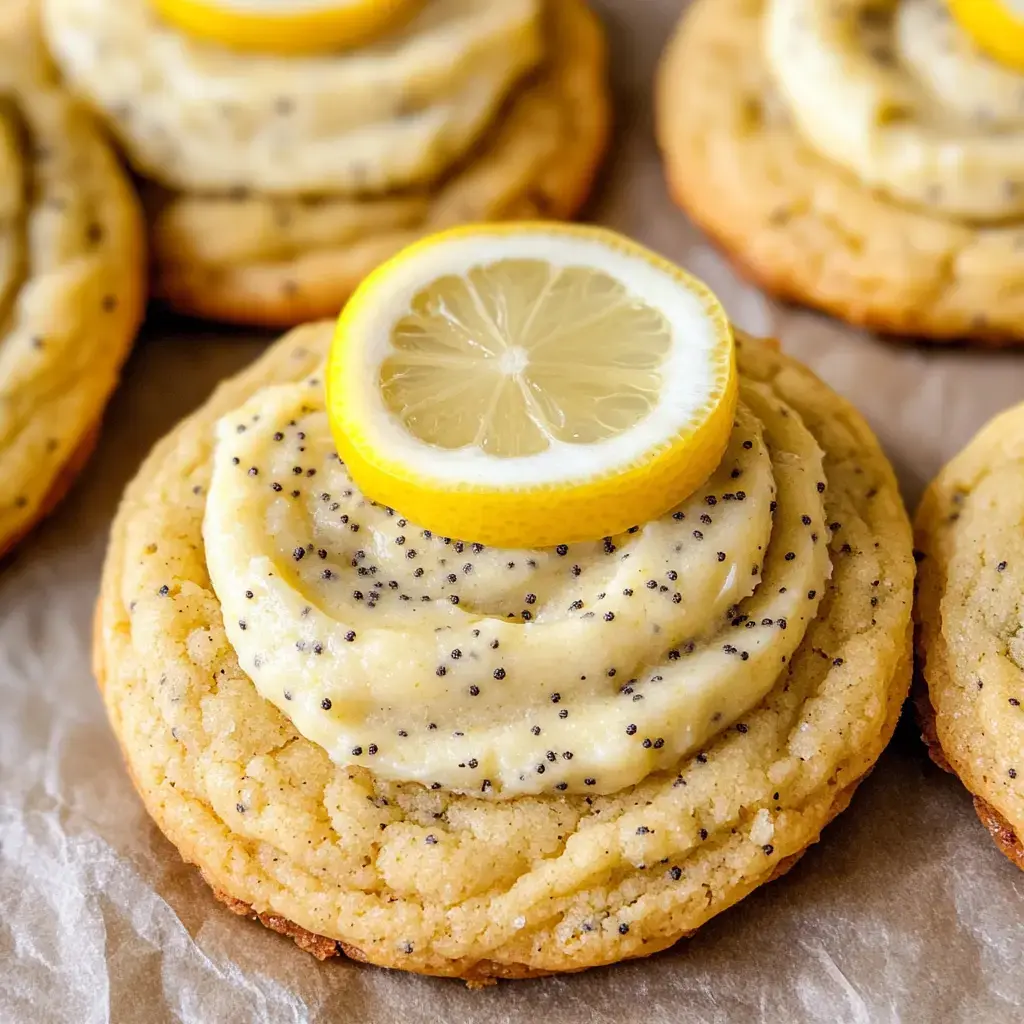
The frosting is optional, but it gives the cookie a bakery look and adds another soft cheesecake note. Keep it thick enough to hold a swirl. If it slumps, beat in another spoonful of powdered sugar.
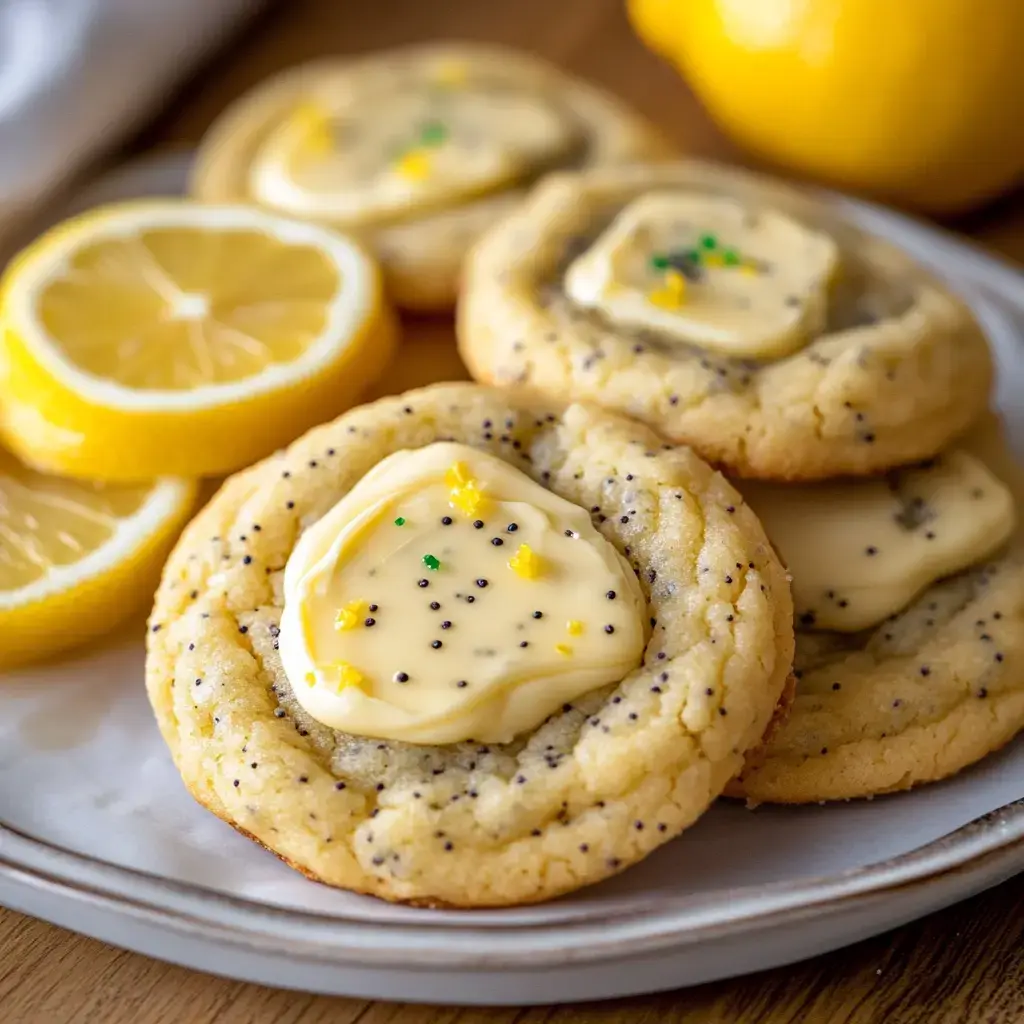
For an easier finish, skip the piping bag and spread a thin layer over each cooled cookie. You can also leave the frosting white and garnish with a few poppy seeds and a little lemon zest. Food coloring is only for looks, not flavor.
Bake now, serve later
These cookies store better than most filled cookies because the center is baked inside, not added after. Refrigerate them in a single layer or with parchment between layers.
They are best within three days, but still good on day five. For make-ahead baking, freeze the unbaked stuffed dough balls on a tray. Bake from frozen and add 1-2 minutes to the bake time. Wait to frost until after they cool.
Summary
These stuffed lemon poppy seed cookies are best made with room-temperature dairy, fresh lemon zest, and a frozen cream cheese center. Chill the filling first, seal the dough well, and bake only until the edges look set.
FAQs
- Can I make the cheesecake filling ahead?
Yes. Scoop the filling onto a lined plate and freeze it until solid, then move the pieces to an airtight container. Use them within one month and stuff the cookies straight from frozen.
- Why did my filling leak out?
The dough may have been too warm or the filling was not frozen hard enough. Seal the dough fully around each filling piece and chill the stuffed dough balls for 10 minutes if your kitchen is warm.
- Can I skip the frosting?
Yes. The cookies are sweet enough without frosting. Roll the dough balls in a little lemon sugar before baking if you want a simpler finish with sparkle and extra citrus.
- Can I use bottled lemon juice?
Use fresh lemons for the zest because that is where most of the bright flavor comes from. Bottled juice can work in the frosting in a pinch, but it will taste flatter in the filling.
- How should I store these cookies?
Store them in an airtight container in the refrigerator for up to five days. Let them sit at room temperature for 10 minutes before serving so the cookie softens slightly.
- Can these cookies be frozen after baking?
Yes, but freeze them before frosting for the cleanest result. Wrap cooled cookies well, freeze for up to two months, then thaw in the fridge and frost before serving.
