 Pin it
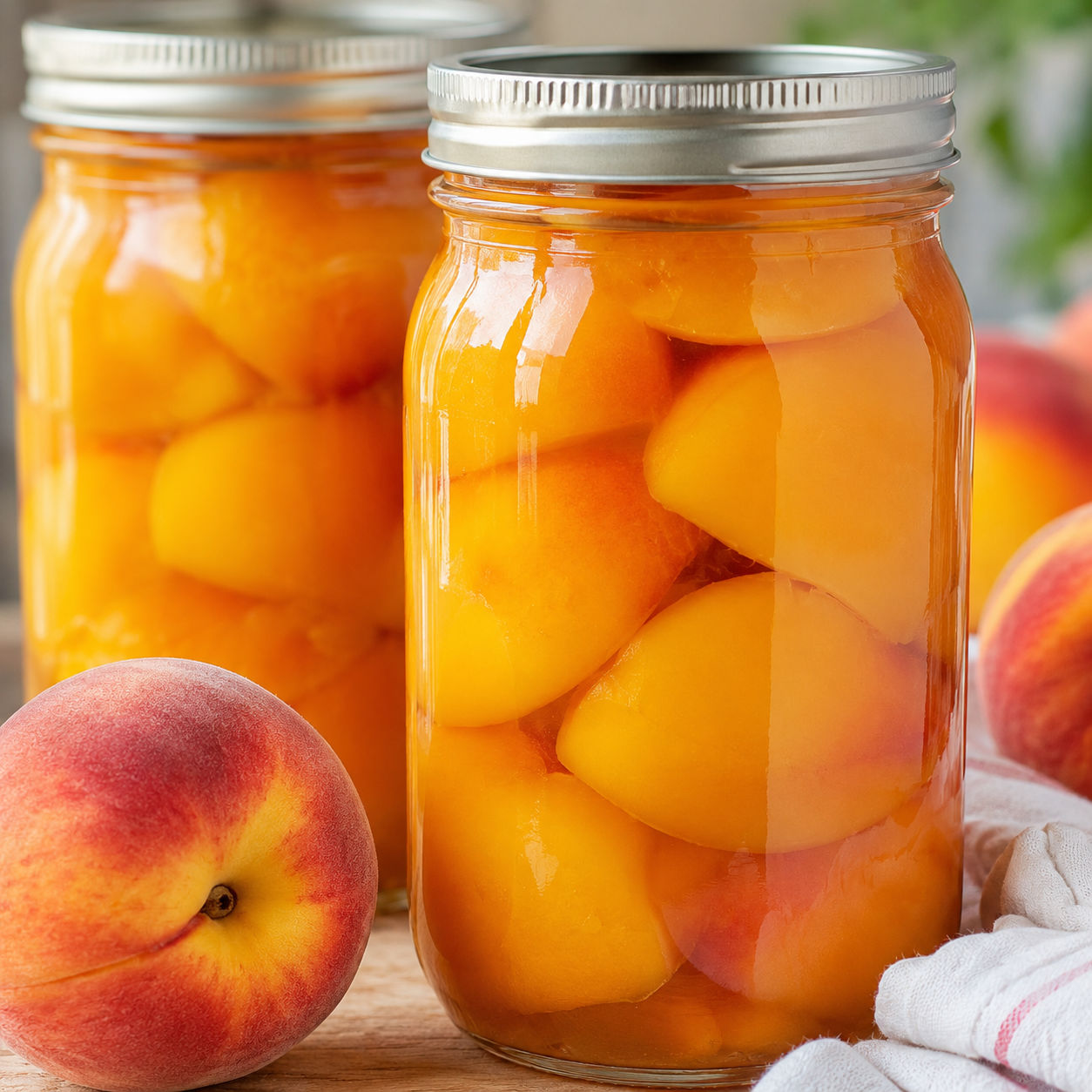
How to Can Peaches sounds fussy until the first jar seals and you see those golden slices lined up on the counter. The work is steady, not hard. Most of it is peeling, packing, and keeping the jars hot.
I like a hot pack for peaches because the fruit settles better and the jars look cleaner. A very light syrup keeps the peach flavor bright without making the jars taste like candy.
This method is for ripe yellow-flesh peaches. White peaches are a different safety issue for home canning, so freeze those instead.
Peaches And Syrup Basics
Start with ripe yellow peaches that smell sweet and give slightly near the stem. Avoid mushy, bruised, or moldy fruit because canning will not improve tired peaches.
A very light syrup is enough for most jars. You can also use water, apple juice, or white grape juice if you want less added sugar.
- Yellow peaches. The safe fruit choice for this water bath method, with enough natural acidity for tested processing.
- Water. The base for the canning liquid and the boiling water canner.
- Granulated sugar. Helps the peaches keep a nicer color and shape in storage.
- Ascorbic acid or lemon water. Keeps peeled fruit from browning while you work through the batch.
- Ice. Stops the blanching fast so the peaches peel cleanly without cooking too much.
- Bottled lemon juice. Useful for an anti-browning dip if you do not have ascorbic acid.
How to Can Peaches Safely
- Prepare the canner. Fill a boiling water canner with enough water to cover filled jars by at least 1 inch. Keep clean jars hot while you work.
- Blanch and peel. Dip peaches in boiling water for 30-60 seconds, then move them to ice water. Slip off the skins, halve the peaches, and remove the pits.
- Hold the color. Keep peeled peaches in an ascorbic acid solution or lemon water while you finish the batch.
- Make the syrup. Bring water and sugar to a boil, stirring until clear. For hot pack, add drained peaches and heat just until the liquid returns to a boil.
- Fill the jars. Pack hot peaches cut side down into hot jars. Cover with hot syrup or juice, leaving 1/2-inch headspace.
- Process and rest. Remove bubbles, wipe rims, add lids, and process in a boiling water canner. Let jars rest on a towel for 12 hours before checking seals.
Why Yellow Peaches Matter
For this process, use yellow-flesh peaches only. The National Center for Home Food Preservation peach canning guidance warns that some white peaches can have a higher pH than yellow varieties. That means they may not be acidic enough for the same boiling water process.
Pick fruit that is ripe but still firm enough to slice. If a peach collapses in your hand, save it for a quick dessert like pan fried sweet peaches. Canning fruit should feel sturdy. It softens more during the hot pack and again in the canner.
Hot Pack Beats Fruit Float
Raw pack is faster, but peaches love to float. The fruit shrinks as trapped air leaves, and you can end up with peaches near the lid and syrup at the bottom. The jars are often still safe if sealed, but they look messy and the top fruit can darken sooner.
Hot pack solves most of that. Heating the peaches briefly in syrup, water, or juice softens them just enough to pack tighter. You will usually fit more fruit in each jar too. Keep the liquid hot and work one jar at a time so the temperature stays steady from pan to jar to canner.
Choose Your Canning Liquid
The syrup is about flavor and texture, not safety. A very light syrup tastes closest to fresh peaches, while a light syrup gives a little more body. The NCHFP syrup chart is a helpful reference if you want to scale sweetness up or down.
Apple juice and white grape juice are good no-refined-sugar options, though they add their own flavor. Plain water works too, but the peaches may fade faster and taste flatter after a few months. If you plan to use the jars for southern fried peaches with brown sugar, a lighter pack gives you more control later.
Seals, Storage, And Spoilage
Once processing is done, turn off the heat, remove the lid, and let the jars sit in the canner for 5 minutes. That short pause helps prevent liquid from siphoning out. Move jars to a towel and leave them alone for 12 hours. Do not tighten bands while the jars are cooling.
After the rest, press the center of each lid. A sealed lid stays down. Remove the rings, wipe the jars, label them, and store them in a cool, dark cabinet. If a lid flexes, refrigerate that jar and use it soon. Any jar with mold, spurting liquid, a bad smell, or a broken seal should be discarded.
Ways To Use Every Jar
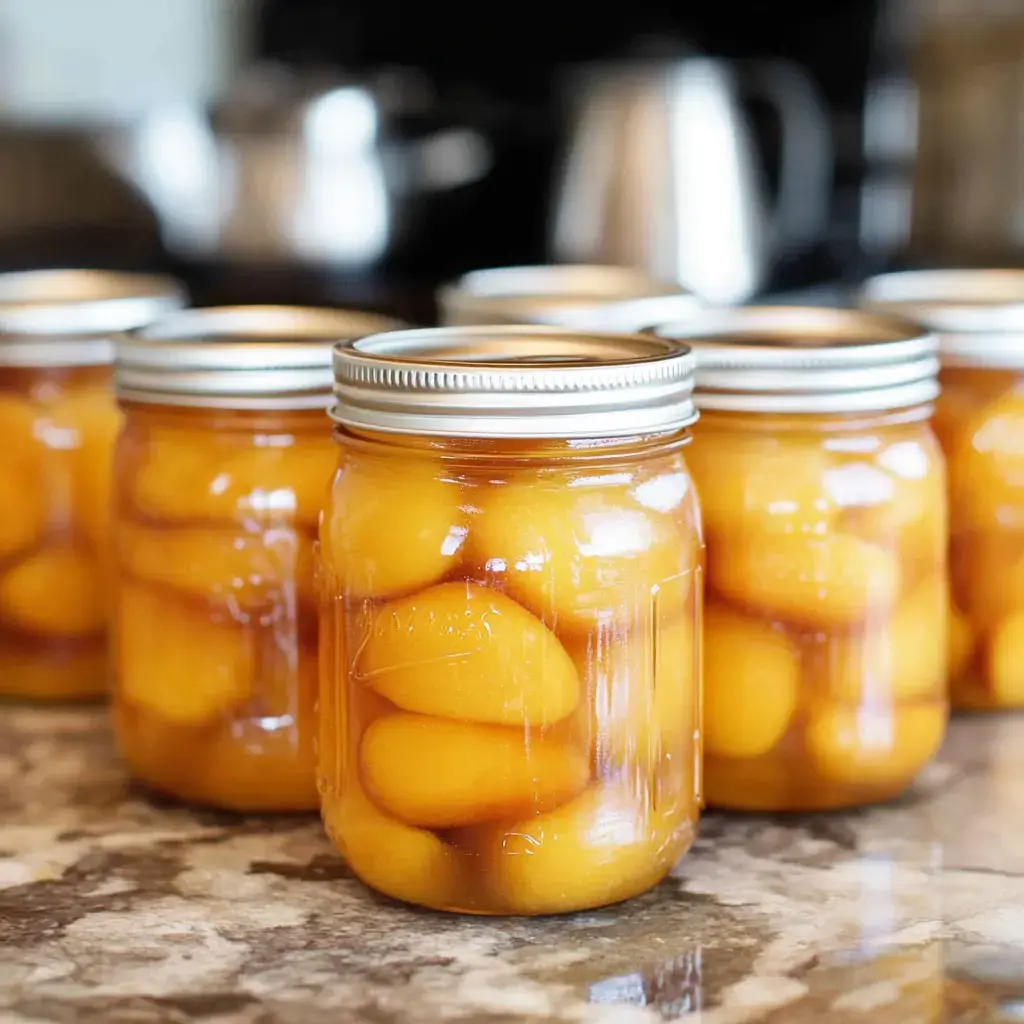
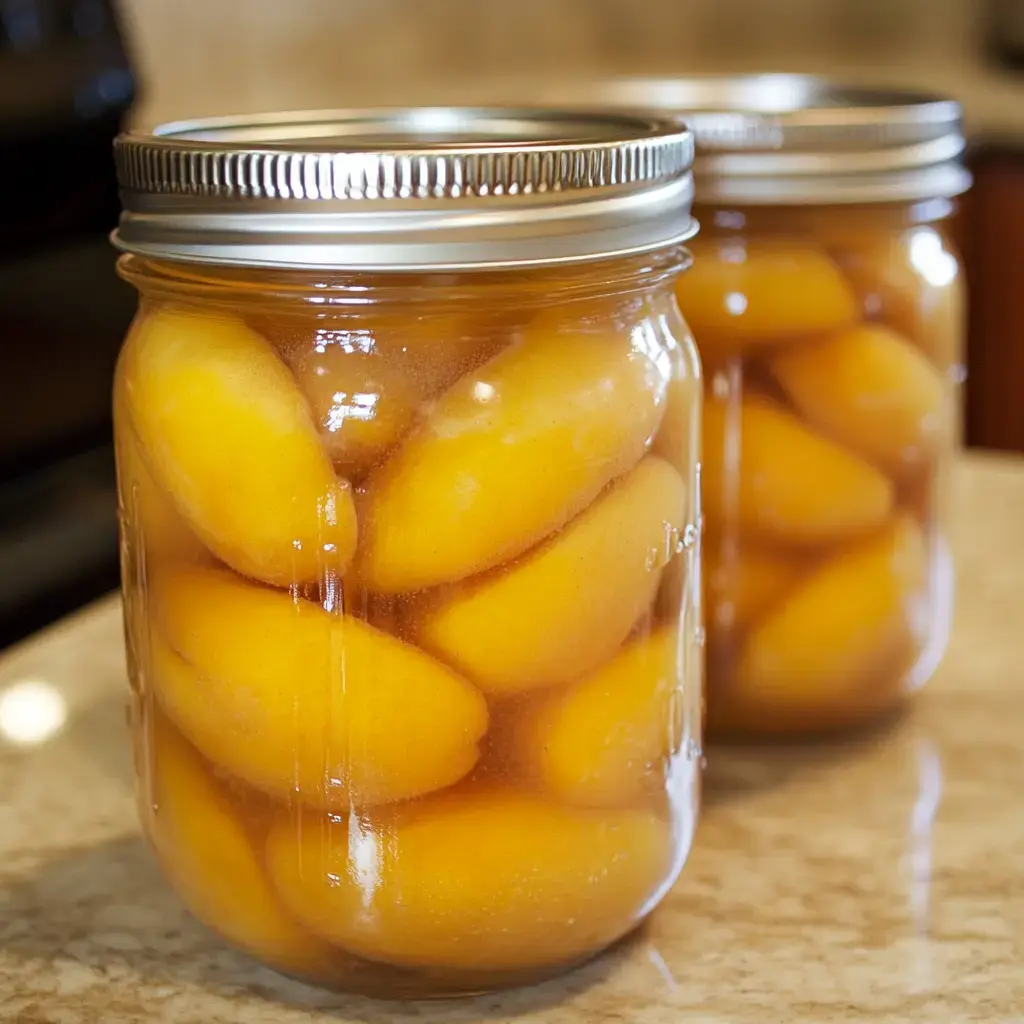
Home canned peaches are ready for cobblers, oatmeal, yogurt bowls, and quick skillet desserts. Drain them well before baking so they do not water down a filling. The syrup can be simmered into a quick sauce or stirred into iced tea.
For breakfast, spoon the peaches over pancakes or tuck a few slices into apple cinnamon breakfast quesadillas. For dessert, they are good over pound cake with a little whipped cream. Keep one jar in the fridge after opening and use it within a week.
FAQs
- Can I can peaches without sugar?
Yes, yellow peaches can be packed in water, apple juice, or white grape juice. Sugar helps the fruit hold color and texture, but it is not what makes this recipe safe.
- Why can I not water bath can white peaches?
Some white-flesh peaches can be too low in acid for the standard boiling water process. There is no tested home canning process for them, so freezing is the safer choice.
- Do I have to peel peaches before canning?
Peeling gives the cleanest texture and keeps the skins from floating loose in the jar. A quick blanch in boiling water followed by an ice bath makes the skins slip off with very little knife work.
- How long do canned peaches last?
For best quality, store sealed jars in a cool, dark place and use them within 12-18 months. If a jar did not seal, refrigerate it and use it within a few days.
- What causes fruit float in canned peaches?
Fruit float happens when raw fruit shrinks during processing and rises above the liquid. Hot packing reduces it because the peaches soften and release some air before they go into the jars.
- Can I use quart jars instead of pint jars?
Yes, but quart jars need a longer processing time than pints. At 0-1,000 feet, hot-packed pints process for 20 minutes and hot-packed quarts process for 25 minutes.
