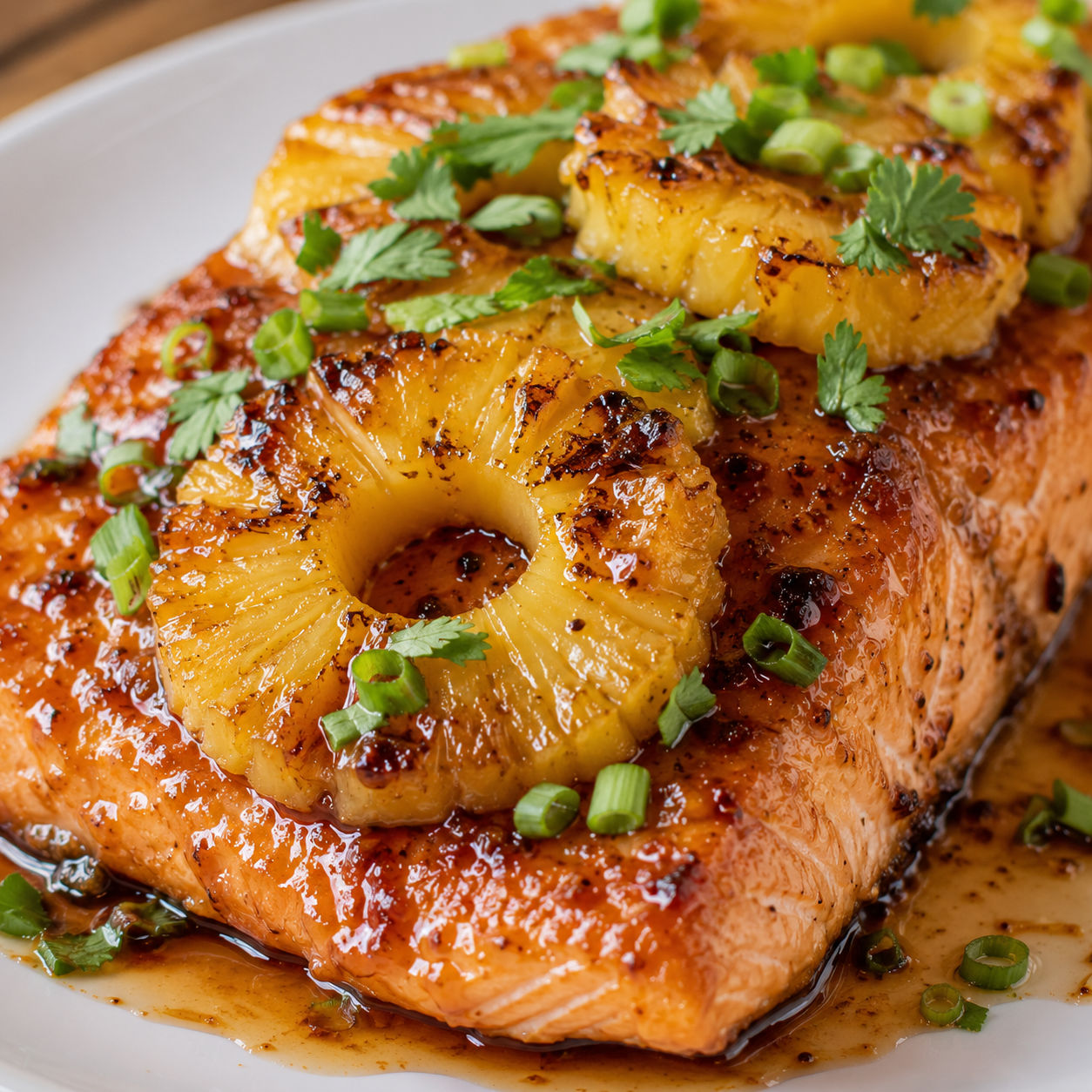
 Pin it
Some weeknights call for something that feels a little more exciting than the usual rotation. This honey pineapple salmon delivers exactly that without asking much of you. The glaze comes together in a minute, the pineapple rings add a gentle sweetness that plays against the savory fish, and the oven does almost all of the work.
I started making this when I wanted the ease of baked salmon but craved the kind of sticky, caramelized edges you usually get from a grill or a pan. A hot oven and a simple honey-based glaze solve that problem neatly. The whole dish is on the table in about 20 minutes, which makes it just as practical for a Tuesday as it is for guests on the weekend.
What goes on the pan
A short list of pantry staples does the heavy lifting here. Use the best salmon you can find, and do not skip the fresh ginger if you have it. The canned pineapple rings are reliable and hold their shape under heat better than fresh, which can weep too much juice.
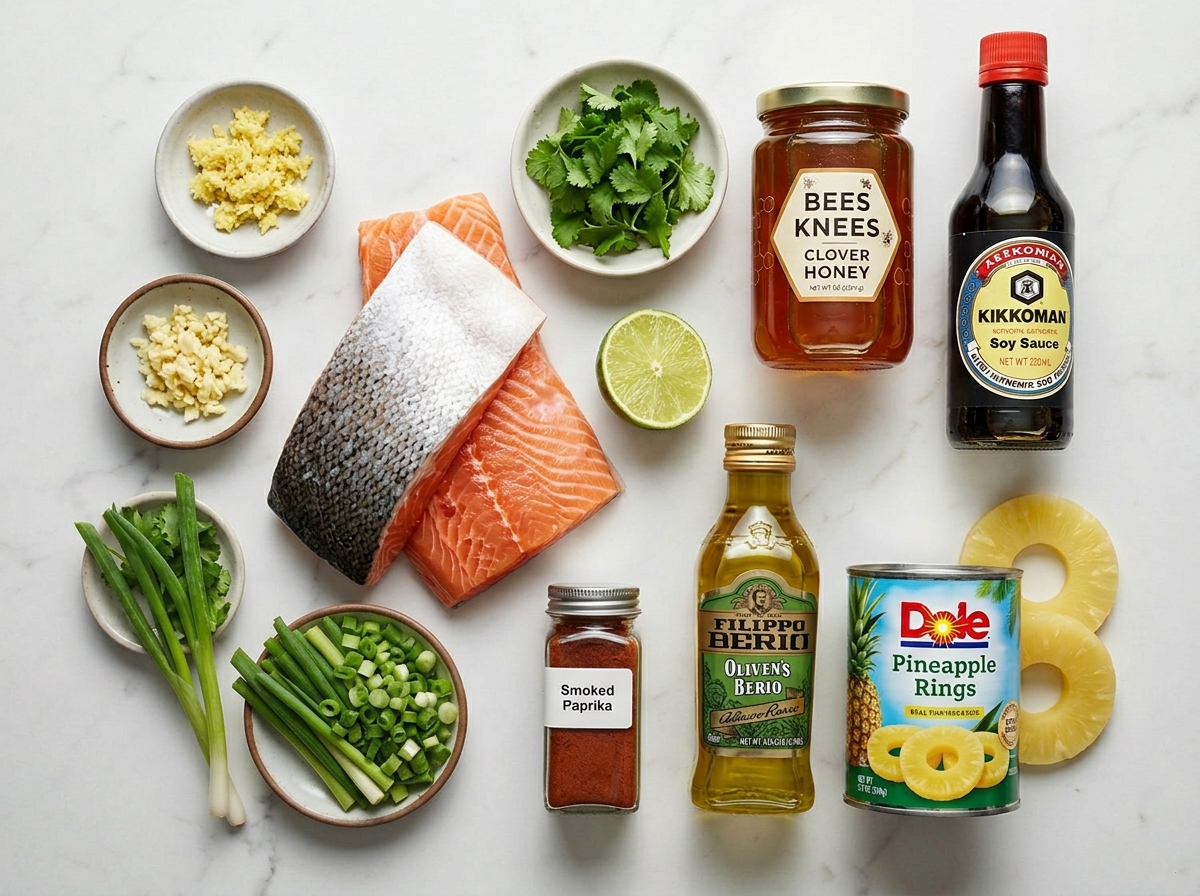
- Salmon fillet. A 1.5 lb side of salmon feeds four comfortably. Skin-on helps protect the flesh from the hot pan.
- Honey. The base of the glaze. It caramelizes in the oven and gives the top a beautiful lacquered finish.
- Soy sauce. Adds depth and saltiness that balances the sweetness of the honey and pineapple.
- Fresh ginger and garlic. Aromatics that cut through the richness and give the glaze real backbone.
- Lime juice. Bright acidity that keeps the glaze from tasting one-dimensional.
- Canned pineapple rings. Drained well, they sit on top and roast into soft, golden crowns.
- Smoked paprika. A light dusting adds warmth and a subtle smoky note.
How it bakes up
- Make the glaze. Whisk honey, soy sauce, olive oil, grated ginger, minced garlic, lime juice, and a pinch of smoked paprika in a small bowl until smooth.
- Prep the salmon. Pat the fillet very dry with paper towels and place it skin-side down on a parchment-lined sheet pan. Brush the glaze evenly over the top.
- Add the pineapple. Arrange drained pineapple rings in a single layer over the salmon. Tuck a few into the pan around the edges so they caramelize too.
- Bake until just done. Roast at 400°F for 12 to 15 minutes, depending on thickness, until the flesh flakes easily but still looks moist. The glaze should be bubbling and lightly browned.
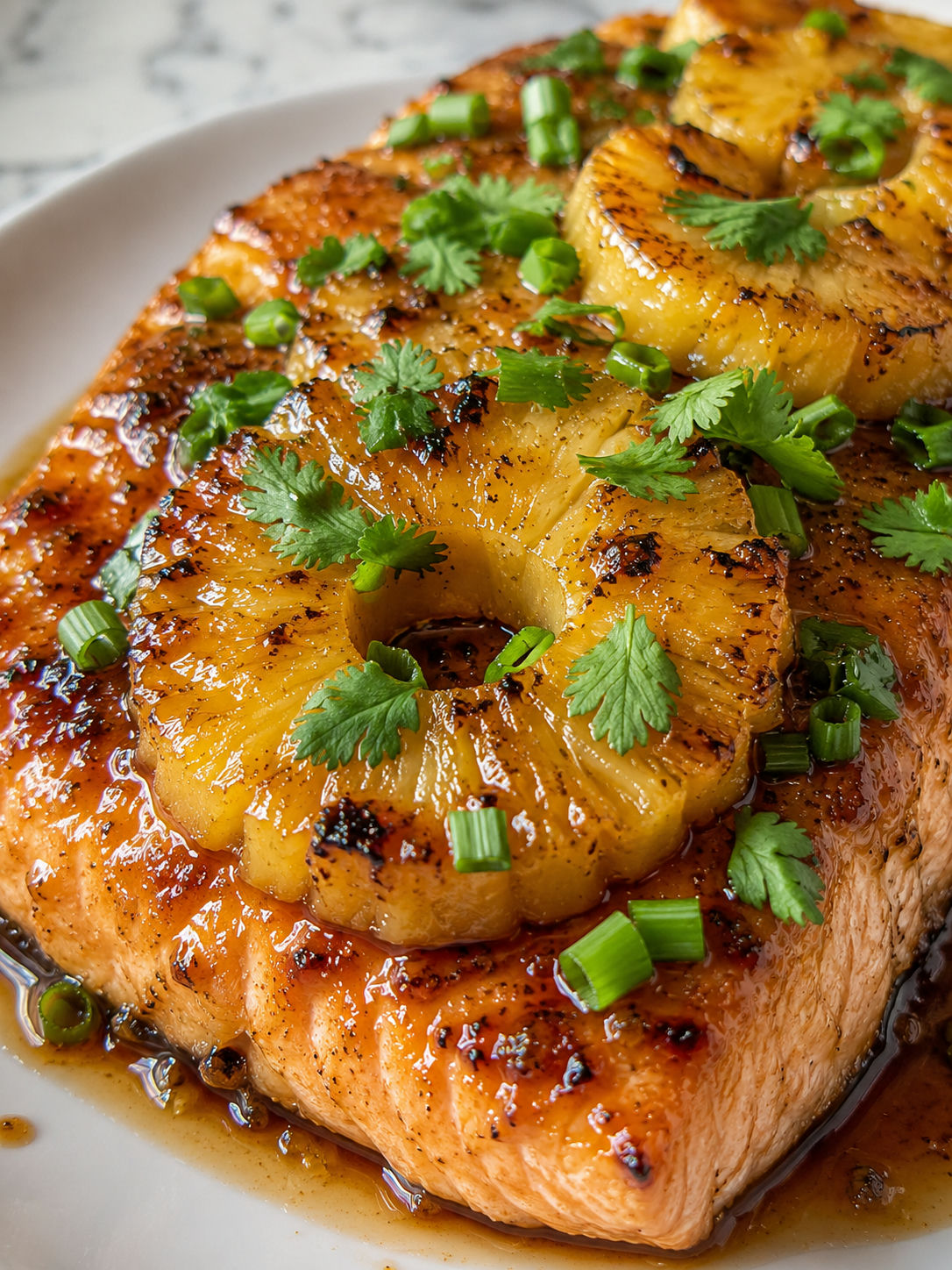
- Rest and garnish. Let the salmon sit for 3 to 5 minutes so the juices settle. Scatter sliced green onion and fresh cilantro over the top before serving.
The drying step matters
Surface moisture is the enemy of a good glaze. If the salmon is wet, the honey mixture slides off and pools underneath instead of clinging to the fish. Take the extra thirty seconds to blot both sides with paper towels. The same principle applies to garlic butter baked salmon, where dry skin helps the butter brown instead of boil.
Why canned pineapple wins
Fresh pineapple is wonderful in salsa or on the grill, but it is not ideal here. It contains enzymes that can start to break down the surface of the fish during baking, and it releases far more juice than canned. The extra liquid steams the salmon instead of roasting it, which gives you soggy flesh instead of that sticky, glazed crust. Canned rings in juice, drained well, behave predictably and taste great. If you want to double down on the tropical theme, brown sugar grilled pineapple makes an excellent side.
Serving ideas that work
This salmon wants something simple alongside it. Steamed jasmine rice soaks up the glaze beautifully. A quick cucumber salad with rice vinegar adds crunch and contrast. For something heartier, roasted sweet potato wedges or coconut rice both complement the sweet-savory profile without competing. If you are feeding a crowd, pair it with pineapple brown sugar glazed ham for a full tropical spread.
Storing and reheating
Leftovers keep in an airtight container in the refrigerator for up to three days. Reheat gently in a 300°F oven covered loosely with foil, or flake the cold salmon over a salad for lunch. The microwave works in a pinch, but it will toughen the fish. The USDA recommends cooking fish to an internal temperature of 145°F for food safety. You can read more on their seafood safety guidelines.
FAQs
- Can I use frozen salmon for this recipe?
Yes. Thaw it fully in the refrigerator overnight, then pat very dry before glazing. Frozen salmon often holds extra moisture, so expect to add a minute or two to the bake time and check for doneness carefully.
- What can I substitute for soy sauce?
Tamari or coconut aminos both work well. If you use coconut aminos, the glaze will be slightly sweeter, so reduce the honey by about one teaspoon to keep the balance right.
- Can I make this on the grill instead of the oven?
Yes. Use a cedar plank or a foil packet over medium indirect heat for about 15 minutes. The glaze can burn quickly over direct flame, so keep the lid closed and watch it closely.
- How do I know when the salmon is perfectly cooked?
The flesh should look opaque and flake easily with a fork. An instant-read thermometer inserted into the thickest part should read 145°F, which is the USDA recommendation for finfish.
- What sides pair best with honey pineapple salmon?
Steamed jasmine rice soaks up the glaze beautifully. A quick cucumber salad with rice vinegar adds crunch and contrast. Roasted sweet potato wedges or coconut rice also complement the sweet-savory profile without competing.
- Can I prep any part of this ahead of time?
Mix the glaze up to two days ahead and refrigerate it. You can also assemble the salmon on the pan a few hours before baking. Add the pineapple rings just before the pan goes into the oven.
