 Pin it
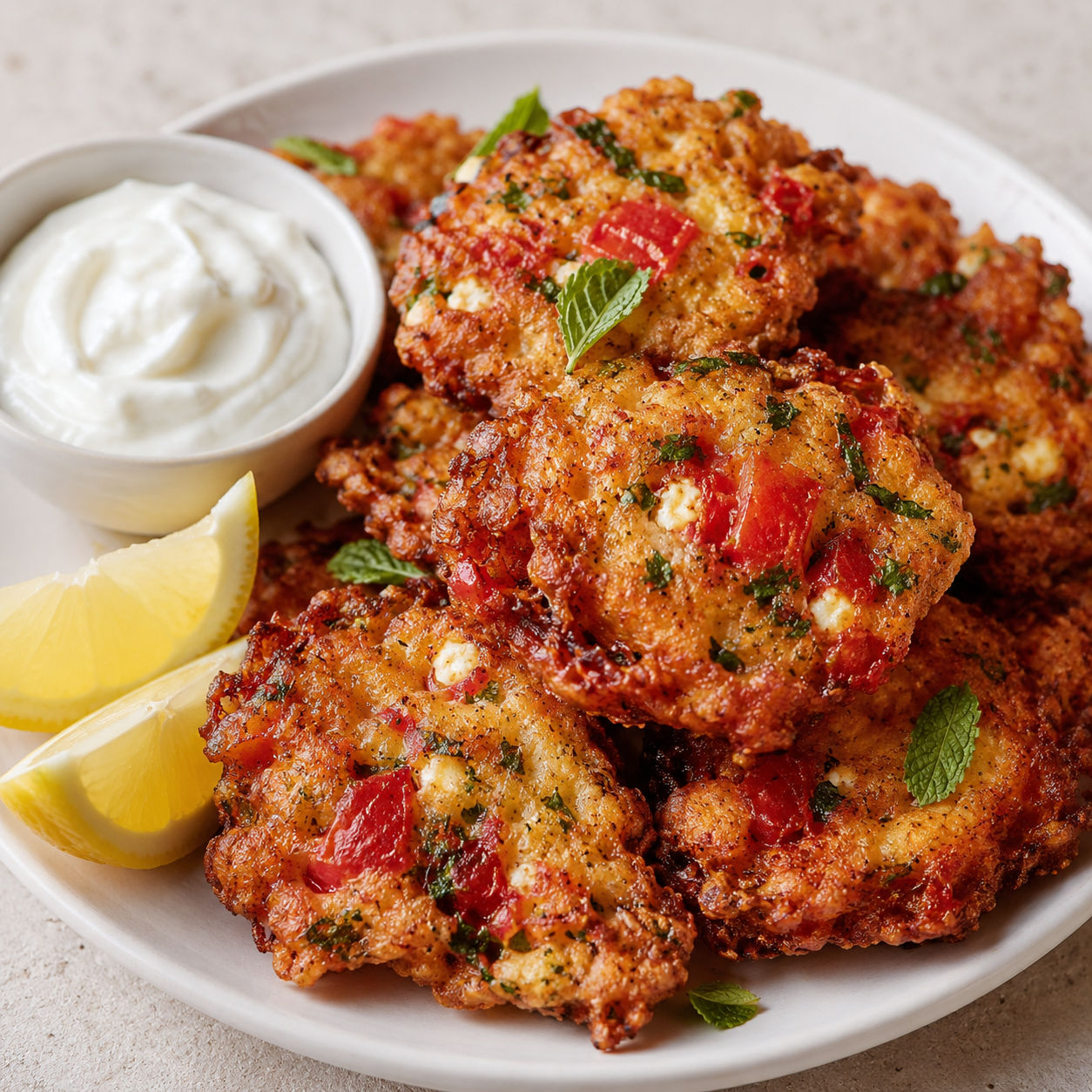
Easy Greek Tomato Fritters are the kind of snack that tastes like summer tomatoes finally got their moment. The edges fry up crisp, the centers stay soft and juicy, and the herbs make the whole pan smell like a Greek taverna kitchen.
They are inspired by Santorini tomatokeftedes, a tomato-heavy fritter often served as meze. You do not need special island tomatoes to make a good batch at home. You do need ripe tomatoes, a patient hand with the flour, and oil that is hot enough before the first spoonful goes in.
Tomatoes, Feta, Fresh Herbs
Use the ripest tomatoes you can find. Roma tomatoes are easy to manage because they are meaty, but sweet vine tomatoes or cherry tomatoes also work if you drain off extra juice.
- Ripe tomatoes. They give the fritters their sweet, juicy center and bright color.
- Red onion. A little sharpness keeps the tomato flavor from tasting flat.
- Feta cheese. Salty crumbles melt into small creamy pockets as the fritters fry.
- Fresh parsley and mint. These herbs make the fritters taste fresh instead of heavy.
- Dried oregano. A small spoonful gives the batter that familiar Greek aroma.
- All-purpose flour. It binds the tomato mixture without turning it into a dough.
- Baking powder. This helps the fritters puff lightly in the pan.
- Olive oil. Use it for flavor, or blend it with a neutral oil if you prefer a higher smoke point.
Easy Greek Tomato Fritters Method
- Chop and drain. Finely chop the tomatoes, place them in a sieve for 10 minutes, and press lightly so the batter does not turn watery.
- Mix the base. Stir the tomatoes with red onion, scallions, feta, parsley, mint, oregano, paprika, vinegar, salt, and pepper.
- Add the flour. Sprinkle in the flour and baking powder a little at a time until the mixture holds on a spoon but still looks soft.
- Heat the oil. Warm 1/2 inch of oil in a skillet over medium-high heat until a tiny bit of batter sizzles as soon as it touches the pan.
- Fry in batches. Drop heaping spoonfuls into the oil, flatten gently, and cook for 2-3 minutes per side until deeply golden.
- Drain and serve. Move the fritters to a rack or paper towel, season lightly, and serve warm with Greek yogurt and lemon.
Keep The Batter Loose
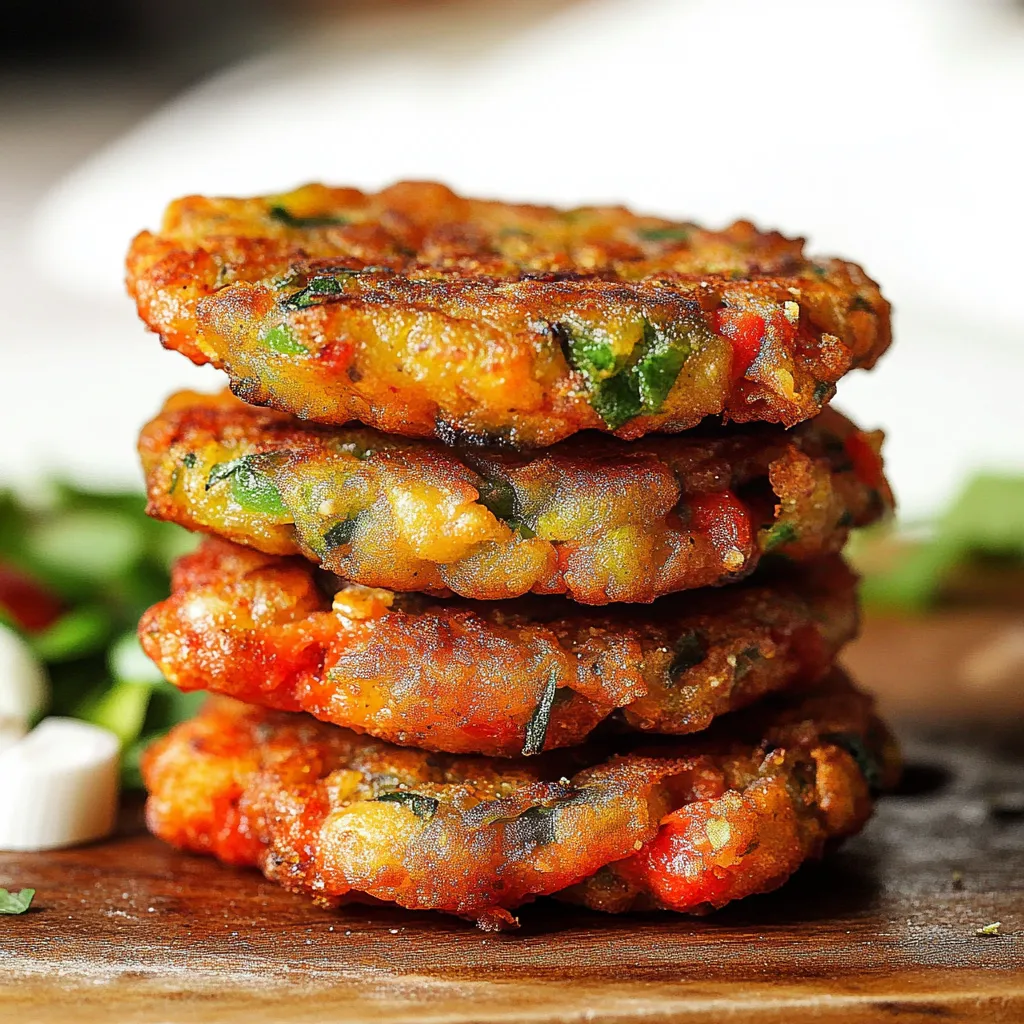
The best tomato fritter batter is not firm like a veggie burger mix. It should mound on a spoon, then relax slightly when it hits the pan. Too much flour makes the center bready and dulls the tomato flavor. Start with most of the flour, fry one small tester, then adjust. If it spreads into a thin pancake, add another tablespoon. If it sits stiff and dry on the spoon, fold in a spoonful of reserved tomato juice.
Tomatokeftedes are known as a Santorini specialty, and TasteAtlas notes the usual mix of tomatoes, onion, herbs, spices, feta, and sometimes zucchini. This version keeps the list simple so the tomatoes stay in charge.
How To Get Crisp Edges
Moisture is the main fight with tomato fritters. Drain the chopped tomatoes, do not skip the hot oil test, and leave space between spoonfuls in the skillet. Crowding drops the temperature fast. The fritters then soak up oil before they can set.
I like a wide skillet with about 1/2 inch of oil. The fritters should not be submerged, but the oil should come high enough to crisp the edges. Flip only when the underside is sturdy and golden. If you love fritter-style snacks, the site also has Crispy Greek Tomato Herb Fritters and Cheesy Broccoli Fritters for another vegetable-heavy option.
Swaps That Taste Right
No mint? Use dill or more parsley. No feta? Leave it out for a dairy-free version, but add a little extra salt and a few chopped capers for the briny edge. Cherry tomatoes are wonderful here if they are sweet. Cut them small and drain them well because their juice builds quickly in the bowl.
For a gluten-free batch, chickpea flour works nicely and adds a faint nutty flavor. Use about the same amount and keep the baking powder. If you want a fuller Greek spread, serve these with Classic Greek Salad, Greek Style Loaded Hummus, or lemony Greek Roast Potatoes Lemon Feta.
Serving And Storage Notes
These fritters are best within minutes of frying. Set them on a rack if you have one, since air underneath keeps the bottoms from steaming. Greek yogurt with lemon and a little grated garlic is enough for dipping. Tzatziki is even better if you already have it.
Leftovers keep in the fridge for up to three days. The USDA has clear leftover guidance at its food safety leftovers page. Reheat fritters in a 375°F oven or an air fryer until hot and crisp. The microwave works, but it softens the crust fast.
Summary
Serve these fritters warm with Greek yogurt, tzatziki, or a lemony salad. They are best right after frying, when the contrast between crisp crust and juicy tomato center is strongest.
FAQs
- What are Greek tomato fritters called?
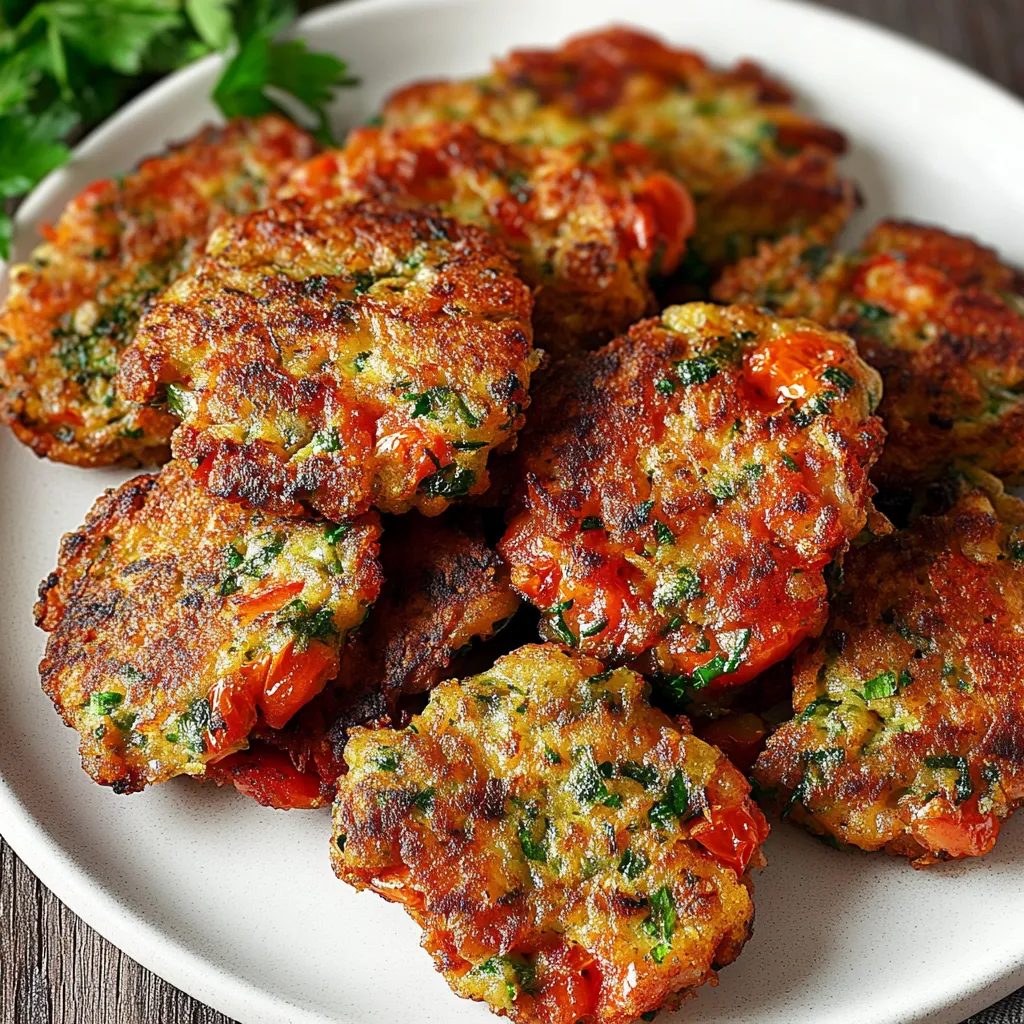
Greek tomato fritters are often called tomatokeftedes or domatokeftedes. They are strongly associated with Santorini and are usually made with chopped tomatoes, onion, herbs, flour, and sometimes feta.
- Can I use canned tomatoes?
Fresh tomatoes are better because the texture matters here. If you only have canned tomatoes, drain them very well and chop them small. The batter will still be softer and may need extra flour.
- Can I make Greek tomato fritters gluten-free?
Yes. Use a cup-for-cup gluten-free flour blend or chickpea flour with baking powder. Add it slowly because gluten-free flours thicken at different rates.
- Why are my tomato fritters falling apart?
The batter is probably too wet or the oil is not hot enough. Let juicy tomatoes drain for a few minutes, add flour gradually, and fry a small tester first. It should sizzle right away and hold its shape.
- Can I make the batter ahead?
I do not recommend mixing the full batter too early because tomatoes keep releasing juice. You can chop the vegetables and herbs a few hours ahead, then stir in feta, flour, and baking powder right before frying.
- What should I serve with tomato fritters?
Serve them with thick Greek yogurt, tzatziki, lemon wedges, or a crisp salad. They also fit nicely beside grilled chicken, roasted potatoes, hummus, or other Greek-style meze.
