 Pin it
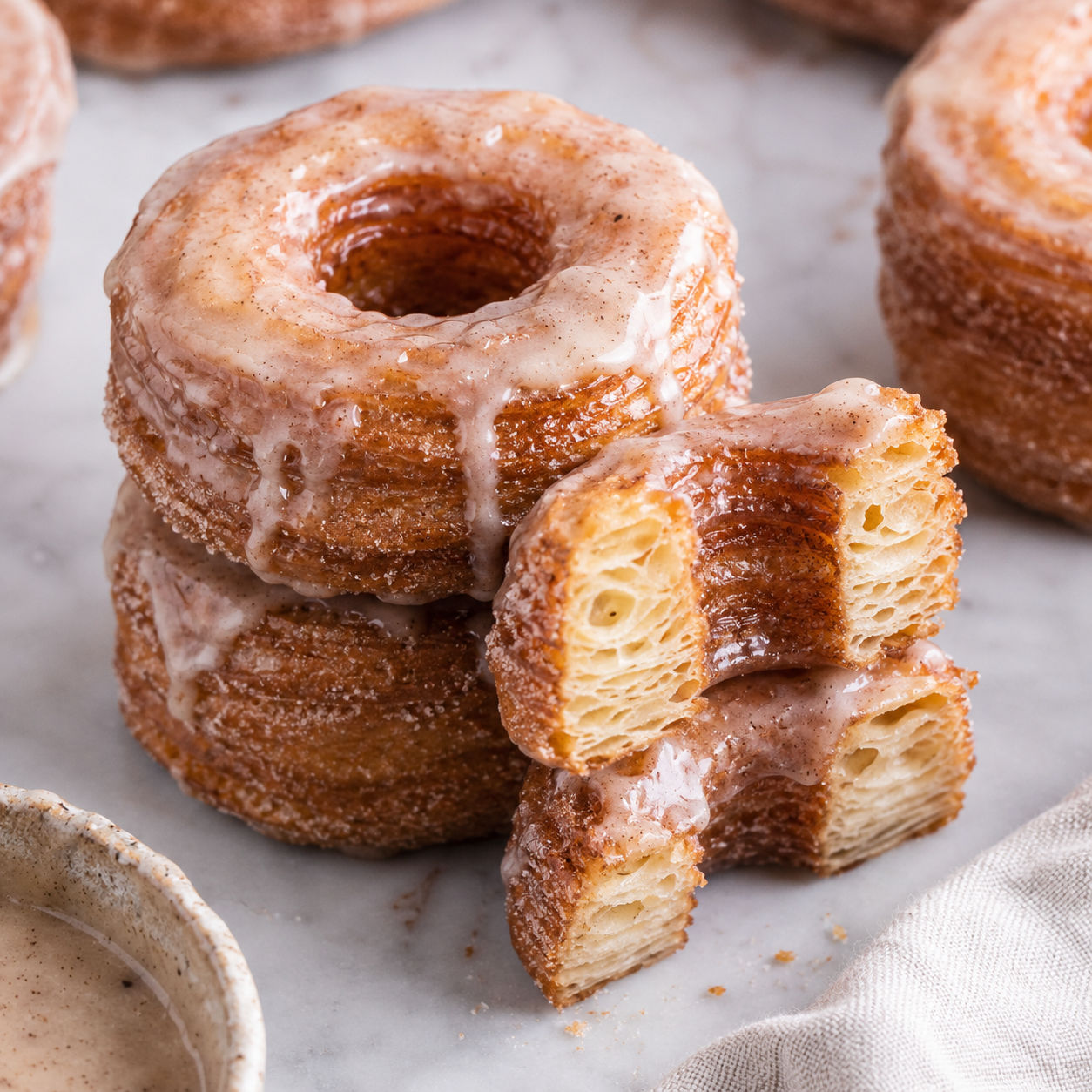
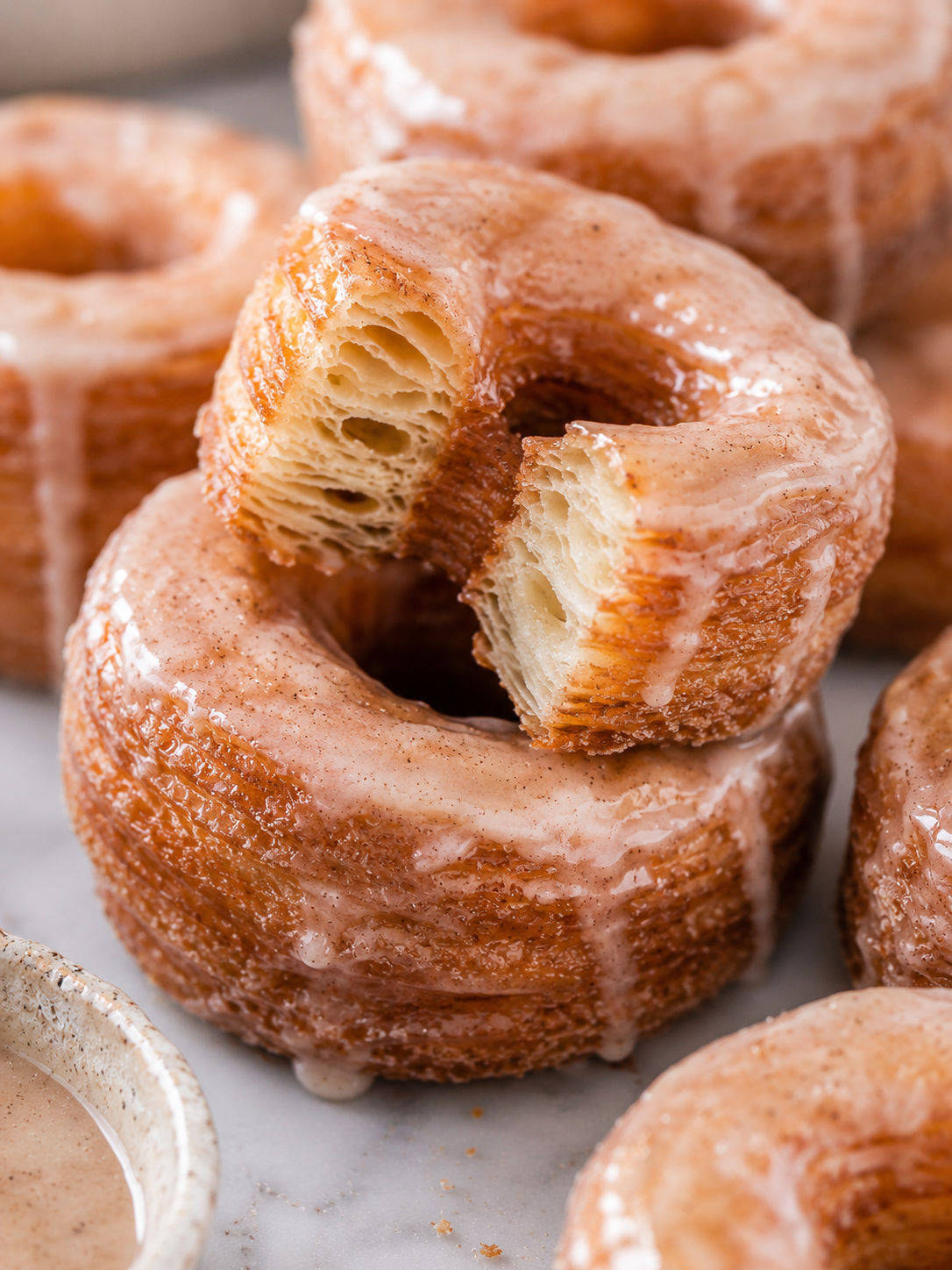
Homemade Cronuts are for the morning when you want a project with a real payoff. You get the flaky pull of a croissant and the crisp, sugared edge of a doughnut in one rich pastry.
The trick is not speed. It is cold butter, patient folds, and oil that stays steady. I like these with a vanilla glaze and cinnamon sugar because it lets the butter layers stay in charge.
Butter, Flour, Patience
The ingredient list is plain, so each one matters. Use fresh yeast, good unsalted butter, and all-purpose flour with enough strength to handle rolling.
- Whole milk. Gives the dough tenderness and helps the yeast wake up.
- Active dry yeast. Lifts the pastry so the fried layers puff instead of sitting heavy.
- Granulated sugar. Feeds the yeast and sweetens the dough lightly.
- All-purpose flour. Builds enough structure for folding, cutting, and frying.
- Unsalted butter. Creates the thin layers that make cronuts flaky.
- Egg. Adds richness and a softer doughnut-style bite.
- Neutral oil. Fries cleanly without adding a strong flavor.
- Cinnamon sugar. Clings to the warm sides and gives the first bite a little crunch.
- Vanilla glaze. Sets into a thin sweet shell over the top.
Fold, Cut, Fry
- Mix the dough. Bloom the yeast in warm milk with a pinch of sugar, then mix in flour, salt, egg, and soft butter until the dough turns smooth.
- Make the butter slab. Press cold butter with a little flour into a neat rectangle. Chill it until firm but still bendable.
- Laminate the dough. Roll the dough around the butter, then complete three letter folds with a chill between each one. Stop if the butter starts to smear.
- Cut the rings. Roll the chilled dough to about 1/2 inch thick and cut doughnut shapes with a center hole. Use the small centers as testers.
- Proof gently. Let the rings puff until light and slightly jiggly. Keep them away from a hot spot so the butter stays inside the layers.
- Fry and finish. Fry at 350°F until deeply golden, drain well, roll the sides in cinnamon sugar, and dip the tops in vanilla glaze.
Homemade Cronuts Without Panic
The dough only asks for one thing at a time. Mix it, chill it, lock in the butter, then fold. If the counter gets warm or the dough fights back, wrap it and refrigerate it for 20 minutes. That pause is part of the method, not a mistake. The butter should stay in thin sheets between the dough, which is what makes the pastry split into layers in the oil. For another sweet project with a softer pace, try Homemade Strawberry Vanilla Cronuts.
The Frying Temperature Matters
Cronuts need hot, steady oil. At 350°F, the outside crisps while the inside has time to puff and cook through. If the oil drops too low, the pastry absorbs oil and tastes heavy. If it climbs too high, the outside browns before the center is done. A thermometer is the simplest fix. Fry the holes first to check the oil and give the pot a minute to recover between batches. I use the same steady-heat mindset for fried or griddled breads, including Homemade Flour Tortillas My Way.
Glaze While Slightly Warm
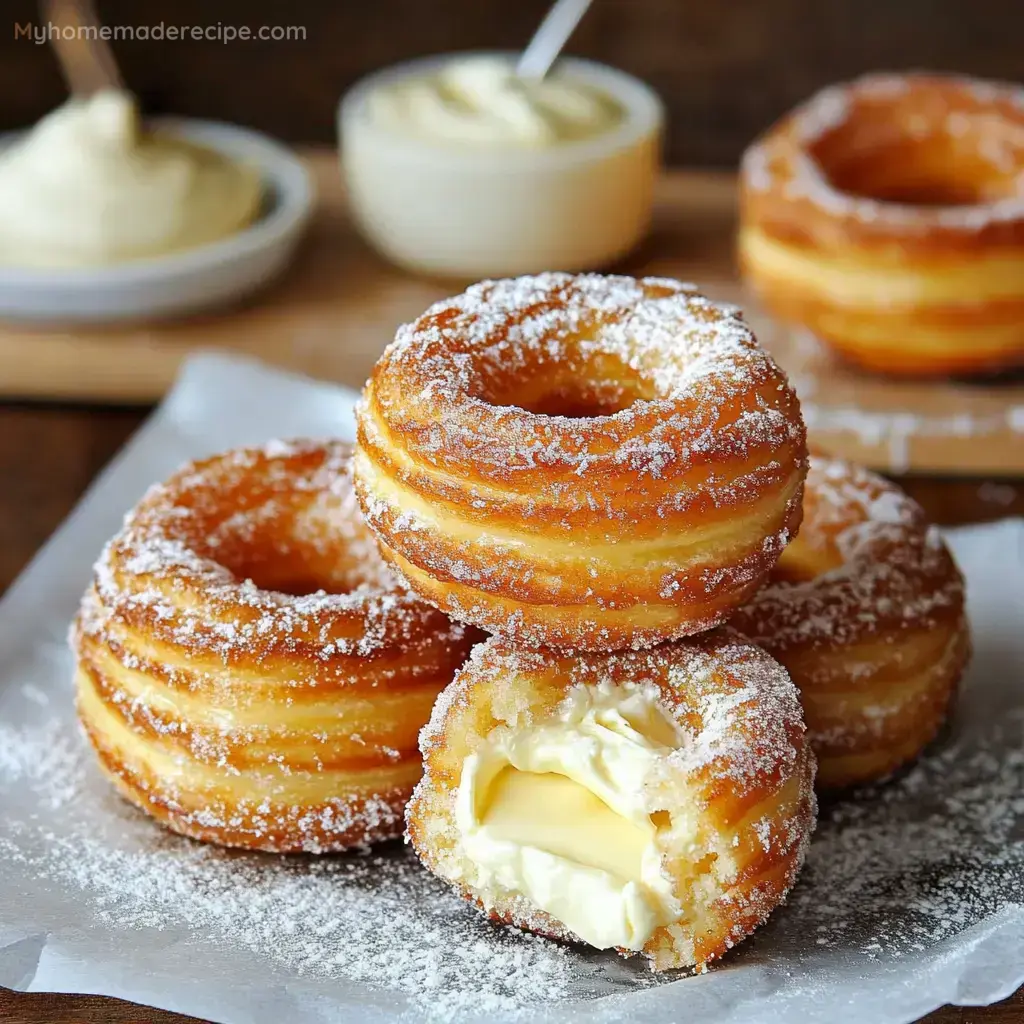
Let the cronuts drain until they are warm enough to handle. Roll the sides in cinnamon sugar first, then dip just the tops into glaze. If they are blazing hot, the glaze slides off. If they are fully cold, the sugar will not cling as well. A thin glaze works better than a thick frosting here because it settles into the ridges without hiding the layers. If you want a cream-filled version, pipe in Easiest Homemade Whipped Cream right before serving.
Smart Flavor Swaps
Vanilla is the cleanest starting point, but the same dough can take plenty of finishes. Add orange zest to the glaze, toss the warm sides in cardamom sugar, or spoon a little jam into the center after frying. Coffee glaze is especially good with the buttery layers. Serve these with Homemade Coffee Ice Cream Treat if you are turning them into dessert. For a shortcut version using puff pastry, Chelsea's Messy Apron has a fast method at Chelsea's Messy Apron.
Storing The Layers
Cronuts are at their best within a few hours of frying. Store leftovers loosely covered at room temperature and skip the fridge unless they are filled with cream. To reheat, use a 300°F oven for 5-7 minutes. The microwave softens the crust and makes the glaze sticky. If you want to split the work, laminate the dough the day before and keep it wrapped in the refrigerator overnight. Ashlee Marie's laminated version is another useful reference for timing at Ashlee Marie.
Summary
These cronuts are best eaten the day they are fried, while the layers are crisp and the glaze is just set.
FAQs
- Can I make Homemade Cronuts with store-bought puff pastry?
Yes, but the texture will be lighter and less doughnut-like. Puff pastry is a good shortcut when you want crisp layers fast, but homemade yeasted dough gives more chew and a richer center.
- Why did my cronuts leak butter while frying?
The dough probably got too warm during rolling or proofing. Chill it whenever the butter feels soft or greasy, and proof in a cool room until puffy rather than hot and swollen.
- What oil is best for frying cronuts?
Use a neutral oil with a high smoke point, such as vegetable, canola, or grapeseed oil. Keep it near 350°F so the pastry puffs before it absorbs too much oil.
- Can I fill these cronuts?
Yes. Let them cool, then pipe in vanilla pastry cream, jam, or whipped cream from the side using a small piping tip. Do not fill them while hot because the filling will melt and make the layers soggy.
- How should I store leftover cronuts?
Keep them loosely covered at room temperature for one day. They lose crispness quickly, but a few minutes in a 300°F oven helps revive the outside.
- Can I prepare the dough ahead?
Yes. After the final fold, wrap the dough well and refrigerate it overnight. Cut, proof, and fry the cronuts the next day for a calmer bake.
