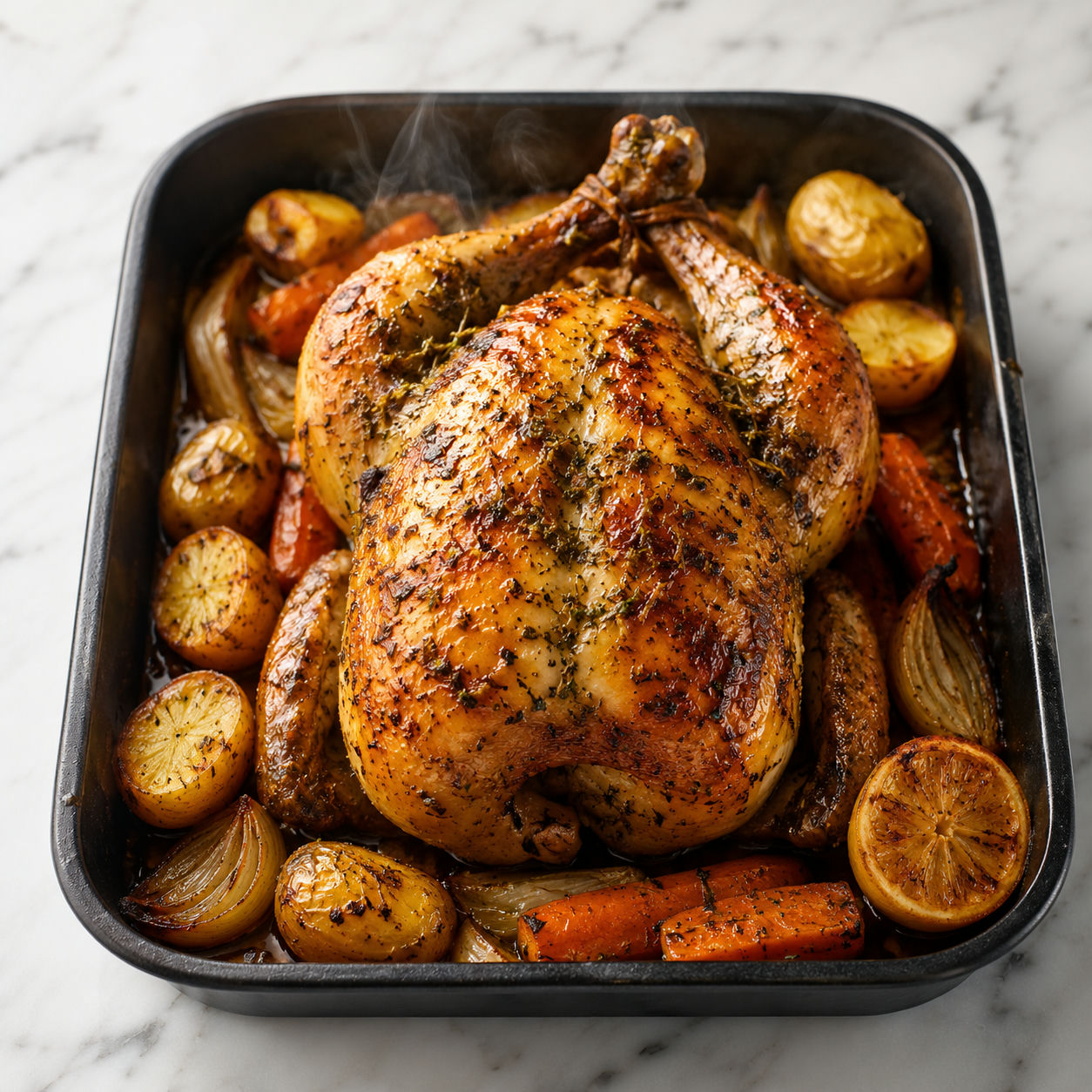
 Pin it
My oldest daughter came home for a few days while she was in the area for training. She was tired and a little stressed, and the last thing I wanted to do was hand her a takeout bag. So I made roast chicken. Her favorite since she was little. She sat at the kitchen table while I got everything ready and we talked the way you only do when you know she's leaving again soon.
There is nothing complicated about a good roast chicken. But when you take the extra ten minutes to push herb butter under the skin and start it in a very hot oven, it comes out looking like something you'd pay real money for at a restaurant. The vegetables roasting underneath collect every drop of buttery, garlicky drippings from the bird. By the time it comes out of the oven you already have your side dish.
She asked me to write this down before she left. So here it is.
The Bird and What Goes On It
Start with a 4 to 5 pound chicken. Air-chilled birds, when your store carries them, tend to have drier skin right out of the package, which means you are already ahead. Buy the chicken the day before if you can and leave it uncovered in the fridge overnight on a rack. That extra air-drying makes a real difference to the skin.
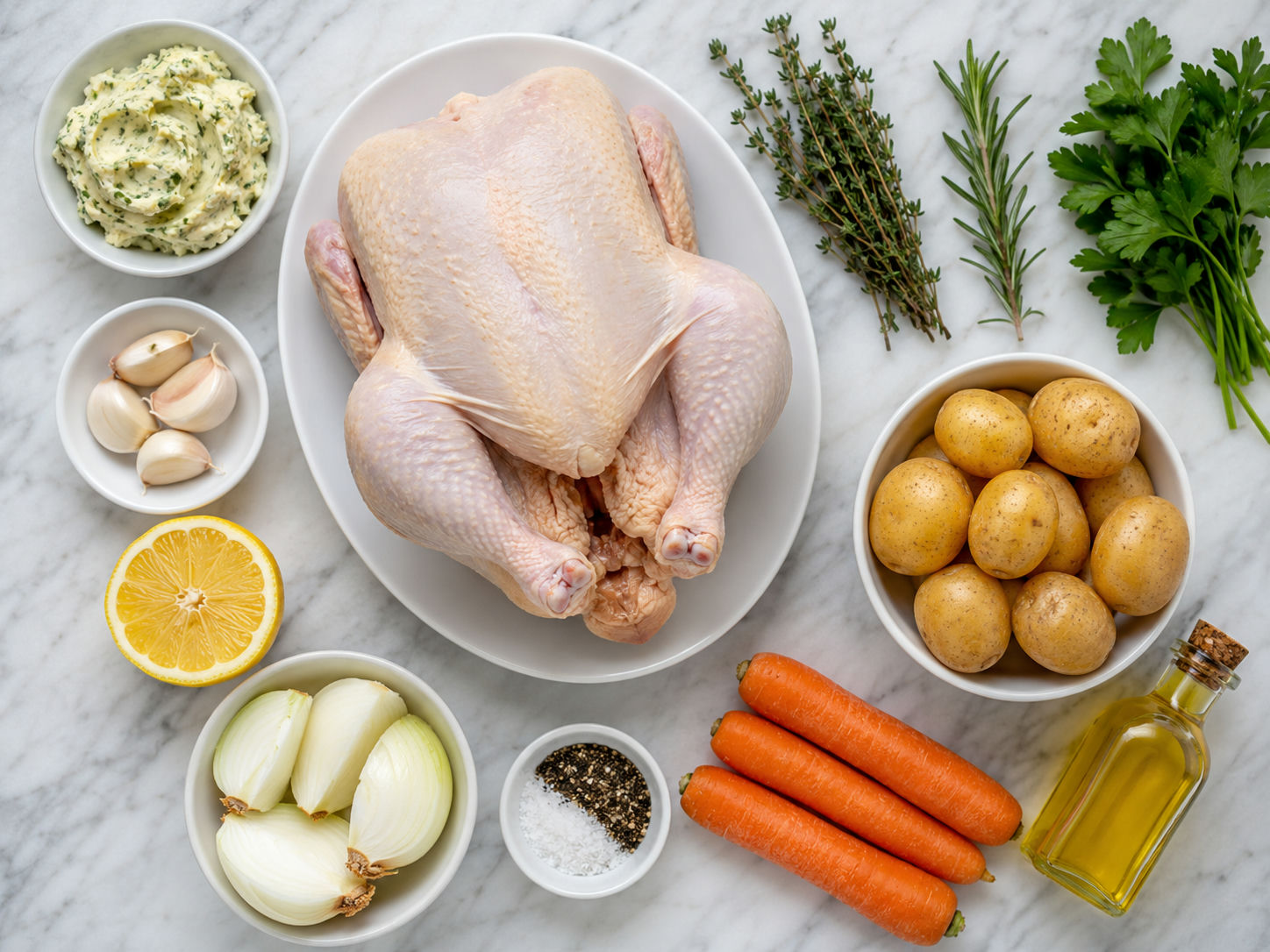
- Whole chicken. A 4 to 5 lb bird serves four to five people. Larger birds take longer to cook and risk drying out at the breast before the thighs come up to temperature.
- Unsalted butter. The base of the herb butter and the thing that makes the skin shine. Softened, not melted, so it holds to the skin and under it.
- Fresh garlic. Minced into the butter compound and also stuffed whole into the cavity, where it steams and mellows throughout the roast.
- Fresh thyme and rosemary. The two herbs that smell like a real Sunday dinner. Both stand up to prolonged heat without turning bitter or disappearing.
- Fresh parsley. Chopped into the butter for a bright, clean note that balances the richness of the fat.
- Lemon. Halved and placed inside the cavity, it steams the breast meat gently from the inside and keeps it from drying out.
- Potatoes, carrots, and onion. Cut large and spread under the chicken, they roast in the drippings and need no separate attention.
The Method from Start to Finish
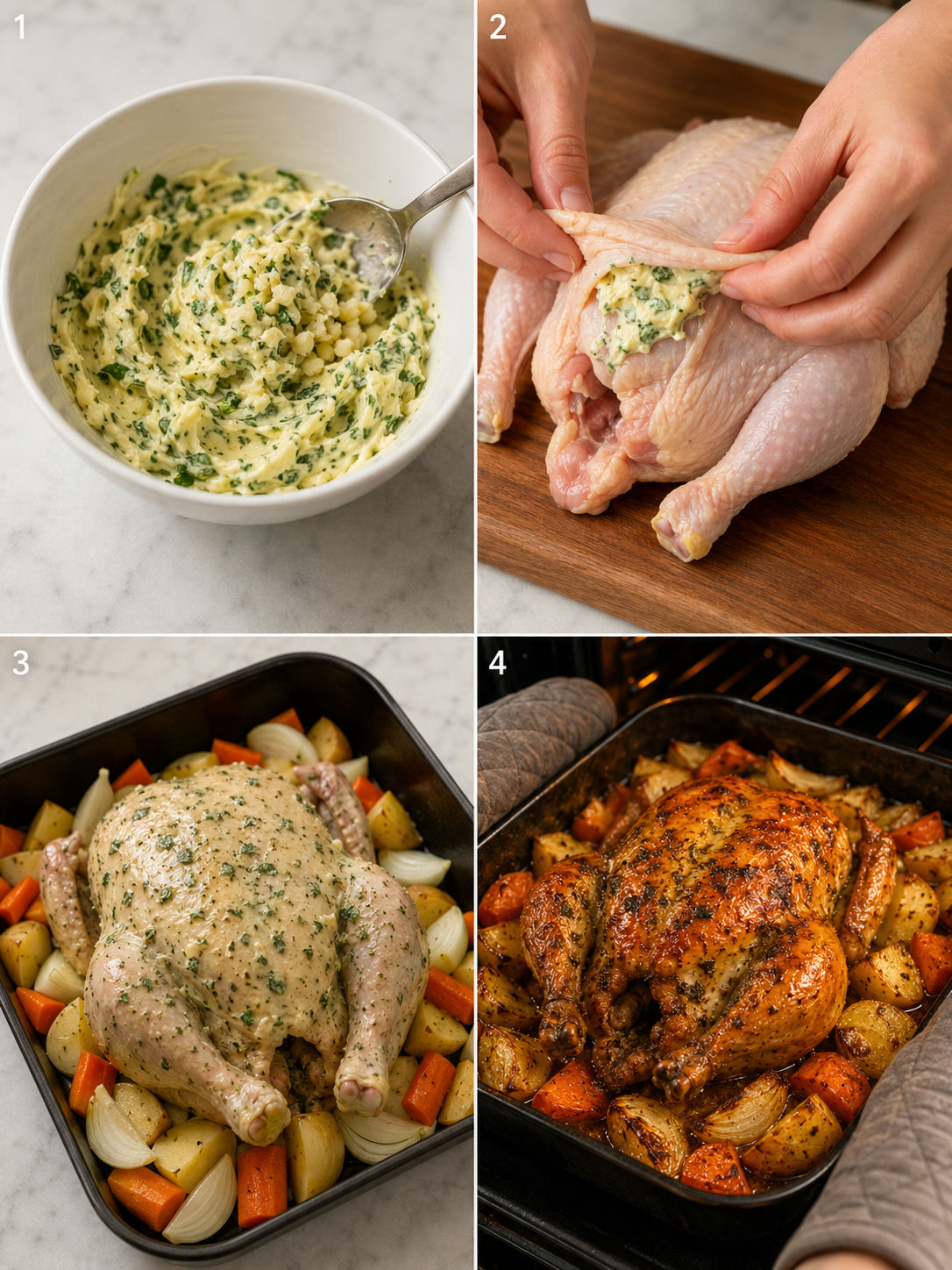
- Make the herb butter. Combine the softened butter with minced garlic, chopped thyme, rosemary, parsley, a generous pinch of salt, and black pepper. Mix until everything is fully incorporated. Set it aside at room temperature while you prep the bird.
- Prep the chicken. Pat the chicken completely dry inside and out with paper towels. Season the cavity well with salt and pepper. Stuff it with the halved lemon, a halved head of garlic, and a few thyme sprigs.
- Work the butter under the skin. Slide your fingers carefully between the skin and the breast meat, then the thighs, without tearing. Push about two-thirds of the herb butter under the skin and spread it as evenly as you can. Rub the remaining butter all over the outside of the bird.
- Build the roasting pan. Preheat the oven to 425°F (220°C). Scatter the potato halves, carrot pieces, and onion wedges across the bottom of a large roasting pan. Drizzle with olive oil, season with salt and pepper, and place the chicken breast-side up on top.
- Start hot, then lower. Roast at 425°F (220°C) for 20 minutes to set the skin and start browning. Lower the oven to 375°F (190°C) and continue roasting for another 50 to 60 minutes until a thermometer in the thickest part of the thigh reads 165°F (74°C).
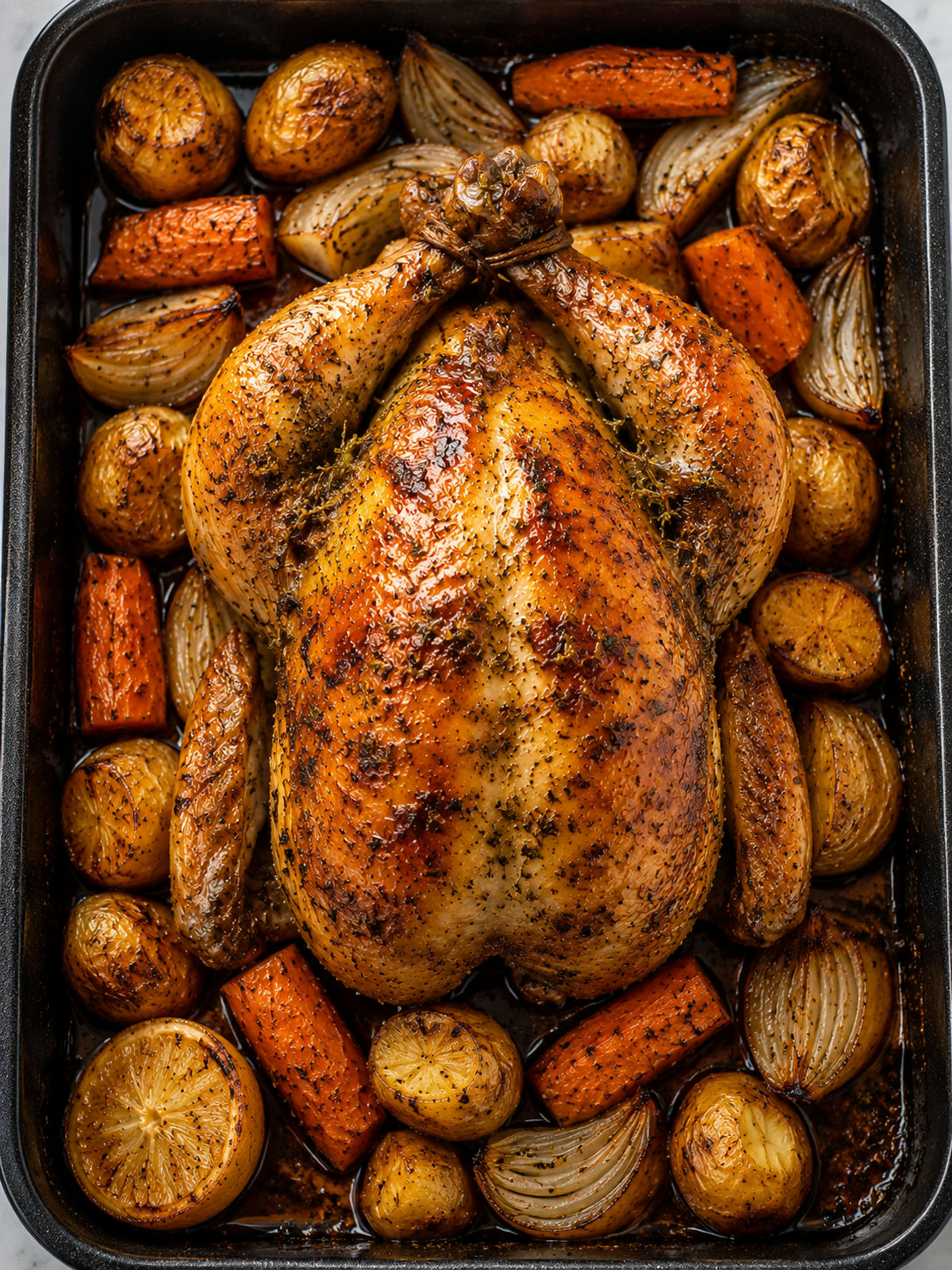
- Rest before carving. Move the chicken to a cutting board and leave it alone for at least 15 minutes. Carve and serve over the vegetables with the pan drippings spooned over everything.
Why Butter Under the Skin Changes Everything
Butter rubbed on the outside of a chicken mostly slides off into the pan and smokes. Butter pushed under the skin stays pressed against the meat and bastes it continuously as it melts during roasting. The breast meat, which tends to dry out before the thighs are done, benefits the most from this. By the time the bird comes out of the oven the breast is almost self-basting from the inside. It is the single step that separates a good roast chicken from a dry one. If you enjoy that technique of sealing flavor directly against the protein, the baked salmon with creamy spinach sauce uses a similar idea to keep the fish moist under the heat.
Using the Drippings for a Fast Pan Sauce
Once the chicken goes to rest, the pan holds concentrated drippings, caramelized vegetable bits, and herb-infused fat. Pour two tablespoons of the fat into a small saucepan and whisk in a tablespoon of cornstarch dissolved in a little cold water. Add a cup of warm chicken broth, bring it to a simmer, and stir until it thickens. Season and pour it over everything. This takes about five minutes and uses what is already in the pan. It is the same principle behind the slow-cooked short rib ragu, where the fat and collagen from the meat become the sauce by the end of cooking.
Checking Doneness Without Guessing
A golden-brown chicken that looks done can still be undercooked at the thigh joint. The thigh takes longer to come up to temperature than the breast, and color on the skin tells you nothing about what is happening at the bone. The only reliable check is a thermometer reading at least 165°F (74°C) in the thickest part of the thigh. The USDA poultry safety guidelines are clear on this temperature and it should be your only standard.
What to Serve and What Comes After
The roasted vegetables are already handled by the pan. A simple green salad or a crusty roll to mop up the drippings rounds out the meal without much work. For dessert, the irresistible lemon cake fits naturally after a roast chicken dinner, especially when lemon was already working inside the bird the whole time. It is the kind of ending to a meal that makes someone feel properly taken care of before they have to leave.
Storing and Stretching the Leftovers
Pull the meat from the carcass after dinner and refrigerate it in an airtight container for up to four days. The carcass goes into a bag in the freezer until you are ready to make stock from it. Leftover chicken reheats well in a skillet with a splash of broth over medium heat. That keeps the texture right in a way that a microwave never quite manages. The cooked chicken also works well shredded into soup or tucked into a quesadilla the next day.
FAQs
- What internal temperature should the chicken reach before it's safe to eat?
The USDA recommends 165°F (74°C) measured in the thickest part of the thigh, away from the bone. Use an instant-read thermometer and check at the 60-minute mark. Color and clear juices are secondary checks, not substitutes for the thermometer.
- Can I use dried herbs instead of fresh?
Yes. Use about one-third the quantity of dried herbs because they are more concentrated. Dried thyme and rosemary both hold up well to roasting heat. The flavor will be a little less bright but still very good, especially once the butter melts into the skin.
- How do I get the skin crispy and not rubbery?
Two things matter above everything else. Pat the chicken completely dry with paper towels before anything else touches it, and roast it at 425°F (220°C) for the first 20 minutes. Surface moisture steams instead of crisps. The blast of initial heat sets the skin fast and gives you that golden result.
- Can I make the herb butter ahead of time?
Absolutely. The herb butter keeps in the refrigerator for up to a week or frozen for a month. You can also rub the chicken with the butter the night before and leave it uncovered in the fridge overnight. The skin dries out further and seasons throughout, which means even crispier skin and juicier meat the next day.
- What vegetables work best in the roasting pan?
Potatoes, carrots, and onions are the classic base because they hold up to the full roasting time without turning to mush. Parsnips, celery root, and fennel also work well. Cut everything large so the pieces don't burn before the chicken is done.
- How long does leftover roast chicken keep?
Pulled chicken keeps in an airtight container in the fridge for up to four days. The carcass is worth saving in the freezer for stock. Reheat leftovers gently in a skillet with a splash of chicken broth rather than the microwave, which can make the meat tough.
- The skin browned too fast. What should I do?
Tent the chicken loosely with foil once it reaches the color you want, usually around the 30-minute mark. The bird continues cooking through while the foil stops the skin from darkening further. Remove the foil for the last five minutes if you want to firm the skin back up slightly.
